Union Pacific Revives Big Boy Train
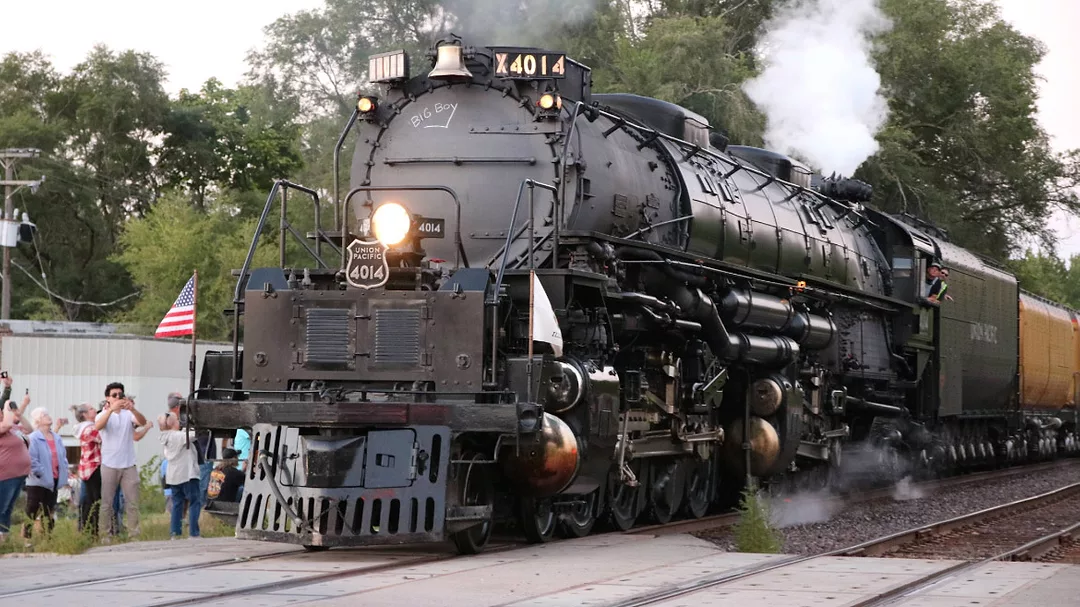
Big Boy has the longest engine body of any reciprocating steam locomotive and relies on an articulated design
For more than 70 years, WARE has been passionate about steam. Part of that passion involves knowing the history of our industry, and having an appreciation for the milestone pieces of equipment that have shown us what steam is really capable of delivering. One of WARE’s favorite bits of steam history involves a steam locomotive that set records when it was first produced, and continued to set them even after it was brought out of retirement.
The Need for Steam
When the Union Pacific Railroad wanted to increase their freight-hauling capabilities back in 1941, they turned, of course, to the power of steam. More specifically, they turned to the American Locomotive Company. The result was nothing less than a titan of the rails. But first, a little background.
Hauling freight through the Wasatch Mountain Range was a profitable business for Union Pacific. However, the Challenger steam locomotives of the time were struggling with the slow, steady uphill climb that the route involved. Union Pacific’s mechanical officer at the time hit upon a simple idea that still holds true today: bigger is better. Using a standard Challenger locomotive as a starting point, the Union Pacific team enlarged the firebox and boiler to give the new locomotive even more horsepower. But this presented two problems.
How Big is Too Big?
The first issue was size. Because of its 132-foot length, the new locomotive wasn’t going to be able to navigate all the twists and turns it would encounter as it chugged its way up and around the various twists and turns of the mountain route. Union Pacific couldn’t re-lay straighter track, obviously, so the next best thing was to articulate the locomotive. Clever design allowed the front and rear wheel sets to turn independently, allowing the new locomotive to traverse tighter turns.
The second issue was one of power. The Union Pacific builders had done their homework when it came to enlarging the steam capacity of the new design, because in its new configuration -- with a larger boiler and firebox -- the steam engine was rated at an astonishing 7,000 horsepower. Even though the engine itself weighed over a million pounds, it was still capable of spinning its drive wheels on the track. To get more useable power down to the rails, the Union Pacific designers added four more drive wheels.
Big Reveal
Once the final design was complete, 25 of these new locomotives, known as “Big Boys” were manufactured and put to work. Each locomotive cost around $265,000 back then, which equates to almost $5,500,000 in today’s money. But Union Pacific got its money’s worth, because the Big Boy series continued to operate regularly for the next 20 years. During their reign, the Big Boy locomotives were cargo-hauling legends, with each one routinely pulling 3,700-ton freight trains up through the mountains of the western United States.
Unfortunately, even a legendary piece of steam history like a Big Boy locomotive can end up in history’s scrapyard, and sadly, most of them did. Only eight of these monsters remain in any sort of recognizable shape today. But thanks to the efforts of Union Pacific’s Heritage Fleet Operations Division, one of them lives on today in its full glory.
Back on Track
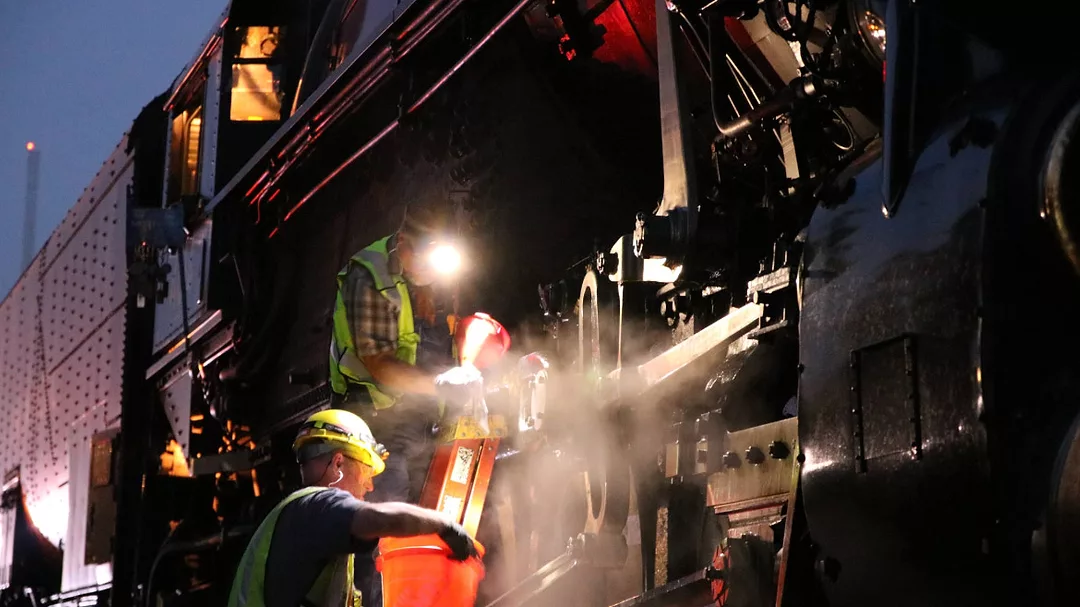
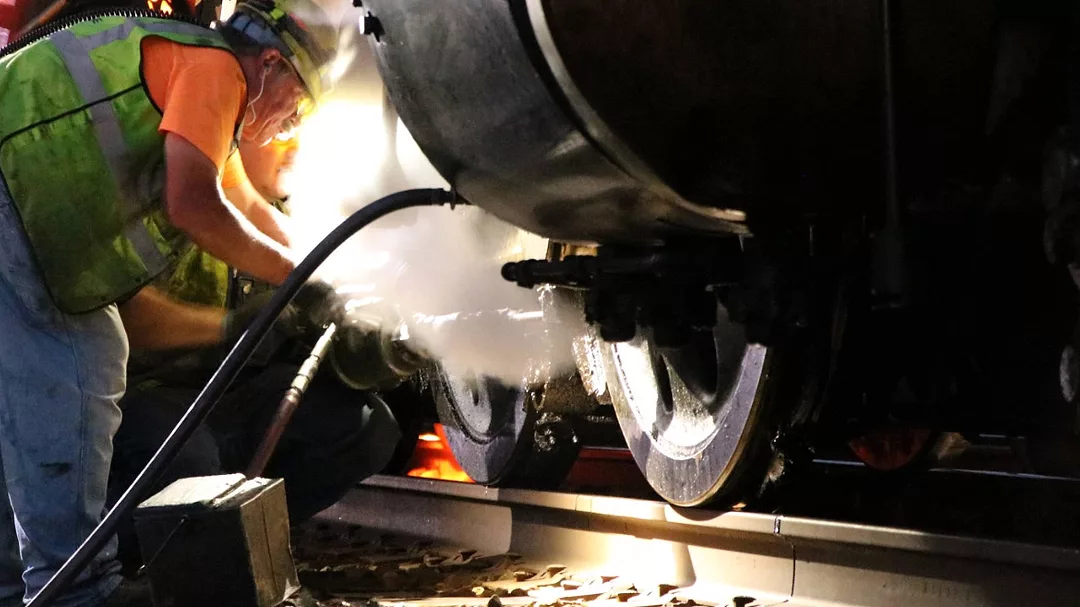
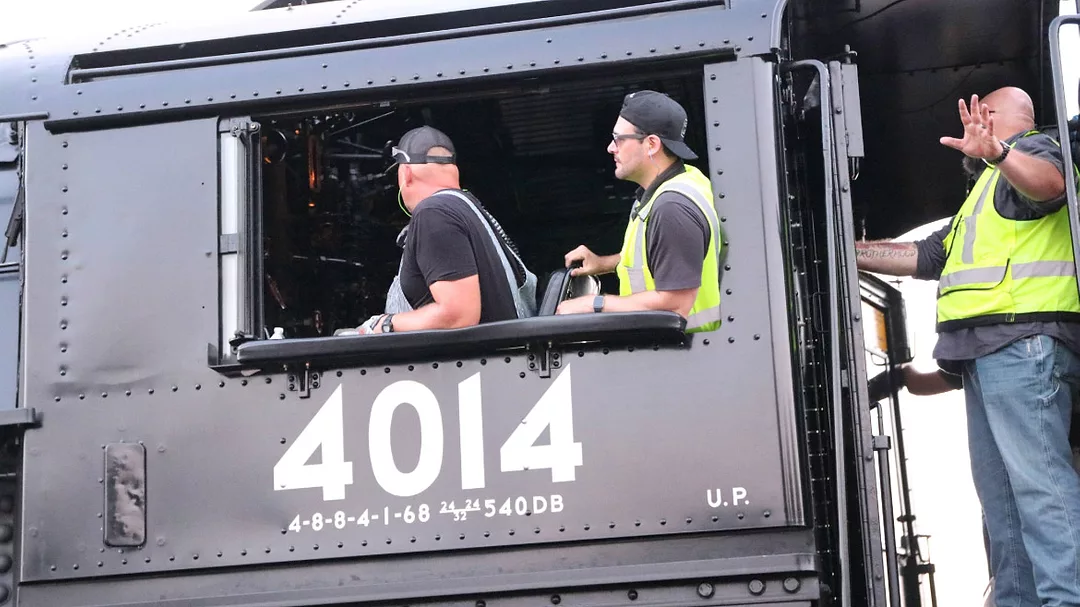
It’s known as “No. 4014,” and it’s the only Big Boy locomotive that’s still running. It also currently holds the undisputed title of “largest and most powerful operating steam locomotive in the world”. Restored over the course of approximately six years, No. 4014 returned to the rails in May of 2019, just in time to celebrate the 150th anniversary of the completion of the first transcontinental railroad.
If you’re a steam fan, there’s a lot to love about this restored giant of superheated steam. The firebox of the fire tube boiler is 235 inches long, and 96 inches wide, and while No. 4014 initially ran on coal, it’s been converted to run on No. 5 fuel oil. The pressure vessel inside this behemoth is 106 inches in diameter, and operates at a pressure of 300 psi. There are 75 fire tubes that are 2.25 inches in diameter, and an additional 184 four-inch fire tubes, all of which are about 22 feet long and single-pass.
The heat and water have over 5,889 square feet of surface contact, with 2,466 square feet of superheating surface. All that steam is driving four cylinders that are each nearly two feet in diameter, with a stroke of 32 inches.
Another interesting feature to note is the way No. 4014 injects makeup water into its boiler. There were no variable-speed, high-efficiency electric pumps back when it was built. However, feedwater still had to be added under pressure. The solution was to use a system that routed pressurized steam through a series of injectors to force makeup water into the boiler as needed, giving us yet another cool thing that steam can do.
Today, No. 4014 is still running strong, only these days it hauls people instead of freight, making excursion runs between selected cities in the American west. It’s difficult to get a ticket to ride on a Big Boy excursion, because it doesn’t make many trips every year. The good news is, though, when it does run, there are scheduled public viewings along the way that allow the general public to get an up-close look at this legendary locomotive. If you’d like to try and buy a ticket, visit the Union Pacific Ticketing website. If you’d like to meet No. 4014 in person, there’s a schedule of stops available at Union Pacific’s Steam Schedule website.
Remember, if you have anything steam-related that needs service or maintenance, or if you’re in the market for a new or rental boiler, WARE is always here to help. Even if it isn’t a historic steam locomotive.
Looking for a reprint of this article?
From high-res PDFs to custom plaques, order your copy today!


