ACHR News
search
Ask ACHR NEWS AI
cart
facebook twitter instagram linkedin youtube
  • Sign In
  • Subscribe
  • Sign Out
  • My Account
ACHR News
  • NEWS
    • Breaking News
    • New HVAC Products
    • Featured Products
    • Manufacturer Reports
    • HVAC Data
    • Legislation
    • ACHR NEWS Centennial
  • RESIDENTIAL
    • Air Conditioners
    • Furnaces
    • Residential Heat Pumps
    • Ductless
    • Residential IAQ
    • Testing, Monitoring, Tools
    • Components & Accessories
  • COMMERCIAL
    • Air Handlers
    • Rooftop Units
    • Chillers and Cooling Towers
    • Commercial Heat Pumps
    • Boilers and Hydronics
    • VRF/Ductless
    • Commercial IAQ
  • REFRIGERATION
    • Refrigerants
    • Refrigerant Regulations
    • Leak Management
  • CONTRACTOR PRO
    • Geothermal
    • Homeowner Study
    • VRF and VRV Ductless
    • Unitary Trends
  • EDUCATION
    • Training and Education
    • Business Management
    • Service and Maintenance
    • Continuing Education
    • Market Research >
      • HVAC Brand Awareness Report
      • VRV, VRF, VRVZ Report
      • Unitary Trends Report
      • Water Heat Professionals Report
    • Webinars
    • Sponsor Insights
    • eProducts Info
    • White Papers
  • EVENTS
    • HVAC Contractor Forum
    • Industry Events and Webinars
  • MEDIA
    • Videos
    • AHR Expo 2025 Videos
    • Podcasts >
      • ACHR News Podcast
      • HARDI Podcasts
      • AHR Expo Podcasts
      • ACCA Podcasts
    • Interactive Spotlights
    • Quizzes
    • eBooks
    • HVAC Talkback
  • HVAC GROUP
    • ACHR NEWS >
      • Current Issue
      • Digital Edition
      • Subscribe
    • Distribution Trends
    • SNIPS NEWS >
      • Join SNIPS NEWS
    • Engineered Systems News >
      • Join ES News
    • HVACR Directory
    • Contests
    • Newsletters
    • Contact
    • Advertise
    • My Account
HVAC ContractingNewsService and MaintenanceHeat PumpsGuest Column

Diagnosing a Heat Pump Defrost Sensor

By Matthew Akins
Defrost Sensor
ICY: The defrost sensor should be open during regular heat pump operation in the heating mode unless the coil is iced or frosted. (Courtesy of Pixabay)
February 19, 2023
✕
Image in modal.

A split system heat pump's defrost sensor is used to detect ice buildup on the heat pump's outdoor coil. When ice builds up on the coil, it reduces the heat pump's ability to transfer heat, which can cause the unit to become less productive. The exact way in which a defrost sensor works can vary (see figure 1.0).
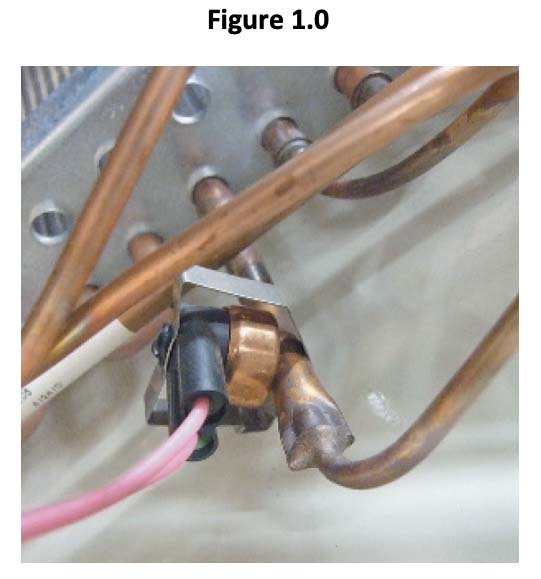
Figure 1.


Overview:

To defrost the heat pump, the defrost control must accomplish four things:

  • Shift the reversing valve from heating to cooling
  • Turn off the outdoor fan
  • Turn on the auxiliary heat
  • Energize the indoor blower motor

The most frequently used method of determining when to initiate a defrost is based on time and temperature. The defrost sensor is mounted on the tubes of the outdoor unit and it's used in combination with a timer for cumulative heat pump run time. The defrost sensor must be closed. The sensor closes when the outdoor coil temperature is cold enough to frost or freeze. Once closed, the defrost control board begins saving accumulated run time for the compressor.

For example, when the coil temperature is below 30°F ±3°F, the defrost thermostat completes a circuit to the defrost board (the sensor closes the circuit). The defrost board will then start timing. A defrost cycle is initiated when the timer reaches the elapsed time programmed by the jumper. However, if the defrost thermostat opens before the timing period is reached, the timer is reset. The system can operate for 30, 60, or 90 minutes with the coil temperature below the defrost thermostat set-point before initiating a defrost cycle. If the defrost thermostat doesn't open, the defrost cycle is terminated after approximately 10 minutes (unless the OEM specifics something different). See figure 2.0 for the timer terminals.
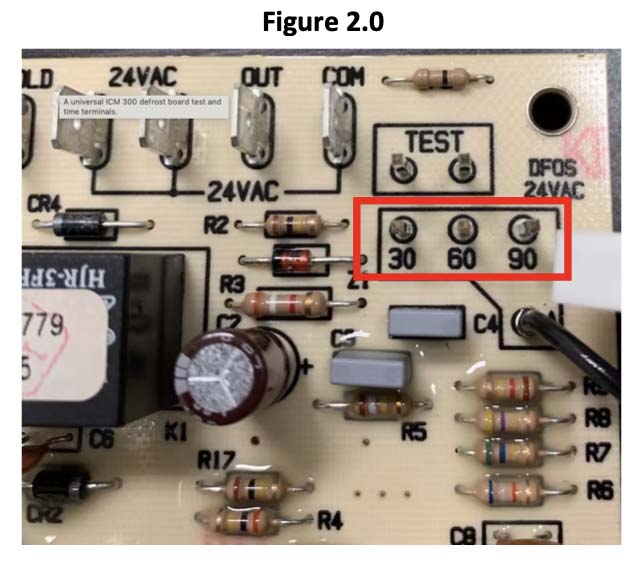
Figure 2.


Defrost Sensor:

Let's go through an example with a defrost sensor. In figure 3.0, this sensor will open on temperature rise and is a single pole and single throw switch. Also, there is a stamp on the sensor (L80-30). That means it's a limit switch; it opens at 80°F and closes at 30°F. So anytime this outdoor coil is 30°F or below, it will close the connections.
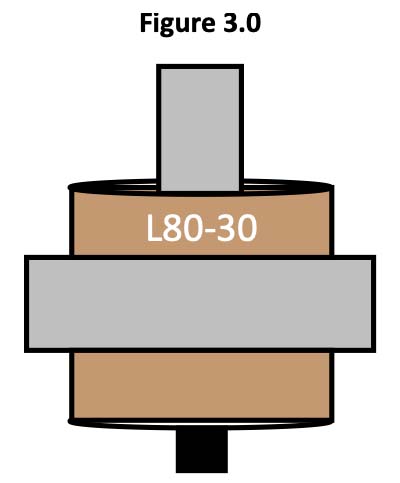
Figure 3.

When heat pumps run in the heating mode, the outdoor coil is about 10°F colder than the ambient air. So, for example, a heat pump that runs at 40 degrees outside will have a much colder outdoor coil. This is to absorb heat from the outside air into the refrigerant and move it to the inside.


Defrost Diagnostic: Control Board:

Let's move on to the defrost sensor diagnostic. There are a few ways to diagnose if the defrost sensor is faulty. If you suspect the defrost sensor is the culprit, there are a few things to test. First, let's ensure the defrost control board works with the defrost sensor. With the power on but not calling, remove the defrost sensor's spade connectors attached to the defrost control board. Set your meter to read volts DC and place one probe on the R (the power coming out of the control board) and the other probe on DFT (keep in each manufacturer may be different). A common reading is anywhere from 5 to 6 volts DC coming out of the defrost control board on the R terminal and into the DFT terminal on the defrost control board. (Figure 4.0). If the OEM has a particular range, always follow the OEMs guidance. For this example, we are reading 5.2 volts DC. If there were no voltage from R to DFT, the defrost control board has likely failed, or another underlying problem exists.
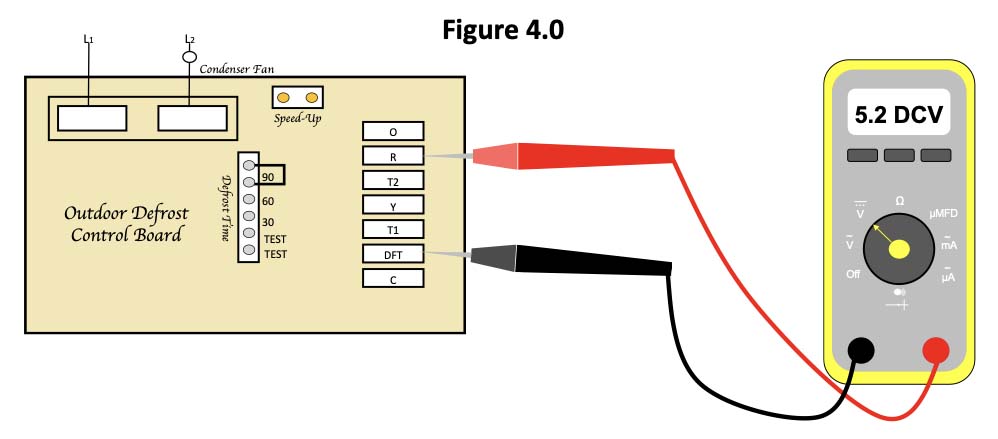
Figure 4.

Here is a sample defrost temperature sensor table (Figure 5.0) from an OEM. If you can locate a similar chart on the particular equipment you are working on, follow that chart.

Looking for quick answers on air conditioning, heating and refrigeration topics? Try Ask ACHR NEWS, our new smart AI search tool. Ask ACHR NEWS →
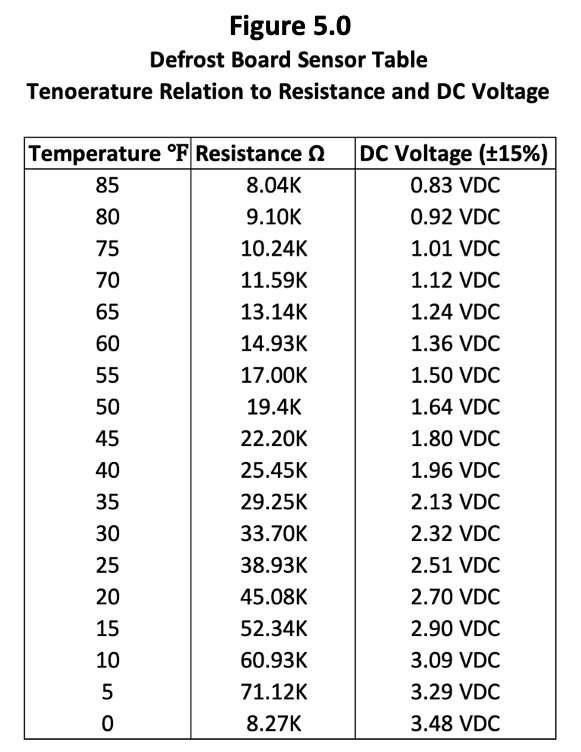
Figure 5.


Defrost Diagnostic: Defrost Sensor:

Next, we will check if the defrost sensor is closing when it should close. Using the specs from this defrost sensor, we know the defrost sensor is supposed to close at 30°F. Let's say the outdoor ambient temperature is 41°F; you will need to lower the defrost sensor's temperature by placing it in cold water. We are trying to test whether the defrost sensor will open when it is supposed to open. In Figure 6.0, we see the defrost sensor in cold water. In figure 6.0, you will notice that the sensor has closed in the cold water, giving a resistance of .6 ohms.
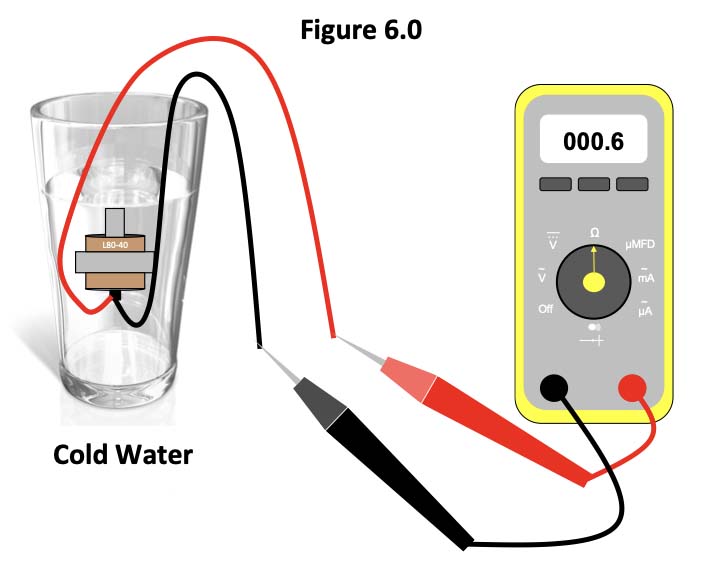
Figure 6.

Moving on, we will check and see if the defrost sensor is opening when it is supposed to open. The concept is similar to putting it in cold water, but this time you will need to heat the defrost sensor with a heat gun, hot water, or some other method. As a caution, I do not recommend using your Oxy-Acetylene torches as this may damage the sensor. You can place the defrost sensor in a glass of hot water to check if the sensor will open. (Figure 7.0). When the defrost sensor opens, you will read 0.L on your meter, letting you know the defrost sensor is open. When the defrost sensor opens, the heat pump should return to its regular operation in heating mode.
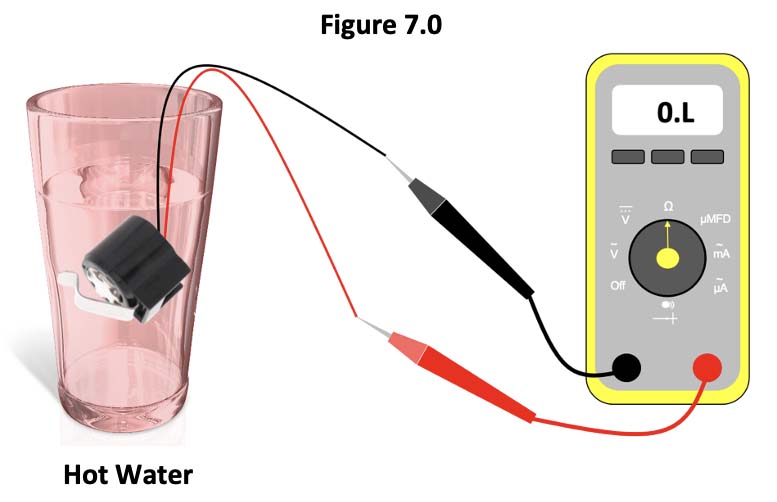
Figure 7.

If you discover that the defrost sensor is receiving the correct DC voltage but is not opening and closing as it should, you will likely have a faulty defrost sensor that should be replaced. When defrosting sensors fail mechanically, they can be stuck open or closed. So first, a complete system evaluation should be performed to ensure there are no other problems and that you have diagnosed the problem correctly the first time.


Defrost Diagnosis:

Since the defrost sensor plays a critical role in heat pump operation in the heating mode, here are a few

symptoms that may indicate the defrost sensor is at fault.

The symptoms of a heat pump with a defective defrost sensor can include the following:

  • Ice buildup on the outdoor coil.
  • The outdoor fan may run constantly or intermittently.
  • The heat pump may take longer than usual to defrost.
  • The heat pump may not reach the desired temperature.
  • The outside unit may make loud noises when running.
  • The heat pump may turn on and off frequently.
  • The heat pump runs continuously without providing any heat.


Summary:

Let's wrap up with a few reminders. The defrost sensor should be open during regular heat pump operation in the heating mode unless the coil is iced or frosted. The defrost sensor should be closed when the heat pump goes into defrost. This will drop out the condenser fan motor and shift the reversing valve into cooling; the blower motor should be operational and turn on the auxiliary heat strips inside to help maintain the temperature while the heat pump is defrosting. Unless the OEM says something different, look for 5-6 volts DC to the defrost sensor from the heat pump's defrost control board.

Take time to diagnose the problem correctly. Spending this time and effort up-front can help reduce callbacks, reduce your company's liability, and increase revenue by completing a system evaluation and providing repair options that will resolve the issue, not simply a band-aid fix. It's a no-brainer! Some technicians are intimidated by heat pumps, but it is critical to understand them to diagnose them accurately and thoroughly.

KEYWORDS: defrost control diagnostics for HVACR maintenance for HVACR temperature control

Share This Story

Looking for a reprint of this article?
From high-res PDFs to custom plaques, order your copy today!


Matthew Akins is manager of HVACR Education for ACCA.

Recommended Content

JOIN TODAY
To unlock your recommendations.

Already have an account? Sign In

  • HVAC-enrollment

    The Trades Are Back: HVACR Programs See Nearly 30% Enrollment Spike

    A new wave of future technicians is entering the pipeline.  
    News
    By: Matt Jachman
  • 2025 Top 40 Under 40

    2025 Top 40 Under 40 HVACR Professionals List

    The 11th annual Top 40 Under 40 list highlights those...
    HVAC Light Commercial Market
    By: Hannah Belloli-Oster
  • LG Ductless Mini-Split Systems

    The 9 Types of Heat Pumps

    As the U.S. moves toward electrification, heat pumps are...
    Heat Pumps
    By: Joanna R. Turpin
Subscription Center
  • Create an Account
  • Start a Subscription
  • Manage My Account
  • Sign Up for Newsletters
  • Visit Customer Service
  • Update Preferences

More Videos

Sponsored Content

Sponsored Content is a special paid section where industry companies provide high quality, objective, non-commercial content around topics of interest to The News audience. All Sponsored Content is supplied by the advertising company and any opinions expressed in this article are those of the author and not necessarily reflect the views of The News or its parent company, BNP Media. Interested in participating in our Sponsored Content section? Contact your local rep!

close
  • Piggy Bank
    Sponsored byWatercress Financial

    Energy Prices, Inflation, and HVAC: What Today’s Homeowners Care About

  • Refrigerated Food
    Sponsored bySolstice Advanced Materials

    R-455A Refrigeration: A Cold Storage Solution for the Future

  • Airex Rooftop Units
    Sponsored byAirex Manufacturing Inc

    Consolidating Roof Penetrations: A Growing Trend in Multifamily HVAC Design

Popular Stories

HVAC-Price-Increase-graphic

HVAC Price Increase List: June 2026

Trump-Section-232.jpg

Trump Reduces Section 232 Tariffs on HVAC Equipment to 15%

R410A-Refrigerant-Cylinder.jpg

Refrigerant Recovery is a Revenue Opportunity

Heat-pump-cutaway.jpg

PFAS Rules and A2L Building Codes Continue to Evolve

Kroger.jpg

Kroger to Spend $100 Million to Reduce Refrigerant Leaks

View The ACHR NEWS
Centennial Anniversary Timeline

The ACHR News Timeline Chart
Submit a Letter
Submit a letter to our editors.

Events

November 6, 2025

Next-Gen Data Center Cooling: HVAC Innovation and Real-World Solutions

On Demand As AI workloads and high-density computing push traditional cooling methods to their limits, the data center industry is accelerating the adoption of next-generation HVAC technologies.

June 17, 2026

Decarbonization Without Disruption

This webinar will explore practical HVAC decarbonization strategies that minimize disruption while maximizing long-term performance and ROI.

View All Submit An Event

Poll

Summer Staff

Are you fully staffed for the summer season?
View Results Poll Archive

Products

BNI Mechanical/Electrical Square Foot Costbook, 2026 Edition

BNI Mechanical/Electrical Square Foot Costbook, 2026 Edition

See More Products
A2L Refrigerants - Free Webinar - May 21, 2026

Related Articles

  • heat pump defrost

    Troubleshooting the Heat Pump Defrost Cycle: A Step-By-Step Guide

    See More
  • Emerson Introduces Universal Heat Pump Defrost Control

    See More
  • heat-pump-defrost.jpg

    Understanding a Defrost Board on a Heat Pump

    See More

Related Products

See More Products
  • A-Heat-Pump-Thats-Not-Delivering-Any-Air-DVD-Cover-218x300.jpg

    A Heat Pump That’s Not Delivering Any Air

  • A-Heat-Pump-That-Won__t-Cool-DVD-Cover-214x300.jpg

    A Heat Pump That Won't Cool

  • HPOIS.png

    Heat Pump Operation, Installation, Service

See More Products

Related Directories

  • BP Porter Inc. (Heat Pump Controls/Thermostats)

    BP Porter Inc., the products of this company BPC-1 Bill Porter Control (a fossil fuel control) and BPC-ODS micro'stat was developed (invented) by Bill Porter, an HVAC technician in early 1994.
  • IGSHPA-International Ground Source Heat Pump Assn.

    IGSHPA is an association of companies, professionals and users dedicated to promoting the science, utility and use of geothermal (ground source) heating and cooling technology.
×

Sign Up. Stay Informed.

The #1 trusted source for the HVACR industry since 1926

SUBSCRIBE
  • RESOURCES
    • Advertise
    • Contact Us
    • Advisory Board
    • Classifieds
    • Submit a Letter
    • Directories
    • Store
  • ACCOUNT CENTER
    • Create an Account
    • Start a Subscription
    • Manage My Account
    • Sign Up for Newsletters
    • Visit Customer Service
    • Update Preferences
  • SERVICES
    • Marketing Services
    • Reprints
    • Market Research
    • List Rental
    • Survey/Respondent Access
  • STAY CONNECTED
    • LinkedIn
    • Facebook
    • Instagram
    • YouTube
    • X (Twitter)
  • PRIVACY
    • PRIVACY POLICY
    • TERMS & CONDITIONS
    • DO NOT SELL MY PERSONAL INFORMATION
    • PRIVACY REQUEST
    • ACCESSIBILITY

Copyright ©2026. All Rights Reserved BNP Media, Inc. and BNP Media II, LLC.

Design, CMS, Hosting & Web Development :: ePublishing