HVAC Upgrades Needed In Many U.S. Schools
Inadequate ventilation in classrooms is of particular concern, due to potential virus spread
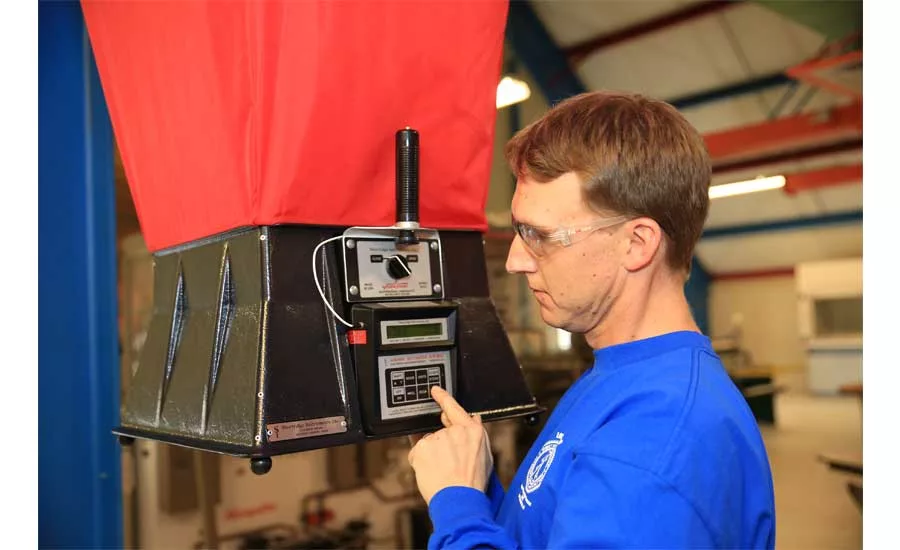
CURRENT CONDITION: Physically verifying and documenting the operating condition of a unit will provide an accurate baseline of the current condition of the HVAC unit. Courtesy of Tiffannie Bond, Imagine Communications
A new report (PDF) from the U.S. Government Accountability Office (GAO) shows that an estimated 54% of public school districts need to update or replace multiple building systems or features in their schools. Improving HVAC systems is at the top of the list, with an estimated 41% of districts needing to update or replace HVAC systems in at least half of their schools, representing about 36,000 schools nationwide that need HVAC updates.
One of the biggest concerns is antiquated ventilation systems in schools, as experts have concluded that better ventilation and filtration are needed to mitigate the transmission of the COVID-19 virus. Fortunately, many states, along with the federal government, are now providing additional funds to schools so that they can update their inadequate HVAC systems, but some say that may not be enough.
Scope of the Problem
Most public schools have ventilation and IAQ problems, which is why Christopher Ruch, director of training at the National Energy Management Institute (NEMI) in Fairfax, Virginia, and a member of ASHRAE’s Epidemic Taskforce for Schools and Universities (PDF), believes that the additional funding for school upgrades may be inadequate. He said that some of these problems include:
- Closed outside air dampers. It is common on an excessively hot or cold day for an untrained technician to close the outside air dampers so the HVAC units can maintain the desired thermal comfort setpoints; however, these dampers can be left closed for years;
- Neglected maintenance on filters, belts, and condensate drainage;
- BAS controls being manipulated over the years and the initial settings are never reinstated; and
- Occupant use changes. A classroom with an outside air supply (OSA) rate designed for 30 students may now be used for 40 students. When these changes happen, the settings should be set accordingly, but they are often forgotten.
Another reason why schools may have HVAC problems is that the installation, equipment start-up, TAB (testing, adjusting, and balancing), and maintenance was not completed by a skilled, trained, and certified technician, said Ruch.
“If a highly efficient unit is purchased but is not installed, adjusted, and maintained correctly, the unit will never achieve full design intent — the highly efficient unit simply wastes energy efficiently and provides inadequate ventilation at the detriment of the occupants,” he said.
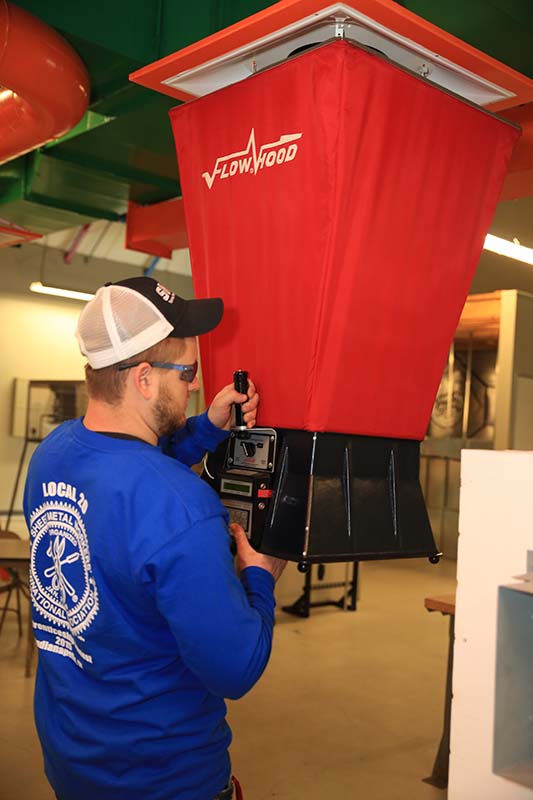
PROPER ASSESSMENT: A proper ventilation verification assessment should be performed before any changes are made to a school’s HVAC system. Courtesy of Tiffannie Bond, Imagine Communications
This scenario is less likely in newly constructed schools, said Duane Davies, CEO of the National Air Balance Co. (NABCO) in Fremont, California, but the problem occurs fairly frequently in remodels of existing schools.
“We have performed testing, adjusting, and balancing (TAB) on many remodels where the existing equipment is left in place and is not a part of the remodel; however, it is a part of the TAB process,” he said. “When this is done, we find dirty filters, disconnected economizers, dirty coils, condensate pans that do not function as designed, and drive assemblies that are worn and in need of replacement.”
These issues, combined with lack of regular maintenance — which is often due to financial pressures — create a very unhealthy environment, said Davies.
Looking for quick answers on air conditioning, heating and refrigeration topics? Try Ask ACHR NEWS, our new smart AI search tool. Ask ACHR NEWS
“In many older schools, there is a band-aid approach to repair,” he said. “This creates a situation where the HVAC system might be operational as far as moving airflow; however, filters are dirty or missing, OSA dampers and/or economizers are not functioning, as well as numerous other deficiencies.”
Instead of a band-aid approach, schools should have a thorough assessment of their HVAC systems performed by a qualified technician. That’s because quick fixes or shortcuts can result in costly unintended consequences that may not achieve the desired goal, said Ruch, including:
- Untrained technicians who simply open the OSA damper 100%, which will not only significantly increase energy usage, but may also result in premature unit failure;
- School officials who think the ventilation rate is adequate for 15 students because the classroom was designed for 30 students. But it is likely that the classroom may not even be providing the OSA rate for 15 students;
- School officials may install MERV 13 filters without physically verifying that the system can handle the increased resistance, which may result in inadequate ventilation and total reduced airflow. Typically, a MERV 13 filter can be applied; however, a skilled, trained, and certified technician must physically evaluate the unit and then select a MERV 13 filter with an acceptable pressure drop.
For these reasons, a proper ventilation verification assessment should be performed before any changes are made to a school’s HVAC system.
Devising a Plan
In their recently published white paper entitled, “Proposed Ventilation and Energy Efficiency Verification/Repair Program for School Reopening,” Ruch and co-author Theresa Pistochini, engineering manager at the University of California Davis Western Cooling Efficiency Center (WCEC), outline the steps schools should take in order to reopen during the COVID-19 crisis. The first step in this process is assessing and repairing existing HVAC systems, followed by installing CO2 sensors in classrooms, providing MERV 13 filtration or better where feasible, then preparing an HVAC assessment report documenting the work performed.
“Physically verifying and documenting the operating condition of the unit with a ventilation verification assessment will provide the design professional with an accurate baseline of the current condition of the HVAC unit,” he said. “This will reduce assumptions made in the design process. Additionally, required repairs, adjustments, and upgrades can be triaged based on the available budget.”
As noted, this is a physical assessment that cannot be completed by merely monitoring the existing BAS, said Ruch. In addition, the assessment should be performed by skilled, trained, and certified technicians.
“Ideally, school districts would have a certified TAB technician on staff with scheduled rotating ventilation verification assessments, but many school districts cannot afford this,” he said. “In these cases, schools should schedule a periodic ventilation verification assessment by a skilled, trained, and certified technician.”
When performing an assessment, Davies stresses that contractors need to perform a complete examination of each piece of mechanical equipment to determine if the unit is operating as intended or if deficiencies are present. This testing includes determining total airflow, OSA, coil performance, demand control ventilation, filter installation, and CO2 monitoring. Only then can a determination be made about possible upgrades and repairs, which will vary depending on the school itself.
“We see many schools in rural areas that were built in the 1970s that need to be completely replaced, and there are some that have no HVAC at all and rely on radiant heat and operable windows,” he said. “We also see schools in metropolitan areas that were built in the 1970s and 1980s that — due to lack of maintenance — need to be replaced and upgraded to meet today’s code requirements.”
Once the ventilation has been physically verified and the necessary repairs completed, CO2 sensors should be installed in classrooms in order to continually monitor the space for adequate ventilation, said Ruch. If there is an unexpected ventilation malfunction, the CO2 sensor would then alert occupants about the problem.
“Without the CO2 sensor, which is a dynamic measurement, ventilation failures can go unnoticed for years until the ventilation system is again verified by a skilled, trained, and certified technician,” he said.
The white paper cited earlier states that MERV 13 or better filtration should also be installed in schools wherever possible. This is consistent with the recommendations of the ASHRAE Guidance for Reopening Schools and Universities. If MERV 13 filters cannot be used without adversely impacting equipment, then the highest MERV rated filter should be installed.
Poor ventilation in schools is an age-old problem that pre-dates the current COVID-19 crisis. Many classrooms did not have HVAC units operating at the minimum required ventilation rates even before the pandemic, said Ruch.
“The benefits of adequate ventilation, including reduced absenteeism, improved cognitive retention, and improved productivity have been well documented in multiple publications (see sidebar),” he said. “This issue needs to be addressed regardless of the COVID-19 pandemic.”
Many California Classrooms Lack Sufficient Ventilation
In a recent study from Lawrence Berkeley National Laboratory and University of California-Davis, researchers concluded that ventilation rates in California classrooms are often below the minimum rates required by building standards. Here are some of the findings from the report:
- Previous research has shown that under-ventilation of classrooms is common and negatively impacts student health and learning. To advance understanding of contributing factors, this study visited 104 classrooms from 11 schools that had recently been retrofitted with new HVAC units. CO2 concentration, room and supply air temperature and relative humidity, and door opening were measured for four weeks in each classroom.
- Field inspections identified HVAC equipment, fan control, and/or filter maintenance problems in 51% of the studied classrooms. Across 94 classrooms with valid data, average CO2 concentrations measured during school hours had a mean of 895 ppm and a standard deviation (SD) of 263 ppm. Ventilation rates (VRs), estimated using the daily maximum 15-min CO2 in each classroom, had a mean of 5.2 L/s-person and a SD of 2.0 L/s-person across 94 classrooms. Classrooms with economizers, with or without demand control ventilation (DCV), tended to have lower mean CO2.
- Improperly selected equipment, lack of commissioning, incorrect fan control settings, and maintenance issues (heavily loaded filters) were all associated with underventilation in classrooms. Many classrooms in this sample were frequently too warm to support learning. There were 23 out of 103 classrooms that had indoor air temperature above 25.6°C for more than 20% of the school hours.
- Better oversight on HVAC system installation and commissioning are needed to ensure adequate classroom ventilation. Periodic testing of ventilation systems and/or continuous real-time CO2 monitoring (either as stand-alone monitors or incorporated into thermostats) is recommended to detect and correct ventilation problems.
Looking for a reprint of this article?
From high-res PDFs to custom plaques, order your copy today!