HVAC System Life Cycles: How Long Should They Really Last?
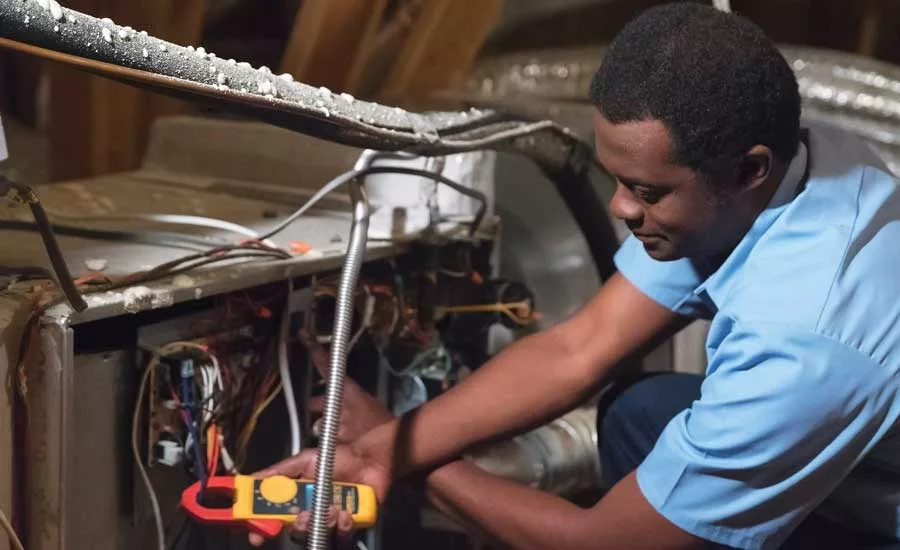
LIFELINE: Technology can help lengthen life cycles by monitoring how a system functions and notifying the contractor when an issue arises, said Tim Brizendine, director, product management – cooling products at Lennox.

KEEPING UP WITH THE TIMES: For some homeowners, particularly those who are significantly modernizing old equipment, the tuneups that today’s systems require can come as a surprise.
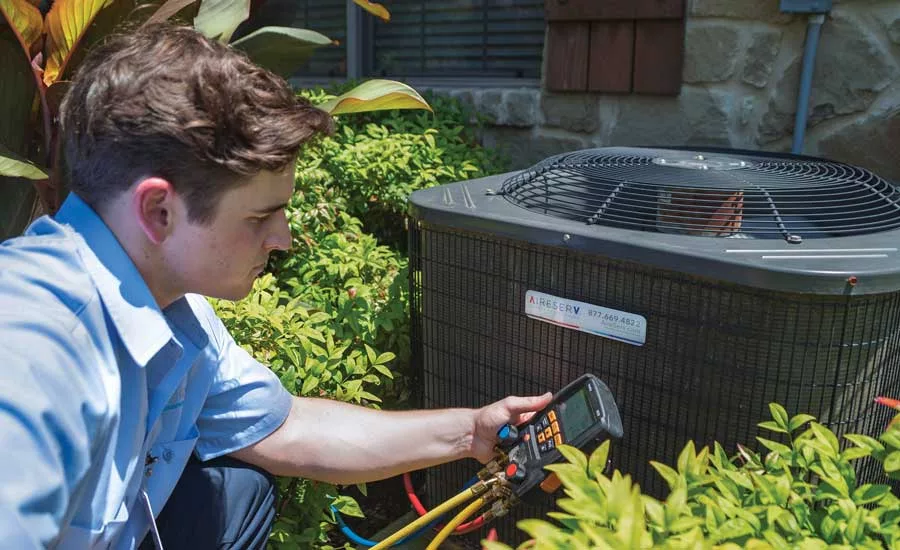
WEAR OUT OR RUST OUT: Indoor and outdoor climate plays a role in life expectancy. Systems in coastal areas experience more corrosion. In cold climates, furnaces get more wear and tear; in a hot climates, it’s the a/c or heat pump.
Is it time to repair? Or time to replace? The answer remains one of the HVAC industry’s most long-standing questions.
“Back 20 to 30 years ago, everything was straightforward,” said Scott Jay, franchise owner at Aire Serv, a Neighborly company, located in Branson and Springfield, Missouri. “The controls were very simple, and there was a lot fewer moving parts to fail. Therefore, they could withstand a lot more abuse, such as dirty filters, plant overgrowth on the outside condensers, and low airflow issues like dirty blower wheels, dirty coils, and undersized duct work.”
Today, systems are just more complicated. As technologies advance and systems become more intricate, their life cycle, too, is evolving. Some manufacturers attribute it more to external forces than the systems themselves — although as Tye Leishman, president at Tempco Heating and Cooling Specialists in Elgin, Illinois, noted, “If they have a 40-year-old oil furnace, then most likely, they’re not going to get the longevity out of a new system, compared to that.”
Regardless of cause, the burden of selling systems that might not be as set-it-and-forget-it as they were in the past falls squarely on contractors’ shoulders.
OUTSIDE FORCES FACTOR IN
Tim Brizendine, director, product management – cooling products at Lennox, said it’s not something within the systems themselves that causes a shorter life cycle; it’s today’s environment.
“As indoor environments are changing, we’re getting new ‘stressors’ that are attacking the HVAC systems: chemicals from things that you use in your house for cleaning — some of the newer [household] cleaning supplies have a different makeup than the older stuff did — and also outgas from new materials: carpets, wood, especially things that are processed in a plant,” he said.
Those chemicals are causing the indoor coils — particularly the copper — to wear out more quickly.
Looking for quick answers on air conditioning, heating and refrigeration topics? Try Ask ACHR NEWS, our new smart AI search tool. Ask ACHR NEWS
“On top of that, as our building practices get better and we do great things to make the house very tight and energy efficient, there’s less ‘air’ that comes in and dilutes that — you get a buildup in the house, and it doesn’t leave,” Brizendine said.
He put typical system life expectancy at 12 to 15 years, adding that outdoor as well as indoor environment does play a role. People in coastal areas, for example, can expect more corrosion. In a cold climate, the furnace will get more wear and tear, and in a hot climate, it’s the heat pump or a/c.
“In our Missouri markets, we have a lot of heat pump systems,” said Jay. “Heat pump condensers work all year long, versus air conditioning systems, which may only run for five to eight months out of the year. So, we see that comfort systems tend to last anywhere from 12 to 15 years in our area, although we do see a little longer life expectancy out of the furnace and air conditioner combinations that can last somewhere between 15 to 20 years.”
UPGRADES
Manufacturers like Lennox are taking steps to help their new systems withstand today’s environment.
“In particular, indoor coils,” said Brizendine. “Most everybody in the industry is looking at a change in design, either a material change or coatings, to make them more resistant to some of the chemicals that are attacking those things in houses, so we can get life expectancy up there.”
Technology, too, can help lengthen life cycles, although it’s “sort of a double-edged sword,” according to Brizendine.
“As we get into more efficient products, we’re typically bringing in more electronics and controls,” he continued. “Now we’ve got more intelligence and the ability to monitor how a system functions, to ensure that, one, everything’s working correctly and providing the comfort and efficiency the homeowner needs … and also lets you look and see if the components are working correctly. If they start going outside the bounds of operation they should have, it can notify someone to keep the system working properly and give it a longer life.
For some homeowners, particularly those who are significantly modernizing old equipment, the tuneups that today’s systems require, in order to reap those benefits, can come as a surprise. Leishman, whose company serves a 20,000-person community on the west coast of British Columbia, Canada, sees that often.
“Natural gas came to our community in 1992, so our market is predominantly still original systems from ’92 to ’95, when that push came through,” he said.
That was 26 years ago.
“Typically when we see those, the heat exchangers are cracked,” Leishman added. “Then you have old oil furnaces. They are 50 years old and still working as designed 50 years ago; they’re just spending eight times the cost on fuel as they need to.”
As a result, Tempco has been doing a fair number of oil to gas changeovers. Sometimes the new systems’ need for periodic maintenance does freak people out.
“They may have been in the home 40 years and had the same oil furnace,” he said. “Suddenly, you put a high-efficiency furnace in; a couple years later, it has a couple hiccups … and now they think they’ve got a system that isn’t as dependable.”
Scott said it’s a tradeoff.
“In my opinion, systems seem to be holding out about the same, although I do believe new systems require more maintenance and a little more expense getting there,” he said. “As our comfort systems get more energy efficient, they do seem to have more reliability issues, which leads to more expense for maintaining the units. But when you factor in the savings you get from purchasing a high-efficiency system, along with the longer warranties provided by the manufacturer, I believe our clients still come out way ahead by purchasing new equipment instead of keeping the old, less energy-efficient models.
“I think in today’s age, with technology moving so fast, most people understand that nothing is going to last as long as it did back in the good ole days,” Scott continued. “I think most people would say that their comfort systems will last approximately 15 years today.”
WHAT CONTRACTORS CAN DO
On the contractor’s side, it comes down to customer education, said Brizendine.
“I think, one, you just educate them on the different products and technology and all the benefits new products can provide,” he said. “Two, in particular the heat exchanger … most manufacturers have a pretty lengthy warranty period for when it’s covered, so [contractors] can give the homeowner peace of mind that they can get the length of life they expect.”
The majority of residential systems on the market today have a 10-year limited product warranty, according to Tim Storm, product manager for heat pumps at Trane.
“We do not see a shorter life cycle on systems today that are properly designed, sized, installed, and maintained,” he said. “The only wild card would be the cost to repair versus replace on a high-efficiency system that is out of warranty. A homeowner may opt to replace and upgrade for system efficiency, rather than investing in a 10-plus-year system. The cost of R-22 can certainly factor into this decision on much older systems, due to the high cost.”
When talking to clients, Leishman explains the cost in the context of the investment relative to how long they plan to live in the home. For example, some of his customers are older Vancouver residents who are taking advantage of a hot real estate market — selling their homes, which they bought for a matter of thousands 50 years ago, for $2.5 million — then moving to Leishman’s community.
“In that case, if the furnace [at their new home] is nine, 10 years old, I’d tell them if they don’t replace it now, they’ll be replacing it in the next five to 10 years — so why not invest in high efficiency and get the payback over the years,” he said.
With his clients, system longevity isn’t usually that big of an obstacle, said Jay; most people with outdated systems understand that technology has advanced so much that they should replace it rather than attempt repairs.
“We usually start talking about replacement when they start having reliability issues outside of warranty,” he said. “That doesn’t mean we are telling them to replace their 10- or 11-year-old system, but we are starting to try to manage their expectations and educate them on the average life expectancy of their comfort system.”
Jay gets more pushback on the price — especially when it’s a new client who has had another company complete an expensive repair in the past and now has something else wrong with their system.
“Then, we deal with frustration and anger,” he said. “Most of the time, we hear: ‘So why didn’t the other company tell me that before I spent all this money?’”
Leishman said he does occasionally run across customers who insist on fixing a 50-year-old system that should have been replaced about 20 years ago.
“You’ve got an old oil furnace, and they say, ‘Listen, we just want you to fix it, I’m happy paying exorbitant prices,’ or whatever … situations where we say, ‘It’s totally crazy to do up this furnace,’” he said.
In that case, he has the customer sign a document stating Tempco strongly advises them not to invest any more money in the system, and if they do choose to, there’s no warranty.
“Basically, we pass the onus along to the homeowner, so a month from now … we’re not having to come back for free,” Leishman said. “We’re better off just to say we’re going to pass on this, because we know they’re going to be unhappy with us, and that’s the last thing we want.”
Most times, though, people are understanding of both the need for updates and the care that today’s systems require.
“We’ve had some significant systems, especially ductless systems, that had premature coil failures, where we’ve absorbed the cost as a company because I don’t feel it’s fair they need to pay, even if we’re not getting reimbursed,” Leishman said. “I have them understand that we’re going to take care of them. I think the reality is, as I tell every homeowner, if there’s a mechanical system, there’s going to be problems that will crop up unexpectedly, whether it’s a ductless or gas furnace or an air source heat pump. I say with confidence to them, this doesn’t happen all the time, and if it did happen all the time, we’d be out of business.
“It doesn’t matter what we’re installing as far as equipment brand,” he added. “It’s really our brand installing the equipment, at the end of the day.”
Publication date: 1/9/2019
Want more HVAC industry news and information? Join The NEWS on Facebook, Twitter, and LinkedIn today!
Looking for a reprint of this article?
From high-res PDFs to custom plaques, order your copy today!