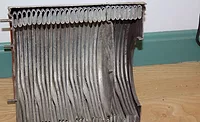
Furnaces Must be Modified for High-altitude Applications
Proper sizing, installation key to optimal performance
ALTITUDE ADJUSTMENT: Many HVAC professionals do not know that gas-fired furnaces installed at higher altitudes usually require modifications to operate as designed.
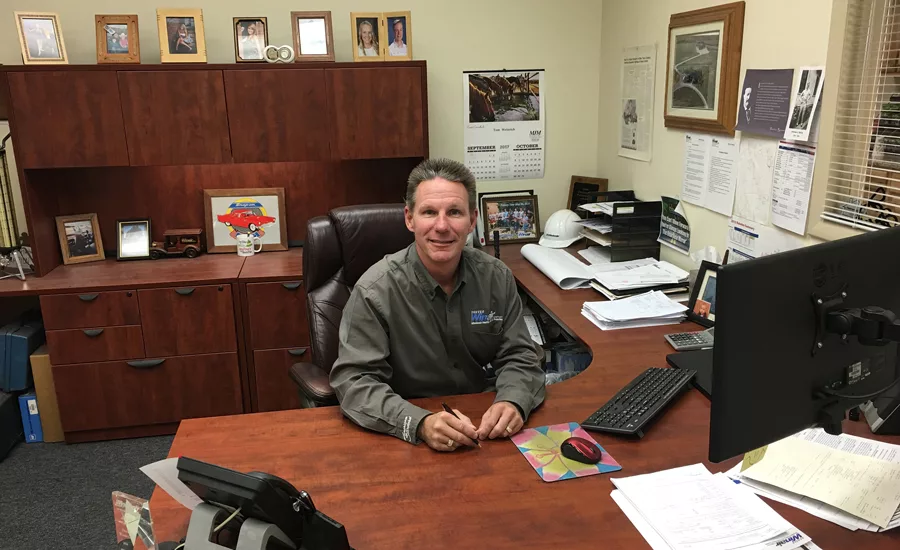
NOT RECOGNIZED: Tom Weinrich, president/owner, Denver Winair Co., Denver, said those living in mountainous regions are a forgotten area of HVAC, as manufacturers don’t make high-altitude furnaces.
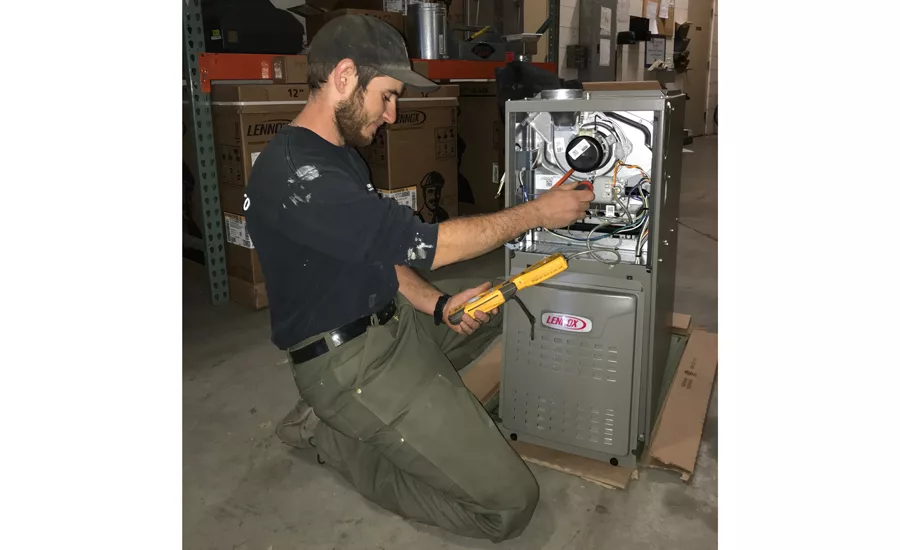
SHOP SWAP: Installer Chad Eastman, Boyer Heating and Cooling, makes high-altitude modifications to a furnace in the shop before heading out on the job.
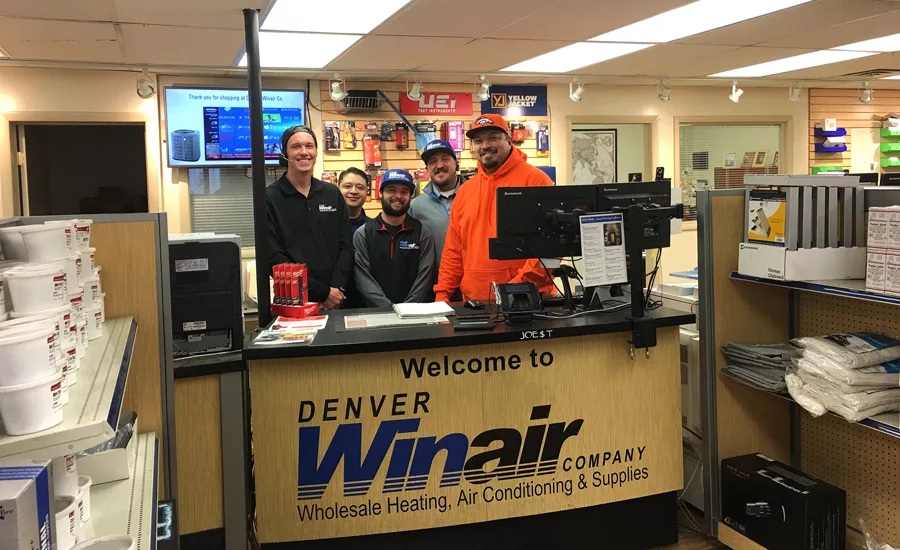
ADD-ONS: At Denver WinAir, every furnace is sold with a high-altitude kit, even if the contractor didn’t order it.
MOUNTAIN INSTALL: Ron Boyer, president, Boyer Heating and Cooling, Flagstaff, Arizona, installs furnaces in areas that range in elevation between 5,000-9,000 feet.
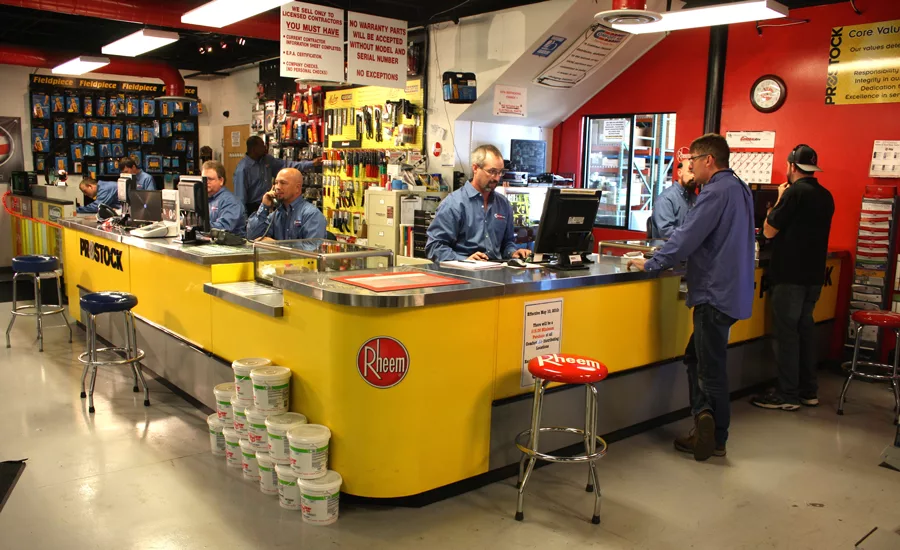
INCORRECT DERATE: One of the most common errors seen at Comfort Air Distributing, Centennial, Colorado, relates to elevation derate being done incorrectly or not at all, which results in poor indoor comfort levels.
A very small number of Americans live in mountainous regions, which is why many HVAC professionals may not even know that gas-fired furnaces installed at higher altitudes usually require modifications to operate as designed. That has long frustrated Tom Weinrich, president and owner, Denver Winair Co., Denver.
“We are the forgotten area of HVAC,” he said. “Because we’re such a small percentage of the total population, manufacturers don’t make furnaces specifically for us.”
Manufacturers do, however, provide field-installed high-altitude kits, usually consisting of orifices and pressure switches that modify the furnace, so it can operate effectively in environments with less oxygen. Besides utilizing this kit, contractors need to pay particular attention to the proper sizing and installation of furnaces at high altitudes, or homeowners will likely be disappointed in their performance.
MODIFICATIONS
Technically, any furnace installed above 2,000 feet of elevation could be considered for high-altitude modifications, because oxygen levels start to decrease at that height, which affects the air/fuel ratio, said Ryan Teschner, product manager of furnaces, Rheem Mfg. Co.
“Since gas appliances need oxygen to operate safely, a derate must occur manually (with a high-altitude kit) when the natural one is simply not sufficient,” he said.
Factory-installed orifices are calculated and sized based on a sea level natural gas heating value of 1,100 Btu per cubic foot, so at higher elevations, contractors should use a high-altitude kit to change the input rate and orifices, said Teschner.
“Input rates, for the most part, should be adjusted due to decreased oxygen levels depending on the heating value,” he said. “However, at certain heating values and altitudes, production orifices can be used since gas appliances have about a 1.6 percent natural derate.”
Looking for quick answers on air conditioning, heating and refrigeration topics? Try Ask ACHR NEWS, our new smart AI search tool. Ask ACHR NEWS
Every manufacturer that offers high-altitude furnaces has specific requirements for the installation of their equipment, which is why contractors need to follow their instructions carefully. At Rheem, for example, a high-altitude kit is required for furnaces installed at an elevation of 5,000-8,000 feet above sea level, but the derate value depends on the furnace model.
Most furnaces require a 4 percent derate per 1,000 feet of elevation when installed above 2,000 feet of elevation, including Rheem’s Classic Plus, Classic, and Prestige (R96V) furnaces, said Teschner.
“However, Rheem’s R97V and R98V furnaces require only a 2 percent reduction in rate [input capacity in Btu] per each 1,000 feet of elevation above sea level when installed at elevations of 2,000 feet or more,” he said. “For example, a R97V furnace installed at 5,000 feet above sea level would need to have the input rate reduced to 10 percent less than the input Btu listed on the nameplate.”
In addition, some premium Rheem furnaces may require a model data card, which adjusts the airflow for optimal heating rise, because at higher altitudes, when combined with derate, the heating rise range could be slightly lower. The model data card decreases the airflow and allows for the best comfort level, said Teschner.
Ron Thingvold, service coordinator, Comfort Air Distributing Inc., and a Rheem distributor, noted in his service area, which includes Colorado and Wyoming, the 97- and 98-percent furnace models require orifices over 2,000 feet in elevation and model data cards above 5,000 feet for proper operation.
“As for pressure switch changes, for the standard furnaces we sell here, those are not needed up to 10,000 feet above sea level,” he said.
At Goodman Mfg. Co., furnaces can be installed up to 7,000 feet in the U.S. without modification, said Shiblee Noman, marketing product planning manager, Goodman.
“In general, an installation over 7,000 feet requires an orifice and pressure switch change because of the lower barometric pressure at high altitude,” he said. “Contractors should contact their local gas supplier about the derate value to determine if an orifice change is needed.”
Some utilities derate the gas at high altitude, noted Noman, and, in that case, a pressure switch change is also necessary.
“The idea is for the furnace to have the same input rate at higher altitude as it does at sea level to avoid overfired issues like high CO [carbon monoxide] and lower efficiency,” he added.
MAKING THE CHANGE
Ron Boyer, president, Boyer Heating and Cooling, Flagstaff, Arizona, and a Lennox dealer, usually installs furnaces anywhere between 5,000 and 9,000 feet, and he has found that most equipment does not need any modifications until about 5,000 feet.
“When we get over 5,000 feet, we have to derate the furnace to account for less oxygen at our altitude,” he said. “Depending on the equipment, that usually involves a combination of changing the pressure switches and putting in different orifices.”
Occasionally, a customer has a home located above 9,000 feet, and, at that altitude, there is a second set of pressure switches that needs to be changed out as well, said Boyer. Regardless of the elevation at which the furnace is being installed, he has found it to be most effective to make the high-altitude modifications in the shop before heading out on the job. Sometimes those changes need to be made in the field, though, especially when a previous contractor did not install a high-altitude kit.
“We get contractors up here from Phoenix, and they don’t realize the equipment needs to be derated,” said Boyer. “If the modifications aren’t made for our altitude, you get a real sooty flame because the gas/air mixture is running too rich. In condensing furnaces, it can soot up enough that it will block the secondary heat exchanger in the furnace, which will eventually shut off the operation because the condensate won’t drain.”
As an American Standard distributor, Weinrich has also come across contractors who do not know that furnaces need to be modified at higher altitudes.
“That’s why every furnace that leaves our door goes with a high-altitude kit,” he said. “The contractor doesn’t even order it — our sales team adds it right onto the ticket without asking. Some do ask what the extra box included with the order is for. We explain why it’s necessary, and they understand.”
Unfortunately, sometimes that extra box does not make it to the installation site, where the furnace is then installed without the necessary modifications being made.
“It usually happens with new construction,” said Weinrich. “Sometimes the furnace goes to the shop before it goes to the job site, and the additional box doesn’t make it. Or, it makes it there, and the installer just doesn’t take the time to put it in. Then, when we get a cold snap, we’ll have that rash of calls from customers saying their furnaces won’t work.”
SIZING AND INSTALLATION
Contractors also need to be aware that sizing a furnace at a high altitude is very different from sizing one at sea level. That’s because, as elevation increases, decreasing air density reduces the amount of oxygen per cubic foot of air when compared to a cubic foot of air at sea level, explained Thingvold.
“This reduction in air density also affects the fuel, reducing the number of methane molecules in each cubic foot of natural gas, which reduces the ability of a furnace to produce heat,” he said.
That means a furnace in a high-altitude home will need to be larger than the same size home at sea level in order to meet heating demand. For example, a 100,000 Btuh induced-draft, fixed-input furnace at sea level will input approximately 100 cubic feet/hour of natural gas with a heat content of roughly 1,000 Btu/cubic foot, said Thingvold.
“If that same furnace is installed at 5,000 feet, the input will still be 100 cubic feet/hour; however, due to the reduced air/fuel density, the input capacity of that furnace is reduced to roughly 80,000 Btuh with a derate factor of 4 percent per thousand feet of elevation,” he explained.
Using the same input rate of 100 cubic feet/hour, an 80-percent efficient furnace will have an output heating capacity of 64,000 Btuh, while a 95-percent efficient furnace will have an output heating capacity of 76,000 Btuh, said Thingvold.
“Higher efficiency furnaces have better heating capacities than their 80-percent counterparts, which is why we typically recommend higher efficiency furnaces for high-altitude applications,” he said.
Of course, conducting a proper heat loss calculation using ACCA Manual J is an excellent place to start before selecting any equipment.
“Be sure to select equipment that will meet the heating load requirement when derated for efficiency and elevation,” said Thingvold. “One of the most common errors that we see relates to elevation derate being done incorrectly, or not at all, resulting in poor indoor comfort levels at design conditions.”
Besides sizing, the installation of high-efficiency furnaces is also different in high-altitude locations because the vent system needs to be larger in order to compensate for lower air density.
“In a standard installation at sea level, you can usually use 2-inch PVC [polyvinyl chloride] to go 50 feet with four elbows,” said Weinrich. “You can’t do that at a higher elevation; at our altitude, we need to increase that PVC vent size to 3 inches to achieve that same 50 feet with four elbows. Even though the furnace has a 2-inch outlet, we recommend increasing that to 3 inches.”
While sizing and installing equipment at a high altitude can present some challenges, if done correctly, the furnace should experience a long and efficient operating life, said Thingvold.
“We may need larger furnaces to meet our heating demand due to air/fuel density derating, but we still see expected efficiency and longevity from our high-altitude projects,” he said. “It is common to have these systems operating very efficiently for many decades.”
Publication date: 11/27/2017
Looking for a reprint of this article?
From high-res PDFs to custom plaques, order your copy today!