ACHR News
search
Ask ACHR NEWS AI
cart
facebook twitter instagram linkedin youtube
  • Sign In
  • Subscribe
  • Sign Out
  • My Account
ACHR News
  • NEWS
    • Breaking News
    • New HVAC Products
    • Featured Products
    • Manufacturer Reports
    • HVAC Data
    • Legislation
    • ACHR NEWS Centennial
  • RESIDENTIAL
    • Air Conditioners
    • Furnaces
    • Residential Heat Pumps
    • Ductless
    • Residential IAQ
    • Testing, Monitoring, Tools
    • Components & Accessories
  • COMMERCIAL
    • Air Handlers
    • Rooftop Units
    • Chillers and Cooling Towers
    • Commercial Heat Pumps
    • Boilers and Hydronics
    • VRF/Ductless
    • Commercial IAQ
  • REFRIGERATION
    • Refrigerants
    • Refrigerant Regulations
    • Leak Management
  • CONTRACTOR PRO
    • Geothermal
    • Homeowner Study
    • VRF and VRV Ductless
    • Unitary Trends
  • EDUCATION
    • Training and Education
    • Business Management
    • Service and Maintenance
    • Continuing Education
    • Market Research >
      • HVAC Brand Awareness Report
      • VRV, VRF, VRVZ Report
      • Unitary Trends Report
      • Water Heat Professionals Report
    • Webinars
    • Sponsor Insights
    • eProducts Info
    • White Papers
  • EVENTS
    • HVAC Contractor Forum
    • Industry Events and Webinars
  • MEDIA
    • Videos
    • AHR Expo 2025 Videos
    • Podcasts >
      • ACHR News Podcast
      • HARDI Podcasts
      • AHR Expo Podcasts
      • ACCA Podcasts
    • Interactive Spotlights
    • Quizzes
    • eBooks
    • HVAC Talkback
  • HVAC GROUP
    • ACHR NEWS >
      • Current Issue
      • Digital Edition
      • Subscribe
    • Distribution Trends
    • SNIPS NEWS >
      • Join SNIPS NEWS
    • Engineered Systems News >
      • Join ES News
    • HVACR Directory
    • Contests
    • Newsletters
    • Contact
    • Advertise
    • My Account
HVAC Residential MarketHVAC Light Commercial MarketHVAC Commercial Market

The Scoop on Branch Duct Takeoffs

How to overcome the most common problems
By David Richardson
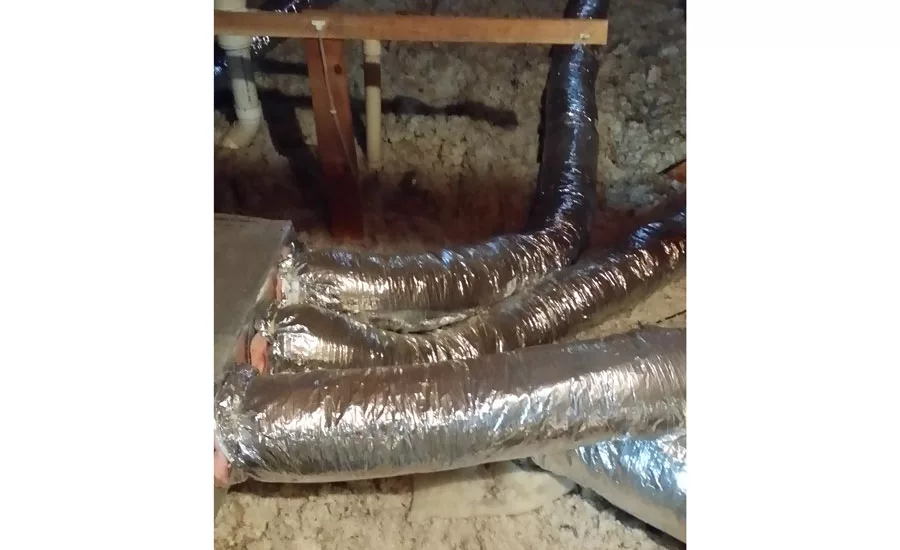
duct takeoffs

AIR TRAFFIC CONTROL: Multiple takeoffs in a row have a difficult time properly distributing the correct amount of airflow.
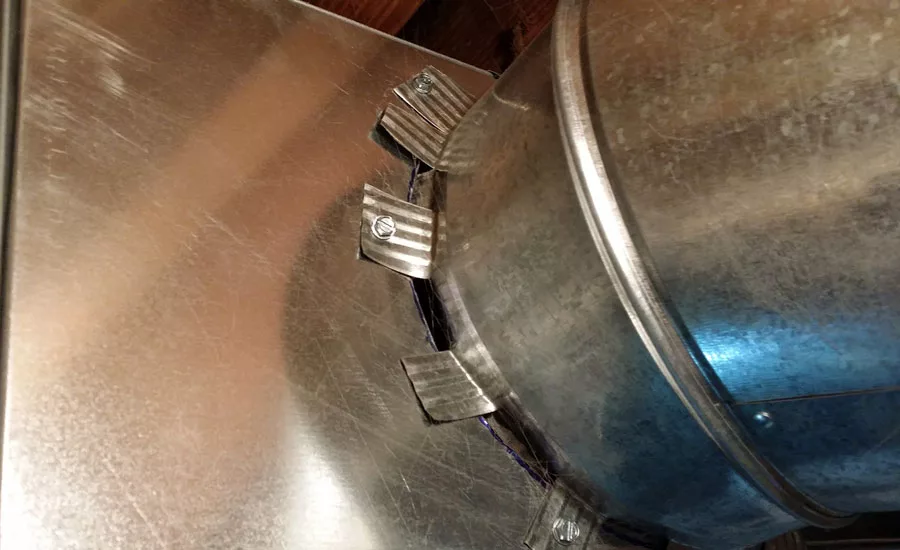
elbow takeoff

PREPARE FOR A SMOOTH TAKEOFF: A practice that may hinder proper airflow is the use of an elbow as a takeoff.

duct takeoffs
elbow takeoff
April 24, 2017

A few months ago, I wrote a Duct Dynasty article on the ideal duct system. The most frequent comments and questions I received about this article were regarding branch takeoffs. So, I thought it would be fun to take a deeper look at branch duct takeoffs and how to overcome some of the most common problems associated with them.

AN AIRFLOW PRINCIPLE TO REMEMBER

As air moves from a supply plenum or main duct into a takeoff it changes direction. Airflow has a hard time making turns at high rates of speed, just as we would driving down the interstate. When we leave the interstate, the exit ramp is hopefully a gradual and smooth transition, since we’re moving really fast.

With this in mind, let’s think of the supply plenum or main trunk of a duct system as a fast-moving interstate with branch duct takeoffs serving as off-ramps. Do your duct system installations resemble interstates with exit ramps or windy country roads with small driveways?

Today, many duct systems would cause major traffic accidents or missed turns if they were roads. Just as we can’t make 90-degree turns in our vehicles going 70 mph, we can’t expect air to make 90-degree turns in similar conditions. As you choose branch takeoffs, remember this concept. 

DIFFERENT TYPES OF TAKEOFFS

Branch takeoffs should transfer air from the main trunk of a duct system to individual branch runs as efficiently as possible. The easier it is for them to accomplish this, the greater your chances for delivering the proper amount of airflow to a room.

There are various styles and shapes of takeoffs commonly used in duct system installations. As we preview each type of takeoff, consider the pros and cons of each with regard to their impact on airflow.

ROUND TAKEOFFS

This is the most common branch takeoff many of us encounter. Round takeoffs range from those using scrap sheet metal pipe with tabs cut on one end to those using a traditional tap-in side collar or sheet metal elbow. The one thing they all have in common is the opening mounted to the duct is also the same size as the branch duct it feeds.

Looking for quick answers on air conditioning, heating and refrigeration topics? Try Ask ACHR NEWS, our new smart AI search tool. Ask ACHR NEWS →

Round takeoffs are the most cost-effective of all branch takeoffs. While they do work, there may be an airflow penalty to deal with when using them. In some scenarios, these fittings can cause a properly sized branch duct to function like one much smaller in diameter due to the way air enters it. Remember, air doesn’t like to make 90-degree turns.

The next progressions from round takeoffs are conical and square-to-round takeoffs. These provide a mix of both cost-effectiveness and increased airflow performance.

The airflow penalty with these fittings is greatly reduced since the duct side opening is often 25-30 percent larger than the branch duct it is feeding. It’s easier for air to change direction and enter this style of takeoff. If you prefer round, these are a good choice to consider.

DIRECTIONAL TAKEOFFS

Directional takeoffs have some form of a metal scoop or extractor fitting (turning vanes that protrude into the airstream). The idea is to grab air from the duct and direct it into the branch fitting.

While the concept looks great on paper, these fittings can cause more problems than they solve due to their field application. When placed into the airstream, directional takeoffs work great for the first branch duct they are connected to. However, branch ducts downstream suffer.

Think back to the traffic example, if you suddenly block off one lane of traffic all at once, you’ll have a backup. Airflow responds the same way inside a duct system when scoops or extractor fittings are used. It takes some time for traffic to get going again once vehicles move around the lane restriction.

When these takeoffs are staggered in a row, there is no chance for air to straighten back out after the fitting. This results in reduced airflow to the next branch duct in line. These takeoffs do have their place, but you need to understand their limitations.

Daniel Vaughan, an HVAC technician, told me he solved an airflow issue using a scoop takeoff. The original takeoff was a straight collar about 2.5 feet downstream from a ductboard, three-piece, 90-degree elbow with no airflow going into the flexible branch duct.

When he took the flexible duct off the collar, he felt air shooting past the duct opening, not coming through it. With limited space and the right conditions, a scoop takeoff solved the airflow complaint. This small correction gained a customer for life.

RECTANGULAR TAKEOFFS

Whenever possible, the rectangular takeoff is my choice for airflow performance. For round branch ducts, these rectangular-to-round fittings allowed easy air entry due to a substantially oversized duct opening.

When working with rectangular branch ducts, such as those found in commercial applications, a 45-degree rectangular transition fitting that has a 30-40 percent larger opening creates a smooth pathway for air to move into the fitting.

HIGH-EFFICIENCY TAKEOFFS (HETO)

The HETO, or High-efficiency Takeoff, is one I hear wonderful reports on. These takeoffs feature a rectangular-to-round design that allows for easy airflow entry into the fitting with an oversized duct opening.

Additional HETO options include a gasketed flange for duct mounting with a sealed connection, which often contains a preinstalled balancing damper. HETOs are priced on the high-end range for takeoffs but are well worth it for the airflow performance they provide. You get what you pay for, and these fittings are perfect examples of that.

TAKEOFF PLACEMENT MATTERS

You can go through the work of getting the best takeoffs our industry has to offer and still have issues if you don’t plan their placement on the duct system. Poor placement is one of the top reasons some registers get very little airflow, even though the duct may be sized and installed correctly.

My colleague John Puryear teaches the simple “2 Foot Rule” for takeoff placement in his classes. When there is a change in air direction in a duct, it takes roughly 24 inches for airflow to restore its pattern. Because of this, John recommends keeping takeoffs 24 inches away from any turns, transitions, or the end cap.

MORE THAN DUCT FITTINGS

I hope a look at this important duct accessory changes your point of view regarding them. One of the motivating factors among many professionals when selecting takeoffs is cost.

Instead of selling sheet metal duct fittings to your customers, start selling what they achieve. You’ll be surprised how many customers upgrade in the name of comfort.   

Publication date: 4/24/2017

Want more HVAC industry news and information? Join The NEWS on Facebook, Twitter, and LinkedIn today!

KEYWORDS: airflow management Duct Dynasty ductwork

Share This Story

Looking for a reprint of this article?
From high-res PDFs to custom plaques, order your copy today!


David richardson
David Richardson serves the HVAC industry as Vice President of Training for National Comfort Institute, Inc. (NCI). NCI specializes in training focused on improving, measuring, and verifying HVAC and Building Performance. If you’re an HVAC contractor or technician interested in learning more about building science applied to HVAC, contact David at ncilink.com/ContactMe.

Recommended Content

JOIN TODAY
To unlock your recommendations.

Already have an account? Sign In

  • HVAC-enrollment

    The Trades Are Back: HVACR Programs See Nearly 30% Enrollment Spike

    A new wave of future technicians is entering the pipeline.  
    News
    By: Matt Jachman
  • 2025 Top 40 Under 40

    2025 Top 40 Under 40 HVACR Professionals List

    The 11th annual Top 40 Under 40 list highlights those...
    News
    By: Hannah Belloli-Oster
  • LG Ductless Mini-Split Systems

    The 9 Types of Heat Pumps

    As the U.S. moves toward electrification, heat pumps are...
    Heat Pumps
    By: Joanna R. Turpin
Subscription Center
  • Create an Account
  • Start a Subscription
  • Manage My Account
  • Sign Up for Newsletters
  • Visit Customer Service
  • Update Preferences

More Videos

Sponsored Content

Sponsored Content is a special paid section where industry companies provide high quality, objective, non-commercial content around topics of interest to The News audience. All Sponsored Content is supplied by the advertising company and any opinions expressed in this article are those of the author and not necessarily reflect the views of The News or its parent company, BNP Media. Interested in participating in our Sponsored Content section? Contact your local rep!

close
  • An illustration shows a house with a geothermal heating system. Pipes are depicted running underground.
    Sponsored byClimateMaster

    Residential Tax Credits Are Ending, But Demand Continues

  • Piggy Bank
    Sponsored byWatercress Financial

    Energy Prices, Inflation, and HVAC: What Today’s Homeowners Care About

  • Refrigerated Food
    Sponsored bySolstice Advanced Materials

    R-455A Refrigeration: A Cold Storage Solution for the Future

Popular Stories

price-raising-practices.jpg

Rising Costs Force Contractors to Take a Harder Look at Pricing

DOE-sign.jpg

HVAC Groups Support DOE’s Rulemaking to Cut Energy Efficiency Mandates

HARDI lolgo navy

HARDI Distributors' Sales Down Nearly 5% in May

Data-Center-Inspection.jpg

Can HVAC Train Enough Technicians for the Data Center Boom?

New-HVAC-Equipment.jpg

Amended Complaint Filed in HVAC Price-Fixing Lawsuit

View The ACHR NEWS
Centennial Anniversary Timeline

The ACHR News Timeline Chart
Submit a Letter
Submit a letter to our editors.

Events

November 6, 2025

Next-Gen Data Center Cooling: HVAC Innovation and Real-World Solutions

On Demand As AI workloads and high-density computing push traditional cooling methods to their limits, the data center industry is accelerating the adoption of next-generation HVAC technologies.

July 22, 2026

Designing VRF Systems Using A2L Refrigerant

In this session, we will cover how to design VRF systems for the U.S. market using new A2L refrigerants. These systems provide an advanced zoning solution by using inverter technology to deliver precise heating and cooling control across multiple zones and spaces.

View All Submit An Event

Poll

Summer Staff

Are you fully staffed for the summer season?
View Results Poll Archive

Products

BNI Mechanical/Electrical Square Foot Costbook, 2026 Edition

BNI Mechanical/Electrical Square Foot Costbook, 2026 Edition

See More Products
Designing Systems Using A2L Refrigerant - Free Webinar - 7/22/2026

Related Articles

  • DuraTite Systems LLC: Duct System Takeoffs and Connectors

    See More
  • DuraTite Systems LLC: Duct System Takeoffs and Connectors

    See More
  • Contractors get scoop on service contract regulations

    See More

Related Products

See More Products
  • solidworkscourse31.gif

    SolidWorks for the Sheet Metal Guy - Course 3: Unfolding

  • solidworkscourse2.gif

    SolidWorks for the Sheet Metal Guy - Course 2: Hole Patterns and Notches

  • solidworkscourse1.gif

    SolidWorks for the Sheet Metal Guy - Course 1: Part Creation

See More Products
×

Sign Up. Stay Informed.

The #1 trusted source for the HVACR industry since 1926

SUBSCRIBE
  • RESOURCES
    • Advertise
    • Contact Us
    • Advisory Board
    • Classifieds
    • Submit a Letter
    • Directories
    • Store
  • ACCOUNT CENTER
    • Create an Account
    • Start a Subscription
    • Manage My Account
    • Sign Up for Newsletters
    • Visit Customer Service
    • Update Preferences
  • SERVICES
    • Marketing Services
    • Reprints
    • Market Research
    • List Rental
    • Survey/Respondent Access
  • STAY CONNECTED
    • LinkedIn
    • Facebook
    • Instagram
    • YouTube
    • X (Twitter)
  • PRIVACY
    • PRIVACY POLICY
    • TERMS & CONDITIONS
    • DO NOT SELL MY PERSONAL INFORMATION
    • PRIVACY REQUEST
    • ACCESSIBILITY

Copyright ©2026. All Rights Reserved BNP Media, Inc. and BNP Media II, LLC.

Design, CMS, Hosting & Web Development :: ePublishing