ACHR News
search
Ask ACHR NEWS AI
cart
facebook twitter instagram linkedin youtube
  • Sign In
  • Subscribe
  • Sign Out
  • My Account
ACHR News
  • NEWS
    • Breaking News
    • New HVAC Products
    • Featured Products
    • Manufacturer Reports
    • HVAC Data
    • Legislation
    • ACHR NEWS Centennial
  • RESIDENTIAL
    • Air Conditioners
    • Furnaces
    • Residential Heat Pumps
    • Ductless
    • Residential IAQ
    • Testing, Monitoring, Tools
    • Components & Accessories
  • COMMERCIAL
    • Air Handlers
    • Rooftop Units
    • Chillers and Cooling Towers
    • Commercial Heat Pumps
    • Boilers and Hydronics
    • VRF/Ductless
    • Commercial IAQ
  • REFRIGERATION
    • Refrigerants
    • Refrigerant Regulations
    • Leak Management
  • CONTRACTOR PRO
    • Geothermal
    • Homeowner Study
    • VRF and VRV Ductless
    • Unitary Trends
  • EDUCATION
    • Training and Education
    • Business Management
    • Service and Maintenance
    • Continuing Education
    • Market Research >
      • HVAC Brand Awareness Report
      • VRV, VRF, VRVZ Report
      • Unitary Trends Report
      • Water Heat Professionals Report
    • Webinars
    • Sponsor Insights
    • eProducts Info
    • White Papers
  • EVENTS
    • HVAC Contractor Forum
    • Industry Events and Webinars
  • MEDIA
    • Videos
    • AHR Expo 2025 Videos
    • Podcasts >
      • ACHR News Podcast
      • HARDI Podcasts
      • AHR Expo Podcasts
      • ACCA Podcasts
    • Interactive Spotlights
    • Quizzes
    • eBooks
    • HVAC Talkback
  • HVAC GROUP
    • ACHR NEWS >
      • Current Issue
      • Digital Edition
      • Subscribe
    • Distribution Trends
    • SNIPS NEWS >
      • Join SNIPS NEWS
    • Engineered Systems News >
      • Join ES News
    • HVACR Directory
    • Contests
    • Newsletters
    • Contact
    • Advertise
    • My Account
Refrigeration

The Need for Speed

Tips to make refrigerant recovery faster and easier
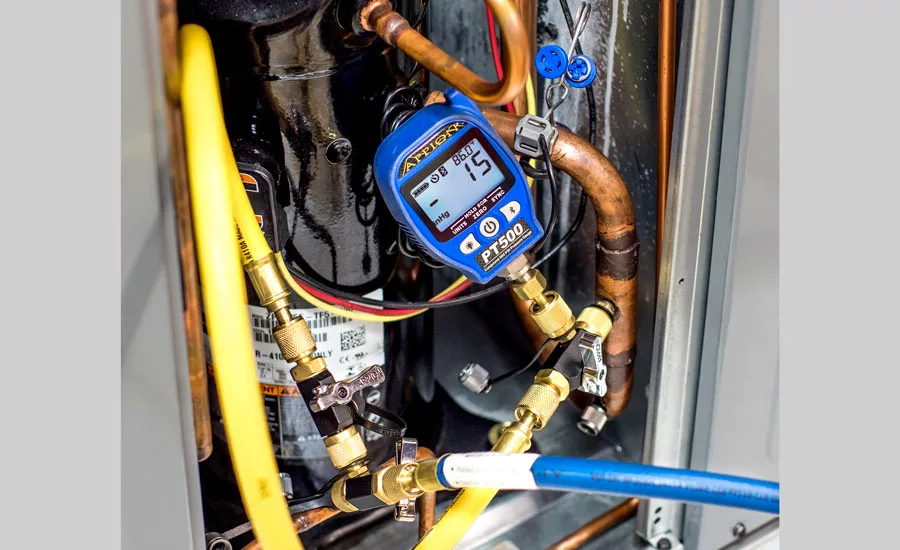
recovery without a manifold
In this example of recovery without a manifold, the vapor side of the system is connected to the side port of a valve on the liquid side. Photo courtesy of Appion Inc.
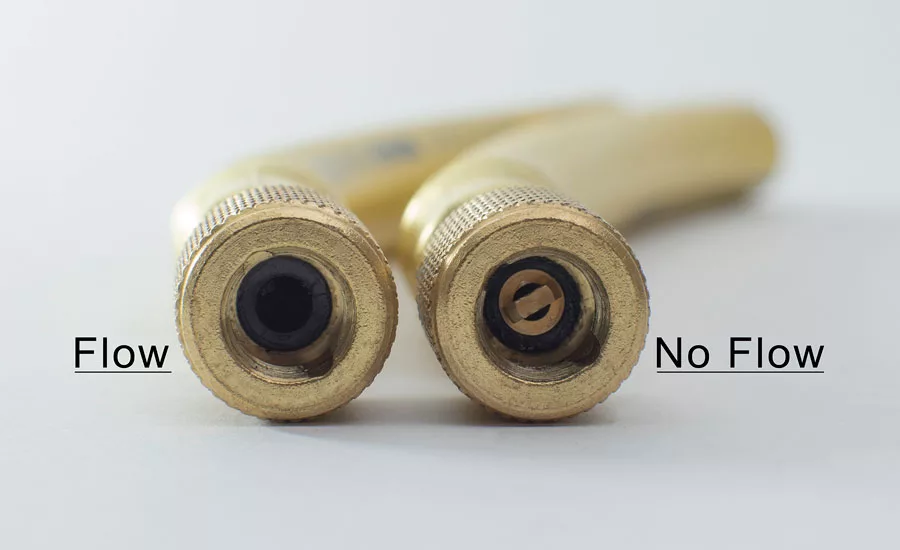
Core Depressor Restriction
Core depressors are examples of input restrictions that can severely reduce liquid flow. Photo courtesy of Appion Inc.
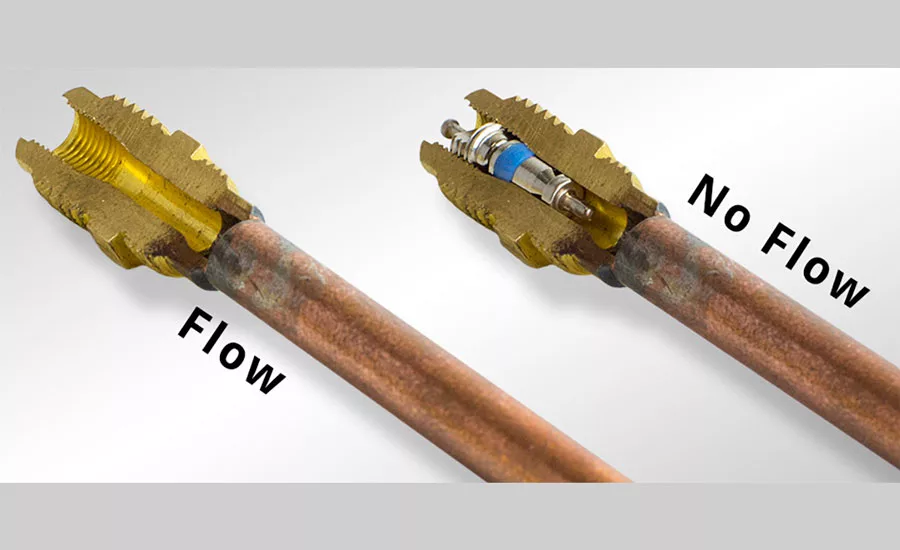
Valve Core Restriction
valve cores are examples of input restrictions that can severely reduce liquid flow. Photo courtesy of Appion Inc.
recovery without a manifold
Core Depressor Restriction
Valve Core Restriction
April 10, 2017

Despite advancements in refrigerant recovery technology over the last 25 years, it remains one of the most time-consuming steps in servicing an air conditioning or refrigeration system. This can make it tempting to “skip” the recovery process for a technician on a tight schedule. However, with the proper understanding of equipment and methods, refrigerant recovery can be faster and easier (not to mention much more legal) than venting.

USE A COMPRESSOR DESIGNED FOR RECOVERY

Nothing slows things down more than the failure of equipment in the middle of a job. A recovery machine has to face grueling conditions while pumping a combination of refrigerant and oil as well as whatever might have caused the air conditioning or refrigeration system to fail in the first place. For a recovery machine, reliability means being able to run the machine every time — at the start of the job, after a job site power interruption, or to truly finish the recovery job.

The heart of a refrigerant recovery machine is the compressor. When recovered refrigerant — which often contains acids and system debris — is flooded into the crankcase of a recovery machine, hidden damage may occur that can lead to a seized compressor or other internal component failures. The refrigerant can also strip away essential bearing lubrication, which can severely damage the compressor if it runs too long in a vacuum. In addition, refrigerant inside the crankcase can be stubborn to remove, making cross-contamination between refrigerants more likely unless an external pump is used to clear out the recovery machine.

With some types of compressors, damage can occur when liquid reaches the compressor. However, liquid is sometimes an unavoidable result of compressing refrigerant. Choosing a recovery machine that is designed to take the full force of liquid flow can ensure the entire process can be easily performed without intentionally reducing the flow.

These are some of the reasons why hermetic compressors are no longer used for refrigerant recovery. Machines that isolate the refrigerant flow completely from the compressor’s working components generally will last longer and are less expensive to service.

A recovery machine also should be able to start at high pressure differentials between the input and output sides or be able to run in a vacuum for prolonged periods. When high-pressure differentials exist and a power loss occurs, you want to be sure that you can restart the machine without enduring complicated pressure-relief procedures. Similarly, the U.S. Environmental Protection Agency (EPA) requires a minimum vacuum on the system of 10-15 inches of mercury (inHg) and reaching this vacuum level can take a while when pumping against the back pressure of a full recovery cylinder, leaving the recovery machine running in a vacuum for a prolonged period.

KEEP THINGS COOL

In many cases, refrigerant recovery is performed on a hot rooftop or a cozy mechanical room, which means the machine will need to disperse the heat caused by compression while relying on hot ambient air. During this process, the recovery machine is essentially a condensing unit. Similar to a condensing unit, a condenser’s capacity for heat transfer is directly related to the cooling airflow across the condenser surface. Make sure the recovery machine produces a high volume of cooling airflow and make sure the airflow through the machine is unrestricted.

Looking for quick answers on air conditioning, heating and refrigeration topics? Try Ask ACHR NEWS, our new smart AI search tool. Ask ACHR NEWS →

ENSURE FULL-FLOW CONNECTIONS

Just like tires can affect a car’s performance, the hoses, fittings, manifold, and recovery cylinder all play a role in how quickly and efficiently the recovery process is completed.

Hoses and Hose Fittings — During refrigerant recovery, ¼-inch-diameter charging hoses effectively are capillary tubes and greatly reduce flow and potentially cause trouble throughout the process. Charging hoses also often include quick-disconnect and auto-shutoff hose fittings, which incorporate valve mechanisms that not only restrict the flow of refrigerant but can act as a metering device during liquid recovery, leading to other problems, such as overheating tanks. Using hoses equipped with ball valves meets the EPA’s low-loss-fitting requirement while ensuring full refrigerant flow during the recovery process.

Even when recovering from systems with ¼-inch service valves, using 3/8-inch-diameter hoses reduces resistance and allows a full flow of refrigerant to reach the recovery machine, and, ultimately, the recovery cylinder. Using a shorter length of hose between the recovery machine and cylinder will also reduce the amount of refrigerant released.

Manifolds — Using a manifold can make it easier to start a typical recovery job in liquid, but some charging manifolds are designed to regulate a reduced flow, a design that is not necessarily ideal when looking to increase flow during recovery. Either use a manifold with a large internal bore or skip it entirely by using ball valves equipped with an additional side port.

In the setup shown in Figure 1, the vapor side of the system is connected to the side port of a valve on the liquid side. This allows technicians to start the process in liquid only while finishing with the full system open to the recovery machine.

Recovery Cylinders — For safety reasons, it’s important to never exceed 80 percent of a recovery cylinder’s rated capacity. In addition to safety, using a cylinder with extra capacity reduces back pressure toward the end of the recovery process, making the EPA’s 10-15 inHg vacuum requirement much easier to reach. For the best results, start with a new recovery cylinder that has already been evacuated below 500 microns. As always, make sure the recovery cylinder is rated for the refrigerant being recovered.

REMOVING RESTRICTIONS

Refrigerant recovery is subject to a number of factors that can make the difference between quick and easy or long and frustrating. Many of the common headaches result from flow restrictions. Because of the shared symptoms, flow restrictions can be categorized as either input restrictions or output restrictions, based on whether they are on the input or output side of the recovery machine.

Input restrictions are points between the air conditioning or refrigeration and the recovery machine that can severely reduce the liquid flow. Typically, this includes valve cores, core depressors, restrictive hose fittings, partially opened manifold valves, or worn-out hoses (see Figures 2 and 3). A valve core blocks about 90 percent of the inside of an access valve while a core depressor blocks about 50 percent of the hose fitting. Overheating of the recovery cylinder and high cylinder pressures are often symptoms of input restrictions.

Just like a metering device in an air conditioning or refrigeration system, the pressure drop caused by the restriction can result in low-density superheated vapor being fed to the recovery machine. Recall that a recovery machine is essentially a condensing unit, and condensers work best when there is enough refrigerant inside to be cooled into liquid, but a severe undercharge can render a condenser useless. When the heat from the recovery machine’s compressor is added, the recovery cylinder is slowly filled with hot vapor refrigerant, increasing back pressure and greatly slowing down the process.

While buckets of ice and external cooling may still be helpful, allowing a full liquid flow to reach the recovery cylinder will enable better thermal transfer through the cylinder walls and ultimately reduce cylinder pressures and temperatures overall.

Output restrictions are points between the recovery machine and recovery cylinder that can increase the back pressure on the recovery machine. Damage to the gauges on the recovery machine or loud “knocking” noises during recovery typically indicate a significant output restriction. These can both be symptoms of rapid pressure spikes caused by the output hose being filled faster than it flows into the tank and also can result in significantly reduced recovery speeds.

Just as with the input side, it’s helpful to use larger-diameter hoses and remove unnecessary core depressors. Additionally, connect the output hose from the recovery machine to the vapor port of the recovery cylinder. This allows the refrigerant to quickly empty into the tank instead of traveling through the liquid port dip tube, which is often smaller than ¼ inch in diameter.

THE GREATER THE FLOW, THE FASTER IT WILL GO

Recovery machines have gotten smaller, faster, and more reliable in the last 30 years. A recovery machine designed for greater throughput will magnify the symptoms caused by flow restrictions because of greater pressure drops on the input side and higher back pressure on the output side. Suddenly, ice buckets seem like an attractive solution again, but this is only patching up the symptom rather than addressing the causes.

Using larger diameter hoses and removing valve cores and core depressors opens the recovery machine and cylinder up to a full flow of refrigerant, enabling fast, trouble-free refrigerant recovery on every job.

Christian Peña is the executive manager of business development and training at Appion Inc. He has led the engineering, operations, technical, and training teams at Appion for more than 10 years. Contact him at christian@appioninc.com or (303) 937-1580. For more information and educational videos, visit www.appiontools.com. 

Publication date: 4/10/2017


TIPS FROM THE FIELD

The NEWS asked three contractors for their best refrigerant recovery tips from the front lines.

  • Kevin O’Neill, owner, O’Neill Air Conditioning and Heating, Myrtle Beach, South Carolina — I recently had a technician from another company tell me that he never recovered refrigerant because it was too much trouble. I told him he was insane. Between the potential $35,000 fine and the five years in jail if you get caught, that is enough for me to always recover refrigerant when servicing refrigeration systems.

    Recovering refrigerant also is just the right thing to do. I have been recovering refrigerant for more than 25 years, since before the U.S. Environmental Protection Agency’s (EPA’s) Section 608 rules went into effect. We always wanted to be able to use the refrigerant over if we could. And, these days, with the price of R-22, who can afford to vent?

    With a decent recovery machine and a little practice, recovering refrigerant is no trouble at all. When I go out to replace a compressor or coil, the first thing I do is hook up the recovery machine and recovery cylinder. While the recovery is proceeding, I can start to take the cabinet apart and disconnect any wiring. Then, I carry the parts, materials, and my tools to the job site from the truck. By the time I’m ready to start cutting the piping, the recovery has been completed. So, it really does not add much time to the job.

    If it is very hot outside, I put the recovery cylinder in a bucket of cool water to speed up the recovery process by lowering the recovery machine head pressure. On a big job, I may need to run water into the bucket from a hose. I often use oversized hoses on the manifold on the suction side of the recovery machine. I also use core removal tools to take the Schrader cores out of the unit.

    If it is cold outside, there may be liquid (which is harder to draw out) in the bottom of the accumulator or the compressor. If there is liquid present, the accumulator will sweat or frost on the bottom as an indicator. In these cases, I just run water from a hose over the accumulator. In my area, it does not even need to be warm water; technicians in colder northern states may need to use warm or hot water.I recently heard about an Ohio man who was convicted of venting refrigerant. He was sentenced to four-and-a-half years in prison and assessed a $29,000 fine. That is a terrible price to risk because you feel it is too much trouble to recover refrigerant.
     
  • Athey Crawford, service manager, Benson’s Heating & Air Conditioning Inc., Tallahassee, Florida — It’s a good idea to always perform an acid test before reclaiming the refrigerant from a refrigeration system. This is accomplished using a simple test instrument made up of a small plastic tube with a treated ribbon within it. The ribbon will change color if there is an indication of acid or contaminants. The tool has a small extension on one end of the device that allows the user to depress the Schrader core and allows the refrigerant to pass over the ribbon. If there is an indication of contaminants, the refrigerant will need to be recovered and submitted to a local HVAC wholesaler. If the refrigerant tests negative for any contaminants, it may be re-used within that system.

    The equipment needed to complete the reclamation process is a good set of refrigerant gauges, clean refrigerant hoses, a reclaim refrigerant tank/cylinder, and a reclaim machine. After properly attaching all refrigerant hoses to the proper locations for reclamation, be sure to purge the air from the hoses. This allows the recovery of the refrigerant without the mixing of any atmospheric air that may be trapped within the refrigerant hoses or reclaim machine before entering the recovery tank.

    Once the refrigerant gauges reach a minimal pressure — as close to 0 psi as possible without going into a vacuum — the refrigerant gauges/manifold should be closed off, and the refrigerant machine should be switched to a purge mode to free it of any residual refrigerant that may not have migrated into the recovery tank. After the completion of this purge, the recovery tank’s valves can then be adjusted to a closed position to contain the recovered refrigerant within the recovery cylinder.

    The evacuated refrigeration system should be isolated so no contaminants (water, debris, etc.) enter until work is complete.

    After completion of any work and the sealing of the refrigeration system, a deep vacuum (typically 500 microns) should be pulled to ensure all noncondensable particulates are depleted. Always replace the refrigerant filter drier once a refrigeration repair is made and/or the system has been opened to the elements.
     
  • Vincent J. DiFilippo, president, DiFilippo’s Service Co., Paoli, Pennsylvania — When it comes to refrigerant recovery, there is no escaping, sidestepping, ignoring, dodging, evading, or skipping out: It’s the law.

    We all should have been recovering refrigerant for the past 25 years, since the EPA rules took effect. If we had, we would not be facing such a shortage of reclaimed R-22.

    My advice for making refrigerant recovery easier is simple.

    Technicians and installation crew: Before you take any equipment off your truck, set up the recovery machine and turn it on. Then you can set up drop cloths, bring in tools, talk to the client, etc. By the time all the other stuff is done, you’re done recovering.

    Service technicians: Set up your recovery machine before anything else. While recovering, perform other duties related to the visit, such as a visual inspection of the equipment inside and outside the home, look for any future work possibilities, check the ductwork, look for any water stains, etc. The time will fly by.

    There is money to be made from recovering refrigerant. Reclamation companies are available to buy back your used refrigerant and will pay you for it.

    There is no excuse anymore. Recovery equipment is less expensive and faster than ever before, and there are more buy-back companies, too. For all these reasons, when it comes to refrigerant recovery, follow Nike’s advice and “Just Do It.”
KEYWORDS: air conditioning systems refrigerant recovery

Share This Story

Looking for a reprint of this article?
From high-res PDFs to custom plaques, order your copy today!


Recommended Content

JOIN TODAY
To unlock your recommendations.

Already have an account? Sign In

  • HVAC-enrollment

    The Trades Are Back: HVACR Programs See Nearly 30% Enrollment Spike

    A new wave of future technicians is entering the pipeline.  
    Training and Education
    By: Matt Jachman
  • 2025 Top 40 Under 40

    2025 Top 40 Under 40 HVACR Professionals List

    The 11th annual Top 40 Under 40 list highlights those...
    HVAC Contracting
    By: Hannah Belloli-Oster
  • LG Ductless Mini-Split Systems

    The 9 Types of Heat Pumps

    As the U.S. moves toward electrification, heat pumps are...
    Heat Pumps
    By: Joanna R. Turpin
Subscription Center
  • Create an Account
  • Start a Subscription
  • Manage My Account
  • Sign Up for Newsletters
  • Visit Customer Service
  • Update Preferences

More Videos

Sponsored Content

Sponsored Content is a special paid section where industry companies provide high quality, objective, non-commercial content around topics of interest to The News audience. All Sponsored Content is supplied by the advertising company and any opinions expressed in this article are those of the author and not necessarily reflect the views of The News or its parent company, BNP Media. Interested in participating in our Sponsored Content section? Contact your local rep!

close
  • Piggy Bank
    Sponsored byWatercress Financial

    Energy Prices, Inflation, and HVAC: What Today’s Homeowners Care About

  • Refrigerated Food
    Sponsored bySolstice Advanced Materials

    R-455A Refrigeration: A Cold Storage Solution for the Future

  • Airex Rooftop Units
    Sponsored byAirex Manufacturing Inc

    Consolidating Roof Penetrations: A Growing Trend in Multifamily HVAC Design

Popular Stories

Refrigerants-and-gauge.jpg

HVAC Industry Warns of Counterfeit Refrigerants Entering U.S. Supply Chain

Lennox equipment

Platinum Equity to Sell Heat Controller to Lennox

HVAC Minute retail refrigeration system

EPA Final Rule’s Impact on R-410A Deadlines

HVAC-tech-van.jpg

Report: Only 65% of HVAC Technician Time is Billable Hours

Dealer_Couple2_Kitchen_Estimate.jpg

Predicting the Next Service Call

View The ACHR NEWS
Centennial Anniversary Timeline

The ACHR News Timeline Chart
Submit a Letter
Submit a letter to our editors.

Events

November 6, 2025

Next-Gen Data Center Cooling: HVAC Innovation and Real-World Solutions

On Demand As AI workloads and high-density computing push traditional cooling methods to their limits, the data center industry is accelerating the adoption of next-generation HVAC technologies.

July 28, 2026

How Top Home Services Companies Turn Every Conversation Into Predictable Revenue

In this webinar, we'll outline how top contractors are turning every conversation into predictable revenue by coaching every comfort advisor visit, not just the ones a manager rides along on.

View All Submit An Event

Poll

Summer Staff

Are you fully staffed for the summer season?
View Results Poll Archive

Products

BNI Mechanical/Electrical Square Foot Costbook, 2026 Edition

BNI Mechanical/Electrical Square Foot Costbook, 2026 Edition

See More Products
Designing Systems Using A2L Refrigerant - Free Webinar - 7/22/2026

Related Articles

  • BuildingAutomation

    Controls: The Need For Speed

    See More
  • United Feels Need For Speed

    See More
  • Purdue researchers

    White Paint Could Reduce Surface Temperatures, Decreasing the Need for Air Conditioning

    See More

Related Products

See More Products
  • new cover.jpg

    Profit is An Attitude: The Strategies You Need to Optimize Profits

  • fanfelaysdvd.jpg

    Understanding Fan Relays and Multiple Speed Motors

  • math.jpg

    Math for the Technician

See More Products

Events

View AllSubmit An Event
  • April 24, 2014

    Motors, Variable Speed Drives and Energy Efficiency

    The introductory course on motors and variable-speed drives will give participants a better understanding of motors and the theory behind how they work.
  • April 14, 2026

    Inside HVAC Lending: What Contractors Need to Know to Close More Sales

    On Demand From this webinar, attendees will learn how to use financing as a strategic sales tool for growth in a repair market. 
View AllSubmit An Event

Related Directories

  • SpeedClean

    SpeedClean manufactures and markets HVAC maintenance tools like portable coil cleaning systems, biodegradable coil cleaners, tube cleaners, mini-split cleaning systems and much more.
×

Sign Up. Stay Informed.

The #1 trusted source for the HVACR industry since 1926

SUBSCRIBE
  • RESOURCES
    • Advertise
    • Contact Us
    • Advisory Board
    • Classifieds
    • Submit a Letter
    • Directories
    • Store
  • ACCOUNT CENTER
    • Create an Account
    • Start a Subscription
    • Manage My Account
    • Sign Up for Newsletters
    • Visit Customer Service
    • Update Preferences
  • SERVICES
    • Marketing Services
    • Reprints
    • Market Research
    • List Rental
    • Survey/Respondent Access
  • STAY CONNECTED
    • LinkedIn
    • Facebook
    • Instagram
    • YouTube
    • X (Twitter)
  • PRIVACY
    • PRIVACY POLICY
    • TERMS & CONDITIONS
    • DO NOT SELL MY PERSONAL INFORMATION
    • PRIVACY REQUEST
    • ACCESSIBILITY

Copyright ©2026. All Rights Reserved BNP Media, Inc. and BNP Media II, LLC.

Design, CMS, Hosting & Web Development :: ePublishing