The Professor: In Spring, Thoughts Turn to Troubleshooting
Spotting problems now will help you get a/c systems ready for cooling season
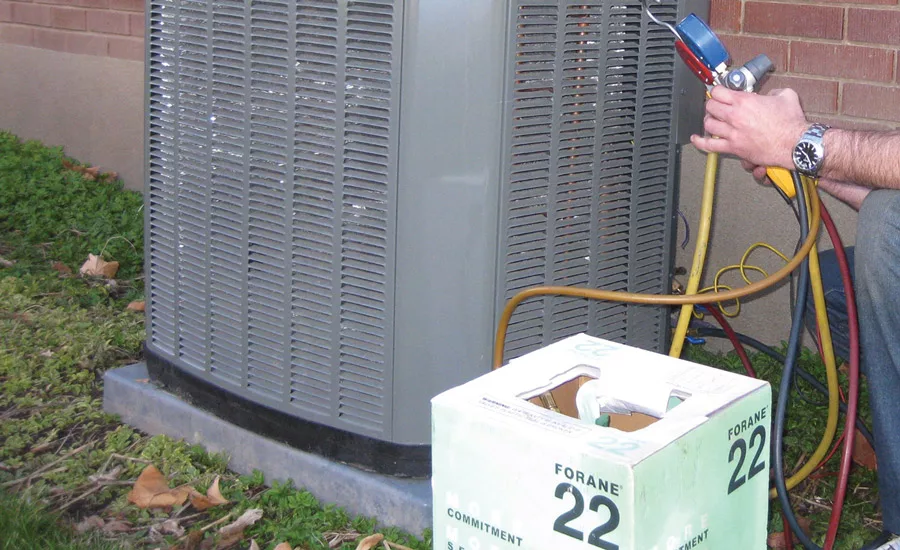
FIGURE 1: Condensing temperatures and pressures will vary with coil surface area size and EER, just as evaporator temperatures and pressures will.
Spring will be here before we know it, and that means transition time for technicians. The end of the heating season means getting ready for the cooling season, at least at my latitude.
Checking temperatures in and out of the air conditioning coil is an important part of preparing a residential air conditioning system for the season. This article will cover how checking temperatures through an evaporator coil can tell a service technician if there’s a problem in the air-handling system or refrigerant system. It will also cover other general troubleshooting areas.
AIRFLOW VERSUS REFRIGERANT FLOW
Low airflow problems cause high temperature differences across a cooling coil. When the flow of air is low, the air will be in contact with the cooling coil longer, thus decreasing its temperature coming out of the coil.
High airflow problems, on the other hand, are usually not an issue when troubleshooting residential air conditioning systems, because too much airflow is hardly ever encountered. Air-handling systems do not suddenly increase their airflow without some kind of human intervention. Therefore, if there is a low temperature difference across the evaporator coil in an air conditioning system, the problem most often is in the refrigerant flow not the airflow. The low temperature difference across the coil also indicates a capacity drop, meaning the heat-handling capability of the system has failed.
COIL SIZE MATTERS
The larger the evaporator coil surface area, the closer the coil temperature will be to the entering air temperature. This happens because a larger evaporator coil has a higher operating temperature. An air conditioning unit runs higher evaporating (suction) pressures and temperatures with a larger surface area coil. With this increase in coil temperature — and thus higher vapor pressure of the refrigerant vaporizing inside the coil — the unit will experience higher efficiencies from the higher-pressure (more dense) refrigerant gases entering the compressor with each revolution of its crankshaft.
The compression ratio will also decrease from the higher evaporator pressures, causing the mass flow rate of refrigerant vapors through the compressor to increase. These are the reasons manufacturers have been making air conditioning coils larger. Larger and more efficient coils are more expensive to manufacture, but they increase unit efficiency, which hopefully offsets their higher manufacturing costs.
An example of this is the increase in microchannel coil technology in the HVACR industry. Microchannel coils are all-aluminum with multiple flat tubes containing small channels (microchannels) through which refrigerant flows. The flat tubes are in parallel with one another. Heat transfer is maximized by the insertion of angled and louvered fins between the flat tubes. All of this is done to maximize coil surface area.
Looking for quick answers on air conditioning, heating and refrigeration topics? Try Ask ACHR NEWS, our new smart AI search tool. Ask ACHR NEWS
Coil surface area may vary from one manufacturer to another. One manufacturer may choose large coil areas for high suction pressures and smaller compressors. Another may go with smaller-surface-area coils (causing lower suction pressures) and use larger compressors. As long as the unit meets the required capacity and energy ratings, it’s a tradeoff.
Often, evaporator coil surface area, which includes fin surface area and fin spacing, is a function of geographical regions. Sensible heat ratios — the ratio of the sensible heat to the total heat the coil has to remove — vary by region. Total heat comprises both the sensible and latent heat loads the evaporator coil has to remove. Large surface coils running higher suction pressures may not have low enough coil temperatures to be able to remove enough moisture (latent heat). Their apparatus dew points will be too high to condense the right amount of moisture from the air passing through the coil for a certain geographical region. This may cause high humidity, mold, and human discomfort.
Other than having different pressures and temperatures, the condenser and evaporator are very similar. Condensers are usually a bit larger than the evaporator in order to handle not only the evaporator’s heat load, but also suction line superheat gains, the heat of compression, and compressor motor heat loads.
The surface area of the condenser affects the design temperature difference between the condensing temperature and the ambient (surrounding temperature). The larger the condenser, the lower the condensing temperature will be. The larger the condenser, the more expensive it is to manufacture, but the unit’s energy efficiency ratio (EER) will be much higher. Figure No. 1 (Page 26) shows a large condensing coil. So, what should the condensing temperature and pressure be? Believe it or not, condensing temperatures and pressures will vary with coil surface area size and EER, just as evaporator temperatures and pressures will. As coil surface area increases, condensing pressures and temperatures will decrease. Always consult with the coil manufacturer or service manual for condensing pressure and temperature ranges.
REFRIGERANT SUBCOOLING IN THE CONDENSER
Subcooling is the difference between a refrigerant’s measured liquid temperature and the saturation temperature at a given pressure. Condenser subcooling can be measured at the condenser outlet with a thermometer or thermocouple and a pressure gauge. Simply subtract the condenser out temperature from the condensing saturation temperature to get the amount of liquid subcooling in the condenser. The saturation pressure has to be measured at the condenser outlet and converted to a temperature. Always take the pressure at the same point the temperature is taken. This will alleviate any pressure-drop error that the refrigerant experiences as it travels through the condenser.
As a rule of thumb, a forced-air condenser will usually have from 6° to 10°F of liquid subcooling, if charged properly. However, the amount of condenser subcooling depends on the static- and friction-line pressure losses in the liquid line and will vary from system to system. Condenser subcooling can be an indicator of the refrigerant charge in the system. For receiverless systems, the less the refrigerant charge, the less the subcooling. The rated EER will have little or no effect on condenser subcooling.
Another factor that will affect condenser subcooling is the condenser air entering temperature (CAET). As the CAET increases, the liquid subcooling will decrease. This is because higher condensing (head) pressures will force more of the subcooled liquid through the metering device to the evaporator. This will also affect evaporator superheat. Assuming the system does not have a thermostatic expansion valve (TXV) for a metering device, the evaporator superheat will be less from the increased flow rate through its coil. This phenomenon is not quite as severe when using a TXV for a metering device, but even some TXVs can overfeed when experiencing high head pressures. The balanced port TXV is one metering device designed for varying head pressures.
LOW CONDENSER AIR ENTERING TEMPERATURE
A low air temperature entering the condenser will cause a low head pressure from the excessive heat transfer between this cool ambient and the condenser coil. Low head pressures may reduce flow through metering devices, which have capacity ratings dependent on the pressure differences across them. A 30-psi pressure difference is usually the minimum across TXVs. This reduced refrigerant flow causes a starved evaporator, which will cause low suction pressures and high superheats. However, this may be offset by increased condenser subcooling at these lower ambient temperatures.
This entire drop in capacity may decrease an air conditioner’s heat-removal abilities if it is not designed for it. If not designed properly, liquid will start to back up in the condenser. But, because of a low heat transfer rate caused by the lower condenser temperature, the liquid temperature in the bottom of the condenser will be low. This will cause liquid subcooling in the condenser to be increased. Also, less refrigerant circulated means less work for the entire system to perform, so the amp draws of the compressor will be lowered. Below are some symptoms of low condenser entering air temperature:
• Low suction pressure (if not designed for low head pressure at the TXV);
• Low condensing pressures;
• High superheat (if not designed for low head pressure at TXV);
• Low amp draw; and
• High subcooling.
Publication date: 3/7/2016
Want more HVAC industry news and information? Join The NEWS on Facebook, Twitter, and LinkedIn today!
Looking for a reprint of this article?
From high-res PDFs to custom plaques, order your copy today!