Condensing Furnaces Require Special Care
Sophisticated Systems Require More Comprehensive, Consistent Maintenance
After enduring last winter’s bitterly cold temperatures across much of the country, many will be relieved to hear the polar vortex is not expected to make a return appearance this year. However, the National Oceanic and Atmospheric Administration (NOAA) cautions that below-average temperatures are likely in the south-central and Southeastern U.S. And, for those who put stock in it, “The Old Farmer’s Almanac” predicts this winter will bring Arctic-like temperatures and above-normal snowfall throughout much of the nation.
Regardless of the forecast, there is no question there are some chilly months ahead, and homeowners will expect their expensive condensing furnaces to operate without fail, even on the coldest of days. And, if they’ve had their equipment properly maintained, there is no reason why their furnaces should not keep them warm and toasty all winter long.
Special Needs
Condensing furnaces offer higher efficiencies and better comfort, but they also require more care than standard 80 percent AFUE furnaces. As John Poyle, owner, Hagerstown Heating and Cooling LLC, Hagerstown, Maryland, noted: “With noncondensing furnaces, you mainly just have to check for cracks in the heat exchanger and do a combustion safety test. With condensing furnaces, there’s a lot more stuff that can fail, so more maintenance is required.”
That’s because condensing furnaces have condensate drains and secondary heat exchangers, which can become plugged, as well as additional safety devices, pressure switches, and other controls that need to be tuned up and/or adjusted annually, said Eric Knaak, vice president of service, Isaac Heating and Air Conditioning, Rochester, New York. “Lack of regular maintenance can lead to system lockout, decreased efficiency, and premature failure of the components.”
For these reasons, Ron Staley, owner, Staley Mechanicals, Dillsburg, Pennsylvania, wishes homeowners would look at HVAC equipment the same way they look at their cars. “Most of us have our cars serviced every 3,000 miles, but we ignore our HVAC systems, with the equivalent of hundreds of thousands of miles on them every year. Who would fault their car for breaking down with so much usage? If a condensing furnace is malfunctioning, it has probably earned the privilege. And if it hasn’t broken down yet without service, it probably will soon.”
Long before an unmaintained furnace breaks down, it starts losing efficiency, so more energy is required to keep homeowners comfortable, said Staley. “In addition to inefficiency, safety is an issue. A 15-year-old furnace is like a set of tires with 45,000 miles of wear. Furnaces suffer from wear, too, and a crack or hole in the heat exchanger could allow carbon monoxide (CO) to enter the living environment. Regular maintenance includes testing for CO leaks, and operating an untested furnace is as dangerous and life threatening as taking your family out for a drive on a set of bald tires.”
Homeowners who do not have their furnaces maintained regularly may also be in for a surprise when it finally does break down. “I ran a quick analysis of our business and found that, on average, repairs cost about $200 for each year a furnace is not maintained,” said Poyle. “If a furnace goes five years without maintenance and then breaks down, it usually costs about $1,000 to fix it. If homeowners go 10 years without maintenance, they might as well buy another furnace because it’s going to cost more than $2,000 to fix it. That’s why we emphasize maintenance because, in the scheme of things, a $159 maintenance contract with us just makes sense.”
Looking for quick answers on air conditioning, heating and refrigeration topics? Try Ask ACHR NEWS, our new smart AI search tool. Ask ACHR NEWS
Take Steps
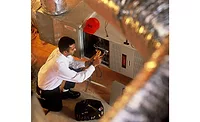
When performing routine maintenance on any furnace, Staley suggests following these guidelines:
• Replace air filters or air cleaner media in order to prevent furnace overheating and ensure adequate airflow for comfort and IAQ;
• Check blower motor brackets for cracks or breaks as vibration can weaken and break brackets, causing damage;
• Check setscrews on the blower wheel to make sure they are tight and centered in the housing. Setscrews sometimes work loose and cause misalignment, resulting in poor airflow, and, eventually, damage to the blower;
• Check blower wheel for excessive dirt and wash blower wheel and housing, if necessary. Dirt builds up in the blower wheel vanes and reduces airflow, causing poor efficiency;
• Lubricate draft motors and bearings, if applicable;
• Check combustion air blower, examining the blower wheel for rust, corrosion, and blockages;
• Check for gas leaks because vibration can loosen some fittings and joints;
• Check for spider nests in air shutters and burner openings. Spiders love gas appliance air passages for some reason, and their nests can block combustion air, which prevents burners from receiving the proper amount of air for combustion;
• Check flue and combustion air piping for blockages and breaks. Nests from insects and rodents are frequently found in the pipes, and blockages can cause furnace shutdown and even damage the furnace;
• Check the main burners for deterioration, blockage, or corrosion. A defective burner can cause CO and premature heat exchanger failure;
• Check the flame sensor signal, as corrosion, positioning, and poor grounding of the flame sensor can weaken the flame signal and cause nuisance safety lockouts;
• Check gas pressure and adjust if necessary. High gas pressure will cause heat exchanger failure, sooting, and furnace overheating, while low pressure will cause inefficient and erratic operation;
• Check for proper control operation as inoperative safeties are fire hazards;
• Check for flue gas leakage into the living spaces, as even small amounts of leakage into the occupied space can cause headaches and an ill feeling; and
• Inspect the exterior of the equipment and replace any missing screws. As much as 25 percent of conditioned air can escape due to improperly fitted or secured access panels.
In addition to these steps, Knaak said the following items need to be checked on condensing furnaces:
• Check the primary heat exchanger for signs of rusting, cracks, or deformities that could lead to CO issues. Because condensing furnaces produce acidic condensate, it is important to make sure there are no issues with drainage back into the primary heat exchanger, which can cause premature deterioration. Local codes may require the use of a neutralizing filter on the condensate before it goes into the home drainage system;
• Check the secondary or condensing heat exchanger for any signs of leaking or blockage of the condensate drain. This may require flushing the heat exchanger, because the condensing heat exchanger has very tight passages for the air to move through. It is important to make sure that dust and build-up are removed to allow for proper airflow and that the filter is replaced on a regular basis;
• Flush the drain at least once (or more) each year. If there is a condensate pump attached to the system, this, too, needs to be cleaned and flushed, and the safety shut-off device needs to be checked each season, as well;
• Check the venting to make sure any drains built into the vent are clear and allow water to drain away properly. The vent termination should be free from any blockages outside, including nests built by bees, insects, or other animals, which can prevent furnace operation. Make sure that vegetation is not blocking the termination, and, if it is, discuss its removal with the homeowner; and
• Verify the system is operating at different stages of fire rates to ensure the unit is operating as designed and to verify the client is receiving the proper efficiency of the condensing furnace.
To this list, Staley adds the integrity of primary and secondary heat exchangers must be checked by taking temperature, pressure, and O2 tests in the intake and exhaust flue pipes to determine compromises in the heat exchangers. “High oxygen levels and low flue temperatures indicate holes in the exchangers.”
This may seem like a lot of maintenance that needs to be performed each year, but customers must understand it’s necessary if they want their pricey condensing furnaces to operate without fail during winter. According to Poyle, most of his customers understand why regular maintenance is necessary. “It’s not my job to make them feel good about spending the money — it’s my job to make them feel good about what they’re paying for. After I educate them about why it’s needed, it’s up to them to decide if they want to have us maintain their equipment. And, fortunately, most of our customers do.”
SIDEBAR: Poor Installation Problems
A?furnace is like a car — if it’s not maintained properly, it’s not going to operate at its peak efficiency, said Doug Priestley, supervisor of technical services and training, Nordyne. “Things like a dirty filter can cause a furnace to have longer run cycles, which wastes fuel and causes the homeowner to spend more money. An improperly maintained furnace with dirty components can also start to overheat and then trigger a safety, which prevents it from operating at all.”
And while a lack of regular maintenance can be the cause of many customer complaints, improperly installed furnaces tend to be the biggest problem. “Overall discomfort, such as a room being too cold, can be the result of ductwork issues,” said Priestley. “It would be nice if all furnaces could be installed exactly the same way, but, the reality is, there are slightly different installation requirements across manufacturers.”
Priestley’s No. 1 tip to contractors is to pay attention to the manufacturer’s details. “If you’re servicing a furnace that was improperly installed, read the instructions and properly make the necessary corrections.”
Publication date: 12/1/2014
Want more HVAC industry news and information? Join The NEWS on Facebook, Twitter, and LinkedIn today!
Looking for a reprint of this article?
From high-res PDFs to custom plaques, order your copy today!