ACHR News
search
Ask ACHR NEWS AI
cart
facebook twitter instagram linkedin youtube
  • Sign In
  • Subscribe
  • Sign Out
  • My Account
ACHR News
  • NEWS
    • Breaking News
    • New HVAC Products
    • Featured Products
    • Manufacturer Reports
    • HVAC Data
    • Legislation
    • ACHR NEWS Centennial
  • RESIDENTIAL
    • Air Conditioners
    • Furnaces
    • Residential Heat Pumps
    • Ductless
    • Residential IAQ
    • Testing, Monitoring, Tools
    • Components & Accessories
  • COMMERCIAL
    • Air Handlers
    • Rooftop Units
    • Chillers and Cooling Towers
    • Commercial Heat Pumps
    • Boilers and Hydronics
    • VRF/Ductless
    • Commercial IAQ
  • REFRIGERATION
    • Refrigerants
    • Refrigerant Regulations
    • Leak Management
  • CONTRACTOR PRO
    • Geothermal
    • Homeowner Study
    • VRF and VRV Ductless
    • Unitary Trends
  • EDUCATION
    • Training and Education
    • Business Management
    • Service and Maintenance
    • Continuing Education
    • Market Research >
      • HVAC Brand Awareness Report
      • VRV, VRF, VRVZ Report
      • Unitary Trends Report
      • Water Heat Professionals Report
    • Webinars
    • Sponsor Insights
    • eProducts Info
    • White Papers
  • EVENTS
    • HVAC Contractor Forum
    • Industry Events and Webinars
  • MEDIA
    • Videos
    • AHR Expo 2025 Videos
    • Podcasts >
      • ACHR News Podcast
      • HARDI Podcasts
      • AHR Expo Podcasts
      • ACCA Podcasts
    • Interactive Spotlights
    • Quizzes
    • eBooks
    • HVAC Talkback
  • HVAC GROUP
    • ACHR NEWS >
      • Current Issue
      • Digital Edition
      • Subscribe
    • Distribution Trends
    • SNIPS NEWS >
      • Join SNIPS NEWS
    • Engineered Systems News >
      • Join ES News
    • HVACR Directory
    • Contests
    • Newsletters
    • Contact
    • Advertise
    • My Account
Heat PumpsAir ConditionersAir Source Heat Pumps

Maintenance Kicks Dirty Sock Syndrome

Contractors Discuss Diagnosis and Cleaning Issues
By Angela D. Harris
November 4, 2013
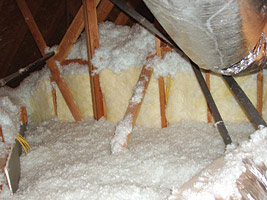
Issues such as wet insulation can mimic the smell of dirty sock syndrome. Condensate pans and drainage are other places to look for any type of biological growth as well.

Found in both commercial and residential units, dirty sock syndrome can take a state-of-the-art heating and cooling system owner straight to their junior high gym locker days. According to Casey1230, a forum user complaining in May 2011 about the new system he or she had installed, this trip down memory lane wasn’t a pleasant one. The user had an earful ready for the unit’s salesperson and didn’t appear optimistic about the company’s HVAC technician coming to look at the problem the next day.

Casey1230 punctuated the complaint with, “I can’t believe that I spent $10,000 for a new system only to have my house stink.”

Further down the thread, another dirty sock syndrome sufferer, jmarie, let the HVAC contractors who installed her geothermal system have it.

“Our installer was arrogant from the very beginning so it gave us immense pleasure to be able to prove him wrong.”

It seems that not only can dirty sock syndrome cause the customer problems, but it can also damage an HVAC contractor’s reputation. Is there a solution for smelly systems and the stinky reputations they can cause contractors?

Start with the Basics

“Dirty sock syndrome is the combination of slime and mold found on coils and occasionally in the condensate pan,” said Ken Bodwell, operational consultant, Innovative Service Solutions, Orlando, Fla. “It is bacteria that grows on the indoor coil, especially on a heat pump. It is not thought to be hazardous to occupants because it does not become airborne and is only detectable by the unpleasant odor. When the unit switches from heat to cool, the odor is released.”

Bodwell explained that there are different types of equipment affected, and that dirty sock syndrome is not manufacturer-specific. He also noted that coil replacement is not really necessary unless the bacteria is embedded in the coil.

“The problem seems to be limited to heat pumps,” said Leigh MacKenzie, service manager, Sky Heating & Air Conditioning, Portland, Ore. “In most gas-fired furnaces, the coil temperature exceeds 160°F, a temperature that would kill most microbial life. But, in heat pumps, the typical coil temperatures during heating cycles is between 120° and 130°, a temperature that seems ideal for the supposed microorganism to thrive.”

Looking for quick answers on air conditioning, heating and refrigeration topics? Try Ask ACHR NEWS, our new smart AI search tool. Ask ACHR NEWS →

MacKenzie added, “Finding a solution – well, that’s the million dollar question. A lot of things have been tried, and some have worked for a while, but the dirty sock smell seems to find its way back.”

Ensure Correct Diagnosis

Despite the need for regular maintenance and cleaning, Fred Kobie, president and CEO of Kobie Kooling Inc., Fort Meyers, Fla., pointed out that other issues with the HVAC system can mimic dirty sock syndrome.

“Wet insulation is often thought to be dirty sock syndrome,” he said. “The smell is as pungent, but for different reasons.”

MacKenzie noted that in extreme cases, the entire duct system may need to be replaced. “In most cases, these odors and smells are attributed to mold or bacteria in the duct work, which can be eliminated though the installation of a UVC lamp in the return air duct inlet of the furnace. In earlier times, it meant removing the indoor coil of heat pump systems treating the drain pan.”

Preventive Maintenance Solutions

For many HVAC contractors and technicians, cleaning coils tends to eliminate dirty sock syndrome smells and complaints. Once completed, however, Kobie suggests that contractors institute a program of preventive maintenance measures to keep dirty sock syndrome at bay.

“The main cause of dirty sock syndrome is a lack of good preventive maintenance,” he said. “Biannual services should include a chemical cleaning of the evaporator coil and a good antimicrobial agent applied to the coil to help over a longer period of time.”

He explained that UV lights help prevent bacteria and viral growth on a covered surface and noted that photohydroionization (PHI) is an effective method for the treatment and prevention of dirty sock syndrome as well.

“In my experience, there is no better or simpler method than the PHI cell,” said Kobie. “Of course the prevention is predicated on using a properly fitted filter targeted for a customer’s specific environment. Fresh air is also a good preventive measure and lacking in many homes.”

Dirty Sock Patterns

Advances in physical and chemical dirty sock solutions seem to have pushed dirty sock syndrome out of the spotlight. Although still an issue that contractors need to address, many of the contractors interviewed for this article agreed that dirty sock syndrome isn’t as prevalent as it was just a few years ago, and that it could be fully remedied through preventive maintenance regiments and agreements. Is there a solution for smelly systems? Yes. There are many resolutions, and it’s up to a contractor to choose which works best for his business and customers.

Is there a solution for stinky contractor reputations resulting from the mishandling of dirty sock syndrome? Yes. Ensure proper diagnosis, thorough cleaning, customer education, and preventive maintenance agreements. As for Casey1230 and jmarie, let them serve as a cautionary tale of the mishandling of dirty sock syndrome.

SIDEBAR: Three Steps to Stop Dirty Sock Syndrome

1. Properly identify the problem before taking action.

Eliminate dirty drain pans holding water, drain lines connected to plumbing systems without adequate traps or dry traps, return air leaks in ductwork or chases, or dead animals in ductwork or near the living space. If the odor is present all the time, especially during heat, the problem is not a dirty sock syndrome complaint.

2. Thoroughly clean the evaporator coil with a non-acid coil cleaner.

Cleaning will bring the system back to normal and will usually prevent a complaint for the rest of the heating season. Some systems cleaned early in the season, or those having more of a problem, may have repeated problems during the same season.

3. Apply a coating to the coil to prevent further growth. There are multiple types and brands. Consult a local distributor for suggestions.

Don’t initiate step three until the coil is completely dry. Allow the blower to run on fan-only and let it assist in drying the coil faster.

Sidebar information courtesy of Wittichen Supply Co., http://wittichen-supply.com.

Publication date: 11/4/2013 

Want more HVAC industry news and information? Join The NEWS on Facebook, Twitter, and LinkedIn today!

KEYWORDS: Coil Cleaning dirty sock syndrome preventative maintenance Ultraviolet (UV-C) HVAC Technology

Share This Story

Looking for a reprint of this article?
From high-res PDFs to custom plaques, order your copy today!


Angela harris 400x400

Angela Harris is the Technology Editor. She can be contacted at 248-786-1254 or angelaharris@achrnews.com. Angela is responsible for What’s New and Technology articles for The NEWS. She obtained her bachelor’s degree in English from Oakland University and has nine years of professional journalism experience.   

Recommended Content

JOIN TODAY
To unlock your recommendations.

Already have an account? Sign In

  • HVAC-enrollment

    The Trades Are Back: HVACR Programs See Nearly 30% Enrollment Spike

    A new wave of future technicians is entering the pipeline.  
    Training and Education
    By: Matt Jachman
  • 2025 Top 40 Under 40

    2025 Top 40 Under 40 HVACR Professionals List

    The 11th annual Top 40 Under 40 list highlights those...
    HVAC Contracting
    By: Hannah Belloli-Oster
  • LG Ductless Mini-Split Systems

    The 9 Types of Heat Pumps

    As the U.S. moves toward electrification, heat pumps are...
    Heat Pumps
    By: Joanna R. Turpin
Subscription Center
  • Create an Account
  • Start a Subscription
  • Manage My Account
  • Sign Up for Newsletters
  • Visit Customer Service
  • Update Preferences

More Videos

Sponsored Content

Sponsored Content is a special paid section where industry companies provide high quality, objective, non-commercial content around topics of interest to The News audience. All Sponsored Content is supplied by the advertising company and any opinions expressed in this article are those of the author and not necessarily reflect the views of The News or its parent company, BNP Media. Interested in participating in our Sponsored Content section? Contact your local rep!

close
  • Piggy Bank
    Sponsored byWatercress Financial

    Energy Prices, Inflation, and HVAC: What Today’s Homeowners Care About

  • Refrigerated Food
    Sponsored bySolstice Advanced Materials

    R-455A Refrigeration: A Cold Storage Solution for the Future

  • Airex Rooftop Units
    Sponsored byAirex Manufacturing Inc

    Consolidating Roof Penetrations: A Growing Trend in Multifamily HVAC Design

Popular Stories

Outdoor-condensing-units.jpg

EPA Removes R-410A Installation Deadline

Trump-Section-232.jpg

Trump Reduces Section 232 Tariffs on HVAC Equipment to 15%

HVAC-Price-Increase-graphic

HVAC Price Increase List: June 2026

cooling-habits.jpg

50 Percent of Americans Have Skipped HVAC Maintenance

ACHR NEWS Editor Chris Gray Presenting HVAC Minute 5-18-2026

HVAC Manufacturers Fight Pricing Lawsuits

View The ACHR NEWS
Centennial Anniversary Timeline

The ACHR News Timeline Chart
Submit a Letter
Submit a letter to our editors.

Events

November 6, 2025

Next-Gen Data Center Cooling: HVAC Innovation and Real-World Solutions

On Demand As AI workloads and high-density computing push traditional cooling methods to their limits, the data center industry is accelerating the adoption of next-generation HVAC technologies.

June 9, 2026

Before You Go All In on AI: Set Up Your Business to Actually Win

In this webinar, we'll walk you through exactly what to get in place before you add AI to your business. You'll leave with a clear picture of where you stand today and a practical action plan to set yourself up for real results.

View All Submit An Event

Poll

EPA Decision

Are you happy the EPA decided contractors can continue to install R-410A equipment?
View Results Poll Archive

Products

BNI Mechanical/Electrical Square Foot Costbook, 2026 Edition

BNI Mechanical/Electrical Square Foot Costbook, 2026 Edition

See More Products
A2L Refrigerants - Free Webinar - May 21, 2026

Related Articles

  • Dirty Sock Syndrome: What It Is, How to Prevent It

    See More
  • A New Solution Found for Dirty Sock Syndrome

    See More
  • A cure for the dreaded 'Dirty Sock Syndrome'?

    See More

Related Products

See More Products
  • Green Tips for Building Maintenance Engineers

  • Tech_CommRef_Guide_Small.jpg

    Technician’s Guide & Workbook for Quality Maintenance on Commercial Refrigeration Equipment

  • HVAC and Refrigeration Preventive Maintenance.jpeg

    HVAC and Refrigeration Preventive Maintenance

See More Products

Events

View AllSubmit An Event
  • September 9, 2025

    How Maintenance Plays into the HVAC Decarbonization Trend

    On Demand This webinar will explore maintenance strategies for advanced HVAC systems, including VAVs and demand-controlled ventilation.
View AllSubmit An Event

Related Directories

  • RectorSeal

    RectorSeal, LLC, a wholly owned subsidiary of CSW Industrials, Inc. [NYSE: CSW], is a leading provider of quality solutions for the professional trades serving heating, ventilation, and air conditioning (HVAC/R), plumbing, electrical, and construction markets.
×

Sign Up. Stay Informed.

The #1 trusted source for the HVACR industry since 1926

SUBSCRIBE
  • RESOURCES
    • Advertise
    • Contact Us
    • Advisory Board
    • Classifieds
    • Submit a Letter
    • Directories
    • Store
  • ACCOUNT CENTER
    • Create an Account
    • Start a Subscription
    • Manage My Account
    • Sign Up for Newsletters
    • Visit Customer Service
    • Update Preferences
  • SERVICES
    • Marketing Services
    • Reprints
    • Market Research
    • List Rental
    • Survey/Respondent Access
  • STAY CONNECTED
    • LinkedIn
    • Facebook
    • Instagram
    • YouTube
    • X (Twitter)
  • PRIVACY
    • PRIVACY POLICY
    • TERMS & CONDITIONS
    • DO NOT SELL MY PERSONAL INFORMATION
    • PRIVACY REQUEST
    • ACCESSIBILITY

Copyright ©2026. All Rights Reserved BNP Media, Inc. and BNP Media II, LLC.

Design, CMS, Hosting & Web Development :: ePublishing