ACHR News
search
Ask ACHR NEWS AI
cart
facebook twitter instagram linkedin youtube
  • Sign In
  • Subscribe
  • Sign Out
  • My Account
ACHR News
  • NEWS
    • Breaking News
    • New HVAC Products
    • Featured Products
    • Manufacturer Reports
    • HVAC Data
    • Legislation
    • ACHR NEWS Centennial
  • RESIDENTIAL
    • Air Conditioners
    • Furnaces
    • Residential Heat Pumps
    • Ductless
    • Residential IAQ
    • Testing, Monitoring, Tools
    • Components & Accessories
  • COMMERCIAL
    • Air Handlers
    • Rooftop Units
    • Chillers and Cooling Towers
    • Commercial Heat Pumps
    • Boilers and Hydronics
    • VRF/Ductless
    • Commercial IAQ
  • REFRIGERATION
    • Refrigerants
    • Refrigerant Regulations
    • Leak Management
  • CONTRACTOR PRO
    • Geothermal
    • Homeowner Study
    • VRF and VRV Ductless
    • Unitary Trends
  • EDUCATION
    • Training and Education
    • Business Management
    • Service and Maintenance
    • Continuing Education
    • Market Research >
      • HVAC Brand Awareness Report
      • VRV, VRF, VRVZ Report
      • Unitary Trends Report
      • Water Heat Professionals Report
    • Webinars
    • Sponsor Insights
    • eProducts Info
    • White Papers
  • EVENTS
    • HVAC Contractor Forum
    • Industry Events and Webinars
  • MEDIA
    • Videos
    • AHR Expo 2025 Videos
    • Podcasts >
      • ACHR News Podcast
      • HARDI Podcasts
      • AHR Expo Podcasts
      • ACCA Podcasts
    • Interactive Spotlights
    • Quizzes
    • eBooks
    • HVAC Talkback
  • HVAC GROUP
    • ACHR NEWS >
      • Current Issue
      • Digital Edition
      • Subscribe
    • Distribution Trends
    • SNIPS NEWS >
      • Join SNIPS NEWS
    • Engineered Systems News >
      • Join ES News
    • HVACR Directory
    • Contests
    • Newsletters
    • Contact
    • Advertise
    • My Account
HVAC Residential MarketHeat PumpsFurnacesAir ConditionersAir Source Heat Pumps

How High Will Efficiency Get?

By Joanna R. Turpin
June 20, 2011
Technologies continue to evolve and as new processes become available this will lead to higher levels of efficiency in both heating and cooling equipment.


As HVAC products get more and more efficient, the logical question is what level will they top off at? The laws of physics can limit the efficiency levels of air-source heating and cooling equipment. The laws of economics also come into play, as the cost for each incremental escalation in efficiency can substantially increase the cost of the equipment.

That being said, technologies will continue to evolve, new processes will become available, and both will lead to higher levels of efficiency in heating and cooling equipment - just how much higher, though, is open to debate.


FROM HERE TO HIGHER SEER

“We are at an all-time high on efficiency levels, but there is still room for it to grow,” said Jeff Goss, product manager, residential cooling, Rheem. “Today, there are some select air-to-air systems that currently exceed 23 SEER. However, the industry is constantly evolving and adapting new technologies which mean that there are always opportunities to improve upon even the latest technological innovations.”

“We’re not convinced that the energy efficiency levels of cooling units have achieved the highest possible level yet,” said Jim Fisher, product manager, Goodman Global Group, Inc. “Many opportunities are on the horizon that may be used to reduce the energy consumption of central cooling systems.”

Those opportunities include the continual creation, development, and availability of technology, components, and systems that are constantly being refined and improved. “A compressor, fan/motor, coil, and refrigerant are the major elements of a central cooling system, and as improvements are made to one specific component, the efficiency of the unit could be improved,” said Fisher.

Theoretically, noted Nathan Wright, director of process and support, Ingersoll Rand – Residential Solutions, SEER could go as high as 921 and EER 123. However, “these limits would require electrical components, such as motors and compressors, to be 100 percent efficient. It would also require infinitely large heat exchangers with infinite amounts of air moving through them infinitely slowly. These systems would be extremely limited in capacity and dehumidification, so while they would be ultra-efficient, they would not be practical.”

According to Nordyne, whose 22 SEER iQ Drive heat pump is shown here, inverter-driven variable-speed compressors and highly efficient blower motors are key to achieving high SEER ratings.

Realistically, added Wright, “We could probably build a single-stage system that could achieve 20 SEER, but it would be very large and expensive. For a variable-speed system, the efficiency limits are probably around 30 SEER and 17 EER, but these levels will only be achievable with some additional advancements to the current technology.”

Allan Reifel, vice president of research and development, Nordyne, stated that the theoretical thermodynamic maximum for cooling equipment depends on the indoor and outdoor temperatures. “At the rating condition of 95°F outdoor and 80°F indoor temperatures, the theoretical limit is a COP of 36 (122.9 EER), which is the Carnot maximum thermodynamic efficiency at this condition.”

While the maximum COP would be about 36 at standard test conditions, said Tom Goodnight, product manager - residential outdoor products, Unitary Products, Building Efficiency, Johnson Controls, in practice, heat exchanger efficiency and the power consumption of system components result in a current practical maximum COP of around 4.4 for air-to-air systems.

“Technology breakthroughs that would increase the maximum practical COP could come in the areas of heat exchanger technology, motor and compressor efficiency, refrigerant efficiency, or variable capacity control. Because incremental increases in efficiency tend to follow a law of diminishing returns, and because production and installation costs are a significant factor affecting the marketability of air conditioning systems, super-high-efficiency systems usually do not offer the preferred cost-value combination for most consumers,” said Goodnight.

Given these considerations, Reifel believes that efficiencies of air-to-air, variable-speed systems will most likely plateau at 25 to 30 SEER in the next 10 years. “Inverter-driven variable-speed compressors and highly efficient blower motors are key to achieving high SEER ratings without increasing system size and refrigerant usage beyond that which is practical.”

Trane believes that in order to attain the next level of efficiency, there needs to be additional gains in compressor efficiency, heat transfer mediums, and indoor/outdoor air movement systems.

THE END IS NEAR

As far as gas furnaces are concerned, the theoretical limit is 100 percent AFUE, and the industry is already closing in on that maximum efficiency. According to Bryan Rocky, director of residential product management, Unitary Products, Building Efficiency, Johnson Controls, “With the current U.S. Department of Energy definition of AFUE, the practical upper limit is probably very close to what is achieved today, say 98.5 percent AFUE or so. A furnace achieving that level of efficiency starts getting out of the practical design considerations for size, cost, and providing acceptable comfort to customers.”

According to Reifel, the gas furnace industry has already attained the highest practical efficiencies, and efforts to boost efficiencies still higher would be costly and result in negligible gains. Wright agreed, noting that, “As we get closer to reaching the 100 percent AFUE level, we are definitely seeing diminishing returns. In other words, the additional cost to gain another 0.1 to 0.5 increase in AFUE is fairly large.”

At some date in the future, stated Fisher, gas furnaces could provide efficiency levels beyond 100 percent, however, that would require the development of new or revised technology. And, as with all purchases, homeowners would have to balance the cost/benefit scale to determine whether an ultra-high efficiency gas furnace delivers the best value for their homes. “Given that the majority of the U.S. requires a high number of heating hours, more efficient furnaces should be a strong market; however, unless the load hours offset any increased cost, the enhanced efficiency levels may not be realized by a large number of homeowners.”

From a manufacturer’s perspective, time, human resources, and financial capital are three factors that could limit the development of super-high efficiency furnaces, said Terry Stern, product manager, residential heating, Rheem. “While today’s economic environment is certainly better than recent years, manufacturers still face time, HR, and capital constraints.”
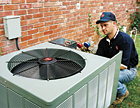
Rheem is improving its air conditioners by enhancing comfort; ensuring increased reliability; adding user friendly controls; fostering greater Internet connectivity; and creating smaller size options.

With maximum efficiencies already being attained, manufacturers are now looking at other ways to improve their gas furnaces and set them apart from the competition. Nordyne is focusing on reductions in noxious flue emissions and furnace operating noise levels, said Reifel. “Rulemakings in California have been finalized which will require major reductions in oxides of nitrogen (NOx) emissions in flue products starting in 2014. Other states are contemplating similar regulations. Completely new burner designs will be required to achieve this, and it presents a major challenge to all of us in the gas furnace industry.”

Johnson Controls believes that total system integration is key, including new controls that offer benefits in flexibility, improved comfort settings for homeowners, and enhanced set-up and diagnostics for contractors. “Our customers are demanding much more out of their heating and air conditioning systems these days - high efficiency, easily understandable and usable thermostats and controls, improved IAQ and comfort in their homes, and reliable and long-lasting products that are affordable,” said Rocky. “Add in features like residential energy management functions, remote access and control, and home automation requirements, and the products today will have to change with customer’s expectations.”

Features that support quick and easy installation, diagnostics, and service will continue to be a priority for Goodman. “The delivery of heating comfort will also remain an area of improvement,” said Fisher. “Consider that homeowners today have options of single-stage, two-stage, and modulating gas furnaces at all efficiency levels. Just a few years ago several of these options were not available.”

To further improve its most efficient products, Rheem will focus its efforts on providing improved home comfort and diagnostics; advancing feature-rich thermostats; ensuring solid, quiet performance; and delivering a powerful product in a compact, space-saving size. “In addition, it’s important to note that the HVAC industry - like other industries that are using current energy sources such as gas and electric - is looking at alternative energy sources,” said Stern. “We feel there is opportunity to better leverage alternative energy sources like solar and fuel cell power in the future.”

While gas furnaces are approaching their maximum AFUEs, manufacturers will still work on finding innovative ways to wring more efficiency from their cooling equipment. These high efficiencies, combined with other cutting edge technology, will help the industry continue to boldly go where no one has gone before.

Publication date: 06/20/2011
KEYWORDS: energy energy efficiency High-Efficiency HVAC Systems

Share This Story

Looking for a reprint of this article?
From high-res PDFs to custom plaques, order your copy today!


Tn joanna 2017
Joanna Turpin is a Senior Editor at The ACHR NEWS. She can be contacted at 248-786-1707 or joannaturpin@achrnews.com. Joanna has been with BNP Media since 1991, first heading up the company’s technical book division before moving over to The ACHR NEWS, where she frequently writes about refrigerants and commercial refrigeration. She obtained her bachelor’s degree in English from the University of Washington and worked on her master’s degree in technical communication at Eastern Michigan University.

Recommended Content

JOIN TODAY
To unlock your recommendations.

Already have an account? Sign In

  • HVAC-enrollment

    The Trades Are Back: HVACR Programs See Nearly 30% Enrollment Spike

    A new wave of future technicians is entering the pipeline.  
    News
    By: Matt Jachman
  • 2025 Top 40 Under 40

    2025 Top 40 Under 40 HVACR Professionals List

    The 11th annual Top 40 Under 40 list highlights those...
    News
    By: Hannah Belloli-Oster
  • LG Ductless Mini-Split Systems

    The 9 Types of Heat Pumps

    As the U.S. moves toward electrification, heat pumps are...
    HVAC Residential Market
    By: Joanna R. Turpin
Subscription Center
  • Create an Account
  • Start a Subscription
  • Manage My Account
  • Sign Up for Newsletters
  • Visit Customer Service
  • Update Preferences

More Videos

Sponsored Content

Sponsored Content is a special paid section where industry companies provide high quality, objective, non-commercial content around topics of interest to The News audience. All Sponsored Content is supplied by the advertising company and any opinions expressed in this article are those of the author and not necessarily reflect the views of The News or its parent company, BNP Media. Interested in participating in our Sponsored Content section? Contact your local rep!

close
  • Piggy Bank
    Sponsored byWatercress Financial

    Energy Prices, Inflation, and HVAC: What Today’s Homeowners Care About

  • Refrigerated Food
    Sponsored bySolstice Advanced Materials

    R-455A Refrigeration: A Cold Storage Solution for the Future

  • Airex Rooftop Units
    Sponsored byAirex Manufacturing Inc

    Consolidating Roof Penetrations: A Growing Trend in Multifamily HVAC Design

Popular Stories

HVAC-Price-Increase-graphic

HVAC Price Increase List: June 2026

Trump-Section-232.jpg

Trump Reduces Section 232 Tariffs on HVAC Equipment to 15%

R410A-Refrigerant-Cylinder.jpg

Refrigerant Recovery is a Revenue Opportunity

Heat-pump-cutaway.jpg

PFAS Rules and A2L Building Codes Continue to Evolve

Kroger.jpg

Kroger to Spend $100 Million to Reduce Refrigerant Leaks

View The ACHR NEWS
Centennial Anniversary Timeline

The ACHR News Timeline Chart
Submit a Letter
Submit a letter to our editors.

Events

November 6, 2025

Next-Gen Data Center Cooling: HVAC Innovation and Real-World Solutions

On Demand As AI workloads and high-density computing push traditional cooling methods to their limits, the data center industry is accelerating the adoption of next-generation HVAC technologies.

June 9, 2026

Before You Go All In on AI: Set Up Your Business to Actually Win

In this webinar, we'll walk you through exactly what to get in place before you add AI to your business. You'll leave with a clear picture of where you stand today and a practical action plan to set yourself up for real results.

View All Submit An Event

Poll

Summer Staff

Are you fully staffed for the summer season?
View Results Poll Archive

Products

BNI Mechanical/Electrical Square Foot Costbook, 2026 Edition

BNI Mechanical/Electrical Square Foot Costbook, 2026 Edition

See More Products
A2L Refrigerants - Free Webinar - May 21, 2026

Related Articles

  • How High Will SEER Go?

    See More
  • High-Efficiency Units Get High Marks

    See More
  • Emily Newton

    How Will Energy-Efficiency-as-a-Service Impact HVAC Contractors?

    See More

Related Products

See More Products
  • The ACHR News - June 30, 2025

    ACHR NEWS June 30, 2025, Issue

  • front cover only.jpg

    How to Market Your HVAC Business

See More Products

Events

View AllSubmit An Event
  • June 10, 2025

    HVAC and Plumbing Marketing 101: How to Stand Out, Get Hired, and Get More Jobs

    On Demand It’s not enough to just get more leads. You need to get more of your ideal customers. And this webinar will show you how.
  • September 23, 2025

    How to Get Found First and Chosen Fast

    On Demand When a customer needs help, they don’t wait around—they choose the first business they find and hear back from. This webinar will cover how to get noticed online, capture every lead, and win more business without adding extra staff or hours.
View AllSubmit An Event

Related Directories

  • Howe Corp.

    Howe manufactures flake ice making equipment for use with virtually any refrigerant including natural such as R-744, and R-717, Ice storage bins, Condensing units for our ice flakers.
×

Sign Up. Stay Informed.

The #1 trusted source for the HVACR industry since 1926

SUBSCRIBE
  • RESOURCES
    • Advertise
    • Contact Us
    • Advisory Board
    • Classifieds
    • Submit a Letter
    • Directories
    • Store
  • ACCOUNT CENTER
    • Create an Account
    • Start a Subscription
    • Manage My Account
    • Sign Up for Newsletters
    • Visit Customer Service
    • Update Preferences
  • SERVICES
    • Marketing Services
    • Reprints
    • Market Research
    • List Rental
    • Survey/Respondent Access
  • STAY CONNECTED
    • LinkedIn
    • Facebook
    • Instagram
    • YouTube
    • X (Twitter)
  • PRIVACY
    • PRIVACY POLICY
    • TERMS & CONDITIONS
    • DO NOT SELL MY PERSONAL INFORMATION
    • PRIVACY REQUEST
    • ACCESSIBILITY

Copyright ©2026. All Rights Reserved BNP Media, Inc. and BNP Media II, LLC.

Design, CMS, Hosting & Web Development :: ePublishing