ACHR News
search
Ask ACHR NEWS AI
cart
facebook twitter instagram linkedin youtube
  • Sign In
  • Subscribe
  • Sign Out
  • My Account
ACHR News
  • NEWS
    • Breaking News
    • New HVAC Products
    • Featured Products
    • Manufacturer Reports
    • HVAC Data
    • Legislation
    • ACHR NEWS Centennial
  • RESIDENTIAL
    • Air Conditioners
    • Furnaces
    • Residential Heat Pumps
    • Ductless
    • Residential IAQ
    • Testing, Monitoring, Tools
    • Components & Accessories
  • COMMERCIAL
    • Air Handlers
    • Rooftop Units
    • Chillers and Cooling Towers
    • Commercial Heat Pumps
    • Boilers and Hydronics
    • VRF/Ductless
    • Commercial IAQ
  • REFRIGERATION
    • Refrigerants
    • Refrigerant Regulations
    • Leak Management
  • CONTRACTOR PRO
    • Geothermal
    • Homeowner Study
    • VRF and VRV Ductless
    • Unitary Trends
  • EDUCATION
    • Training and Education
    • Business Management
    • Service and Maintenance
    • Continuing Education
    • Market Research >
      • HVAC Brand Awareness Report
      • VRV, VRF, VRVZ Report
      • Unitary Trends Report
      • Water Heat Professionals Report
    • Webinars
    • Sponsor Insights
    • eProducts Info
    • White Papers
  • EVENTS
    • HVAC Contractor Forum
    • Industry Events and Webinars
  • MEDIA
    • Videos
    • AHR Expo 2025 Videos
    • Podcasts >
      • ACHR News Podcast
      • HARDI Podcasts
      • AHR Expo Podcasts
      • ACCA Podcasts
    • Interactive Spotlights
    • Quizzes
    • eBooks
    • HVAC Talkback
  • HVAC GROUP
    • ACHR NEWS >
      • Current Issue
      • Digital Edition
      • Subscribe
    • Distribution Trends
    • SNIPS NEWS >
      • Join SNIPS NEWS
    • Engineered Systems News >
      • Join ES News
    • HVACR Directory
    • Contests
    • Newsletters
    • Contact
    • Advertise
    • My Account

Safety First, Last, And Always

By Barbara A. Checket-Hanks
January 19, 2005
"Without the guy in the field, the company goes down the tube," said Charlie Campbell, the safety director for J.J. Kirlin Co. The Rockville, Md., mechanical contractor has 1,200 to 1,500 employees. Campbell knows that injuries in the field can, among other things, wound company morale, disrupt scheduling, and raise insurance costs. Effective safety programs are essential to protect employees and the company.

When it comes to getting workers to buy into a safety program, Campbell knows his stuff. Safety is critical for J.J. Kirlin Co., as the company's projects include sports, entertainment, and hospitality venues; correctional, manufacturing, biopharmaceutical, and medical facilities; and museum, government, and commercial buildings.

The keys to the buy-in, Campbell said, are worker rewards and recognition for safe job performance and discipline of unsafe performance. An effective program can prevent jobsite injuries, get injured workers back on light-duty tasks, and keep workers' compensation and insurance costs down.
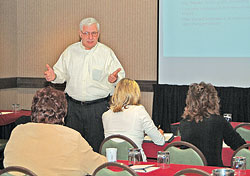
Charlie Campbell, safety director for mechanical contractor J.J. Kirlin Co., says communication is key to the success of a contractor’s safety program: “Saying thanks for being safe and working hard is probably the biggest thing that works.”

Motivation

A safety program is only effective if employees follow it, said Campbell (who also spoke on safety at the most recent Mechanical Service Contractors Association meeting). He said employees will be motivated to follow the program that has a combination of recognition and rewards.

It starts with open lines of communication throughout the company. "Saying thanks for being safe and working hard is probably the biggest thing that works," Campbell said. "Seems that we owners forget that the employees are actually out there in the field. At least say hello. It makes a difference when you are recognized by your employer."

Encourage employees to find new and safe ways to work, he continued, and encourage them to bring their solutions to your office. "Make yourself accessible to all employees, not just upper management and staff. Don't work behind closed doors. It locks out your employees and that hurts like hell."
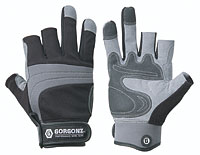
Appropriate personal protective equipment is another critical element of worker safety. Getting employees to wear the right equipment, like these specially designed gloves, can prevent serious injuries.

The Carrot

Safety awards, Campbell said, can be given on a semi-annual or annual schedule:

  • Monthly awards might be coins for gifts, clothing with or without the company logo, gift certificates, or money (which Campbell said he frowns upon). "Do what's comfortable in your company."

    J.J. Kirlin has used a coin system in different ways, Campbell said. In one variation, each employee is given a coin for working safely for one month, with no injuries or violations. Or, each project is given X-amount of coins for working a crew safely for the month; a name is drawn from a worker list and the coins are given to the worker whose name is drawn. "Always try something different and new."

  • Annual awards can be based on safe work hours for the year, with categories broken down by number of safe hours worked consecutively (50,000 hours and above; 20,000 to 30,000 hours; 10,000 to 20,000 hours; 1,000 to 10,000 hours). Giving specific goals makes a difference," Campbell said. "They have something they're working toward."

    "Don't just name your star employees," he added. "That will send a program down the tubes." Create a rule that if an employee received it one year, the same person can't win it the next time.

    As for prizes, "Give them something they are all gonna want." It could be a trip for two to a destination like Las Vegas, a large-screen TV, or gift certificates to a store of their choosing (dollar amount set by the owner). "Gear down your prizes to match your budget."

    When you present the reward, "Make sure you do it in front of everybody else," Campbell said. The recognition is as much a part of the reward as the actual prize. It also encourages other employees to strive to win it next time.

  • An end-of-the-year reward for the entire company could be a small party (for small and medium-sized companies), a bonus for a year of safe work, and recognizing workers with many years of safe work with something symbolic, like a plaque, watch, golf bag, etc.

    Safety awards can also be given at any unscheduled time to honor an employee whose safe work practices made a difference.

    Campbell recalled a Kirlin employee who was wearing safety glasses when a fireproofing line ruptured. "Your face will heal," Campbell said. "Your eyes won't." The glasses saved this employee's eyesight and career.

    Running a safety program may sound costly or time consuming, but it's truly cost effective.

    "If you work safely, your productivity goes up," Campbell stated. "A lot of people say, ‘Ah, that's bull crap.' But it's true."

    The Stick

    Bad behavior or unsafe actions need to be corrected quickly, he continued. "You have to balance the system out or it's worthless."

    Arriving late or leaving early from work, for example, can be a sign of something else going on (personal problems, substance abuse, or job dissatisfaction).

    Disciplinary actions can include the following:

  • For a minor offense, give a verbal warning.

  • For unapproved absenteeism, first time give a verbal warning; the second time give a verbal warning with a possible day off without pay; third time, give a written warning with three days off or terminate the person's employment.

    Above all, make sure to use actions as well as words. "Don't be the contractor who writes people up but you don't do anything," said Campbell.

    When it comes to safety infractions, "Send a note home to the family," he suggested. Getting families involved can help remind employees that they are protecting themselves for their families, not just for the company. Have children come up with safety pictures for a company safety calendar or coloring contest, Campbell suggested.

    Safety glasses are critical for service techs, but they need to be convenient to use, said Charlie Campbell, who recommends that employees be allowed to choose the style they prefer.

    Personal Protection

    According to Campbell, this includes following safe work procedures and wearing appropriate personal protective equipment (PPE): hard hats, safety glasses, respirators, ear protection, proper footwear (steel-toed shoes), and using fall protection equipment.

    Let them know when and how to use it, he said. "Just because you're in the service industry, it doesn't mean you don't wear a hard hat," he pointed out. It depends on where the service is being performed.

  • Hard hats protect against electrical, chemical, or impact hazards. They are rated for specific uses. "Wear your hard hat with the brim forward for protection of the forehead, eyes, and nose," Campbell added. Also, "Do not issue ‘bump hats.' Those are for meat packers."

  • Safety glasses also are critical for service techs, but they need to be convenient to use. Campbell said J.J. Kirlin gave its techs a clip-on pouch and compliance went up.

    Require that safety glasses are worn as soon as the service person gets into the van, and are not taken off until they come in again. Let them choose the style they like so they don't feel like they are wearing something ugly.

    Want to boost safety glass compliance up to 80 percent?

    "Put patches on employees' eyes and put them in a safe, dark room," Campbell said. It shows them what it's like to be blind. Or get an injured employee to speak to other employees - not as a punishment but as a way to help others. "One of the best uses of an injury is as a training aid," he said, "but make sure you don't embarrass the employee."

  • Noise is more critical for service companies than construction, Campbell said, because equipment is running - loudly. "If you can't hear another person speaking three feet from you, you need ear plugs."

  • Service vehicles have their own safety issues. Company vehicles need regular inspections and service. Make sure everything is secured and that the vehicle is carrying appropriate HazCom papers provided, a first aid kit, and a fire extinguisher. Make sure the safety and maintenance of the vehicles are documented.

    What about the driver's safety? You could get a toll-free number for people to report reckless driving (but beware of vengeful exes). For any traffic incident, minor as well as major, run a drug test. Campbell said their union agrees to this.

    Cell phone use? Use hands-free only. "We provide Nextels for everybody," he said. "We prefer that they don't try to talk and drive at the same time. Put sign-age in the vehicle and you, the employer, are protected."

    Finally, "Address problems you see on the job, but follow the rules yourself."

    In Case Of Injury

    In spite of precautions, accidents can still happen. It's better for the company and the employee if you can get him back to work as soon as possible in a modified-duty program, Campbell said. "It shows that you want them back. They heal a lot quicker."

    In addition to employees feeling needed, "It also keeps insurance down, affects the modification rate, and can even reduce medical costs." Campbell contends that employees "heal faster" when they return on modified duty.

    Make sure these employees know what you require in their temporary position, he added. Stress that they are an asset to your company, and be flexible. "Most guys don't want to sit at home collecting workers' comp."

    In service work, Campbell conceded that light-duty field opportunities can be limited. Service employees can do some office work for their modified-duty time.

    "For some guys, it's a hell of a cure," he said. They get new respect for people in the office, knowledge of what goes into paperwork, and how their regular job affects the office. They also can't wait to get back out of the office.

    "Safety, productivity, and profitability go hand in hand," Campbell said. Poor safety practices bring everything else down.

    Sidebar: Service Safety

    Here's a million-dollar question for HVACR service contractors: Does the Occupational Safety and Health Administration (OSHA) have regulations for service contractors?

    Here is the million-dollar answer from Charlie Campbell: No. There are no OSHA regulations for the service industry. "The safety officer for the service tech on the job is the service tech himself," Campbell said.

    He advised service contractors to create method sheets for service procedures that include safety instructions. Have your service employees develop the sheets; they will be more likely to abide by something they had a hand in creating.

    Make sure safety procedures list personal protective equipment, particularly clothing that helps ground the technician. "Some air conditioning units need troubleshooting done when the unit is hot," Campbell said. "The technician needs protection."

    While it is ideal to have a safety officer on staff, "If you can't afford a safety officer, you need to get involved with a group to help you out," Campbell said. Train your people to be their own safety officers.

    - B. Checket-Hanks

    Publication date: 01/24/2005

  • Looking for quick answers on air conditioning, heating and refrigeration topics? Try Ask ACHR NEWS, our new smart AI search tool. Ask ACHR NEWS →

    Share This Story

    Looking for a reprint of this article?
    From high-res PDFs to custom plaques, order your copy today!


    Barbara Checket-Hanks is Service & Maintenance Editor. E-mail her at barbarachecket-hanks@achrnews.com.

    Recommended Content

    JOIN TODAY
    To unlock your recommendations.

    Already have an account? Sign In

    • HVAC-enrollment

      The Trades Are Back: HVACR Programs See Nearly 30% Enrollment Spike

      A new wave of future technicians is entering the pipeline.  
      News
      By: Matt Jachman
    • 2025 Top 40 Under 40

      2025 Top 40 Under 40 HVACR Professionals List

      The 11th annual Top 40 Under 40 list highlights those...
      HVAC Residential Market
      By: Hannah Belloli-Oster
    • LG Ductless Mini-Split Systems

      The 9 Types of Heat Pumps

      As the U.S. moves toward electrification, heat pumps are...
      Heat Pumps
      By: Joanna R. Turpin
    Subscription Center
    • Create an Account
    • Start a Subscription
    • Manage My Account
    • Sign Up for Newsletters
    • Visit Customer Service
    • Update Preferences

    More Videos

    Sponsored Content

    Sponsored Content is a special paid section where industry companies provide high quality, objective, non-commercial content around topics of interest to The News audience. All Sponsored Content is supplied by the advertising company and any opinions expressed in this article are those of the author and not necessarily reflect the views of The News or its parent company, BNP Media. Interested in participating in our Sponsored Content section? Contact your local rep!

    close
    • Piggy Bank
      Sponsored byWatercress Financial

      Energy Prices, Inflation, and HVAC: What Today’s Homeowners Care About

    • Refrigerated Food
      Sponsored bySolstice Advanced Materials

      R-455A Refrigeration: A Cold Storage Solution for the Future

    • Airex Rooftop Units
      Sponsored byAirex Manufacturing Inc

      Consolidating Roof Penetrations: A Growing Trend in Multifamily HVAC Design

    Popular Stories

    HVAC-Price-Increase-graphic

    HVAC Price Increase List: June 2026

    Trump-Section-232.jpg

    Trump Reduces Section 232 Tariffs on HVAC Equipment to 15%

    R410A-Refrigerant-Cylinder.jpg

    Refrigerant Recovery is a Revenue Opportunity

    Heat-pump-cutaway.jpg

    PFAS Rules and A2L Building Codes Continue to Evolve

    Midea-training.jpg

    HVAC Workforce Crisis Expands Beyond Technicians to Instructor Shortages

    View The ACHR NEWS
    Centennial Anniversary Timeline

    The ACHR News Timeline Chart
    Submit a Letter
    Submit a letter to our editors.

    Events

    November 6, 2025

    Next-Gen Data Center Cooling: HVAC Innovation and Real-World Solutions

    On Demand As AI workloads and high-density computing push traditional cooling methods to their limits, the data center industry is accelerating the adoption of next-generation HVAC technologies.

    June 17, 2026

    Decarbonization Without Disruption

    This webinar will explore practical HVAC decarbonization strategies that minimize disruption while maximizing long-term performance and ROI.

    View All Submit An Event

    Poll

    Summer Staff

    Are you fully staffed for the summer season?
    View Results Poll Archive

    Products

    BNI Mechanical/Electrical Square Foot Costbook, 2026 Edition

    BNI Mechanical/Electrical Square Foot Costbook, 2026 Edition

    See More Products
    Decarbonization Without Disruption - Free Webinar - 6/17/2026

    Related Articles

    • Mighty Air Techs LLC Technicians

      How To Be the First and Last Quote a Homeowner Gets

      See More
    • Safety Always Comes First When Working With HVACR Systems

      See More
    • Marchese-Condensing-Units-1.jpg

      Safety First When Working on Rooftop Condensing Units

      See More

    Related Products

    See More Products
    • The ACHR News - August 25, 2025

      ACHR NEWS August 25, 2025, Issue

    • low grade.png

      Low GWP Refrigerant Safety: Flammable & Mildly Flammable Refrigerants Manual

    • 0-88069-032-1-228x228.jpg

      HVAC Security & Safety for Vulnerability Assessment

    See More Products

    Events

    View AllSubmit An Event
    • September 23, 2025

      How to Get Found First and Chosen Fast

      On Demand When a customer needs help, they don’t wait around—they choose the first business they find and hear back from. This webinar will cover how to get noticed online, capture every lead, and win more business without adding extra staff or hours.
    View AllSubmit An Event

    Related Directories

    • Magid Glove and Safety

      Magid is a family-owned, U.S.-based manufacturer and distributor of head-to-toe PPE to keep your workers safe, comfortable, and compliant.
    • DuraLast Products

      Custom or Standard Air filters; Bulk Air filter material; the Original Hogs Hair Supplier; Self Extinguishing PolyLast Synthetic Hogs Hair Material; Panel and Link Filters.
    • MSA Safety (Manufacturer)

      MSA Safety Incorporated (NYSE: MSA) is the global leader in advanced safety products, technologies, and solutions. For the HVAC-R industry, MSA Safety provides gas and refrigerant analysis, detection, monitoring, and tracking solutions. Their FieldServer IIoT gateways are ideal for enabling 24/7 cloud-based monitoring solutions.
    ×

    Sign Up. Stay Informed.

    The #1 trusted source for the HVACR industry since 1926

    SUBSCRIBE
    • RESOURCES
      • Advertise
      • Contact Us
      • Advisory Board
      • Classifieds
      • Submit a Letter
      • Directories
      • Store
    • ACCOUNT CENTER
      • Create an Account
      • Start a Subscription
      • Manage My Account
      • Sign Up for Newsletters
      • Visit Customer Service
      • Update Preferences
    • SERVICES
      • Marketing Services
      • Reprints
      • Market Research
      • List Rental
      • Survey/Respondent Access
    • STAY CONNECTED
      • LinkedIn
      • Facebook
      • Instagram
      • YouTube
      • X (Twitter)
    • PRIVACY
      • PRIVACY POLICY
      • TERMS & CONDITIONS
      • DO NOT SELL MY PERSONAL INFORMATION
      • PRIVACY REQUEST
      • ACCESSIBILITY

    Copyright ©2026. All Rights Reserved BNP Media, Inc. and BNP Media II, LLC.

    Design, CMS, Hosting & Web Development :: ePublishing