ACHR News
search
Ask ACHR NEWS AI
cart
facebook twitter instagram linkedin youtube
  • Sign In
  • Subscribe
  • Sign Out
  • My Account
ACHR News
  • NEWS
    • Breaking News
    • New HVAC Products
    • Featured Products
    • Manufacturer Reports
    • HVAC Data
    • Legislation
    • ACHR NEWS Centennial
  • RESIDENTIAL
    • Air Conditioners
    • Furnaces
    • Residential Heat Pumps
    • Ductless
    • Residential IAQ
    • Testing, Monitoring, Tools
    • Components & Accessories
  • COMMERCIAL
    • Air Handlers
    • Rooftop Units
    • Chillers and Cooling Towers
    • Commercial Heat Pumps
    • Boilers and Hydronics
    • VRF/Ductless
    • Commercial IAQ
  • REFRIGERATION
    • Refrigerants
    • Refrigerant Regulations
    • Leak Management
  • CONTRACTOR PRO
    • Geothermal
    • Homeowner Study
    • VRF and VRV Ductless
    • Unitary Trends
  • EDUCATION
    • Training and Education
    • Business Management
    • Service and Maintenance
    • Continuing Education
    • Market Research >
      • HVAC Brand Awareness Report
      • VRV, VRF, VRVZ Report
      • Unitary Trends Report
      • Water Heat Professionals Report
    • Webinars
    • Sponsor Insights
    • eProducts Info
    • White Papers
  • EVENTS
    • HVAC Contractor Forum
    • Industry Events and Webinars
  • MEDIA
    • Videos
    • AHR Expo 2025 Videos
    • Podcasts >
      • ACHR News Podcast
      • HARDI Podcasts
      • AHR Expo Podcasts
      • ACCA Podcasts
    • Interactive Spotlights
    • Quizzes
    • eBooks
    • HVAC Talkback
  • HVAC GROUP
    • ACHR NEWS >
      • Current Issue
      • Digital Edition
      • Subscribe
    • Distribution Trends
    • SNIPS NEWS >
      • Join SNIPS NEWS
    • Engineered Systems News >
      • Join ES News
    • HVACR Directory
    • Contests
    • Newsletters
    • Contact
    • Advertise
    • My Account
NewsRefrigerationRefrigerants

HVACR Contractors Should Start Preparing for Upcoming Refrigerant Transition

Commercial refrigeration end users will need to employ multiple strategies to ensure success
By Joanna R. Turpin
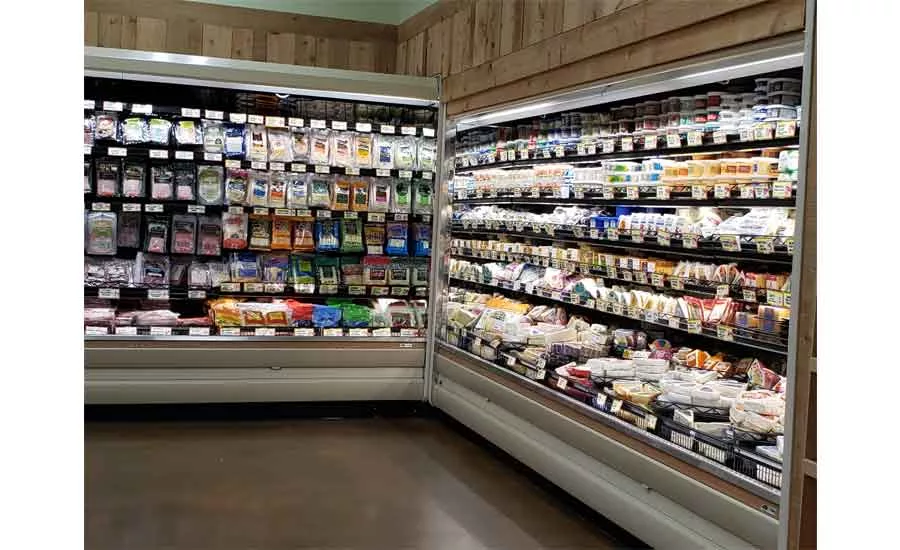
Supermarket Refrigeration.

MAKE A PLAN: Change is coming, which is why commercial refrigeration professionals need to make a plan for how they will address the upcoming refrigerant transition. (Staff Photo)

June 7, 2021
✕
Image in modal.

With the federal government’s passage of the American Innovation and Manufacturing (AIM) Act last year, the phasedown of high-GWP HFCs such as R-404A and R-410A in commercial refrigeration and air conditioning systems is imminent. While the Environmental Protection Agency (EPA) has until October to determine how it will administer the phasedown of HFC production and consumption in the U.S. over the next 15 years, there is no question that the new regulations will affect the entire refrigerant supply chain.

For this reason, commercial refrigeration contractors and their customers should waste no time in starting to prepare for the day in which there is a reduced amount of HFC refrigerant available for use in new and existing equipment. At a recent webinar hosted by AHRI (below), industry experts shared several ways in which the commercial refrigeration industry should start preparing for the phasedown — today.


Understanding Allocations

While it may seem like the 15-year phasedown of HFCs offers plenty of time to prepare for the transition, it is important to note that significant reductions in the production of these refrigerants will take place over that time frame. Under the AIM Act, EPA will gather data from 2011 through 2013 in order to establish the U.S. HFC baseline for production and consumption. Then in 2022, the available supply of HFCs will be reduced to 90% of the baseline; in 2024, it will be reduced to 60%; in 2029 it will be reduced to 30%, etc. (See Table 1.)
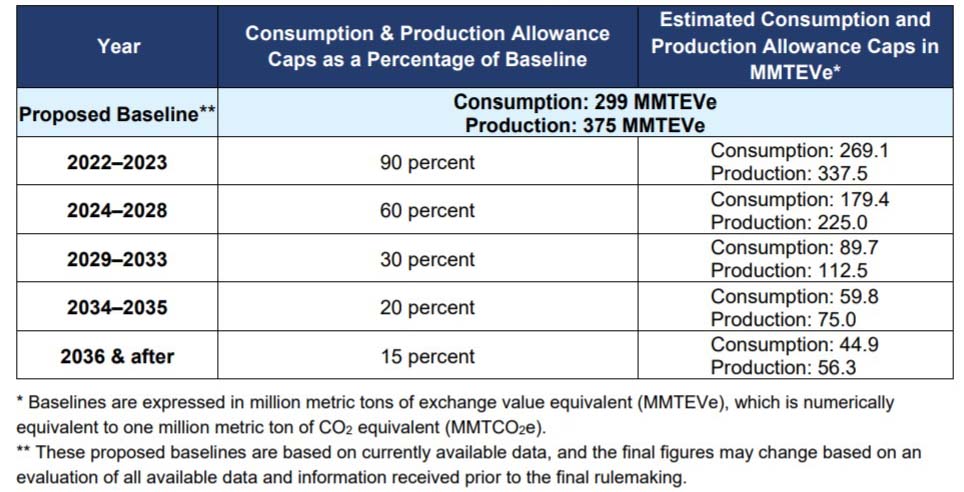
HFC phasedown schedule and consumption and production allowance caps.

Click table to enlarge

TABLE 1: HFC phasedown schedule and consumption and production allowance caps. (Courtesy of EPA)

In administering the phasedown, EPA will create an allocation program, which will define the methodology used to distribute allowances as well as determine the entities that will receive allowances. As Helen Walter-Terrinoni, vice president of regulatory affairs at AHRI, explained, companies or organizations will receive a set quota or allocation of refrigerant they can produce or import. Then that allocation will be phased down over time.

“For example, if a refrigerant producer or an importer of refrigerant has an allocation for 3,922 tons of CO2 equivalents, they could import (or produce) a ton of R-404A; alternatively, they could import (or produce) a few tons of R-448A or R-449A,” she said. “They will be guided with a total basket of carbon dioxide weighted from the GWP of the individual chemicals, and they will decide how those are used. Depending on who receives the allocations will determine how things are used.”

Essentially, the HFC allocation phasedown is designed to create an economic supply imbalance with demand, said Walter-Terrinoni. “So if you think about basic economics, that means that there will be a reduced supply, there'll be scarcity, and there will be increased prices.”

Which is why there is a sense of urgency in deciding how to approach the impending refrigerant transition.

Looking for quick answers on air conditioning, heating and refrigeration topics? Try Ask ACHR NEWS, our new smart AI search tool. Ask ACHR NEWS →


Options Available

While this may seem overwhelming, there is no need to panic, as there are a variety of options covering existing and new refrigeration equipment that can be employed to ensure a successful transition, said Rajan Rajendran, vice president, systems innovation center and sustainability at Emerson. For existing equipment, the focus should be on reducing leaks, using recovered/reclaimed refrigerant, and retrofitting existing equipment with lower-GWP refrigerants. For new equipment, consideration should be given to choosing systems that utilize low-GWP refrigerant and purchasing units that use smaller charge sizes.

“Globally, more than half of the new refrigerant GWP that is produced goes straight into charging leaking equipment,” he said. “How do we prevent this from happening? Preventive maintenance is required, which means you should be doing timely leak sensing, leak detection, leak mitigation, and taking corrective action. And when I talk about corrective action, that's where this question of using new refrigerant or recovered and reclaimed refrigerant comes into the picture.”

Getting into the habit of using recovered and reclaimed refrigerant to service existing equipment is important, because there may be challenges to finding — or affording — virgin refrigerant once the first big production cut of HFCs occurs in 2024. In addition to reducing leaks and using recovered/reclaimed refrigerant, retrofitting existing equipment to lower GWP options should also be considered.

“If you have an R-404A or R-407A piece of equipment that has a lot of charge in it, and it has a potential for leaks and losing a lot of refrigerant, you should probably seriously look at converting that refrigerant to another A1 refrigerant,” said Rajendran. “There's a whole sequence of refrigerants that are less than 1,500 GWP that may very well work. Of course, you need to check with the equipment and component manufacturers before retrofitting, but it is possible to retrofit existing equipment, and that needs to become part of your plan for your whole enterprise.”

When it comes to new refrigeration equipment, end users should consider buying units that utilize low-GWP refrigerants and/or have smaller charges. Both of these strategies will need to be employed, as the installation of large central systems will likely become more of a challenge in the future.

“When we start talking about lower-GWP refrigerants that are not A1, we start moving into the category of flammable refrigerants,” said Rajendran. “As we move into that area, some of these very large charge limits are no longer possible, so you are going to have to move into distributed architecture, remote condensing units, and self-contained equipment.”

Self-contained equipment is likely going to become more appealing to retailers, said Rajendran, because it is something that end users are comfortable using. However, it is not always possible for large retailers to install self-contained equipment everywhere, which is why the industry needs to look at adapting some of that technology into remote equipment.

“Self-contained equipment has managed to squeeze the most Btu or cooling possible out of one pound of refrigerant, so in a very compact form, you get a lot of Btu,” he said. “And the technology and the techniques that they're using to do that are things that we need to migrate into remote equipment.”

As for the ubiquitous central system that utilizes thousands of pounds of A1 refrigerant, that is probably going to become history, said Rajendran.

“Whether it is a self-contained or a distributed system, we’re going to see a new category of mildly flammable A2L refrigerants being used. These are a lot less flammable than propane, but they can’t be used in very large systems.”

Change is coming, which is why commercial refrigeration professionals need to make a plan for how they will address the upcoming refrigerant transition. And doing it sooner rather than later is a prudent thing to do.

KEYWORDS: EPA regulations HFO refrigerant Refrigerant Phasedown refrigerant regulations

Share This Story

Looking for a reprint of this article?
From high-res PDFs to custom plaques, order your copy today!


Tn joanna 2017
Joanna Turpin is a Senior Editor at The ACHR NEWS. She can be contacted at 248-786-1707 or joannaturpin@achrnews.com. Joanna has been with BNP Media since 1991, first heading up the company’s technical book division before moving over to The ACHR NEWS, where she frequently writes about refrigerants and commercial refrigeration. She obtained her bachelor’s degree in English from the University of Washington and worked on her master’s degree in technical communication at Eastern Michigan University.

Recommended Content

JOIN TODAY
To unlock your recommendations.

Already have an account? Sign In

  • HVAC-enrollment

    The Trades Are Back: HVACR Programs See Nearly 30% Enrollment Spike

    A new wave of future technicians is entering the pipeline.  
    Training and Education
    By: Matt Jachman
  • 2025 Top 40 Under 40

    2025 Top 40 Under 40 HVACR Professionals List

    The 11th annual Top 40 Under 40 list highlights those...
    HVAC Contracting
    By: Hannah Belloli-Oster
  • LG Ductless Mini-Split Systems

    The 9 Types of Heat Pumps

    As the U.S. moves toward electrification, heat pumps are...
    Heat Pumps
    By: Joanna R. Turpin
Subscription Center
  • Create an Account
  • Start a Subscription
  • Manage My Account
  • Sign Up for Newsletters
  • Visit Customer Service
  • Update Preferences

More Videos

Sponsored Content

Sponsored Content is a special paid section where industry companies provide high quality, objective, non-commercial content around topics of interest to The News audience. All Sponsored Content is supplied by the advertising company and any opinions expressed in this article are those of the author and not necessarily reflect the views of The News or its parent company, BNP Media. Interested in participating in our Sponsored Content section? Contact your local rep!

close
  • Piggy Bank
    Sponsored byWatercress Financial

    Energy Prices, Inflation, and HVAC: What Today’s Homeowners Care About

  • Refrigerated Food
    Sponsored bySolstice Advanced Materials

    R-455A Refrigeration: A Cold Storage Solution for the Future

  • Airex Rooftop Units
    Sponsored byAirex Manufacturing Inc

    Consolidating Roof Penetrations: A Growing Trend in Multifamily HVAC Design

Popular Stories

Lennox equipment

Platinum Equity to Sell Heat Controller to Lennox

HVAC-tech-van.jpg

Report: Only 65% of HVAC Technician Time is Billable Hours

HVAC Minute retail refrigeration system

EPA Final Rule’s Impact on R-410A Deadlines

Trade groups challenge EPA refrigerant rule

HVACR Trade Groups Challenge EPA Refrigerant Rule in Federal Court

heat-pump-tech-customer.jpg

DOE Updates $8.8B Home Energy Rebate Program Guidance

View The ACHR NEWS
Centennial Anniversary Timeline

The ACHR News Timeline Chart
Submit a Letter
Submit a letter to our editors.

Events

November 6, 2025

Next-Gen Data Center Cooling: HVAC Innovation and Real-World Solutions

On Demand As AI workloads and high-density computing push traditional cooling methods to their limits, the data center industry is accelerating the adoption of next-generation HVAC technologies.

July 28, 2026

How Top Home Services Companies Turn Every Conversation Into Predictable Revenue

In this webinar, we'll outline how top contractors are turning every conversation into predictable revenue by coaching every comfort advisor visit, not just the ones a manager rides along on.

View All Submit An Event

Poll

Summer Staff

Are you fully staffed for the summer season?
View Results Poll Archive

Products

BNI Mechanical/Electrical Square Foot Costbook, 2026 Edition

BNI Mechanical/Electrical Square Foot Costbook, 2026 Edition

See More Products
Designing Systems Using A2L Refrigerant - Free Webinar - 7/22/2026

Related Articles

  • METUS-Commercial-Refrigerant-Byline-Image.jpg

    Preparing for the VRF Refrigerant Transition

    See More
  • The ACHR NEWS Podcast

    Preparing for the Upcoming HVAC Year with Chris Hunter

    See More
  • Technician Reading a Gauge

    Preparing Your Business for the 2025 Refrigerant Transition

    See More

Related Directories

  • Copeland, Cold Chain & Refrigeration

    Industry-leading compressors, facility controls, equipment controls and components for commercial refrigeration applications in food retail, foodservice and light industrial market segments.
  • Women in HVACR

    Women in HVACR are an international organization for Women in the Heating, Ventilation, Air Conditioning and Refrigeration industry. Women in HVACR exist to improve the lives of our members by providing professional avenues to connect with other women.
×

Sign Up. Stay Informed.

The #1 trusted source for the HVACR industry since 1926

SUBSCRIBE
  • RESOURCES
    • Advertise
    • Contact Us
    • Advisory Board
    • Classifieds
    • Submit a Letter
    • Directories
    • Store
  • ACCOUNT CENTER
    • Create an Account
    • Start a Subscription
    • Manage My Account
    • Sign Up for Newsletters
    • Visit Customer Service
    • Update Preferences
  • SERVICES
    • Marketing Services
    • Reprints
    • Market Research
    • List Rental
    • Survey/Respondent Access
  • STAY CONNECTED
    • LinkedIn
    • Facebook
    • Instagram
    • YouTube
    • X (Twitter)
  • PRIVACY
    • PRIVACY POLICY
    • TERMS & CONDITIONS
    • DO NOT SELL MY PERSONAL INFORMATION
    • PRIVACY REQUEST
    • ACCESSIBILITY

Copyright ©2026. All Rights Reserved BNP Media, Inc. and BNP Media II, LLC.

Design, CMS, Hosting & Web Development :: ePublishing