Two New Standards Designed to Improve HVAC Performance
Standards include procedures to grade or score how installed systems are operating
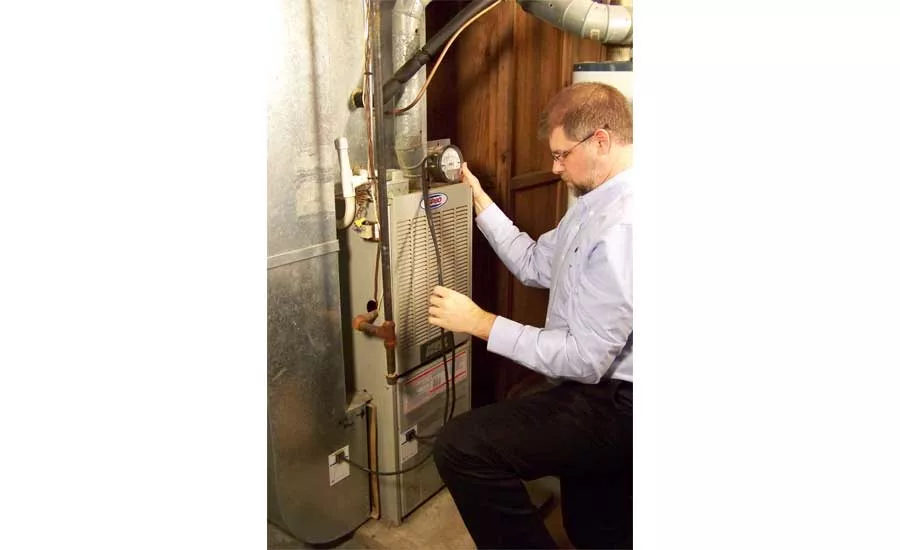
SCORING METHOD: Standard 221 consists of a simple scoring method that can be completed in the field by a qualified technician. (Courtesy of National Comfort Institute)
One of the biggest problems in the HVAC industry is that heating and cooling equipment is often improperly designed and/or installed, which means that systems may not deliver the efficiency and comfort that end users expect to receive. Indeed, the Environmental Protection Agency (EPA) estimates that up to 30% of an HVAC system’s efficiency can be lost if it is improperly designed and installed.
To help alleviate these issues, two very different standards have recently been introduced that offer HVAC professionals the ability to demonstrate the performance of the systems they install. The first is ANSI/RESNET/ACCA/ICC 310-2020 Standard for Grading the Installation of HVAC Systems, and the second is ANSI/ASHRAE Standard 221-2020, Test Method to Field-Measure and Score the Cooling and Heating Performance of an Installed Unitary HVAC System. Both standards are designed to be user-friendly tools that can help HVAC professionals ensure their customers receive the comfort and efficiency they paid for when they purchased their HVAC system.
Standard 310
Standard 310 has a direct beneficial impact on the Energy Rating Index (ERI) or Home Energy Rating System (HERS) index scores when the heating and cooling system is correctly designed and installed. Those who want a better ERI or HERS score for tax or utility incentives, or to show the quality of their work, can use a professional who follows industry standards. For HVAC professionals, this means that their hard work is reflected in the home’s efficiency rating.
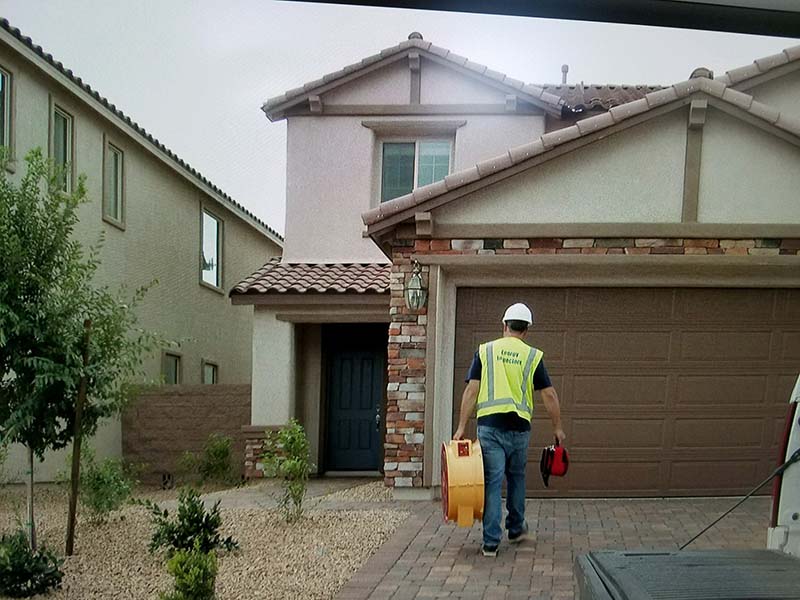
FIVE TASKS: Standard 310 provides a methodology for evaluating the installation quality of unitary HVAC systems and is comprised of five tasks, one of which is a blower fan volumetric airflow test. (Courtesy of RESNET)
This standard was the result of a partnership between RESNET, ICC, and ACCA and establishes the procedures to evaluate and grade elements of an HVAC system’s design and installation. According to Wes Davis, technical services director for ACCA, it solves the problem of confirming compliance to good design and installation practices.
“Shortly after the first residential heating system was installed, HVAC professionals had to compete with low-ball contractors who took shortcuts to offer a cheaper price. This was either because of deceit or from ignorance,” he said. “ACCA coordinated the industry’s HVAC Quality Installation Specification — the QI 5 Standard — to establish the minimum requirements for an HVAC system’s design and commissioning. We worked with RESNET to consider how this could be incorporated into their HERS program, and the answer was Standard 310.”
There are five elements to the standard: two are prerequisites that must be met before testing can begin, and the last three are performance tests. The prerequisites evaluate the system design and confirm the duct system is tight. While performance tests can be conducted, a system that is poorly designed and has a leaky duct system is identified as a poor candidate for further testing. When the design and duct testing evaluations are complete, then come the three performance tests: airflow, refrigerant charge, and cfm/watt. The last is an evaluation of the duct system efficiency — the fan power needed to move the air (watt draw per cubic foot per minute - cfm).
“The object is to earn Grade 1 on each test,” said Davis. “Originally, the plan was to use a simplified evaluation of each test: Grade 1, 2, or 3. That framework stuck, but the test results are now factored in much more scientifically. However, to move from one test to another, the installation must score at least Grade 2; if the result is Grade 3, the testing stops.”
Looking for quick answers on air conditioning, heating and refrigeration topics? Try Ask ACHR NEWS, our new smart AI search tool. Ask ACHR NEWS
Standard 310 is designed to be used on any forced-air heating and cooling system that earns an ERI or HERS score. In the near future, additional tests for combustion appliances and possibly hydronic systems may be added. Davis said that it is important to note that the process in Standard 310 is for either the HERS Rater or the HVAC professional to perform the tests. The standard recognizes the need for the test results to pass through a recognized authority, like ACCA.
“The good contractors do these tests now, so they don’t need any additional tools or training,” he said. “But there will be growing pains for contractors who failed to invest in their installers, or their technicians. It will also take additional time for Raters to perform the tasks in the standard, which means it will be only a small additional expense,” said Davis.
Once the tests in the standard are performed, the RESNET-approved software platform calculates the ERI or HERS index — or score — reflects whether or not the installation has been done correctly.
“This standard is a wonderful companion to the QI 5 Standard,” said Davis. “It provides a pathway for HVAC professionals to get credit for their compliance to the QI 5 Standard. In time, we hope the pathway becomes an eight-lane superhighway of recognition for a wider range of equipment types and additional installation metrics.”
Standard 221
ASHRAE Standard 221-2020, Test Method to Field-Measure and Score the Cooling and Heating Performance of an Installed Unitary HVAC System, essentially enables a technician to score and quantify how efficiently and to what capacity an HVAC system is or isn’t operating in the field. It is based on air balance principles that have been taught by National Comfort Institute (NCI) since about 2001, and as Rob Falke is the president of NCI, it made sense for him to chair the committee that created this consensus standard.
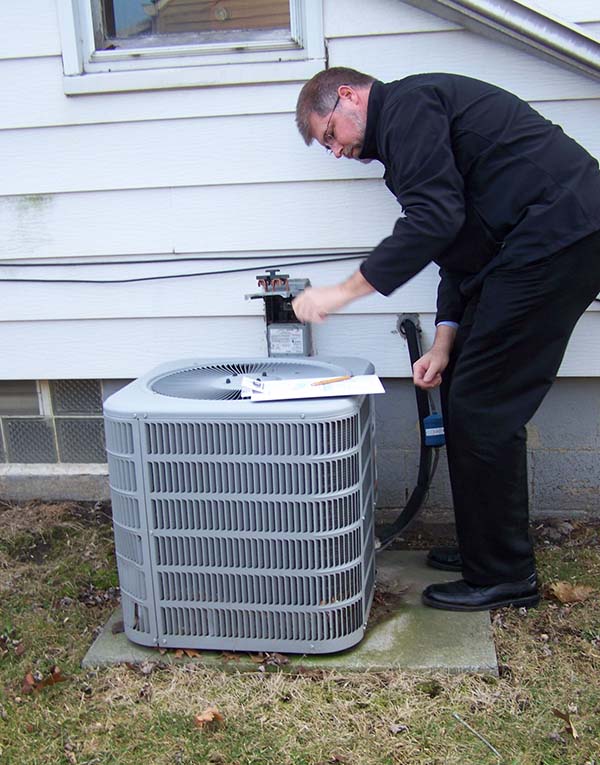
HVAC OPERATION: ASHRAE Standard 221 enables technicians to score and quantify how efficiently and to what capacity an HVAC system is or isn’t operating in the field. (Courtesy of National Comfort Institute)
“ANSI/ASHRAE 221 reveals a truth the industry and consumers have always looked for but have not been able to find,” he said. “For decades, the industry has assumed the yellow efficiency label on the equipment guarantees the efficiency of the system once it’s installed in the field. It does not. Although equipment manufacturer’s data is completely valid and supported by countless industry standards, an installed system is a different product than the equipment in the laboratory and has a different efficiency once installed in a building. Two different products, two different efficiencies.”
Standard 221’s field measured score of the installed system reveals the difference between these two efficiency numbers. The equipment may be rated at 95% efficient, but when it becomes part of a system, the system may only operate at 50%, which is a fairly typical unimproved system score, said Falke.
The standard consists of a simple scoring method that can be completed in the field by a qualified technician, which is a different approach than most ASHRAE standards. As a user-friendly guide, the testing, calculations, and language of the standard are written as informally as ASHRAE standards would allow, said Falke.
To calculate the basic installed system score, the standard instructs HVAC professionals in the field to do the following:
- Collect equipment nameplate data and determine the heating or cooling capacity of the system;
- Measure the total supply airflow delivered into the building at each supply registers;
- Measure average grille air temperatures entering and exiting the building;
- Calculate the amount of heating or cooling Btu entering the building;
- Divide the Btu entering the building by the equipment-rated Btu to find the installed system score. Example: System delivered Btu of 49,000 divided by equipment-rated Btu of 100,000 = an installed system score of 49%.
The standard is currently written for both new and existing forced air residential and commercial heating and cooling systems of any size. Multi-zone HVAC systems and HVAC hydronic systems are currently not addressed in the standard but are being studied by several committee task groups.
Standard Benefits
Falke said Standard 221 can be compared to going to see a doctor: When patients hear their health has deteriorated, it’s an immediate call to action.
“The score delivered by ASHRAE 221 is similar,” he said. “When customers learn there’s a problem and it may be pretty bad news, most decide to do something about it. Normally, the problems discovered by the 221 score are a series of small, hard-to-detect defects whose combined effects deteriorate the system delivered volume of heating or cooling.”
The most common defects discovered by the standard can include low airflow, high duct system temperature loss, and design and installation conditions that are forcing the equipment to operate outside of manufacturer’s specifications, said Falke. He added that the score also uncovers system losses from inadequate maintenance, refrigeration and combustion defects, restrictive air filters, inadequate fan capacity, control problems, unbalanced HVAC systems, and building faults that directly impact the system’s ability to deliver heating or cooling to occupied spaces.
“The score alone has little value,” said Falke. “The score coupled with a contractor who can make surgical repairs, solve the problem, and increase the score is what 221 is all about. In most circumstances, a score below 65% will usually motivate customers to decide the cost to increase their score is worthwhile.
“By the way, most code-compliant systems score in the mid 60% range,” he added. “That’s pretty shocking and usually evidence of problems customers have had for years, but no one could find the problem or help them understand it.”
After surgical repairs and upgrades are made, Falke said that the typical system score increases to near 90%. One of the biggest benefits is that contractors and technicians are able to show how they have improved an HVAC system through tests performed on the system before and after upgrades are made.
“The real prize is the field measured and documented difference between the pre- and post-upgrade score,” he said. “If the system tests in at 50% and tests out at 75%, that’s a 50% increase in the system’s ability to deliver heating or cooling. The increase is the system score is a very marketable product.”
Of course, following Standard 221 will likely result in additional costs for contractors, such as training, new tools, and test equipment. Falke estimates that less than 10% of HVAC companies currently own the full suite of instruments needed to meet 221’s specifications. Many will need to purchase a calibrated air balance hood and a velocity measurement instrument, which cost around $3,000.
As for the time involved to test a customer’s HVAC system, Falke estimates that it takes about an hour in the field for a 3-ton residential unit. A 7.5-ton commercial system will likely take about two hours, and some very large commercial systems may take an entire day. Of course, it will take longer the first couple of times the tests are performed, but testing gets faster after that, he said.
“Some HVAC professionals offer the service for a fee, while others include the cost of testing in the sales cost of a job because it drastically increases their sales closing rates and really educates their customers,” said Falke. “Owners of HVAC contracting companies have told me that the scoring adds an average of 3% to a replacement and system upgrade job, while making the needed repairs to increase the performance of the system typically increases the cost of a job by 20% to 30%. That is a really good value for 30% to 60% more heating or cooling and a comfortable home or building and lowered utility costs.”
Ultimately, ASHRAE 221 is good for the industry, said Falke, because it reveals the hidden gap between rated equipment efficiency and an installed system efficiency and performance in the field.
“That’s new to most the industry, and many HVAC professionals aren’t aware this unseen opportunity can be found and fixed,” he said. “People want certainty these days, and Standard 221’s score provides that certainty and documents it. Bottom line, Standard 221 has created a new product for consumers to buy and for committed contractors to sell. Everybody wins.”
Making sure HVAC systems are installed and operating properly is a big concern, which is why so many industry organizations were involved in creating these new system performance assessment standards. For ASHRAE, its purpose in creating Standard 221 was to score systems before and after upgrades and to provide the tools to document the increase in capacity and efficiency earned by system improvements. The benefit of Standard 310 is to increase the HERS score of a building and give credit to contractors for doing good work. Both standards are invaluable resources for HVAC professionals who wish to set themselves apart from the competition.
Looking for a reprint of this article?
From high-res PDFs to custom plaques, order your copy today!