Refrigerant Recovery Machines Require Regular Maintenance
Properly maintaining units keeps them running efficiently for years
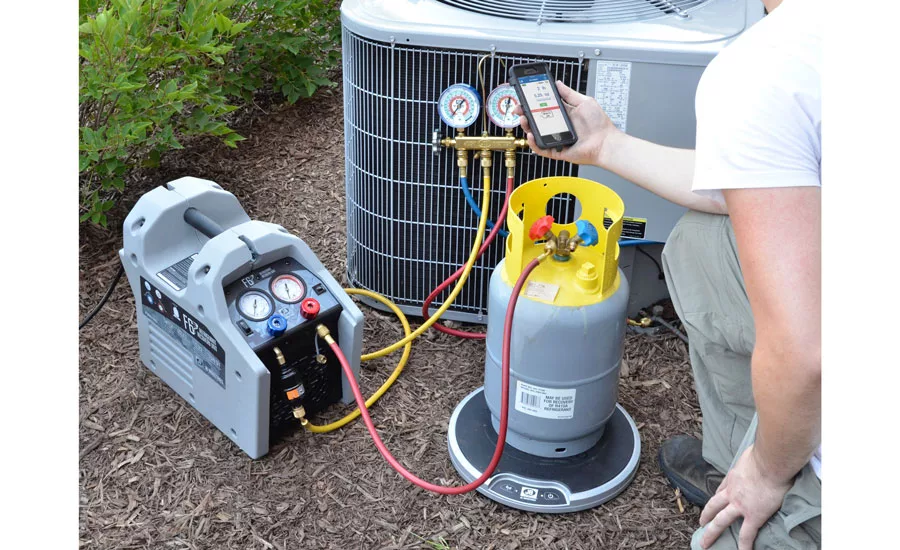
TAKE CARE: Technicians should take the time to install and regularly change the filter driers when caring for their recovery machines. Photo Courtesy of JB Industries
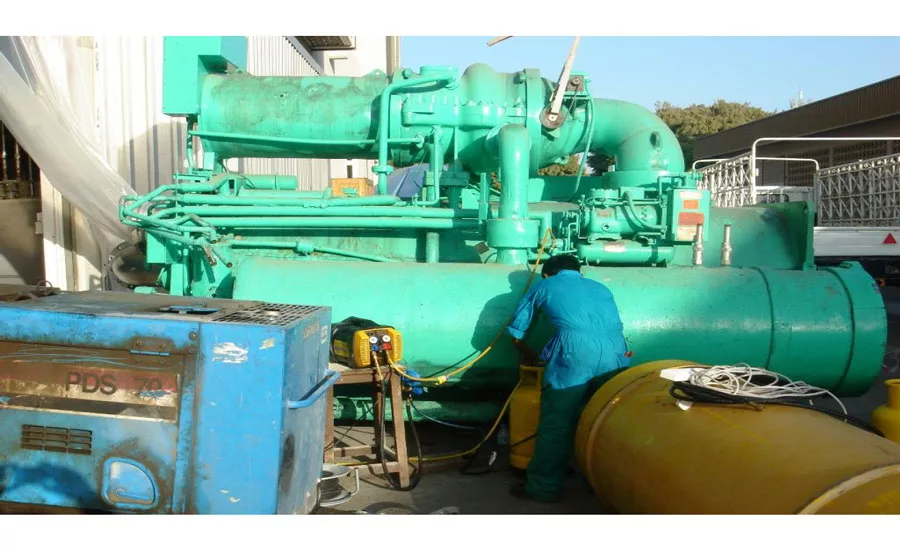
CLEAN AND CHECK: The mesh filter screen on the inlet port of the recovery machine should be inspected before every job and either cleaned or replaced if it is excessively clogged or dirty. Shown here is Appion’s G5Twin being used to recover 4,000 pounds of refrigerant from a chiller in Saudi Arabia.

LONG LIFE: The best way to keep recovery machines operating a long time is to keep them clean, properly store them, and handle them with care. Photo Courtesy of Mastercool
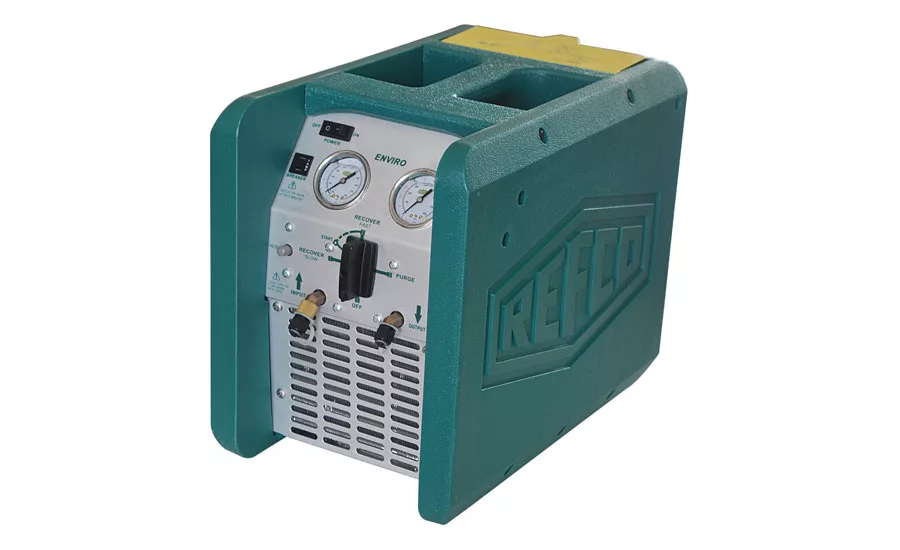
WIPE DOWN: Refco recommends that its ENVIRO and ENVIRO DUO recovery machines be wiped off and cleaned regularly after each use to remove dirt and oils.
Refrigerant recovery machines are to contractors what HVAC systems are to homeowners. Heating and cooling systems are usually the most expensive pieces of equipment in a house, and they need regular maintenance in order to keep running efficiently and for a long time. The same can be said of refrigerant recovery machines, which are some of the more expensive pieces of equipment used by technicians on a daily basis. Just like HVAC systems, they need regular maintenance in order to provide years of efficient, trouble-free operation.
STANDARD PROCEDURE
While requirements differ based on the manufacturer and the type of equipment, there are standard maintenance procedures that can be applied to just about every recovery machine. For example, most recovery machines have a mesh filter screen on the inlet port that should be inspected before every job and either cleaned or replaced if it is excessively clogged or dirty, said Jon Romenesko, technical manager of communications and training, Appion Inc.
“We often see inlet filter screens that are rarely, or never, replaced, which can cause a big restriction and drastically slow performance,” he said. “It is also common to see no filter drier being used on the inlet side. It’s always a good idea to use a brand new filter drier on the inlet side of the recovery machine on every job, especially if the system being worked on has a burned-out compressor.”
Installing and regularly changing the filter drier are the most important steps technicians can take when caring for their recovery machines, said Dave Madden, director of engineering and manufacturing, JB Industries. If technicians choose not to use a filter drier, the machine can be severely damaged if particulates enter the compressor. This can destroy the piston ring seals, which will drastically reduce the machine’s performance, he said.
How often to change the filter drier depends on what is being recovered and how long the machine is being used, but changing it more often than required cannot hurt, especially on larger jobs, according to Madden.
“And if there is a built-in screen on the inlet that filters out particulates, clean it regularly to prevent clogging,” he said. “Changing the filter drier and/or cleaning the screen is especially important to do after a dirty job, like a compressor failure.”
In addition to cleaning and/or replacing the inlet filter screen, it is important to ensure the inlet and discharge ports are protected and kept clean. This is accomplished by replacing the plastic caps after every use, said Steven Secord, vice president, Refco Mfg. US Inc.
Looking for quick answers on air conditioning, heating and refrigeration topics? Try Ask ACHR NEWS, our new smart AI search tool. Ask ACHR NEWS
“For best results, keep a filter permanently connected to the inlet port and change it regularly,” he advised. “Recovery machines should also be wiped off and cleaned regularly after each use to remove dirt and oils.”
It is also important to purge the machine after recovering, according to Madden, and this is especially true when switching between refrigerants.
“If a technician doesn’t purge refrigerant, it can result in contamination if a different refrigerant is recovered on the next job,” he said. “It is not uncommon for technicians to find a mystery mix of refrigerants in a system and not know it. If they do not purge, they could introduce that mix into another system or good recovery cylinder, contaminating the whole thing.”
Romenesko agreed, noting that machines without a refrigerant-isolated crankcase require a separate purge feature to clear out any excess refrigerant that has accumulated in the crankcase.
“Doing so helps prevent cross-contamination and it also slows down crankcase bearing wear, but it must be done at the end of every job,” he said.
If a recovery machine with an oil-less compressor takes an unusually long time to reach a high pressure or if knocking sounds or other unusual noises can be heard in the unit, then technicians should look to replace seals, bearings, and valves, said Chris Carroll, national sales manager, Mastercool Inc.
“The quality of components within each machine determines the performance over time and/or how soon maintenance will be required,” he said. “Also, keep in mind the electrical components — if circuit breakers trip, then a machine should be serviced.”
Regardless of the type of machine, it is a good practice to run a capful of oil (refrigeration oil or vacuum pump oil) through the machine when finished with a job in order to scavenge out any debris, copper particles, or acids that have made their way past the filter drier, said Romenesko.
“This also works to help keep the seals lubricated,” he added. “If storing the machine for long periods, make sure that there is no excess refrigerant inside and that it is stored with the valves open so that any residual refrigerant doesn’t build up pressure.”
REPAIR OR REPLACE?
The best things technicians can do to keep their recovery machines operating for a long time are to keep them clean, properly store them, and handle them with care, according to Carroll. But unfortunately, most technicians run their machines until performance is no longer adequate. Once a machine experiences performance decline and/or unusual noise and maintenance is not performed within a short period of time, the continued use of the machine will usually result in a unit that cannot be repaired, he said.
But if a recovery machine is used and maintained properly, there is no reason why it should not last 10 years or more, said Madden.
“Besides the filter drier, there are very few wear items on a recovery machine,” he said. “Parts of the compressor can wear over time, but they usually last for years. If compressor parts need replacing, the repair is a little more involved, but it can usually be done by a mechanically inclined technician. Of course, it depends on the manufacturer whether or not a recovery machine can be repaired by the technician or if it needs to be sent back to the manufacturer for repair.”
Indications that the machine needs replacing can include slow recovery, excessive compressor noise, not holding pressure, and parts being physically broken, added Madden.
Romenesko often sees machines in the field that are still going strong after nearly 15 years, thanks to routine maintenance and an occasional piston seal replacement. He added that one way to keep a recovery machine operating a long time is to periodically send it to the factory for a tuneup.
“That’s a great way to keep an older machine in service longer, and you would be surprised at how well an older unit can perform when it’s been repaired,” he said.
Customers still send in some of Refco’s original Thermaflo recovery machines to the factory for maintenance — some of those units are at least 20 years old, according to Secord.
“They are still in use, and when they are sent in for a tuneup, we get to see how old they are,” he said. “We feel a properly maintained recovery machine should last many years.”
Technicians should consider getting a tuneup as soon as they begin to experience a noticeable drop in their machine’s performance.
“First, they should perform a self-test (sometimes called a bench test) to rule out any factors in the setup/system that might be slowing things down,” said Romenesko. “If it doesn’t pass the test, it might be time to replace the machine.
“But don’t forget to check with the manufacturer to see if the machine is serviceable before spending any hard-earned money on a new unit,” he added.
Publication date: 4/9/2018
Want more HVAC industry news and information? Join The NEWS on Facebook, Twitter, and LinkedIn today!
Looking for a reprint of this article?
From high-res PDFs to custom plaques, order your copy today!