ACHR News
search
Ask ACHR NEWS AI
cart
facebook twitter instagram linkedin youtube
  • Sign In
  • Subscribe
  • Sign Out
  • My Account
ACHR News
  • NEWS
    • Breaking News
    • New HVAC Products
    • Featured Products
    • Manufacturer Reports
    • HVAC Data
    • Legislation
    • ACHR NEWS Centennial
  • RESIDENTIAL
    • Air Conditioners
    • Furnaces
    • Residential Heat Pumps
    • Ductless
    • Residential IAQ
    • Testing, Monitoring, Tools
    • Components & Accessories
  • COMMERCIAL
    • Air Handlers
    • Rooftop Units
    • Chillers and Cooling Towers
    • Commercial Heat Pumps
    • Boilers and Hydronics
    • VRF/Ductless
    • Commercial IAQ
  • REFRIGERATION
    • Refrigerants
    • Refrigerant Regulations
    • Leak Management
  • CONTRACTOR PRO
    • Geothermal
    • Homeowner Study
    • VRF and VRV Ductless
    • Unitary Trends
  • EDUCATION
    • Training and Education
    • Business Management
    • Service and Maintenance
    • Continuing Education
    • Market Research >
      • HVAC Brand Awareness Report
      • VRV, VRF, VRVZ Report
      • Unitary Trends Report
      • Water Heat Professionals Report
    • Webinars
    • Sponsor Insights
    • eProducts Info
    • White Papers
  • EVENTS
    • HVAC Contractor Forum
    • Industry Events and Webinars
  • MEDIA
    • Videos
    • AHR Expo 2025 Videos
    • Podcasts >
      • ACHR News Podcast
      • HARDI Podcasts
      • AHR Expo Podcasts
      • ACCA Podcasts
    • Interactive Spotlights
    • Quizzes
    • eBooks
    • HVAC Talkback
  • HVAC GROUP
    • ACHR NEWS >
      • Current Issue
      • Digital Edition
      • Subscribe
    • Distribution Trends
    • SNIPS NEWS >
      • Join SNIPS NEWS
    • Engineered Systems News >
      • Join ES News
    • HVACR Directory
    • Contests
    • Newsletters
    • Contact
    • Advertise
    • My Account
RefrigerationIce Machines

The Professor: A Toast to Decorative Spherical Ice

Ice is a serious business, but it can also be fun and creative
By John Tomczyk
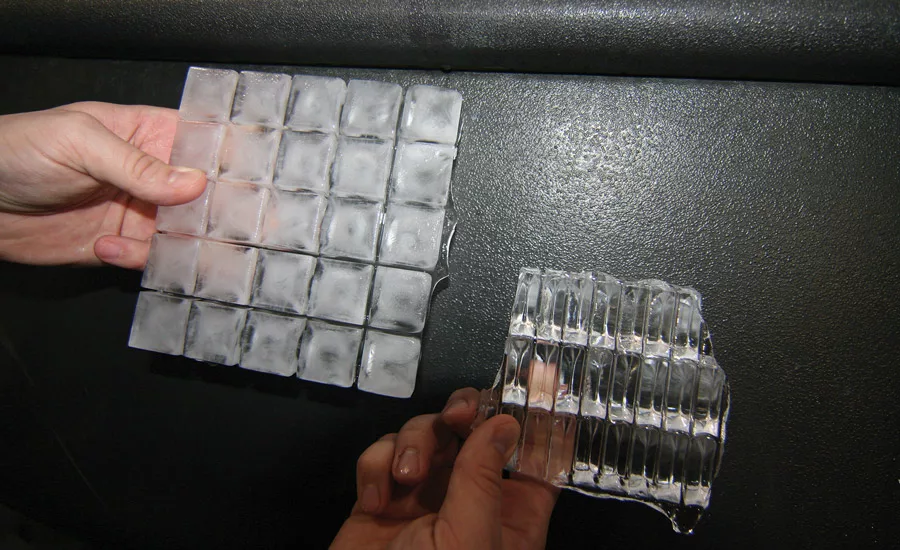
There is a clear difference between hard ice (right) and soft ice. Photo courtesy of Ferris State University

FIGURE 1: There is a clear difference between hard ice (right) and soft ice. Photo courtesy of Ferris State University

FIGURE 2: Soft silicone ice molds. Photo courtesy of Spirit Ice Vice

FIGURE 2: Soft silicone ice molds. Photo courtesy of Spirit Ice Vice

FIGURE 3: An aluminum mold with a custom logo. Photo courtesy of Spirit Ice Vice

FIGURE 3: An aluminum mold with a custom logo. Photo courtesy of Spirit Ice Vice

FIGURE 4: An ice ball with logo. Photo courtesy of Spirit Ice Vice
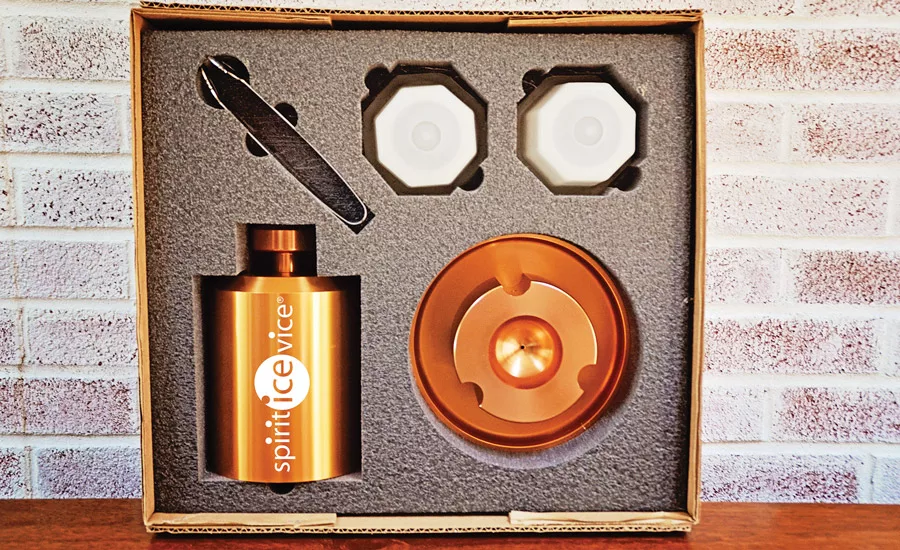
FIGURE 4: An ice ball with logo. Photo courtesy of Spirit Ice Vice

FIGURE 5: The top and bottom aluminum molds, ice tongs, and silicon ice molds. Photo courtesy of Ferris State University

FIGURE 5: The top and bottom aluminum molds, ice tongs, and silicon ice molds. Photo courtesy of Spirit Ice Vice

There is a clear difference between hard ice (right) and soft ice. Photo courtesy of Ferris State University
FIGURE 2: Soft silicone ice molds. Photo courtesy of Spirit Ice Vice
FIGURE 3: An aluminum mold with a custom logo. Photo courtesy of Spirit Ice Vice
FIGURE 4: An ice ball with logo. Photo courtesy of Spirit Ice Vice
FIGURE 5: The top and bottom aluminum molds, ice tongs, and silicon ice molds. Photo courtesy of Ferris State University
September 12, 2016

Homes, restaurants, bars, and businesses rely on clear, clean ice for many applications. Ice is considered a food source, and the water that makes the ice must be of good quality. Good quality water will produce a crystal-clear, hard piece of ice.

Ice hardness is a measure of the thermal cooling capacity (Btu) of the ice. It is measured as a percentage. Flake ice falls in the 75 percent hardness range while block ice falls in the 95-100 percent hardness range, depending on the water quality and how the ice is made. The higher the percentage of hardness, the more cooling ability or cooling capacity the piece of ice will have. This occurs because hard ice is denser than soft ice. Harder ice will last longer in a glass when cooling a drink or in a cooler chilling food.

Do not confuse ice hardness with water hardness. Water hardness has to do with the amount of minerals dissolved in the water. The more minerals dissolved in the water, the harder the water. Hard water reduces the ice hardness and its cooling capacity because of the higher mineral content in the ice. Figure 1 shows the difference between hard and soft ice. The ice sheet on the left is cloudy and soft; it contains a lot of minerals. The ice sheet on the right is clearer, denser, and will have a higher hardness percentage with more cooling capacity.

CLEAR, DECORATVE, SPHERICAL ICE

Ice is serious business, but that doesn’t mean people can’t have a little creative fun with it. A manufacturer in the U.S. has crafted an aluminum mold that creates a perfect 2.5-inch ice sphere to ensure the slowest melt, least dilution, and most efficient cooling of beverages. Custom logos can be laser-etched on the aluminum mold and new technology allows for custom logos or a company’s personal brand on the spherical ice ball itself. Venue operators, bartenders, consumers, and distributors are using this ice sphere as an essential accessory.

The aluminum molds come in bottle or cylinder shapes that are designed to complement the décor of prestigious restaurants, pubs, or personal bars. They are produced in three base colors — black, copper, and champagne — but can be special ordered in any pantone. The aluminum molds are sealed with a Food and Drug Administration (FDA) food-safe coating.

To make the spheres, water is placed in FDA-compliant, soft-silicon plastic ice block molds (Figure 2). Each mold yields an ice chunk that is placed into the aluminum mold (a bottom mold is shown in Figure 3) to produce the spherical ice ball (Figure 4). The 2.5-inch-diameter ice ball has been strategically designed to minimize the surface area of ice exposed to a beverage when compared to ice cubes and other ice piece configurations.

Regular tap water or bottled water can be used in this process, but using water treated with reverse-osmosis technology will produce the clearest ice ball. Remember, regular tap water varies in quality from one community to another, and that will affect the clarity of the ice ball.

Looking for quick answers on air conditioning, heating and refrigeration topics? Try Ask ACHR NEWS, our new smart AI search tool. Ask ACHR NEWS →

A trick to producing very clear ice in the silicon ice block molds is to freeze the water slowly. Simply put the silicon ice block molds filled with the proper water in a small, unsealed portable cooler and place the cooler inside a larger freezer. This process will slow the freezing process and produce crystal-clear ice. Another method bar or restaurant owners may want to consider is to hire an ice sculptor to cut clear ice slugs into hexagon or square shapes to be placed in the aluminum mold. These shapes are the optimal choice for generating a crystal-clear spherical ice ball in the aluminum mold. This cost for the sculptor can in-part be offset by applying an upcharge to a drink.

SPHERICAL ICE BALL TECHNOLOGY

Here is the process for making a spherical ice ball. Once the ice is slowly frozen in the silicon ice block molds, remove the ice from the mold. With the aluminum mold sitting on a level surface, remove its top. Center the ice chunk from the silicon mold on to the base of the aluminum mold. Now, place the unit’s sleeve (top) over the base. Gravity and heat conductivity of the heavy aluminum top actually craft the spherical ice ball. The top aluminum mold will travel downward until it stops in the drip tray in approximately one minute. Remove the top. Use specially designed ice tongs to place the spherical ice in a glass.

In this process, the aluminum molds act as a heat-transfer medium to melt and shape the block of ice into a perfect sphere. How fast the ice melts depends on three factors and is governed by this equation:

Btu of heat transferred = (mass) x (specific heat) x (temperature difference)

Where:

• Btu = British thermal units of heat;

• Mass = Mass of the aluminum mold;

• Specific heat = Specific heat of aluminum; and

• Temperature difference = Temperature difference between the ice and the aluminum mold.

If the machine becomes cold to the touch, the spherical ice ball creation process will slow down. This happens because the temperature difference between the aluminum mold and the ice has become smaller. This temperature difference is the controlling factor in the speed of ice ball production. The temperature difference between the aluminum and the ice is the driving potential for heat transfer. In the equation above, the mass of the aluminum mold and the specific heat of aluminum are constants and are out of the control of the end user. So, for faster cycle times, place the machine under warm tap water after each use. This will warm the aluminum molds and cause a greater temperature difference between the aluminum and ice in the mold.

Figure 5 shows a kit that includes the top and bottom aluminum molds, ice tongs, and FDA-compliant silicon ice molds. For a demonstration, visit http://bit.ly/SpiritIceVice.

Publication date: 9/12/2016

Want more HVAC industry news and information? Join The NEWS on Facebook, Twitter, and LinkedIn today!

KEYWORDS: heat transfer

Share This Story

Looking for a reprint of this article?
From high-res PDFs to custom plaques, order your copy today!


John Tomczyk is HVACR professor emeritus, Ferris State University, Big Rapids, Michigan, and coauthor of Refrigeration & Air Conditioning Technology, published by Cengage Learning. Contact him at tomczykjohn@gmail.com.

Recommended Content

JOIN TODAY
To unlock your recommendations.

Already have an account? Sign In

  • HVAC-enrollment

    The Trades Are Back: HVACR Programs See Nearly 30% Enrollment Spike

    A new wave of future technicians is entering the pipeline.  
    News
    By: Matt Jachman
  • 2025 Top 40 Under 40

    2025 Top 40 Under 40 HVACR Professionals List

    The 11th annual Top 40 Under 40 list highlights those...
    HVAC Contracting
    By: Hannah Belloli-Oster
  • LG Ductless Mini-Split Systems

    The 9 Types of Heat Pumps

    As the U.S. moves toward electrification, heat pumps are...
    Air Source Heat Pumps
    By: Joanna R. Turpin
Subscription Center
  • Create an Account
  • Start a Subscription
  • Manage My Account
  • Sign Up for Newsletters
  • Visit Customer Service
  • Update Preferences

More Videos

Sponsored Content

Sponsored Content is a special paid section where industry companies provide high quality, objective, non-commercial content around topics of interest to The News audience. All Sponsored Content is supplied by the advertising company and any opinions expressed in this article are those of the author and not necessarily reflect the views of The News or its parent company, BNP Media. Interested in participating in our Sponsored Content section? Contact your local rep!

close
  • Piggy Bank
    Sponsored byWatercress Financial

    Energy Prices, Inflation, and HVAC: What Today’s Homeowners Care About

  • Refrigerated Food
    Sponsored bySolstice Advanced Materials

    R-455A Refrigeration: A Cold Storage Solution for the Future

  • Airex Rooftop Units
    Sponsored byAirex Manufacturing Inc

    Consolidating Roof Penetrations: A Growing Trend in Multifamily HVAC Design

Popular Stories

Refrigerants-and-gauge.jpg

HVAC Industry Warns of Counterfeit Refrigerants Entering U.S. Supply Chain

U.S. Supreme Court building

95% Furnace Efficiency Rule to Get New Hearing

Midea-training.jpg

HVAC Workforce Crisis Expands Beyond Technicians to Instructor Shortages

Data_Center_facility.jpg

HVAC Manufacturers Respond to Growing Data Center Backlash

HVAC Minute retail refrigeration system

EPA Final Rule’s Impact on R-410A Deadlines

View The ACHR NEWS
Centennial Anniversary Timeline

The ACHR News Timeline Chart
Submit a Letter
Submit a letter to our editors.

Events

November 6, 2025

Next-Gen Data Center Cooling: HVAC Innovation and Real-World Solutions

On Demand As AI workloads and high-density computing push traditional cooling methods to their limits, the data center industry is accelerating the adoption of next-generation HVAC technologies.

June 23, 2026

HVAC Duct Sealing Mastics: Why Selection Matters

In this webinar we will detail what HVAC material buyers and technicians need to know when selecting duct mastics, including matching mastic to substrate, alternatives to liquid mastic, and where UL 181 Listings fit into real world installations.

View All Submit An Event

Poll

Summer Staff

Are you fully staffed for the summer season?
View Results Poll Archive

Products

BNI Mechanical/Electrical Square Foot Costbook, 2026 Edition

BNI Mechanical/Electrical Square Foot Costbook, 2026 Edition

See More Products
HVAC Duct Sealing Mastics: Why Selection Matters - Free Webinar - 6/23/2026

Related Articles

  • The Professor: A Recap on Oil Traps

    See More
  • The Professor: Leak Checking a Water-Cooled Condenser

    See More
  • The Professor: Hard Ice vs. Soft Ice

    See More

Related Products

See More Products
  • air came to a stop.jpg

    The Air Came to a Stop

  • Lessons Learned in a Boiler Room: A common sense approach to servicing and installing commercial boilers

  • new cover.jpg

    Profit is An Attitude: The Strategies You Need to Optimize Profits

See More Products

Related Directories

  • A to Z Sales & Marketing

    We strive to revolutionize indoor living through innovative solutions that improve air quality, enhance comfort, and promote sustainable living for people around the world.
×

Sign Up. Stay Informed.

The #1 trusted source for the HVACR industry since 1926

SUBSCRIBE
  • RESOURCES
    • Advertise
    • Contact Us
    • Advisory Board
    • Classifieds
    • Submit a Letter
    • Directories
    • Store
  • ACCOUNT CENTER
    • Create an Account
    • Start a Subscription
    • Manage My Account
    • Sign Up for Newsletters
    • Visit Customer Service
    • Update Preferences
  • SERVICES
    • Marketing Services
    • Reprints
    • Market Research
    • List Rental
    • Survey/Respondent Access
  • STAY CONNECTED
    • LinkedIn
    • Facebook
    • Instagram
    • YouTube
    • X (Twitter)
  • PRIVACY
    • PRIVACY POLICY
    • TERMS & CONDITIONS
    • DO NOT SELL MY PERSONAL INFORMATION
    • PRIVACY REQUEST
    • ACCESSIBILITY

Copyright ©2026. All Rights Reserved BNP Media, Inc. and BNP Media II, LLC.

Design, CMS, Hosting & Web Development :: ePublishing