ACHR News
search
Ask ACHR NEWS AI
cart
facebook twitter instagram linkedin youtube
  • Sign In
  • Subscribe
  • Sign Out
  • My Account
ACHR News
  • NEWS
    • Breaking News
    • New HVAC Products
    • Featured Products
    • Manufacturer Reports
    • HVAC Data
    • Legislation
    • ACHR NEWS Centennial
  • RESIDENTIAL
    • Air Conditioners
    • Furnaces
    • Residential Heat Pumps
    • Ductless
    • Residential IAQ
    • Testing, Monitoring, Tools
    • Components & Accessories
  • COMMERCIAL
    • Air Handlers
    • Rooftop Units
    • Chillers and Cooling Towers
    • Commercial Heat Pumps
    • Boilers and Hydronics
    • VRF/Ductless
    • Commercial IAQ
  • REFRIGERATION
    • Refrigerants
    • Refrigerant Regulations
    • Leak Management
  • CONTRACTOR PRO
    • Geothermal
    • Homeowner Study
    • VRF and VRV Ductless
    • Unitary Trends
  • EDUCATION
    • Training and Education
    • Business Management
    • Service and Maintenance
    • Continuing Education
    • Market Research >
      • HVAC Brand Awareness Report
      • VRV, VRF, VRVZ Report
      • Unitary Trends Report
      • Water Heat Professionals Report
    • Webinars
    • Sponsor Insights
    • eProducts Info
    • White Papers
  • EVENTS
    • HVAC Contractor Forum
    • Industry Events and Webinars
  • MEDIA
    • Videos
    • AHR Expo 2025 Videos
    • Podcasts >
      • ACHR News Podcast
      • HARDI Podcasts
      • AHR Expo Podcasts
      • ACCA Podcasts
    • Interactive Spotlights
    • Quizzes
    • eBooks
    • HVAC Talkback
  • HVAC GROUP
    • ACHR NEWS >
      • Current Issue
      • Digital Edition
      • Subscribe
    • Distribution Trends
    • SNIPS NEWS >
      • Join SNIPS NEWS
    • Engineered Systems News >
      • Join ES News
    • HVACR Directory
    • Contests
    • Newsletters
    • Contact
    • Advertise
    • My Account
HVAC ContractingService and Maintenance

Btu Buddy 161: Oversized Air Conditioner Problem
By Bill Johnson
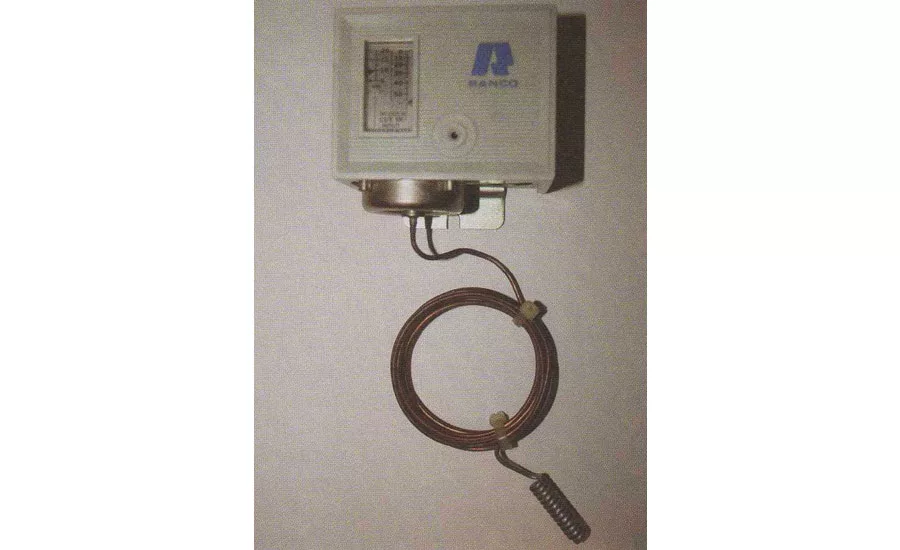
a remote bulb thermostat that could be used as a freeze control

FIGURE 1: This is an example of a typical remote bulb thermostat that could be used as a freeze control. The remote bulb can be located on the suction line leaving the coil. The bulb should be insulated. The compressor contactor coil wire can be routed through the control contacts. (Figures are from Refrigeration & Air Conditioning Technology, 7th Edition, by William Whitman, William Johnson, John Tomczyk and Eugene Silberstein published by Delmar Cengage Learning.) (©Delmar Cengage Learning.)
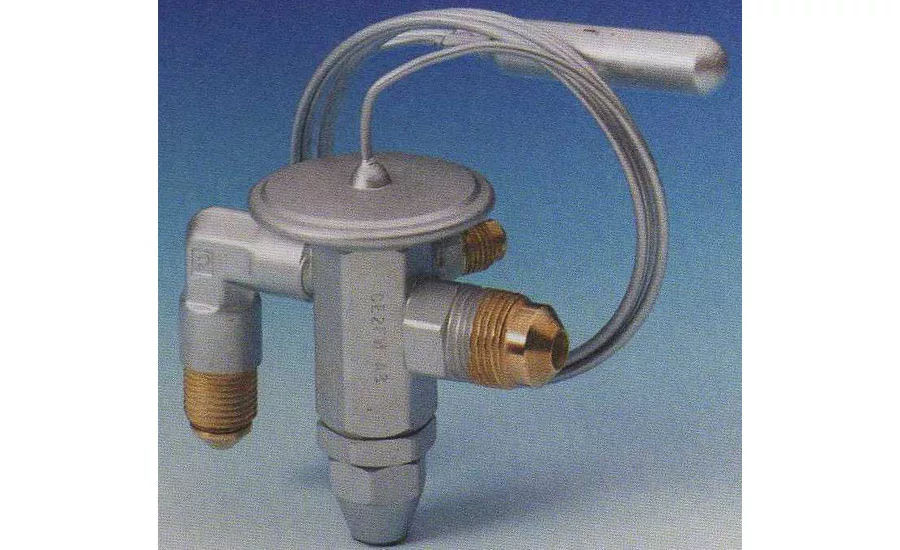
thermostatic expansion valve

FIGURE 2: This is an example of a thermostatic expansion valve that could control the refrigerant in an air conditioning coil. It should maintain the superheat and not allow liquid refrigerant to enter the suction line going to the compressor. (©Delmar Cengage Learning.)

a remote bulb thermostat that could be used as a freeze control
thermostatic expansion valve
August 22, 2016

Bob is a service technician who is well trained and nationally certified. However, he sometimes suffers from the same confusion that all technicians occasionally do — the facts that he gathers may or may not point to the obvious cause of the problem or the best solution. But Bob has had something that no one else has. He recalled his long­time HVACR mentor and imagined him accompanying him as “Btu Buddy,” someone who reminded him to take time to stop and think before rushing to judgment, helped keep him on the right track, even with facts that are confusing.

Now, Bob’s company has promoted him to helping train a new employee, right out of a school specializing in HVAC, just like Bob was. Bob is now Tim’s Btu Buddy. Tim is anxious to travel with Bob. Tim realizes that he is right out of school, with the theory and lab work that he accomplished in school, but still needs help. He knows that he worked with many of the components of the systems in the school, under ideal conditions with good light and air conditioning. Now it is into the field, sometimes under the house with poor lighting, or out on the rooftop in the sun, where the real action is. He is naturally and normally reluctant, but he has Bob to help guide him.

Bob and Tim were at a customer’s house and the customer was explaining what was going on with his air conditioning system. The customer said, “The old system in our house stopped working early this spring and we had it evaluated and we were told that it needed to be replaced. Money is very tight right now so I talked to my cousin who had a system very similar to ours that he had removed from a rental property and was willing to give us if we could make it work. He had an air conditioning man that worked for him that installed it in our house early in the summer. It cools the house really well as you can tell, but it just doesn’t feel right in the house. It feels like the humidity is too high. The system that they took out of our house was a 3-ton package unit and what they installed was a 4-ton package unit.”

Bob told the customer that they would get started on it and see what they could find. Bob and Tim started talking about how the house felt to them and Tim noted, “The house is certainly cool but he is right. It feels damp.”

Bob told him to go to the truck and get the psychrometer and they would take some temperature and humidity readings to see what the house readings actually were.

After taking some readings they determined that the dry bulb temperature in the house was 73°F, and the humidity was 70 percent. Bob explained, “The dry bulb temperature really looks good but the humidity is high in the house just as the customer said. It looks to me like this oversized system is not operating for long enough periods of time to remove the moisture from the house. I would like to ask the homeowner another question.”

Bob went to the customer and asked, “Have you noticed any mold or mildew anywhere in the house, particularly the shoes in any dark closet that you may have?”

Looking for quick answers on air conditioning, heating and refrigeration topics? Try Ask ACHR NEWS, our new smart AI search tool. Ask ACHR NEWS →

The homeowner said, “Yes, some shoes have shown mold in some of our closets. We didn’t really know why. Hopefully, you can get to the bottom of this.”

Bob told Tim, “Let’s talk about ways that we can reduce the humidity in the home. With the coil operating at its current temperature, it is not removing enough moisture during the short running times. If we can lower the coil temperature, it would cause the coil to remove more moisture during the times that it is running.”

Tim then asked, “I understand that the system will not be as efficient operating at the lower coil temperature, but are there other operating difficulties that we may run into?”

Bob said, “Yes, there are possibilities of the coil operating too cold and freezing up during the running cycle. Also the ductwork will be operating at a much lower temperature because of the cooler air. We do not want to get the temperature low enough so that the ductwork and registers in the rooms would start to sweat. Even if they did start to sweat once we reduced the humidity in the house they would probably stop sweating, so that is probably not a big problem. We can also install a freeze control on the system so that, if the coil did start freezing, the control would stop the compressor from running and let the coil defrost. This should be a pretty easy fix but we probably should explain it to the homeowner.”

Bob explained the situation to the homeowner and he said, “Well, that is a much easier fix than buying a new unit. We just cannot afford a new system at this time. I realize that this unit will not operate as efficiently as it should, but it will keep us cool and we will just have to pay for the lower efficiency of operation.”

Bob and Tim obtained a freeze control (Figure 1) and installed the control sensing bulb on the suction line at the coil outlet and insulated it. They set the control for 33°. They then wired the control circuit in series with the compressor contactor coil. This would stop the compressor and give the evaporator time to thaw out because the indoor fan would still be operating. If the thermostat was still calling for cooling when the freeze thermostat contacts were still closed, the compressor would just start again and continue cooling. It probably wouldn’t be off for more than about 10 minutes during the off cycle while the coil was thawing out.

Bob said, “This system has a thermostatic expansion valve (Figure 2) for a metering device, which will prevent liquid from moving over into the suction line if the coil gets too cold. The thermostatic expansion valve should be able to maintain about 10° superheat even at colder temperatures.”

The fan speed was set on medium-­high, so they lowered the fan speed to low. They installed gauges and a superheat thermometer on the suction line and started the system up to see what the operating temperatures would be. After the system had been operating about 15 minutes, they checked the suction pressure; it was an R-­22 system and the operating pressure was 55 psig, corresponding to a 31° coil temperature. They watched the system run until the thermostat cut the system off. There were no signs of ice, so the system looked like it was performing well. If the coil did have a tendency to freeze during a long running cycle, the freeze control would cut the compressor off and let it thaw out.

Bob explained to the customer what they had done and what the operating procedures would be for the system, and as they were driving away he said to Tim, “I believe this system will operate normally and get the humidity down in the house by removing the excess moisture with the cold coil. The system will probably have slightly longer running times which will also help. We will call the customer in a couple of days and ask them what the home is feeling like.”

When they called the customer three days later, the customer said that the system was working great. The house seemed much drier and they did not have any sweating on their discharge air registers. Bob told the customer that this was good news. This should be a permanent fix until he buys a new system and he should remember that the original was a 3-ton system and don’t let anybody replace the system with another 4-ton system. It needed to go back to the original system size if it was ever changed out.

Tim told Bob, “I never would’ve thought of that type of fix for that house. It won’t be fully efficient, but it will save the customer money rather than changing the unit out.”

Publication date: 8/22/2016

Want more HVAC industry news and information? Join The NEWS on Facebook, Twitter, and LinkedIn today!

KEYWORDS: air conditioning troubleshooting humidity troubleshooting and HVACR

Share This Story

Looking for a reprint of this article?
From high-res PDFs to custom plaques, order your copy today!


Active in the HVACR industry since the 1950s, Bill Johnson graduated in gas fuel technology and refrigeration from the Southern Technical Institute, a branch of Georgia Tech (now known as Southern Polytechnic Institute). He taught HVAC classes at Coosa Valley Vocational & Technical Institute for four years. He moved on to become service manager for Layne Trane, Charlotte, N.C. He taught for 15 years at Central Piedmont Community College, part of this time as program director. He had his own business for five years doing installation and service work. Now retired, he is the author of Practical Heating Technology and Practical Cooling Technology, and continues as a co-author of Refrigeration & Air Conditioning Technology, seventh edition, all published by Delmar Cengage Learning. For more information, he can be reached at 704-968-0000 or thebillj1@gmail.com.

Btu Buddy Notebook is a collection of more than 50 service call scenarios in book form covering both cooling season and heating season troubleshooting. For more information and to purchase the book, visit the HVACR Industry Store.

Recommended Content

JOIN TODAY
To unlock your recommendations.

Already have an account? Sign In

  • HVAC-enrollment

    The Trades Are Back: HVACR Programs See Nearly 30% Enrollment Spike

    A new wave of future technicians is entering the pipeline.  
    Training and Education
    By: Matt Jachman
  • 2025 Top 40 Under 40

    2025 Top 40 Under 40 HVACR Professionals List

    The 11th annual Top 40 Under 40 list highlights those...
    HVAC Residential Market
    By: Hannah Belloli-Oster
  • LG Ductless Mini-Split Systems

    The 9 Types of Heat Pumps

    As the U.S. moves toward electrification, heat pumps are...
    Heat Pumps
    By: Joanna R. Turpin
Subscription Center
  • Create an Account
  • Start a Subscription
  • Manage My Account
  • Sign Up for Newsletters
  • Visit Customer Service
  • Update Preferences

More Videos

Sponsored Content

Sponsored Content is a special paid section where industry companies provide high quality, objective, non-commercial content around topics of interest to The News audience. All Sponsored Content is supplied by the advertising company and any opinions expressed in this article are those of the author and not necessarily reflect the views of The News or its parent company, BNP Media. Interested in participating in our Sponsored Content section? Contact your local rep!

close
  • Piggy Bank
    Sponsored byWatercress Financial

    Energy Prices, Inflation, and HVAC: What Today’s Homeowners Care About

  • Refrigerated Food
    Sponsored bySolstice Advanced Materials

    R-455A Refrigeration: A Cold Storage Solution for the Future

  • Airex Rooftop Units
    Sponsored byAirex Manufacturing Inc

    Consolidating Roof Penetrations: A Growing Trend in Multifamily HVAC Design

Popular Stories

Trade groups challenge EPA refrigerant rule

HVACR Trade Groups Challenge EPA Refrigerant Rule in Federal Court

heat-pump-tech-customer.jpg

DOE Updates $8.8B Home Energy Rebate Program Guidance

Lovato-refrigerant-rooftop_AC_Units_.jpg

When Refrigerants Change, So Do the Contactors

HVAC-Price-Increase-graphic

HVAC Price Increase List: July 2026

Martin Hoover

ACCA Leadership Shakeup: Barton James Out, Hoover Named Interim CEO

View The ACHR NEWS
Centennial Anniversary Timeline

The ACHR News Timeline Chart
Submit a Letter
Submit a letter to our editors.

Events

November 6, 2025

Next-Gen Data Center Cooling: HVAC Innovation and Real-World Solutions

On Demand As AI workloads and high-density computing push traditional cooling methods to their limits, the data center industry is accelerating the adoption of next-generation HVAC technologies.

July 28, 2026

How Top Home Services Companies Turn Every Conversation Into Predictable Revenue

In this webinar, we'll outline how top contractors are turning every conversation into predictable revenue by coaching every comfort advisor visit, not just the ones a manager rides along on.

View All Submit An Event

Poll

Summer Staff

Are you fully staffed for the summer season?
View Results Poll Archive

Products

BNI Mechanical/Electrical Square Foot Costbook, 2026 Edition

BNI Mechanical/Electrical Square Foot Costbook, 2026 Edition

See More Products
Designing Systems Using A2L Refrigerant - Free Webinar - 7/22/2026

Related Articles

  • Btu Buddy 112: Too Much Load for Air Conditioner

    See More
  • typical airflow in a low budget system

    Btu Buddy 159: Heat Pump Air Distribution Problem

    See More
  • Btu Buddy 71: Dry House Problem

    See More

Related Products

See More Products
  • A-Heat-Pump-Thats-Not-Delivering-Any-Air-DVD-Cover-218x300.jpg

    A Heat Pump That’s Not Delivering Any Air

  • ac.png

    Air Conditioning Service Guide R-410A and R-22 Systems 2nd Edition

  • HVACR-Troubleshooting-Fundamentals-Cover-Image-One-Sheet.jpg

    HVACR Troubleshooting Fundamentals - Refrigeration & Air Flow Systems Training Package for Instructors & Service Managers

See More Products

Events

View AllSubmit An Event
  • December 4, 2013

    Air Conditioner Installation Optimization Training

    The way a central air conditioner (CAC) is installed by a contractor can be as important as what gets installed in terms of energy efficiency.
  • December 16, 2013

    Air Conditioner Installation Optimization Training

    The way a central air conditioner (CAC) is installed by a contractor can be as important as what gets installed in terms of energy efficiency.
View AllSubmit An Event

Related Directories

  • Aero Conditioner Co. LLC

    Designer and manufacturer of harsh-duty industrial and military air conditioners, including hazardous duty for Classes I and II. All mechanical controls, stainless-steel cabinets, do not clog in dust.
×

Sign Up. Stay Informed.

The #1 trusted source for the HVACR industry since 1926

SUBSCRIBE
  • RESOURCES
    • Advertise
    • Contact Us
    • Advisory Board
    • Classifieds
    • Submit a Letter
    • Directories
    • Store
  • ACCOUNT CENTER
    • Create an Account
    • Start a Subscription
    • Manage My Account
    • Sign Up for Newsletters
    • Visit Customer Service
    • Update Preferences
  • SERVICES
    • Marketing Services
    • Reprints
    • Market Research
    • List Rental
    • Survey/Respondent Access
  • STAY CONNECTED
    • LinkedIn
    • Facebook
    • Instagram
    • YouTube
    • X (Twitter)
  • PRIVACY
    • PRIVACY POLICY
    • TERMS & CONDITIONS
    • DO NOT SELL MY PERSONAL INFORMATION
    • PRIVACY REQUEST
    • ACCESSIBILITY

Copyright ©2026. All Rights Reserved BNP Media, Inc. and BNP Media II, LLC.

Design, CMS, Hosting & Web Development :: ePublishing