ACHR News
search
Ask ACHR NEWS AI
cart
facebook twitter instagram linkedin youtube
  • Sign In
  • Subscribe
  • Sign Out
  • My Account
ACHR News
  • NEWS
    • Breaking News
    • New HVAC Products
    • Featured Products
    • Manufacturer Reports
    • HVAC Data
    • Legislation
    • ACHR NEWS Centennial
  • RESIDENTIAL
    • Air Conditioners
    • Furnaces
    • Residential Heat Pumps
    • Ductless
    • Residential IAQ
    • Testing, Monitoring, Tools
    • Components & Accessories
  • COMMERCIAL
    • Air Handlers
    • Rooftop Units
    • Chillers and Cooling Towers
    • Commercial Heat Pumps
    • Boilers and Hydronics
    • VRF/Ductless
    • Commercial IAQ
  • REFRIGERATION
    • Refrigerants
    • Refrigerant Regulations
    • Leak Management
  • CONTRACTOR PRO
    • Geothermal
    • Homeowner Study
    • VRF and VRV Ductless
    • Unitary Trends
  • EDUCATION
    • Training and Education
    • Business Management
    • Service and Maintenance
    • Continuing Education
    • Market Research >
      • HVAC Brand Awareness Report
      • VRV, VRF, VRVZ Report
      • Unitary Trends Report
      • Water Heat Professionals Report
    • Webinars
    • Sponsor Insights
    • eProducts Info
    • White Papers
  • EVENTS
    • HVAC Contractor Forum
    • Industry Events and Webinars
  • MEDIA
    • Videos
    • AHR Expo 2025 Videos
    • Podcasts >
      • ACHR News Podcast
      • HARDI Podcasts
      • AHR Expo Podcasts
      • ACCA Podcasts
    • Interactive Spotlights
    • Quizzes
    • eBooks
    • HVAC Talkback
  • HVAC GROUP
    • ACHR NEWS >
      • Current Issue
      • Digital Edition
      • Subscribe
    • Distribution Trends
    • SNIPS NEWS >
      • Join SNIPS NEWS
    • Engineered Systems News >
      • Join ES News
    • HVACR Directory
    • Contests
    • Newsletters
    • Contact
    • Advertise
    • My Account
HVAC Residential MarketHVAC Light Commercial MarketHVAC Commercial MarketTesting | Monitoring | Tools

Electric Arc Welding Safety

Preventing electrical shock should remain a top priority for your team at all times

By Pete Chaney
June 22, 2015

While workers performing electric arc welding are subject to hazards related to the inhalation of toxic fumes, eye hazards, burns, or fires, the most potentially perilous hazard they face is electrical shock, which can result in electrocution and other horrific physiological problems. Preventing electrical shock should therefore be a top priority within a company safety program that also addresses the other hazards associated with electric arc welding.

SHOCKING RESULTS

Why is preventing electrical shock so important? Most electric arc welding machines used in mechanical construction push up to 600 V and generate a current between 10-600 A. However, it only takes 70-100 milliamps (mA) to kill a human being, and a mA is only one one-thousandth of a simple amp.

The key to preventing electrical shock is to ensure welders protect themselves from becoming the path of least resistance for electricity traveling to ground, and from becoming part of the actual welding circuit. While most welders thoroughly understand the former concept and keep it foremost in their minds, the latter concept is often overlooked.

For example, a welder in the Midwest recently became part of a welding circuit and remained there for close to 10 seconds until the electrode burned down enough to break the circuit. Fortunately, he survived, but the incident left him bleeding from the nose and mouth and shook him up so much that he seriously contemplated finding another way to make a living.

In this case, the incident was a perfect storm of four events. First, the worker was kneeling on two pipes covered in sheet metal that were electrically connected to the pipe he was welding. Second, it was an extremely hot day, and he was sweating so profusely that his welding gloves and pants were soaking wet. Third, his work cable was clamped to a structural steel beam and not directly to the work itself. Fourth, the work cable was clamped 60 feet away from the welding machine.

The combination of the first two events decreased resistance to a path that the current was not supposed to travel. The combination of the second two events increased resistance in the path that the current was supposed to travel. As a result, the current travelled from the electrode through the work, the welder’s wet welding glove, his body, the sheet metal covered pipe, the steel beam, the work cable, and finally back to the welding machine. Remove any one of the four events that led to the incident, and it probably would not have occurred.

BETTER SAFE THAN SORRY

The lessons from the incident are straightforward and, while the missing protective measures are somewhat obvious, they’re certainly well worth revisiting.

Looking for quick answers on air conditioning, heating and refrigeration topics? Try Ask ACHR NEWS, our new smart AI search tool. Ask ACHR NEWS →

• Make sure welders know how and why to insulate themselves from the anticipated electrode circuit, any unintended and perhaps inconspicuous electrode circuit paths, the work itself, and from ground;

• Ensure welders do not weld in wet environments, and emphasize proper insulation when the work environment and/or their clothing, including their gloves, are even slightly damp; and

• Require welders to clamp their work cables directly to the work itself and as close to the weld as practical. This safe-work practice is recommended by welding machine manufacturers in their operators’ manuals. When there is no place on the work to clamp a standard spring-style work cable clamp, use a magnetic clamp. There are several manufacturers that make effective, high-quality magnetic clamps that are capable of functioning effectively up to 600 A.

WELDER PROTECTION

Protecting welders from other common electric arc welding hazards can be easily accomplished by:

• Preventing overexposure to welding fumes with adequate ventilation, such as effective local exhaust, industrial-grade fans, and, when necessary, point-of-operation ventilation systems such as smoke eaters;

• Having standard safe work practices in place, such as requiring welders to position their bodies away from welding fumes and to position their welding helmets so that the fumes can’t rise up underneath them and into the breathing zone;

• Requiring adequate eye protection at all times. In addition to wearing standard safety glasses underneath their welding helmets while they are welding, welders should use, at a minimum, a No. 10, and sometimes a No. 12 or No. 14, helmet filter plate, depending on the size of the electrode and the amount of current that will be generated;

• Protecting against burns with proper clothing, including leather boots that cover the ankles, flame-resistant pants, and a flame-resistant long-sleeve shirt or flame-resistant coveralls. High- quality welding gloves that are in good condition are also necessary. A welding cap is a good idea, too, unless the welder is using
a combination hardhat/welding helmet rig; and

• Guarding against workplace fires through a combination of good housekeeping and a fire watch at the end of each day. Anything that’s flammable or combustible should be removed from the hot work area or somehow isolated before welding begins. And, a designated fire watch should observe the work area for at least 30 minutes after the welding or any other hot work has stopped for the day. The fire watch should look for smoke, smoldering materials, flames, etc.

The good news is that electric arc welding is extremely safe when performed properly. To learn more about electric arc welding safety, welders should read the safety instructions in a welding machine manufacturer’s operator’s manual before welding with that particular machine.

Publication date: 6/22/2015

Want more HVAC industry news and information? Join The NEWS on Facebook, Twitter, and LinkedIn today!

KEYWORDS: Electrification safety training welding

Share This Story

Looking for a reprint of this article?
From high-res PDFs to custom plaques, order your copy today!


Pete Chaney is the director of safety and health at Mechanical Contractors Association of America (MCAA) and has served in that position since 1997. He holds a master’s degree in safety management, is a certified safety professional, and has 28 years of experience as an occupational safety and health professional. Contact him at 301-869-5800 or pchaney@mcaa.org. 

Recommended Content

JOIN TODAY
To unlock your recommendations.

Already have an account? Sign In

  • HVAC-enrollment

    The Trades Are Back: HVACR Programs See Nearly 30% Enrollment Spike

    A new wave of future technicians is entering the pipeline.  
    News
    By: Matt Jachman
  • 2025 Top 40 Under 40

    2025 Top 40 Under 40 HVACR Professionals List

    The 11th annual Top 40 Under 40 list highlights those...
    HVAC Light Commercial Market
    By: Hannah Belloli-Oster
  • LG Ductless Mini-Split Systems

    The 9 Types of Heat Pumps

    As the U.S. moves toward electrification, heat pumps are...
    Heat Pumps
    By: Joanna R. Turpin
Subscription Center
  • Create an Account
  • Start a Subscription
  • Manage My Account
  • Sign Up for Newsletters
  • Visit Customer Service
  • Update Preferences

More Videos

Sponsored Content

Sponsored Content is a special paid section where industry companies provide high quality, objective, non-commercial content around topics of interest to The News audience. All Sponsored Content is supplied by the advertising company and any opinions expressed in this article are those of the author and not necessarily reflect the views of The News or its parent company, BNP Media. Interested in participating in our Sponsored Content section? Contact your local rep!

close
  • Piggy Bank
    Sponsored byWatercress Financial

    Energy Prices, Inflation, and HVAC: What Today’s Homeowners Care About

  • Refrigerated Food
    Sponsored bySolstice Advanced Materials

    R-455A Refrigeration: A Cold Storage Solution for the Future

  • Airex Rooftop Units
    Sponsored byAirex Manufacturing Inc

    Consolidating Roof Penetrations: A Growing Trend in Multifamily HVAC Design

Popular Stories

HVAC-Price-Increase-graphic

HVAC Price Increase List: June 2026

Trump-Section-232.jpg

Trump Reduces Section 232 Tariffs on HVAC Equipment to 15%

Refrigerants-and-gauge.jpg

HVAC Industry Warns of Counterfeit Refrigerants Entering U.S. Supply Chain

Heat-pump-cutaway.jpg

PFAS Rules and A2L Building Codes Continue to Evolve

Midea-training.jpg

HVAC Workforce Crisis Expands Beyond Technicians to Instructor Shortages

View The ACHR NEWS
Centennial Anniversary Timeline

The ACHR News Timeline Chart
Submit a Letter
Submit a letter to our editors.

Events

November 6, 2025

Next-Gen Data Center Cooling: HVAC Innovation and Real-World Solutions

On Demand As AI workloads and high-density computing push traditional cooling methods to their limits, the data center industry is accelerating the adoption of next-generation HVAC technologies.

June 17, 2026

Decarbonization Without Disruption

This webinar will explore practical HVAC decarbonization strategies that minimize disruption while maximizing long-term performance and ROI.

View All Submit An Event

Poll

Summer Staff

Are you fully staffed for the summer season?
View Results Poll Archive

Products

BNI Mechanical/Electrical Square Foot Costbook, 2026 Edition

BNI Mechanical/Electrical Square Foot Costbook, 2026 Edition

See More Products
Decarbonization Without Disruption - Free Webinar - 6/17/2026

Related Articles

  • Electric Arc Welding Safety

    See More
  • Aug. 13, 2014: MCAA Releases Electric Arc Welding Safety Video

    See More
  • Lincoln Electric Co.: ARC WELDING

    See More

Related Products

See More Products
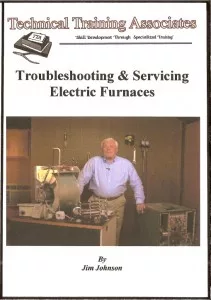
  • Troublingshooting-Servicing-Electric-Furnances-211x300.jpg

    Troubleshooting & Servicing Electric Furnances

  • Troublingshooting-Servicing-Electric-Furnances-211x300.jpg

    Troubleshooting & Servicing Electric Furnances

  • low grade.png

    Low GWP Refrigerant Safety: Flammable & Mildly Flammable Refrigerants Manual

See More Products

Related Directories

  • MSA Safety (Manufacturer)

    MSA Safety Incorporated (NYSE: MSA) is the global leader in advanced safety products, technologies, and solutions. For the HVAC-R industry, MSA Safety provides gas and refrigerant analysis, detection, monitoring, and tracking solutions. Their FieldServer IIoT gateways are ideal for enabling 24/7 cloud-based monitoring solutions.
×

Sign Up. Stay Informed.

The #1 trusted source for the HVACR industry since 1926

SUBSCRIBE
  • RESOURCES
    • Advertise
    • Contact Us
    • Advisory Board
    • Classifieds
    • Submit a Letter
    • Directories
    • Store
  • ACCOUNT CENTER
    • Create an Account
    • Start a Subscription
    • Manage My Account
    • Sign Up for Newsletters
    • Visit Customer Service
    • Update Preferences
  • SERVICES
    • Marketing Services
    • Reprints
    • Market Research
    • List Rental
    • Survey/Respondent Access
  • STAY CONNECTED
    • LinkedIn
    • Facebook
    • Instagram
    • YouTube
    • X (Twitter)
  • PRIVACY
    • PRIVACY POLICY
    • TERMS & CONDITIONS
    • DO NOT SELL MY PERSONAL INFORMATION
    • PRIVACY REQUEST
    • ACCESSIBILITY

Copyright ©2026. All Rights Reserved BNP Media, Inc. and BNP Media II, LLC.

Design, CMS, Hosting & Web Development :: ePublishing