ACHR News
search
Ask ACHR NEWS AI
cart
facebook twitter instagram linkedin youtube
  • Sign In
  • Subscribe
  • Sign Out
  • My Account
ACHR News
  • NEWS
    • Breaking News
    • New HVAC Products
    • Featured Products
    • Manufacturer Reports
    • HVAC Data
    • Legislation
    • ACHR NEWS Centennial
  • RESIDENTIAL
    • Air Conditioners
    • Furnaces
    • Residential Heat Pumps
    • Ductless
    • Residential IAQ
    • Testing, Monitoring, Tools
    • Components & Accessories
  • COMMERCIAL
    • Air Handlers
    • Rooftop Units
    • Chillers and Cooling Towers
    • Commercial Heat Pumps
    • Boilers and Hydronics
    • VRF/Ductless
    • Commercial IAQ
  • REFRIGERATION
    • Refrigerants
    • Refrigerant Regulations
    • Leak Management
  • CONTRACTOR PRO
    • Geothermal
    • Homeowner Study
    • VRF and VRV Ductless
    • Unitary Trends
  • EDUCATION
    • Training and Education
    • Business Management
    • Service and Maintenance
    • Continuing Education
    • Market Research >
      • HVAC Brand Awareness Report
      • VRV, VRF, VRVZ Report
      • Unitary Trends Report
      • Water Heat Professionals Report
    • Webinars
    • Sponsor Insights
    • eProducts Info
    • White Papers
  • EVENTS
    • HVAC Contractor Forum
    • Industry Events and Webinars
  • MEDIA
    • Videos
    • AHR Expo 2025 Videos
    • Podcasts >
      • ACHR News Podcast
      • HARDI Podcasts
      • AHR Expo Podcasts
      • ACCA Podcasts
    • Interactive Spotlights
    • Quizzes
    • eBooks
    • HVAC Talkback
  • HVAC GROUP
    • ACHR NEWS >
      • Current Issue
      • Digital Edition
      • Subscribe
    • Distribution Trends
    • SNIPS NEWS >
      • Join SNIPS NEWS
    • Engineered Systems News >
      • Join ES News
    • HVACR Directory
    • Contests
    • Newsletters
    • Contact
    • Advertise
    • My Account

The Untypical Refrigeration System
By Dave Demma
January 12, 2009
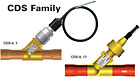
Figure 1. Electric suction line regulator. (Figures shown in this feature are courtesy of Parker Hannifin.)

While it might be fair to say that there is no such thing as a typical supermarket refrigeration system, there are commonalities between all systems that employ multiplex compressor racks. It is typical for the evaporator circuits in each supermarket to be combined into common saturated suction temperature (SST) groups, and connected to a multiplex compressor rack designed to operate within that specific temperature range.

It is also typical that there would be several SST groups in a supermarket. For example: medium-temperature (MT) fixtures/boxes at 15°F and 25°, and low-temperature (LT) fixtures/boxes at -13° and -23°. It is also typical that there would be a variation of temperatures between the evaporator circuits within each suction group. The circuits connected to the 15° MT rack might vary in design from 15° for the service deli cases to 25° for the bakery walk-in cooler. These variations in design SST require some form of temperature control for each individual evaporator circuit.

But for the last five years, the supermarket industry has undergone a gradual shift in thinking regarding the preferred method for controlling evaporator discharge air temperature. You might call it an untypical … and more modern approach.

Mechanical evaporator pressure regulator (EPR) valves continue to have a strong following, and are still used in the majority of applications. However, the margin over the up-and-coming alternate choice - electric suction line regulators - is shrinking. As the name implies, this is a regulator that is installed in the suction line, and utilizes an electric step motor to drive the piston open or closed. Hence the name electric suction line regulator (Fig. 1).

In this story - the first of a multipart series regarding the changes taking place in supermarket refrigeration - we will look at some of those typical ways of currently doing business and what might be driving the changes that we will look at in future parts of this series.


EVAPORATOR SST

Evaporator SST is the temperature design criteria specified on the supermarket equipment legend. Maintaining a constant evaporator SST can be achieved with a mechanical EPR. It is designed to maintain a constant refrigerant pressure in the evaporator, which then maintains the constant SST. This will provide a fairly constant discharge air temperature, and has been the standard method of circuit temperature control dating back to the 1970s.

There are a few drawbacks to this method of circuit temperature control. There is no perfect correlation between SST and discharge air temperature. As the system conditions and/or the refrigeration load changes, maintaining a constant SST will result in some variation in discharge air temperature (Fig. 2).

This will not be problematic in all applications. Canned beverages and bottled water can certainly tolerate wider temperature swings without the risk of spoilage. In other applications, such as a fresh meat display, precise temperature control is essential for product integrity.

Additionally, more consistent discharge air temperatures may be required to satisfy the requirements of regulations such as HACCP (Hazard Analysis of Critical Control Points) begins with the evaluation of a situation, to assess the possibility of consumer health hazard.

Such an evaluation depends on three factors:

1. Does the product contain contaminant-sensitive ingredients?

2. Does its manufacturing involve a controlled process step such as sufficiently high temperature, pH change, or other process that can eliminate the hazard?

3. Does its distribution chain pose any potential hazard?

In the next step, critical control points (CCPs) are identified with maximum assurance. These are the locations in the processing plant where failure to prevent contamination can be detected through instruments such as recording thermometers.

Multiplex compressor racks are typically controlled by a central processor, commonly referred to as an energy management system (EMS). Amongst its many functions is the ability to control pressure and temperature parameters in the supermarket. It will monitor the evaporator discharge air temperature of each system, and might even have a provision to cycle off a liquid solenoid valve to provide a safety against a low-fixture temperature.

The EMS is capable of providing a control signal in response to a fixture discharge air temperature that has strayed outside of its set-point parameter. While this can be used to generate an alarm for monitoring purposes, the EPR set point cannot be changed with a simple control signal. A setting change of that nature would require an onsite technician to make the adjustment.

Herein is the limitation of the mechanical EPR. While it does provide a fairly consistent discharge air temperature by maintaining a constant SST, it cannot be modulated by the EMS when the discharge air temperature strays outside of the design set-point parameter. The inability of the EMS to control the EPR can certainly cause the discharge air temperature to rise above or fall below the design set point.

While the main focus of temperature control is to ensure that the refrigerated product does not suffer a loss of integrity, or prematurely spoil, there is another aspect of display case and/or walk-in box temperature control that should not be overlooked: It is never necessary for the discharge air temperature to fall below the design set point. More importantly, when the discharge air temperature does fall below its set point, it is accomplished by an unnecessary expenditure of energy.
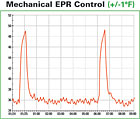


Figure 2. As the system conditions and/or the refrigeration load changes, maintaining a constant SST will result in some variation in discharge air temperature.

PULLDOWN AFTER DEFROST

Every refrigeration circuit in the supermarket will undergo one or more defrost cycles per day. Regardless of the defrosting method employed (off cycle, electric, gas), the product temperature will be well above its design temperature set point upon termination of the defrost cycle. The evaporator will be under its highest load condition at the very moment the defrost cycle terminates.

Product integrity requires that the discharge air temperature be reduced to the design set point promptly after the defrost cycle terminates. Given the high load condition when the refrigeration mode resumes, the EPR will immediately open to 100 percent of its stroke, quickly reducing the evaporator pressure. Once the circuit pressure has been reduced to the EPR set point, the valve will start to throttle in an effort to maintain constant pressure - its design function.

This will happen well before the discharge air temperature has reduced to the design set point. The reason is because the EPR maintains a constant pressure in the evaporator, and only indirectly maintains a relatively constant discharge air temperature. The EPR does not sense discharge air temperature and therefore can do nothing to respond and provide a quicker pull-down after defrost. It can prematurely throttle after the defrost termination in an effort to maintain its control parameter evaporator pressure.


SETTING THE STAGE

All this is setting the stage for increasing use of electric suction line regulators - and that will be the focus of the next installment in this series.

Publication Date: 01/12/2009

Share This Story

Looking for a reprint of this article?
From high-res PDFs to custom plaques, order your copy today!


Dave Demma is Supermarket sales manager, Refrigeration & Air Conditioning - Climate & Industrial Controls Division, Parker Hannifin Corp. He can be reached at dgdemma@parker.com.

Recommended Content

JOIN TODAY
To unlock your recommendations.

Already have an account? Sign In

  • HVAC-enrollment

    The Trades Are Back: HVACR Programs See Nearly 30% Enrollment Spike

    A new wave of future technicians is entering the pipeline.  
    News
    By: Matt Jachman
  • 2025 Top 40 Under 40

    2025 Top 40 Under 40 HVACR Professionals List

    The 11th annual Top 40 Under 40 list highlights those...
    News
    By: Hannah Belloli-Oster
  • LG Ductless Mini-Split Systems

    The 9 Types of Heat Pumps

    As the U.S. moves toward electrification, heat pumps are...
    Air Source Heat Pumps
    By: Joanna R. Turpin
Subscription Center
  • Create an Account
  • Start a Subscription
  • Manage My Account
  • Sign Up for Newsletters
  • Visit Customer Service
  • Update Preferences

More Videos

Sponsored Content

Sponsored Content is a special paid section where industry companies provide high quality, objective, non-commercial content around topics of interest to The News audience. All Sponsored Content is supplied by the advertising company and any opinions expressed in this article are those of the author and not necessarily reflect the views of The News or its parent company, BNP Media. Interested in participating in our Sponsored Content section? Contact your local rep!

close
  • Piggy Bank
    Sponsored byWatercress Financial

    Energy Prices, Inflation, and HVAC: What Today’s Homeowners Care About

  • Refrigerated Food
    Sponsored bySolstice Advanced Materials

    R-455A Refrigeration: A Cold Storage Solution for the Future

  • Airex Rooftop Units
    Sponsored byAirex Manufacturing Inc

    Consolidating Roof Penetrations: A Growing Trend in Multifamily HVAC Design

Popular Stories

Refrigerants-and-gauge.jpg

HVAC Industry Warns of Counterfeit Refrigerants Entering U.S. Supply Chain

U.S. Supreme Court building

95% Furnace Efficiency Rule to Get New Hearing

Data_Center_facility.jpg

HVAC Manufacturers Respond to Growing Data Center Backlash

Midea-training.jpg

HVAC Workforce Crisis Expands Beyond Technicians to Instructor Shortages

HVAC Minute retail refrigeration system

EPA Final Rule’s Impact on R-410A Deadlines

View The ACHR NEWS
Centennial Anniversary Timeline

The ACHR News Timeline Chart
Submit a Letter
Submit a letter to our editors.

Events

November 6, 2025

Next-Gen Data Center Cooling: HVAC Innovation and Real-World Solutions

On Demand As AI workloads and high-density computing push traditional cooling methods to their limits, the data center industry is accelerating the adoption of next-generation HVAC technologies.

June 23, 2026

HVAC Duct Sealing Mastics: Why Selection Matters

In this webinar we will detail what HVAC material buyers and technicians need to know when selecting duct mastics, including matching mastic to substrate, alternatives to liquid mastic, and where UL 181 Listings fit into real world installations.

View All Submit An Event

Poll

Summer Staff

Are you fully staffed for the summer season?
View Results Poll Archive

Products

BNI Mechanical/Electrical Square Foot Costbook, 2026 Edition

BNI Mechanical/Electrical Square Foot Costbook, 2026 Edition

See More Products
HVAC Duct Sealing Mastics: Why Selection Matters - Free Webinar - 6/23/2026

Related Articles

  • John Tomczyk

    The Professor: The Importance of a Refrigeration System’s Operating Pressures

    See More
  • Symptoms of Air in a Refrigeration System Table

    The Professor: Symptoms of Air in a Refrigeration System

    See More
  • Making the Switch: Exploring CO2 Refrigeration System Designs

    See More

Related Products

See More Products
  • comfortcoolingdvd.jpg

    COMFORT COOLING REFRIGERATION SYSTEM TROUBLESHOOTING

  • Soldering and Brazing Refrigeration System Tubing.jpg

    Soldering and Brazing Refrigeration System Tubing DVD

  • Uncomplicating The Heat Pump: Refrigeration & Air Flow Systems DVD

See More Products

Related Directories

  • Choice Refrigerants

    Choice Refrigerants is a leading manufacturer of alternative refrigerants, a pioneer in refrigerant reclaiming and now offering 410A alternative air-conditioners.
  • The Chemours Co., Refrigerants by Chemours

    Trade NamesFreon™ RefrigerantsISCEON™ RefrigerantsOpteon™ RefrigerantsRefrigetants by Chemours™Suva™ Refrigerants
×

Sign Up. Stay Informed.

The #1 trusted source for the HVACR industry since 1926

SUBSCRIBE
  • RESOURCES
    • Advertise
    • Contact Us
    • Advisory Board
    • Classifieds
    • Submit a Letter
    • Directories
    • Store
  • ACCOUNT CENTER
    • Create an Account
    • Start a Subscription
    • Manage My Account
    • Sign Up for Newsletters
    • Visit Customer Service
    • Update Preferences
  • SERVICES
    • Marketing Services
    • Reprints
    • Market Research
    • List Rental
    • Survey/Respondent Access
  • STAY CONNECTED
    • LinkedIn
    • Facebook
    • Instagram
    • YouTube
    • X (Twitter)
  • PRIVACY
    • PRIVACY POLICY
    • TERMS & CONDITIONS
    • DO NOT SELL MY PERSONAL INFORMATION
    • PRIVACY REQUEST
    • ACCESSIBILITY

Copyright ©2026. All Rights Reserved BNP Media, Inc. and BNP Media II, LLC.

Design, CMS, Hosting & Web Development :: ePublishing