ACHR News
search
Ask ACHR NEWS AI
cart
facebook twitter instagram linkedin youtube
  • Sign In
  • Subscribe
  • Sign Out
  • My Account
ACHR News
  • NEWS
    • Breaking News
    • New HVAC Products
    • Featured Products
    • Manufacturer Reports
    • HVAC Data
    • Legislation
    • ACHR NEWS Centennial
  • RESIDENTIAL
    • Air Conditioners
    • Furnaces
    • Residential Heat Pumps
    • Ductless
    • Residential IAQ
    • Testing, Monitoring, Tools
    • Components & Accessories
  • COMMERCIAL
    • Air Handlers
    • Rooftop Units
    • Chillers and Cooling Towers
    • Commercial Heat Pumps
    • Boilers and Hydronics
    • VRF/Ductless
    • Commercial IAQ
  • REFRIGERATION
    • Refrigerants
    • Refrigerant Regulations
    • Leak Management
  • CONTRACTOR PRO
    • Geothermal
    • Homeowner Study
    • VRF and VRV Ductless
    • Unitary Trends
  • EDUCATION
    • Training and Education
    • Business Management
    • Service and Maintenance
    • Continuing Education
    • Market Research >
      • HVAC Brand Awareness Report
      • VRV, VRF, VRVZ Report
      • Unitary Trends Report
      • Water Heat Professionals Report
    • Webinars
    • Sponsor Insights
    • eProducts Info
    • White Papers
  • EVENTS
    • HVAC Contractor Forum
    • Industry Events and Webinars
  • MEDIA
    • Videos
    • AHR Expo 2025 Videos
    • Podcasts >
      • ACHR News Podcast
      • HARDI Podcasts
      • AHR Expo Podcasts
      • ACCA Podcasts
    • Interactive Spotlights
    • Quizzes
    • eBooks
    • HVAC Talkback
  • HVAC GROUP
    • ACHR NEWS >
      • Current Issue
      • Digital Edition
      • Subscribe
    • Distribution Trends
    • SNIPS NEWS >
      • Join SNIPS NEWS
    • Engineered Systems News >
      • Join ES News
    • HVACR Directory
    • Contests
    • Newsletters
    • Contact
    • Advertise
    • My Account
HVAC ContractingService and Maintenance

General Service Safety Precautions

August 7, 2003
In the interest of promoting safety in the refrigeration and air conditioning industry, Tecumseh Products Company has prepared the following information to assist service personnel in safely installing and servicing equipment. This article covers a number of topics related to safety. However, it is not designed to be comprehensive or to replace the training required for professional service personnel.

Trained Personnel Only

Refrigeration and air conditioning devices are extremely complicated by nature. Servicing, repairing, and troubleshooting these products should be done only by those with the necessary knowledge, training, and equipment.

WARNING: Improper servicing can lead to serious injury or death from fire, electric shock, or explosion.

Terminal Venting And Electrocution

Improperly servicing, repairing, or troubleshooting a compressor can lead to electrocution or fire due to terminal venting with ignition. Follow the precautions below to avoid serious injury or death from electrocution or terminal venting with ignition.

A. Fire Hazard From Terminal Venting With Ignition

Oil and refrigerant can spray out of the compressor if one of the terminal pins is ejected from the hermetic terminal. This "terminal venting" can occur as a result of a ground fault (also known as a short circuit to ground) in the compressor. The oil and refrigerant spray from terminal venting can be ignited by electricity and produce flames that can lead to serious burns or death. When spray from terminal venting is ignited this is called "terminal venting with ignition."

B. Terminal Venting And Electrocution Precautions

To reduce the risk of electrocution, serious burns, or death from terminal venting with ignition:

  • Disconnect ALL electrical power before removing the compressor’s protective terminal cover.

    Make sure that all power legs are open. (NOTE: The system may have more than one power supply.)

  • Never energize the system unless: (1) the compressor’s protective terminal cover is securely fastened, and (2) the compressor is properly connected to ground.

  • Never reset a breaker or replace a fuse without first checking for a ground fault (a short circuit to ground).

    An open fuse or tripped circuit breaker is a strong indication of a ground fault.

  • Be alert for sounds of arcing (sizzling, sputtering, or popping) inside the compressor. If you hear these sounds, IMMEDIATELY get away.

  • Disconnect power before servicing.

    Always disconnect power before servicing, unless it is required for a specific troubleshooting technique. In these situations, use extreme caution to avoid electric shock.

    Refrigerants And Other Chemicals

    Contact with refrigerant, mixtures of refrigerant and oil, or other chemicals can cause a variety of injuries including burns and frostbite. For example, if refrigerant contacts skin or eyes, it can cause severe frostbite. Also, in the event of a compressor motor failure, some refrigerant and oil mixtures can be acidic and cause chemical burns.

    To avoid injury, wear appropriate protective eyewear, gloves, and clothing when servicing an air conditioning or refrigeration system. Refer to your refrigerant supplier for more information.

    If refrigerant or mixtures of refrigerant and oil come in contact with skin or eyes, flush the exposed area with water and get medical attention immediately.

    Compressor Removal

    Failure to properly remove the compressor can result in serious injury or death from electrocution, fire, or sudden release of refrigerant and oil.

    Follow these precautions when removing a compressor from a system:

  • Disconnect ALL electrical power.

    Disconnect all electrical power supplies to the system, making sure that all power legs are open. (NOTE: The system may have more than one power supply.)

  • Be sure refrigerant is recovered before removing compressor.

    Attempting to remove the compressor before removing all refrigerant from the system can cause a sudden release of refrigerant and oil. Among other things, this can:

    1. Cause a variety of injuries including burns and frostbite.

    2. Cause a fire if a torch is used to disconnect tubing.

    3. Expose the service person to toxic gas.

    To avoid serious injury or death, be sure to remove and recover all refrigerant before removing the compressor.

  • Use a tubing cutter, not a torch.

    Use a tubing cutter to remove the compressor. A torch can cause even trace amounts of refrigerant to decompose and release toxic fumes. In addition, using a torch to remove the compressor can cause a fire. If you ignore this recommendation and use a torch, be prepared to extinguish a fire.
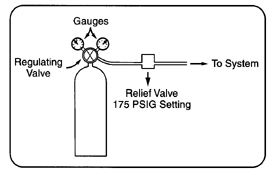
    Figure 1. Dry nitrogen cylinder with attached pressure regulating and relief valves and pressure gauges needed for pressure testing for leaks and purging.

    System Flushing, Purging, And Pressure Testing For Leaks

    Failure to properly flush, purge, or pressure test a system for leaks can result in serious injury or death from explosion, fire, or contact with acid-saturated refrigerant or oil mists.

    Follow these precautions when flushing/purging a system or pressure testing a system for leaks:

  • Use flushing products according to the manufacturer’s instructions.

  • To purge a system, use only dry nitrogen.

  • When pressure testing for leaks, use only regulated dry nitrogen or dry nitrogen plus trace amounts of the serial label refrigerant.

  • When purging or pressure testing any refrigeration or air conditioning system for leaks, never use air, oxygen, or acetylene.

    1. Oxygen can explode on contact with oil.

    2. Acetylene can decompose and explode when exposed to pressures greater than approximately 15 psig.

    3. Combining an oxidizing gas, such as oxygen or air, with an HCFC or HFC refrigerant under pressure can result in a fire or explosion.

  • Use a pressure regulating valve and pressure gauges.

    Commercial cylinders of nitrogen contain pressures in excess of 2,000 psig at 70 degrees F. At pressures much lower than 2,000 psig, compressors can explode and cause serious injury or death. To avoid overpressurizing the system, always use a pressure regulating valve on the nitrogen cylinder discharge (see Figure 1). The pressure regulator must be able to reduce the pressure down to 1 or 2 psig and maintain this pressure.

    The regulating valve must be equipped with two pressure gauges:

    1. One gauge to measure cylinder pressure; and

    2. One gauge to measure discharge or downstream pressure.

  • Use a pressure relief valve.

    In addition to a pressure regulating valve and gauges, always install a pressure relief valve. This can also be a frangible disc-type pressure relief device. This device should have a discharge port of at least 1/2-inch MPT size. The valve or frangible disc device must be set to release at 175 psig (see Figure 1).

  • Do not pressurize the system beyond 150 psig field leak test pressure.

    When field testing a system for leaks, 150 psig is adequate test pressure.

  • Disconnect nitrogen cylinder and evacuate the system before connecting the refrigerant container.

    Disconnect the nitrogen cylinder and release the pressure in the system before connecting a refrigerant container to the system. The higher pressure gas in the system can explode the refrigerant container.

    System Charging

    Failure to properly charge the system can result in serious injury or death from explosion or fire.

    Follow these precautions when charging a system:

  • Do not operate the compressor without charge in the system.

    Operating the compressor without a charge in the system can damage the hermetic terminal. As always, to avoid serious injury or death from terminal venting with ignition, never energize the compressor unless the protective terminal cover is securely fastened.

  • Use proper refrigerant.

    Use only the serial label refrigerant when charging the system. Using a different refrigerant can lead to excess system pressure and an explosion. Use of a refrigerant other than the serial label refrigerant will void the compressor warranty.

  • Do not overcharge a refrigeration or air conditioning system.

    Overcharging a refrigeration or air conditioning system can result in an explosion. To avoid serious injury or death, never overcharge the system. Always use proper charging techniques. Limit charge amounts to those specified on the system equipment serial label or in the original equipment manufacturer's service information.

    Overcharging the system immerses the compressor motor, piston, connecting rods, and cylinders in liquid refrigerant. This creates a hydraulic block preventing the compressor from starting. The hydraulic block is also known as locked rotor.

    Continued supply of electricity to the system causes heat to build in the compressor. This heat will eventually vaporize the refrigerant and rapidly increase system pressure. If, for any reason, the thermal protector fails to open the electrical circuit, system pressure can rise to high enough levels to cause a compressor housing explosion.

    Prevention Of Water-Utilizing System Explosions

    In certain water-utilizing refrigeration systems, water can leak into the refrigerant side of the system. This can lead to an explosion of system components, including but not limited to, the compressor. If such an explosion occurs, the resulting blast can kill or seriously injure anyone in the vicinity.

    A. Systems At Risk Of Explosion

    Water-utilizing systems that have single-wall heat exchangers may present a risk of explosion. Such systems may include:

  • Water source heat pump/air conditioning systems; and

  • Water cooling systems, such as icemakers, water coolers, and juice dispensers.

    Water-utilizing systems that have single-wall heat exchangers present a risk of explosion unless they have either:

  • A high-pressure cutout which interrupts power to ALL leads to the compressor; or

  • An external pressure relief valve.

    B. How An Explosion Occurs

    If the refrigerant tubing in the heat exchanger develops a leak, water can enter the refrigerant side of the system. Water entering the refrigerant side can come in contact with live electrical connections in the compressor causing a short circuit or a path to ground. When this occurs, extremely high temperatures can result. The heat buildup creates steam vapor that can cause excessive pressure throughout the entire system. This system pressure can lead to an explosion of the compressor or other system components.

    C. Service Procedures

    In light of the risk of explosion, be especially alert for signs of water leaking into the refrigerant side of the system. Whenever servicing or troubleshooting a water-utilizing system, always check to see if it has either a pressure relief valve or a high pressure cutout as previously described. If the system does not have at least one of these, DISCONNECT ALL ELECTRICAL POWER and look for indications that water has leaked into the refrigerant side of the system. These indications may include:

  • Observation of or a report of a blown fuse or tripped circuit breaker.

  • Signs that water has leaked to the outside of the system.

  • Reports that the system has made gurgling or percolating noises.

  • A history of loss of refrigerant charge without a leak being found in the system. NOTE: Common leak detection methods will not detect a water-to-refrigerant leak in the system's heat exchanger(s).

  • Observation of or a report of the compressor giving off an unusual amount of heat.

    If ANY of these indications are present, do the following checks to determine if water has leaked into the refrigerant side:

    Step 1: Check for a ground fault (a short to ground).

    Check the compressor for a ground fault (also known as a short circuit to ground).

  • If a ground fault does not exist, go to Step 2.

  • If a ground fault does exist, keep the power off. WARNING: To avoid electric shock, electrocution, and terminal venting with ignition, do not energize a compressor that has a ground fault. Mark and red tag the compressor to indicate that there is a ground fault. Do not reconnect the power leads. Tape and insulate each power lead separately. Proceed to Step 2. Do not replace the compressor or energize the system before performing Step 2.

    Step 2: Check for water in the system.

    Once the compressor is cool to the touch, open the system process valve slightly to see if any water comes out of the system. WARNING: Opening the system process valve while the compressor is hot can cause severe burns from steam coming out of the valve.

    If ANY water comes out of the process valve, the entire system must be replaced. See “D. Replacing A Single-Wall Water-Utilizing System.”

    If water does not come out of the process valve, there is still a possibility that some water has leaked into the refrigerant side of the system. To address this possibility, determine if the system has a history of losing refrigerant charge without a leak being found or repaired.

    If you find ANY indication of a history of losing refrigerant charge without detection of a leak, this is a sign that refrigerant has leaked in the water inside the heat exchanger. The entire system must be replaced. See “D. Replacing A Single-Wall Water-Utilizing System.”

    If you do not find any indication of a history of loss of charge without detection of a leak, you still need to install:

  • A high-pressure cutout which interrupts power to ALL leads to the compressor; or

  • An external pressure relief valve.

    Also, if you found a ground fault in the compressor in Step 1, replace the compressor before applying power to the system.

    D. Replacing A Single-Wall Water-Utilizing System

    When replacing a single-wall water-utilizing system, replace the system with one that has:

  • A double-wall heat exchanger(s); or

  • A high-pressure cutout which interrupts power to ALL leads to the compressor; or

  • An external pressure relief valve.

    Start Capacitor Overheating

    An overheated start capacitor can burst and spray or splatter hot material which can cause burns. Applying voltage to a start capacitor for more than a few seconds can cause the capacitor to overheat.

    Check capacitors with a capacitance meter, and never check a capacitor with the power on.

    System Evacuation

    Never use a compressor to evacuate a system. Instead, use a high vacuum pump specifically designed for that purpose.

    Never start the compressor while it is under deep vacuum. Always break a vacuum with refrigerant charge before energizing the compressor.

    Failure to follow these instructions can damage the hermetic terminal. As always, to avoid serious injury or death from terminal venting with ignition, never energize the compressor unless the protective terminal cover is securely fastened.

    Follow The Labels

    Compressors have labels and markings with important information. For your safety and the safety of others, read the labels and markings on the product.

    Reprinted with permission from the Tecumseh Hermetic Compressor Service Handbook. For more information, visit www.tecumseh.com.

    Publication date: 08/11/2003

  • Looking for quick answers on air conditioning, heating and refrigeration topics? Try Ask ACHR NEWS, our new smart AI search tool. Ask ACHR NEWS →

    Share This Story

    Looking for a reprint of this article?
    From high-res PDFs to custom plaques, order your copy today!


    Recommended Content

    JOIN TODAY
    To unlock your recommendations.

    Already have an account? Sign In

    • HVAC-enrollment

      The Trades Are Back: HVACR Programs See Nearly 30% Enrollment Spike

      A new wave of future technicians is entering the pipeline.  
      Training and Education
      By: Matt Jachman
    • 2025 Top 40 Under 40

      2025 Top 40 Under 40 HVACR Professionals List

      The 11th annual Top 40 Under 40 list highlights those...
      HVAC Light Commercial Market
      By: Hannah Belloli-Oster
    • LG Ductless Mini-Split Systems

      The 9 Types of Heat Pumps

      As the U.S. moves toward electrification, heat pumps are...
      Heat Pumps
      By: Joanna R. Turpin
    Subscription Center
    • Create an Account
    • Start a Subscription
    • Manage My Account
    • Sign Up for Newsletters
    • Visit Customer Service
    • Update Preferences

    More Videos

    Sponsored Content

    Sponsored Content is a special paid section where industry companies provide high quality, objective, non-commercial content around topics of interest to The News audience. All Sponsored Content is supplied by the advertising company and any opinions expressed in this article are those of the author and not necessarily reflect the views of The News or its parent company, BNP Media. Interested in participating in our Sponsored Content section? Contact your local rep!

    close
    • Piggy Bank
      Sponsored byWatercress Financial

      Energy Prices, Inflation, and HVAC: What Today’s Homeowners Care About

    • Refrigerated Food
      Sponsored bySolstice Advanced Materials

      R-455A Refrigeration: A Cold Storage Solution for the Future

    • Airex Rooftop Units
      Sponsored byAirex Manufacturing Inc

      Consolidating Roof Penetrations: A Growing Trend in Multifamily HVAC Design

    Popular Stories

    Refrigerants-and-gauge.jpg

    HVAC Industry Warns of Counterfeit Refrigerants Entering U.S. Supply Chain

    U.S. Supreme Court building

    95% Furnace Efficiency Rule to Get New Hearing

    Midea-training.jpg

    HVAC Workforce Crisis Expands Beyond Technicians to Instructor Shortages

    Data_Center_facility.jpg

    HVAC Manufacturers Respond to Growing Data Center Backlash

    HVAC Minute retail refrigeration system

    EPA Final Rule’s Impact on R-410A Deadlines

    View The ACHR NEWS
    Centennial Anniversary Timeline

    The ACHR News Timeline Chart
    Submit a Letter
    Submit a letter to our editors.

    Events

    November 6, 2025

    Next-Gen Data Center Cooling: HVAC Innovation and Real-World Solutions

    On Demand As AI workloads and high-density computing push traditional cooling methods to their limits, the data center industry is accelerating the adoption of next-generation HVAC technologies.

    June 23, 2026

    HVAC Duct Sealing Mastics: Why Selection Matters

    In this webinar we will detail what HVAC material buyers and technicians need to know when selecting duct mastics, including matching mastic to substrate, alternatives to liquid mastic, and where UL 181 Listings fit into real world installations.

    View All Submit An Event

    Poll

    Summer Staff

    Are you fully staffed for the summer season?
    View Results Poll Archive

    Products

    BNI Mechanical/Electrical Square Foot Costbook, 2026 Edition

    BNI Mechanical/Electrical Square Foot Costbook, 2026 Edition

    See More Products
    HVAC Duct Sealing Mastics: Why Selection Matters - Free Webinar - 6/23/2026

    Related Articles

    • Cooper Oates Air Conditioning Names Biagioni General Manager of Service Division

      See More
    • WEF Logo

      Water Environment Federation Creates Panel to Evaluate Biological Hazards and Precautions for Wastewater Workers

      See More
    • OSHA Recommends Flood Cleanup Precautions In Texas

      See More

    Related Products

    See More Products
    • ac.png

      Air Conditioning Service Guide R-410A and R-22 Systems 2nd Edition

    • HPOIS.png

      Heat Pump Operation, Installation, Service

    • Service-Management-Excellence-Image-2A.jpg

      Service Management Excellence

    See More Products

    Events

    View AllSubmit An Event
    • January 23, 2013

      Meet the General Contractors Expo

      The American Subcontractors Association (ASA) - Midwest Council is set to host its annual Meet the General Contractors Expo. The yearly event gives area subcontractors and construction professionals the opportunity for valuable face-to-face time with some of the St. Louis region's top general contractors.
    View AllSubmit An Event

    Related Directories

    • MSA Safety (Manufacturer)

      MSA Safety Incorporated (NYSE: MSA) is the global leader in advanced safety products, technologies, and solutions. For the HVAC-R industry, MSA Safety provides gas and refrigerant analysis, detection, monitoring, and tracking solutions. Their FieldServer IIoT gateways are ideal for enabling 24/7 cloud-based monitoring solutions.
    ×

    Sign Up. Stay Informed.

    The #1 trusted source for the HVACR industry since 1926

    SUBSCRIBE
    • RESOURCES
      • Advertise
      • Contact Us
      • Advisory Board
      • Classifieds
      • Submit a Letter
      • Directories
      • Store
    • ACCOUNT CENTER
      • Create an Account
      • Start a Subscription
      • Manage My Account
      • Sign Up for Newsletters
      • Visit Customer Service
      • Update Preferences
    • SERVICES
      • Marketing Services
      • Reprints
      • Market Research
      • List Rental
      • Survey/Respondent Access
    • STAY CONNECTED
      • LinkedIn
      • Facebook
      • Instagram
      • YouTube
      • X (Twitter)
    • PRIVACY
      • PRIVACY POLICY
      • TERMS & CONDITIONS
      • DO NOT SELL MY PERSONAL INFORMATION
      • PRIVACY REQUEST
      • ACCESSIBILITY

    Copyright ©2026. All Rights Reserved BNP Media, Inc. and BNP Media II, LLC.

    Design, CMS, Hosting & Web Development :: ePublishing