Moisture problems show up everywhere in HVAC systems. Knowing how humidity behaves in air can make troubleshooting condensation and comfort issues far easier.
From whole-home dehumidifiers to high-efficiency ERVs, new IAQ products aim to improve comfort while helping contractors meet evolving ventilation codes.
Indoor air quality isn’t just about UV bulbs. It’s about humidity, airflow, filtration, and how well a home’s systems work together. For contractors, that’s shifting how they approach IAQ: no longer as a one-stop shop but rather a whole-home strategy that starts with fundamentals.
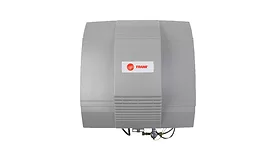
Dry indoor air affects comfort, health, and homes during heating season. Knowing how whole-house humidifiers work helps contractors match homeowners with the right solution.
Heating, cooling, and humidifying air wasn’t new when Willis Carrier came on the scene. What was groundbreaking was the attempt at precise air control in a manufacturing environment.
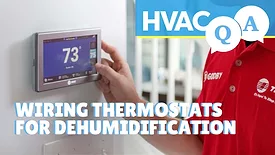
In this video, Bryan Orr, founder of HVAC School and president of Kalos Services Inc., walks us through the essential wiring and setup requirements to ensure a system properly controls indoor moisture.
More and more travelers are ranking air quality as an important factor when deciding where to stay — here’s how the HVAC industry can help tip the scales for hotels.
For contractors in humid climates, a lot of the comfort they provide is through being able to control humidity levels, which can be aided by adding a secondary dehumidification system.
 RSS
RSS