Mold/Bacteria Protection of A/C Coil

Return air from the house is filtered and blown through the air conditioner coil fins, which are chilled. The filtered return air is chilled by passing over, under, and around the chilled aluminum fins and copper tubing. The chilled fins condense the moisture out of the return air, much the same as a chilled glass of water. The moisture drips off the fins down to a collector or drip pan, where it is drained away as condensate wastewater.

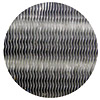
Here is a cross section of a clean AC coil. Note that the aluminum fins transfer cold. Meanwhile, the copper tubes carry chilled gas.
Many forms of mold love this atmosphere including Listeria, a bacterium that loves ice bins and air conditioner systems. Listeria is known for its ability to cause large outbreaks of food poisoning in restaurants.
Mold and bacteria buildup on an air conditioner coil will give you the following indoor air and other problems:
• mold odors;
• airborne mold;
• increased allergy risks;
• increased mold colonization of environment;
• increase in airborne bacteria and associated risk;
• decrease in air conditioner airflow;
• decrease in air conditioner efficiency;
• reduced equipment lifespan; and
• higher electric bills.
What to do?
Glad you asked.
THE UVC SOLUTION
UVC germicidal lamps are rapidly becoming very popular as an easy fix for the air conditioner coil mold problem. This is one of the most prevalent causes of the mold smell you get when you enter an air conditioned sick building. UVC (254nm) lamps are basically similar to sun lamps and are typically only effective on microbials that pass by within a few inches of the lamp or areas where the light is shining directly on for extended periods of time, such as the air conditioner coil.Excerpted from the article “Shedding Light on Germicidial Ultraviolet” in the June 30, 2003, issue of The NEWS:
“‘The biggest questions from contractors are on placement,’ [Robin] Pharo [product manager of Aprilaire’s UV Products] said. For instance, should UVGs be installed in the return or supply?
A small air conditioner coil with one UV bulb mounted in the center. Only one half of this coil has UV protection as the outer sections have no UV bulbs.
“Due to space and financial constraints, however, ‘Most homeowners won’t have that many lamps installed. So we recommend the concurrent installation of a really good filter, with the UV lamp placed over the indoor coil,’ Pharo said. ‘Air conditioning systems are great inventions, but the moist environment (at the coils) creates a microbial breeding ground.’
“Additionally, when UV lamps are shining directly on the coils, they are hitting a stationary target. When moving targets (VOCs and microbes) pass UV lights, the more sensitive microbes may be damaged, but the hardier ones will pass unharmed.”
UV lights, for instance, have been found to be better applied to shine on the indoor coil, not to try to clean the air stream, particularly in residential and light commercial applications; air stream use requires intense UV saturation.

The main advantages to UVC lights are low cost, easy installation, and effectiveness on suppressing mold/bacteria growth on the coil that has the light shining on it.
UVC lights installed correctly can effectively control mold and bacteria growths on the air conditioner coil. They have little to no effect on airborne bacteria, viruses, odors, or VOCs unless very large commercial, heavy-duty UV systems are utilized.
The key to good UV/air conditioner coil mold control is the installation. A small air conditioner coil will require a minimum of three UV lights. The geometry of the light and the intensity will dictate the effectiveness. Remember, only the surface the light is shining on will be treated, and only up to 6 inches to 8 inches in distance from the bulb.
EXAMPLES
The following are examples of installation.Example No. 1: An eight-year old air conditioner coil with two bulbs properly installed on the inside, one bulb was dead. There is growth next to the dead bulb. The other side is clean. No bulbs were installed on the outside. Accordingly, only one-half of this air conditioner coil was treated. The outside of the air conditioner coil was full of mold and bacteria, blocking airflow and creating IAQ problems. This installation is of minimal value to the customer.
Example No. 2: A 10-year-old air conditioner coil with a UV bulb placed too close to the end coil. Most of the coil was clean, but the 25 percent over 8 inches away grew mold and bacteria, actually blocking airflow of 25 percent. This installation was of some value to the client, but not 100 percent.
Example No. 3: A small air conditioner coil with one UV bulb mounted in the center. Only one-half of this coil has UV protection as the outer sections have no UV bulbs. Figure 3 shows how the light does not go through the coil as the geometry of the fins will not permit it.
Example No. 4: A large residential coil could require nine UV bulbs to provide good UV protection for mold/bacteria growth. This will add approximately 300 watts of heat energy to the air conditioner system. However, the mold/bacteria protection and subsequent airflow savings would make this installation worthwhile.
Example No. 5: A large residential a/c coil will require six lamps for a good coverage. This is an example of an excellent installation.
Example No. 6: A clean 9-year-old coil from a Florida home that survived three hurricanes within a total of 30 days of power outage. An advanced oxidation cell was properly and professionally installed.

Exhibit 3: Light does not go through the coil as the geometry of the fins will not permit it.
GERMICIDAL LAMPS ON AIRBORNE MICROBES
UV has the ability to kill surface bacteria that the bulb is shining directly on at a distance of usually less than 6 to 8 inches. Some UVC light companies state their UV systems can kill 99.9 percent of MRSA bacteria on a single pass and then reference an EPA study.This is very misleading as the test was conducted on a test unit of five UV high-energy lamps, each 50 inches long in a reflective tunnel, which burns 1,100 watts of electricity. This is the equivalent of running a hair dryer in your air conditioner 24 hours a day. This obviously generates a lot of heat in addition to burning a lot of electricity, and the units cost thousands of dollars.
This system is not something the homeowner would install. This is an industrial UV system; very expensive, heavy-duty systems for food processing or medical applications. The EPA study specifically distinguishes this from UV devices that are designed to treat specific surfaces within the HVAC system; in particular, the cooling coils and the condensate drain pan to prevent biological growth on those surfaces.
A standard 12- to 24-inch HVAC UV light system installed in an air conditioner coil will destroy mold and bacteria growth on the coil surface that the UV light shines on. What sections of the coil the light does not hit will grow mold and bacteria. The UVC lights used on an air conditioner coil will provide little, if any, airborne microbial kill as the UV energy and dwell or exposure time is not nearly enough to kill fast-moving airborne microbials.
UV technology is very simple. Take a known quantity of UV light and expose a surface or substance to the light for a specified period of time, and a percentage of the microbials are killed. The product of the UV light intensity, multiplied by the time at that intensity, is termed “CT value.”
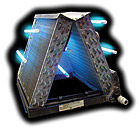
Exhibit 5: This is a large residential AC coil that requires six lamps for a good coverage. This is an example of an excellent installation.
(Note of caution: Unprotected UVC lamps were used for this article. In practice, protected lamps should always be used as UV lamps contain mercury, a hazardous heavy metal known to cause health problems. A broken lamp in an HVAC system could permanently contaminate the system.)
Typical HVAC home systems operate around 2,000 cfm for a 2,000-square-foot home. For example, 2,000 cfm will have an exit velocity of 500 feet per minute, or 8.33 feet per second. From this value, the proper residence time can be evaluated for specific CT values.
Typical molds found in household are in the Aspergillius family. Aspergillius has CT values for a 90 percent kill ranging from 44,000 to 132,000 uWsec/cm2. Bacillus subtilis spores, a common bacteria, has a CT value of 11,600 uW-sec/cm.
For example, we will use the Bacillus number, because as we will see, that relatively low number will mean a relatively high residence time. CT values higher than Bacillus will require an even longer residence time. The lamps can be placed at the outlet or inlet of the coils; however, at this flow rate, you will only have a residence time of 0.24 seconds.
That is only 1.7 percent of the required 14.5 seconds for 90 percent kill. That is not even close to the required CT value to kill Bacillus. In fact, this value is so small, the UV will have next to no effect on any airborne pathogens.
OZONE
Concern about ozone and HVAC air cleaning devices is often exaggerated. All UV light lamps emit some ozone. UVC germicidal lamps emit very low levels, way below federal safety limits. Many everyday items emit ozone, such as:• fluorescent lamps;
• electric motors;
• copy machines; and
• electro static air cleaners.
All are within federal safety limits. To pass a UL, ETL, or TUV test, they must be below 0.04 ppm of ozone. Outside air is usually higher than this. Example:
• 0.01 ppm ozone becomes detectable to humans;
• 0.04 ppm is federal indoor safety limit;
• 0.12 EPA city safe air limit;
• 0.50 ppm smog alert No. 1; and
• 1.0 ppm smog alert No. 2.
THE ADVANCED OXIDATION SOLUTION
The Advanced Oxidation Plasma will destroy mold and bacteria growth on an air conditioner coil and the air filter. The plasma, being a gas primarily made up of ionized hydroperoxides, will achieve full coverage as it moves in and around the air conditioner coil fins and through the air filter, controlling mold and bacteria growth.SILVER NANO COATINGS
A new technology is a silver nano coating on the air conditioning coil and drip pan to prevent microbial growth. Copper and silver are both good controllers of bacteria and mold. Silver has been used for centuries for bacteria control. In medieval times, wealthy families would put a silver spoon in the mouth of babies after feeding to kill bacteria and prevent food poisoning. Hence the phrase “silver spoon baby.” Silver nano is a promising new possibility for low-cost control of bacteria and mold.Publication date: 02/18/2008
Looking for a reprint of this article?
From high-res PDFs to custom plaques, order your copy today!