ACHR News
search
Ask ACHR NEWS AI
cart
facebook twitter instagram linkedin youtube
  • Sign In
  • Subscribe
  • Sign Out
  • My Account
ACHR News
  • NEWS
    • Breaking News
    • New HVAC Products
    • Featured Products
    • Manufacturer Reports
    • HVAC Data
    • Legislation
    • ACHR NEWS Centennial
  • RESIDENTIAL
    • Air Conditioners
    • Furnaces
    • Residential Heat Pumps
    • Ductless
    • Residential IAQ
    • Testing, Monitoring, Tools
    • Components & Accessories
  • COMMERCIAL
    • Air Handlers
    • Rooftop Units
    • Chillers and Cooling Towers
    • Commercial Heat Pumps
    • Boilers and Hydronics
    • VRF/Ductless
    • Commercial IAQ
  • REFRIGERATION
    • Refrigerants
    • Refrigerant Regulations
    • Leak Management
  • CONTRACTOR PRO
    • Geothermal
    • Homeowner Study
    • VRF and VRV Ductless
    • Unitary Trends
  • EDUCATION
    • Training and Education
    • Business Management
    • Service and Maintenance
    • Continuing Education
    • Market Research >
      • HVAC Brand Awareness Report
      • VRV, VRF, VRVZ Report
      • Unitary Trends Report
      • Water Heat Professionals Report
    • Webinars
    • Sponsor Insights
    • eProducts Info
    • White Papers
  • EVENTS
    • HVAC Contractor Forum
    • Industry Events and Webinars
  • MEDIA
    • Videos
    • AHR Expo 2025 Videos
    • Podcasts >
      • ACHR News Podcast
      • HARDI Podcasts
      • AHR Expo Podcasts
      • ACCA Podcasts
    • Interactive Spotlights
    • Quizzes
    • eBooks
    • HVAC Talkback
  • HVAC GROUP
    • ACHR NEWS >
      • Current Issue
      • Digital Edition
      • Subscribe
    • Distribution Trends
    • SNIPS NEWS >
      • Join SNIPS NEWS
    • Engineered Systems News >
      • Join ES News
    • HVACR Directory
    • Contests
    • Newsletters
    • Contact
    • Advertise
    • My Account

Customer Care Gets Technical

By Greg Mazurkiewicz
May 10, 2001
TYLER, TX — American Standard’s Customer Care™ dealer product service training is designed to give contractors a good technical overview in addition to covering marketing and customer service. A recent session held here at the Tyler plant illustrated the company’s detailed training for its top dealers.

Dan Rasmussen, product support team leader, started by focusing on mechanical refrigeration troubleshooting for R-22 and R-410A. Thinking safety first, he talked about R-410A safety and handling.

For R-410A, pressures are 60% to 70% higher than R-22, he noted. Evaporating and condensing temperatures are about the same.

Inhalation of R-410A vapor may cause irritation. “At high concentrations, it can cause asphyxiation. Large leaks require evacuation,” he said.

This refrigerant is combustible under pressure when mixed with air. Avoid exposing it to very high temperatures, he warned. Contact with certain red hot materials may cause an explosive reaction.

When working with R-410A, “You will need a new gauge manifold set and hoses,” Rasmussen told the dealers. It will require up to 800 psig high side and up to 250 psig low side. Hoses must have a service pressure rating of 800 psig. A recovery cylinder must be rated at 400 psig.

R-410A uses polyolester or POE oil. It cannot use mineral oil like R-22. POE oils and moisture will not separate under a vacuum, he stated. “When servicing an R-410A system, the liquid line drier must always be replaced.”

Always evacuate to 500 microns, he said. “Make sure you have a micron gauge and condition yourself to use it.” With it, you can be sure you have a good vacuum.

Looking for quick answers on air conditioning, heating and refrigeration topics? Try Ask ACHR NEWS, our new smart AI search tool. Ask ACHR NEWS →


Going For The Cycle

Looking at the mechanical refrigeration cycle of an R-22 system, he explained that saturation temperature is the temperature of a liquid, vapor, or solid at a given pressure where, if any heat is added or removed, a change of state will take place.

“Using your refrigeration gauges allows you to convert pressure to saturation temperature,” said Rasmussen. This is the first step in the analysis of the system.

The evaporator coil’s function is to act as a heat transfer surface for the refrigerant. The coil has a metering device that drops the pressure of the refrigerant from high to low. The low-pressure refrigerant leaves the metering device at a saturation temperature corresponding to the suction pressure.

Since the refrigerant is at saturation temperature, the addition of heat causes the liquid to boil off to vapor. When the vapor leaves the evaporator, it will be at a temperature above saturation temperature, which is superheat.

“With changes in outdoor air temperature, the amount of liquid entering the evaporator is constantly changing,” he explained. High outdoor temperature causes high pressure. Low outdoor temperature leads to low pressure.

If the refrigerant charge is too high, the coil will flood and superheat will be low. If the charge is too low, the liquid will boil off quickly and superheat will be very high, causing the compressor to overheat.

The problem of high heat load can be caused by:

  • Too much airflow;
  • New startups;
  • Undersized unit; or
  • Infiltration air in return ducting;
  • Low heat load can be caused by:

  • Too little indoor airflow;
  • Dirty filter;
  • Dirty evaporator; or
  • Thermostat set too low.
  • R-410A systems use a thermostatic expansion valve to meter the refrigerant. This valve will try to maintain a constant level of superheat. Using a TXV, if heat load is high, superheat will be high. If heat load is low, superheat will be close to normal.

    With an overcharge, the TXV may close and maintain superheat and suction pressure. With an undercharge, the system will operate like a fixed metering system.


    The Condensed Version

    The condenser coil is used to condense the hot discharge gas from the compressor back into a liquid. “The process of lowering the temperature of the liquid to a level below its saturated temperature,” Rasmussen said, “is called subcooling.”

    Low subcooling means the system may be undercharged. High subcooling means the system may be overcharged.

    Most systems will perform with about 10°F of subcooling. For R-410A, the 10° level of subcooling allows for a standard pressure loss of around 50 psig.

    High subcooling and liquid pressure indicates a flooded state. Low subcooling and liquid pressure equals a starved state. “The liquid line temperature should never be below ambient temperature,” he said. If it is, you have a restriction.


    16-SEER Systems

    Glenn Stecker, product support specialist, touched on the company’s 16-SEER dual-compressor package unit, then detailed its 16-SEER split system.

    These dual-compressor units run one compressor at a time. The product is cooling only or heating and cooling heat pump models.

    “The small compressor — the first stage — runs and maintains temperature 70% to 80% of the time,” said Stecker. The large compressor runs only when the small compressor can’t handle the load. The dual-compressor model matched with a variable-speed indoor unit provides enhanced airflow, supplying greater humidity control. This feature is called Comfort-R™.

    An oil equalizer line between the two compressors maintains proper oil level in both.

    First stage airflow is 50% of programmed airflow for the outdoor unit size. Ductwork is sized according to ACCA Manual D standards. “Select registers for acceptable throw at first-stage airflow,” he said.

    The system is controlled by a microprocessor in the outdoor unit. Three LEDs indicate system status and are used for troubleshooting.

    For heat pump control operation, he pointed out, “The defrost control has more control over decisions on operation than in prior units.” The defrost control microcomputer determines the need for defrost by continuously measuring the difference between ambient and coil temperature.

    If a compressor has failed and the system is not acid, he stated, you only have to replace the compressor that failed. If the system is acid, you need to change both compressors.

    Additional presentations during the weeklong training included furnaces, variable speed, heat pumps, and duct design/airflow considerations. Attendees were also given a lab tour and a factory tour so they could see American Standard products from birth, up close and personal.

    After completing this intensive training, the dealer is ready to take care of his/her customers with a detailed plan because, as the company’s brochure says, “The rest is up to you.”

    Publication date: 05/14/2001

    Share This Story

    Looking for a reprint of this article?
    From high-res PDFs to custom plaques, order your copy today!


    Greg Mazurkiewicz is Web Editor. He can be contacted at 248-244-6459 or gregmazurkiewicz@achrnews.com. Greg handles the day-to-day operations of The NEWS' website, www.achrnews.com, including the Extra Edition page, which offers additional online-exclusive articles. He has 40 years of experience as a writer and editor. He holds a bachelor's degree in Journalism and a master's degree in Business Management.

    Recommended Content

    JOIN TODAY
    To unlock your recommendations.

    Already have an account? Sign In

    • HVAC-enrollment

      The Trades Are Back: HVACR Programs See Nearly 30% Enrollment Spike

      A new wave of future technicians is entering the pipeline.  
      News
      By: Matt Jachman
    • 2025 Top 40 Under 40

      2025 Top 40 Under 40 HVACR Professionals List

      The 11th annual Top 40 Under 40 list highlights those...
      HVAC Light Commercial Market
      By: Hannah Belloli-Oster
    • LG Ductless Mini-Split Systems

      The 9 Types of Heat Pumps

      As the U.S. moves toward electrification, heat pumps are...
      News
      By: Joanna R. Turpin
    Subscription Center
    • Create an Account
    • Start a Subscription
    • Manage My Account
    • Sign Up for Newsletters
    • Visit Customer Service
    • Update Preferences

    More Videos

    Sponsored Content

    Sponsored Content is a special paid section where industry companies provide high quality, objective, non-commercial content around topics of interest to The News audience. All Sponsored Content is supplied by the advertising company and any opinions expressed in this article are those of the author and not necessarily reflect the views of The News or its parent company, BNP Media. Interested in participating in our Sponsored Content section? Contact your local rep!

    close
    • Piggy Bank
      Sponsored byWatercress Financial

      Energy Prices, Inflation, and HVAC: What Today’s Homeowners Care About

    • Refrigerated Food
      Sponsored bySolstice Advanced Materials

      R-455A Refrigeration: A Cold Storage Solution for the Future

    • Airex Rooftop Units
      Sponsored byAirex Manufacturing Inc

      Consolidating Roof Penetrations: A Growing Trend in Multifamily HVAC Design

    Popular Stories

    Refrigerants-and-gauge.jpg

    HVAC Industry Warns of Counterfeit Refrigerants Entering U.S. Supply Chain

    U.S. Supreme Court building

    95% Furnace Efficiency Rule to Get New Hearing

    Data_Center_facility.jpg

    HVAC Manufacturers Respond to Growing Data Center Backlash

    Midea-training.jpg

    HVAC Workforce Crisis Expands Beyond Technicians to Instructor Shortages

    HVAC Minute retail refrigeration system

    EPA Final Rule’s Impact on R-410A Deadlines

    View The ACHR NEWS
    Centennial Anniversary Timeline

    The ACHR News Timeline Chart
    Submit a Letter
    Submit a letter to our editors.

    Events

    November 6, 2025

    Next-Gen Data Center Cooling: HVAC Innovation and Real-World Solutions

    On Demand As AI workloads and high-density computing push traditional cooling methods to their limits, the data center industry is accelerating the adoption of next-generation HVAC technologies.

    June 23, 2026

    HVAC Duct Sealing Mastics: Why Selection Matters

    In this webinar we will detail what HVAC material buyers and technicians need to know when selecting duct mastics, including matching mastic to substrate, alternatives to liquid mastic, and where UL 181 Listings fit into real world installations.

    View All Submit An Event

    Poll

    Summer Staff

    Are you fully staffed for the summer season?
    View Results Poll Archive

    Products

    BNI Mechanical/Electrical Square Foot Costbook, 2026 Edition

    BNI Mechanical/Electrical Square Foot Costbook, 2026 Edition

    See More Products
    HVAC Duct Sealing Mastics: Why Selection Matters - Free Webinar - 6/23/2026

    Related Articles

    • Karmelich.jpg

      Robert Karmelich Joins ASME as Senior Managing Director of Corporate Sales and Customer Care

      See More
    • BN_Master-Bilt

      Master-Bilt Names New Vice President of Sales and Customer Care

      See More
    • Customer Care Drives IAQ Sales

      See More

    Related Products

    See More Products
    • Training-System-2017.jpg

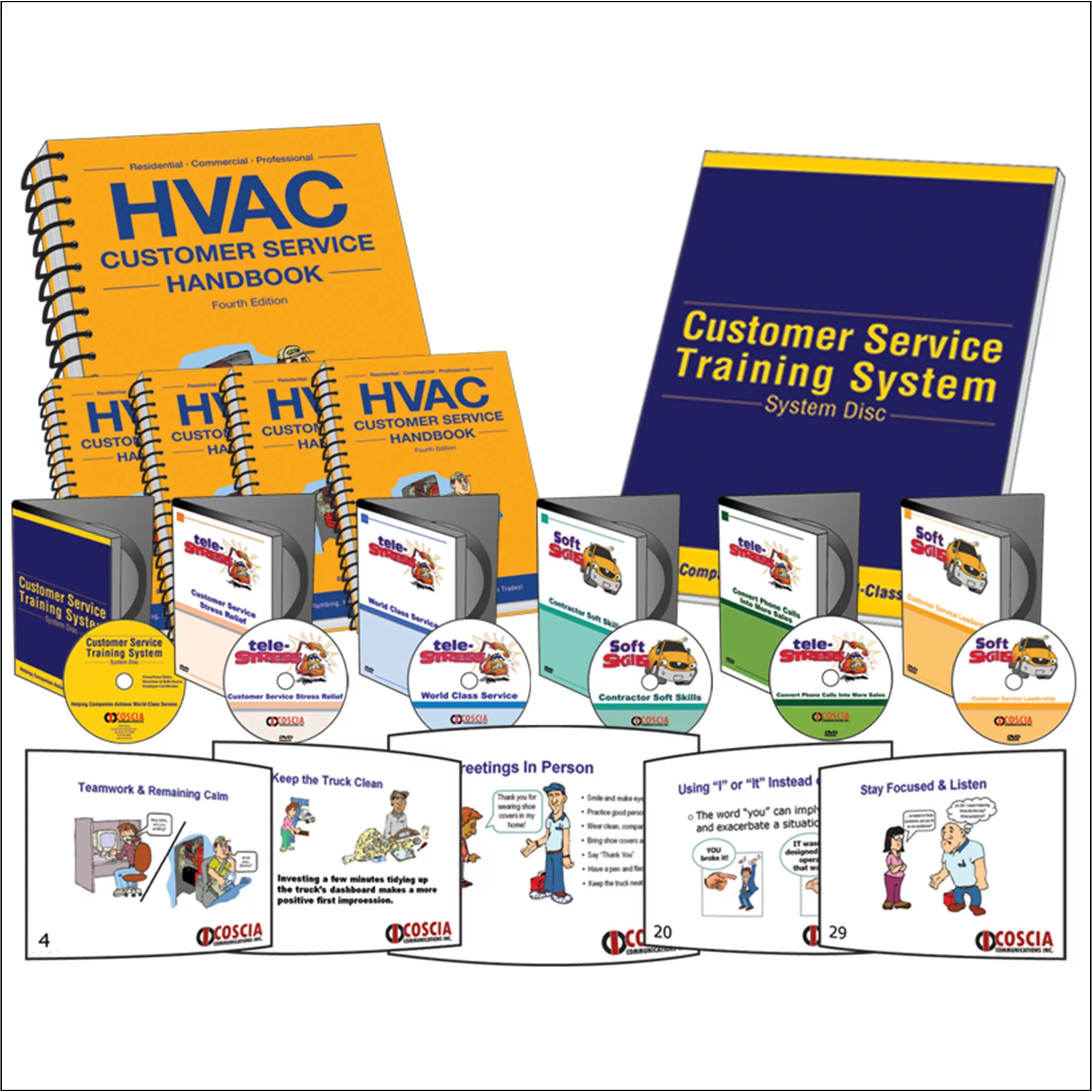
      Customer Service Training System by Steve Coscia

    • peak performance training.png

      Instructor/Facilitator Package: PEAK Performance for the Technical Professional

    • ttabppftpfront.png

      PEAK Performance for the Technical Professional

    See More Products
    ×

    Sign Up. Stay Informed.

    The #1 trusted source for the HVACR industry since 1926

    SUBSCRIBE
    • RESOURCES
      • Advertise
      • Contact Us
      • Advisory Board
      • Classifieds
      • Submit a Letter
      • Directories
      • Store
    • ACCOUNT CENTER
      • Create an Account
      • Start a Subscription
      • Manage My Account
      • Sign Up for Newsletters
      • Visit Customer Service
      • Update Preferences
    • SERVICES
      • Marketing Services
      • Reprints
      • Market Research
      • List Rental
      • Survey/Respondent Access
    • STAY CONNECTED
      • LinkedIn
      • Facebook
      • Instagram
      • YouTube
      • X (Twitter)
    • PRIVACY
      • PRIVACY POLICY
      • TERMS & CONDITIONS
      • DO NOT SELL MY PERSONAL INFORMATION
      • PRIVACY REQUEST
      • ACCESSIBILITY

    Copyright ©2026. All Rights Reserved BNP Media, Inc. and BNP Media II, LLC.

    Design, CMS, Hosting & Web Development :: ePublishing