Recovery and Consolidation: Safety Issue for Contractors?

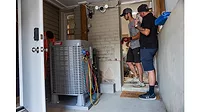
Third-party refrigerant management programs can include coming to a contractor’s shop to exchange and restock empty cylinders. (Photo courtesy of Consolidated Refrigerant Solutions.)
In light of the pending HCFC phaseout, contractors are faced with many challenges. The call for increased recovery efforts has never been greater. Therefore, finding a viable and beneficial reclamation program is a concern of increasing importance.
One method used by contractors to help reduce the impact of the ensuing phaseout is to consolidate recovered refrigerants in house. The belief has been that it will minimize the costs of cylinder handling fees, and/or maximize the profits from recovered R-22.
There are four key issues to consider when consolidating recovered refrigerants into larger vessels.
1. Efficiency and cost effectiveness: Contractors must ensure that the time and labor costs associated with the process don’t negate the benefits.
2. Availability of empty recovery cylinders: When it’s busy, the task of emptying cylinders may not be a viable option. At times, technicians may find themselves without empty cylinders when they need them the most.
3. The wide array of refrigerants coming into the mix: Contractors must be sure not to mix gases at the risk of losing all or some of the profit from the recovered product.
4. Safety: Contractors must ensure the safety and integrity of the cylinders their technicians are working with.
For most, the choice to consolidate into larger vessels means that they are also using the same 50- or 30-pound recovery cylinders day in and day out, year after year. One possible problem is that most cylinders are never inspected or safety checked. This, more often than not, results in a potentially dangerous fleet of recovery cylinders.
Over the years, numerous articles have been published by The NEWS concerning safe refrigerant recovery. The same theme is repeated over and over again: “If the cylinder has rust, dents, or the certification date is overdue, do not use the cylinder ... cylinders must be retested and recertified every five years, and the test date stamped on the cylinder shoulder must be in accordance with DOT regulations.”
Often contractors report having many cylinders that are either potentially unsafe, uncertified, or not up to current pressure standards - 4BA400 or 4BW400. Even worse, many of their service technicians routinely use 4BA300 cylinders to recover R-410A.
THE DANGER
Damaged or weakened refrigerant cylinders may fail at pressures lower than originally specified. Physical abuse such as dents, scratches, rust, bulges, or exposure to excessive heat can reduce the strength of joints or the metal itself. Materials originally designed to hold hundreds of psi pressure might now fail at typical refrigerant pressures.In the case of damaged cylinders, the pressure relief device shouldn’t be relied upon for protection. The cylinder should be repaired and retested or discarded. While pressure relief devices provide some safety, they do not eliminate all risk.
I heard a story of a technician who was injured when using a cylinder that was not rated to handle the pressure of the refrigerant being recovered. The cylinder was exposed to outdoor temperatures. It overpressurized and ruptured, sending liquid refrigerant and metal fragments into his face. Hydrostatic pressure can develop quickly in a confined volume. Technicians should always check for signs of damage or excessive wear before filling recovery cylinders.
Neglected recovery cylinders can create a potential hazard, which can lead to very serious injury. The fact is, refrigerant recovery cylinders need to be maintained, inspected routinely, and, at the very least, hydrostatically tested every five years to be safe and legal.
ALTERNATIVE AND INCENTIVE
Contractors interested in another option when it comes to the cylinder issue might want to consider a cylinder and refrigerant management program. Such a program does not require in-house consolidation.The provider of such services comes to the contractor’s shop to exchange and restock empty cylinders. The company maintains, reconditions, recertifies, and upgrades cylinders as needed. Contractors also receive detailed records and documentation as well as an annual report.
One such program (offered by Consolidated Refrigerant Solutions) has no cylinder-handling fees and no evacuation fees. Contractors are paid for their recovered refrigerant and there is no need to consolidate.
Another benefit is the accessibility of affordable refrigerant products after phaseout. The cylinder management company reserves the majority of its reclaimed refrigerant products for the contractors who enroll in the program.
For more information, visit www.crsrefrigerants.com.
Publication Date: 01/12/2009
Looking for a reprint of this article?
From high-res PDFs to custom plaques, order your copy today!