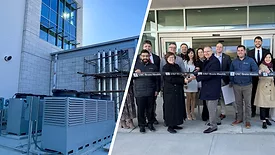
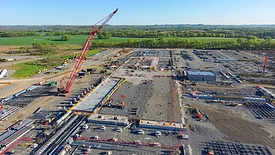
The USC Brain Health Center integrates advanced clinical care, research, and technology to improve outcomes for patients, writes Michael Scruggs, PE, project manager at RMF Engineering.
ASHRAE Standard 183 is now embedded in energy codes across most U.S. jurisdictions, and many engineering teams don't know their current load calculation workflows may not meet it.
Buildings can't take advantage of modern AI and automation tools because their data is locked inside proprietary systems. Liberating that data into a centralized, structured layer is the foundation for smarter facilities.
Whether a coil coating is necessary hinges on the environment: salty air, kitchen grease, or aggressive chemicals can turn unprotected HVAC/R coils into short-lived liabilities.
Air cleaners are either subtractive or additive. Subtractive devices, like fiber or carbon filters, physically remove particles or chemicals from the air. Additive devices release substances into the air to neutralize microbes or chemicals.
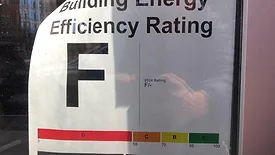
A firsthand look at New York City’s visible building energy ratings and what those letter grades really mean for owners, visitors, and the city’s sustainability efforts.
Tarang Patel is setting new standards for high-rise HVAC engineering in the New York and New Jersey region, with published innovations in ventilation and system design recognized across the industry.
Dig into how data center mechanical systems must be engineered to handle stricter power and water limits, increasing computing density, and heightened community concerns, all while staying flexible for the future.
 RSS
RSS