NYC’s Window to Energy Efficiency: Decoding the City’s Building Ratings
Dive into the real life impact of NYC’s mandatory building energy ratings
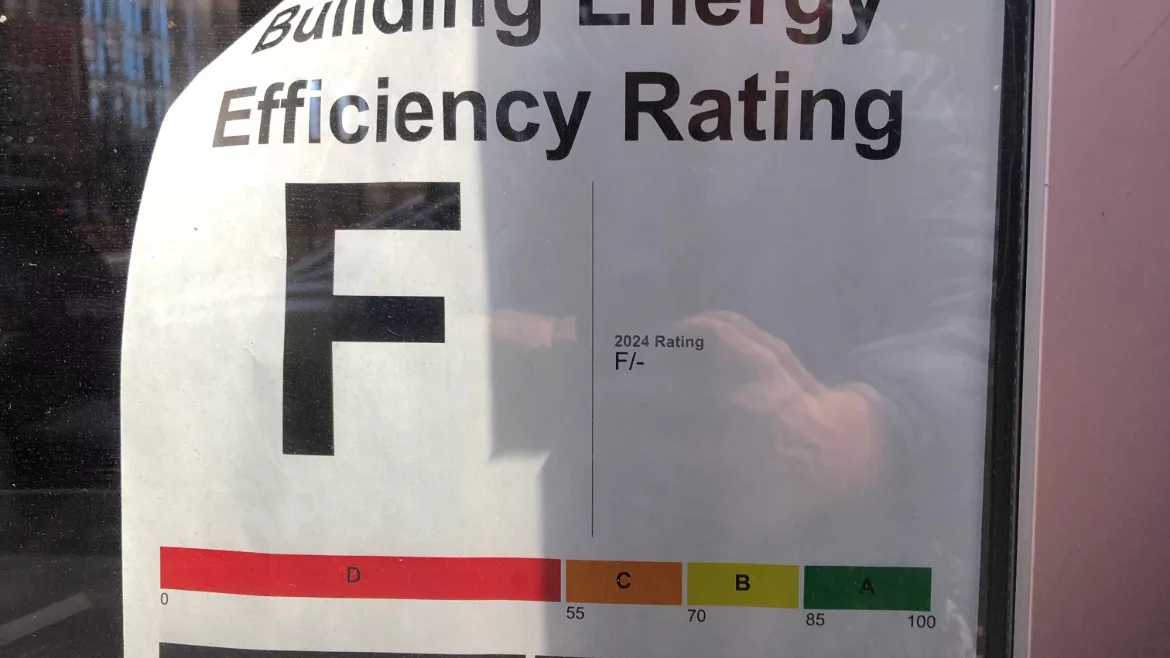
ENERGY GRADES: Discovering, decoding, and questioning the significance of New York City’s building energy ratings.
While recently visiting New York City (NYC), I noticed from inside the lobby that the hotel window had a placard taped to it, which could only be read from the street. However, one thing was readable from inside the lobby – a big letter “F.” It probably should have concerned me at the time more than it did, but the place we were staying at was extremely nice and we had no complaints. I didn’t think any more about the placard with the “F” or what it could possibly mean. That is, until later, while walking the streets to other venues. It was then that I noticed other buildings also had placards on their street-level windows – some of these with “A”s and “B”s. At that point, I had to get closer to the buildings to read the placards and see what these letter ratings indicated. It turns out that the letters, from “A” to “F,” indicate a building’s energy rating, which must be posted in many NYC buildings.
As a longtime advocate for energy efficiency in buildings, I had to find out more about this program. I looked at NYC websites such as the NYC Mayor’s Office of Climate and Environmental Justice and the NYC Office of Energy and Sustainability to see what I could find out and who I could contact if I had more questions. As it turns out, there are a number of websites that discuss NYC’s recent push towards sustainability. They have a Sustainable Building Program with a Covered Buildings List of properties over 25,000 SF that receive a rating based on various factors, and where the rating is required to be posted where visible to the public. Two factors contributing to this rating are energy and water consumption. This information is automatically extracted from the utility companies and uploaded to the Energy Star Portfolio Manager. Another factor is greenhouse gas emissions (GHG), which are calculated by the NYC Department of Buildings. In some cases, the City allows an independent energy firm to perform the evaluation for the owner.
As we all know, there are several major factors affecting a building’s energy consumption rate. Some of these, building owners have little or no control over without a substantial outlay of cash. One of these is the building envelope, particularly if the building was constructed many decades ago, as is the case with many NYC buildings. Many of these have poor glass U or SC values compared to the types of glass available now. When I asked if there was any requirement to change out the glass over a certain period of time, the answer was no.
Another question I had related to the building’s energy efficiency was about the fact that many of the City’s buildings are on City steam. The City responded, “Several thousand Manhattan buildings below 96th Street use Con Edison Steam service for heating and cooling purposes. The GHG emissions are allocated based upon the rate calculated from the source at the power plant.”
I don’t believe I have been to another city where energy ratings for buildings are posted in the windows for all to see as they pass by. I assume that if that were a requirement in your city, and you were the owner of a highly efficient building with low GHG, you would almost want the ratings – Energy Star or some other rating – to be visible not only to the public but also to occupants of the building. The question boils down to this: Does it really impact much from the owner’s perspective, except in cases where they have to raise rates to compensate for higher energy bills or when the sale price is impacted in some way when the building is offered for sale?
Looking for a reprint of this article?
From high-res PDFs to custom plaques, order your copy today!


