More efficient cooling technology helps provide more computer power in same space
July 10, 2017
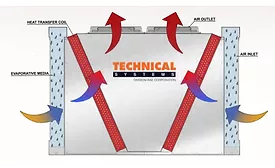
Challenged to do more with less, data centers are seeking innovative ways to keep operating costs as low as possible — all while computer technologies may be changing as often as every three months. In a market demanding denser and more powerful electronics, data centers are pressed for cooling technology that can keep up with the times.
To keep their units operating at peak efficiency, homeowners are encouraged to schedule regular system maintenance. However, there are a number of problems with this approach. As a result, companies are developing hardware/software products to provide a means for monitoring and maintaining optimum performance of residential HVAC units.
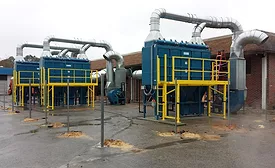
Welding fumes aren’t good to breath, and all regulatory agencies agree that welding fumes should be directed away from the welder’s breathing zone when local exhaust ventilation (LEV) is being used. While all fumes are bad, some fumes are recognized as more hazardous than others. One such fume is hexavalent chromium, which is produced when welding stainless steel and other materials containing chromium.
More often than not, filters are being changed too late
May 22, 2017
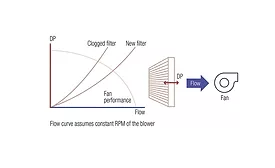
Where clean air is needed, an air filter is usually not far away. In the last decade, the filtration industry has made tremendous progress in filter technologies. With new materials and designs, advances in nonwoven fabric manufacturing, and pleating methods, as well as new developments like nanofiber layers and coatings, filters have become more efficient, reliable, and compact. Demands on the filtration industry are also changing. It’s no longer solely about filter efficiency and dust-holding capacity; with soaring energy prices and increasing awareness of sustainability, filter media are expected to contribute to lower energy consumption.
High-efficiency super capacity chiller system successfully completes certification tests
May 8, 2017
The U.S. Navy has successfully completed final production prototype shock and vibration testing for the new-generation high-efficiency super capacity (HESC) chiller system, consisting of the HESC chiller and the HESC variable speed drive (VSD), which integrates key components from Calnetix Technologies.
New system handles daytime temperature and nighttime humidity with a single system
April 17, 2017
As the movement to legalize marijuana continues to take hold across the country, growers are beginning to seek out equipment that will help them maximize production. Until recently, there were no cooling and drying products specifically designed to optimize growing conditions for this agricultural product. Now, new technology is being engineered that can produce the right temperature and humidity conditions to maximize productivity and minimize mold and insect problems.
Researchers must look beyond nonflammable chemicals
April 3, 2017
NIST’s study, entitled “Limited options for low-global warming potential [GWP] refrigerants,” focused on residential and small-commercial single-package and split air conditioning systems, but the authors said their conclusions also generally apply to room air conditioning units and other refrigeration and heat-pump systems currently using common, ozone-depleting refrigerants such as R-410A or R-22, which are still used in some developing countries today. “The takeaway is there is no perfect, easy replacement for current refrigerants,” NIST chemical engineer Mark McLinden said.
Facility managers face critical decisions when replacing aging induction units
March 20, 2017
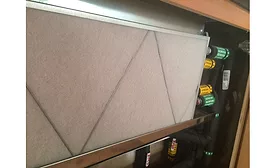
As old induction units inevitably decline in efficiency, facility owners and managers are faced with critical decisions: upgrade to more modern induction units or embark on extensive, costly renovation projects to overhaul entire HVAC systems.
Advantages of adiabatic humidification and free air cooling
March 6, 2017
Proper indoor air quality and adequate humidity levels are imperative to safe and efficient data center operations. Humidification in data centers is required to prevent electrostatic discharge, which can damage servers and network products, and offers the benefit of high capacity, low cost evaporative cooling.
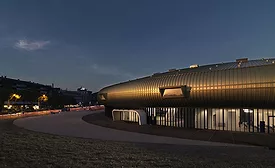
The Luigi Pecci Centre for Contemporary Art once again reopened
February 20, 2017
The new Pecci Centre is innovative not only from an architectural point of view, but also in terms of its sustainable mechanical systems.
The lighting and air conditioning systems, which are the main energy expenditure in every kind of building, have been designed to offer the best internal comfort for the visitors of the centre, while guaranteeing minimal impact both on the running costs and on the environment.
 RSS
RSS