ACHR News
search
Ask ACHR NEWS AI
cart
facebook twitter instagram linkedin youtube
  • Sign In
  • Subscribe
  • Sign Out
  • My Account
ACHR News
  • NEWS
    • Breaking News
    • New HVAC Products
    • Featured Products
    • Manufacturer Reports
    • HVAC Data
    • Legislation
    • ACHR NEWS Centennial
  • RESIDENTIAL
    • Air Conditioners
    • Furnaces
    • Residential Heat Pumps
    • Ductless
    • Residential IAQ
    • Testing, Monitoring, Tools
    • Components & Accessories
  • COMMERCIAL
    • Air Handlers
    • Rooftop Units
    • Chillers and Cooling Towers
    • Commercial Heat Pumps
    • Boilers and Hydronics
    • VRF/Ductless
    • Commercial IAQ
  • REFRIGERATION
    • Refrigerants
    • Refrigerant Regulations
    • Leak Management
  • CONTRACTOR PRO
    • Geothermal
    • Homeowner Study
    • VRF and VRV Ductless
    • Unitary Trends
  • EDUCATION
    • Training and Education
    • Business Management
    • Service and Maintenance
    • Continuing Education
    • Market Research >
      • HVAC Brand Awareness Report
      • VRV, VRF, VRVZ Report
      • Unitary Trends Report
      • Water Heat Professionals Report
    • Webinars
    • Sponsor Insights
    • eProducts Info
    • White Papers
  • EVENTS
    • HVAC Contractor Forum
    • Industry Events and Webinars
  • MEDIA
    • Videos
    • AHR Expo 2025 Videos
    • Podcasts >
      • ACHR News Podcast
      • HARDI Podcasts
      • AHR Expo Podcasts
      • ACCA Podcasts
    • Interactive Spotlights
    • Quizzes
    • eBooks
    • HVAC Talkback
  • HVAC GROUP
    • ACHR NEWS >
      • Current Issue
      • Digital Edition
      • Subscribe
    • Distribution Trends
    • SNIPS NEWS >
      • Join SNIPS NEWS
    • Engineered Systems News >
      • Join ES News
    • HVACR Directory
    • Contests
    • Newsletters
    • Contact
    • Advertise
    • My Account
Refrigeration

The Professor: Condenser Splitting
By John Tomczyk
May 2, 2011
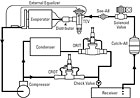
Figure 1. The Close on Rise of Outlet (CRO) valve is located between the compressor’s discharge line and the receiver inlet. (All artwork courtesy Sporlan Division, Parker Hannifin Corp.)


This column focuses on condenser splitting. But first, here’s a quick review of condenser flooding before covering condenser splitting to help all better understand both concepts and their advantages and disadvantages.


CONDENSER FLOODING

A pressure-actuated holdback valve is installed at the condenser outlet. This valve is often referred to as an ORI (Open on Rise of Inlet) valve. The valve will throttle shut when the condenser pressure reaches a preset minimum pressure in a cold ambient condition (Figure 1). This throttling action will back up liquid refrigerant in the bottom of the condenser, causing a flooded condition. The condenser now has a smaller internal volume, which is what is needed for a colder ambient condition. The condenser pressure will now rise, giving sufficient liquid line pressures to feed the expansion valve. Larger receivers are needed for these systems to hold the extra refrigerant for condenser flooding in the summer months.

While the condenser is being flooded with liquid refrigerant, a CRO (Close on Rise of Outlet) valve, located between the compressor’s discharge line and the receiver inlet, will bypass hot compressor discharge gas to the receiver inlet when it senses a preset pressure difference between the discharge line and the receiver (Figure 1). The ‘T’ symbol means the valve comes with a built-in pressure tap for ease in taking a pressure reading for service purposes and for setting the valve. The pressure difference is created from the reduced flow of refrigerant to the receiver because of the throttling action of the ORI valve. The bypassed hot gas through the CRO valve serves to warm up any cold liquid coming from the ORI valve at the receiver’s inlet, and it will also increase the pressure of the receiver so metering devices will have the proper liquid line pressure feeding them.

One of the main advantages of condenser flooding is to keep consistent liquid pressure feeding the metering device in low ambient conditions. Manufacturers do supply technical information on how much extra refrigerant is needed for flooding a condenser for a certain low ambient condition. However, in extreme low ambient conditions, it may be necessary to flood 80 to 90 percent of the condenser. On larger systems, this could mean several hundred pounds of refrigerant. This is the main disadvantage of flooding a condenser for low ambient operations. With the rising price of refrigerant and the environmental concerns of global warming and ozone depletion, condenser flooding can become quite expensive and environmentally unsound if not managed and serviced properly.
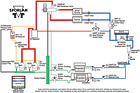
Figure 2. One way to reduce the amount of extra refrigerant charge needed for condenser flooding is to split the condenser into separate and identical condenser circuits.

CONDENSER SPLITTING

As mentioned above, the main disadvantage of condenser flooding is that larger refrigeration systems may hold hundreds of extra pounds of refrigerant needed to properly flood a condenser at extremely low ambient conditions. One way to reduce the amount of extra refrigerant charge needed for condenser flooding is to split the condenser into two separate and identical condenser circuits (Figure 2). This method is referred to as condenser splitting. The splitting of the condensers is done with the addition of a pilot-operated, three-way solenoid valve installed in the discharge line from the compressors (Figure 3). The splitting of the identical condensers is done in such a way where only one-half of the condenser is used for winter operation, and both halves are used for summer operation. The top half of the condenser is referred to as the summer-winter condenser, and the bottom half of the condenser is referred to as the summer condenser (Figure 2). The three-way solenoid valve controlling the splitting of the condensers can be energized and de-energized by a controller sensing outside ambient conditions, an outdoor thermostat, or a high-side pressure control.

During summertime operations, the added surface area and volume of both condensers are needed to maintain a reasonable head pressure at higher ambient conditions. The pilot-operated, three-way solenoid valve is then de-energized. This positions the main piston inside the valve to let refrigerant flow from the compressor’s discharge line to the three-way valve’s inlet port, and then equally to the valve’s two outer ports. In other words, the flow of refrigerant will flow to both of the condenser halves equally.
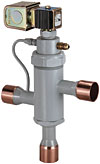
Figure 3. The splitting of the condensers is done with the addition of a pilot-operated, three-way solenoid valve installed in the discharge line from the compressors.

In low ambient conditions, the summer portion of the condenser can be taken out of the active refrigeration system by the three-way valve. When the coil of the pilot-operated, three-way solenoid valve is energized, the sliding piston inside the valve will move and close off the flow of refrigerant to the port on the bottom of the valve that feeds the summer condenser. This action will render the summer condenser inactive or idle, and the minimum head pressure can be maintained by flooding the summer-winter half of the condenser with conventional refrigerant-side head pressure control valves, as explained in the condenser flooding section of this column.

In fact, during winter operations, the system’s head pressure is best maintained with a combination of condenser splitting, refrigerant-side head pressure controls, and air-side controls like fan cycling or fan variable-speed devices. This combination of refrigerant-side and air-side controls will minimize the refrigerant charge even more while splitting the condenser. These combinations will also maintain the correct head pressure for better system efficiencies.

The refrigerant that is trapped in the idle summer condenser during low-ambient conditions will flow back into the active system through a bleed hole in the piston of the three-way valve. This trapped refrigerant will flow through the piston’s bleed hole, into the valve’s pilot assembly, and back to the suction header through a small copper line which feeds all parallel compressors (Figure 2). Another scheme to rid the idle summer condenser of its refrigerant is to have a dedicated pump-out solenoid valve, which will open when energized and vent the trapped refrigerant to the common suction header through a capillary tube restriction. Both the bleed hole in the piston or the capillary tube ensure that the refrigerant experiences a restriction, and is mostly vaporized before reaching the common suction header which is under low side (common suction) pressure.

A check valve is located at the summer condenser’s out- let to prevent any refrigerant from entering it while it is idle and under a low pressure condition. While not needed for backflow prevention, a check valve is also located at the outlet of the summer/winter condenser simply to make the pressure drops equal in both halves of the condenser when both are being used simultaneously in summertime operations.

Publication date: 05/02/2011

Share This Story

Looking for a reprint of this article?
From high-res PDFs to custom plaques, order your copy today!


John Tomczyk is HVACR professor emeritus, Ferris State University, Big Rapids, Michigan, and coauthor of Refrigeration & Air Conditioning Technology, published by Cengage Learning. Contact him at tomczykjohn@gmail.com.

Recommended Content

JOIN TODAY
To unlock your recommendations.

Already have an account? Sign In

  • HVAC-enrollment

    The Trades Are Back: HVACR Programs See Nearly 30% Enrollment Spike

    A new wave of future technicians is entering the pipeline.  
    News
    By: Matt Jachman
  • 2025 Top 40 Under 40

    2025 Top 40 Under 40 HVACR Professionals List

    The 11th annual Top 40 Under 40 list highlights those...
    News
    By: Hannah Belloli-Oster
  • LG Ductless Mini-Split Systems

    The 9 Types of Heat Pumps

    As the U.S. moves toward electrification, heat pumps are...
    News
    By: Joanna R. Turpin
Subscription Center
  • Create an Account
  • Start a Subscription
  • Manage My Account
  • Sign Up for Newsletters
  • Visit Customer Service
  • Update Preferences

More Videos

Sponsored Content

Sponsored Content is a special paid section where industry companies provide high quality, objective, non-commercial content around topics of interest to The News audience. All Sponsored Content is supplied by the advertising company and any opinions expressed in this article are those of the author and not necessarily reflect the views of The News or its parent company, BNP Media. Interested in participating in our Sponsored Content section? Contact your local rep!

close
  • Piggy Bank
    Sponsored byWatercress Financial

    Energy Prices, Inflation, and HVAC: What Today’s Homeowners Care About

  • Refrigerated Food
    Sponsored bySolstice Advanced Materials

    R-455A Refrigeration: A Cold Storage Solution for the Future

  • Airex Rooftop Units
    Sponsored byAirex Manufacturing Inc

    Consolidating Roof Penetrations: A Growing Trend in Multifamily HVAC Design

Popular Stories

HVAC-Price-Increase-graphic

HVAC Price Increase List: June 2026

Trump-Section-232.jpg

Trump Reduces Section 232 Tariffs on HVAC Equipment to 15%

Refrigerants-and-gauge.jpg

HVAC Industry Warns of Counterfeit Refrigerants Entering U.S. Supply Chain

Heat-pump-cutaway.jpg

PFAS Rules and A2L Building Codes Continue to Evolve

Midea-training.jpg

HVAC Workforce Crisis Expands Beyond Technicians to Instructor Shortages

View The ACHR NEWS
Centennial Anniversary Timeline

The ACHR News Timeline Chart
Submit a Letter
Submit a letter to our editors.

Events

November 6, 2025

Next-Gen Data Center Cooling: HVAC Innovation and Real-World Solutions

On Demand As AI workloads and high-density computing push traditional cooling methods to their limits, the data center industry is accelerating the adoption of next-generation HVAC technologies.

June 17, 2026

Decarbonization Without Disruption

This webinar will explore practical HVAC decarbonization strategies that minimize disruption while maximizing long-term performance and ROI.

View All Submit An Event

Poll

Summer Staff

Are you fully staffed for the summer season?
View Results Poll Archive

Products

BNI Mechanical/Electrical Square Foot Costbook, 2026 Edition

BNI Mechanical/Electrical Square Foot Costbook, 2026 Edition

See More Products
Decarbonization Without Disruption - Free Webinar - 6/17/2026

Related Articles

  • The Professor: Condenser Efficiency Affects the System

    See More
  • The Professor: Why Is Condenser Subcooling Needed?

    See More
  • These condenser fins have been bent horizontally and are blocking airflow through the condenser. Photos courtesy of John Tomczyk

    The Professor: The Importance of the Condenser

    See More

Related Products

See More Products
  • Uncomplicating The Heat Pump: Refrigeration & Air Flow Systems DVD

See More Products

Related Directories

  • Condenser and Chiller Services

    Offers in-field eddy current inspection, remote video inspection, protective epoxy coatings and complete retubing service with tubes in stock.
  • SpeedClean

    SpeedClean manufactures and markets HVAC maintenance tools like portable coil cleaning systems, biodegradable coil cleaners, tube cleaners, mini-split cleaning systems and much more.
×

Sign Up. Stay Informed.

The #1 trusted source for the HVACR industry since 1926

SUBSCRIBE
  • RESOURCES
    • Advertise
    • Contact Us
    • Advisory Board
    • Classifieds
    • Submit a Letter
    • Directories
    • Store
  • ACCOUNT CENTER
    • Create an Account
    • Start a Subscription
    • Manage My Account
    • Sign Up for Newsletters
    • Visit Customer Service
    • Update Preferences
  • SERVICES
    • Marketing Services
    • Reprints
    • Market Research
    • List Rental
    • Survey/Respondent Access
  • STAY CONNECTED
    • LinkedIn
    • Facebook
    • Instagram
    • YouTube
    • X (Twitter)
  • PRIVACY
    • PRIVACY POLICY
    • TERMS & CONDITIONS
    • DO NOT SELL MY PERSONAL INFORMATION
    • PRIVACY REQUEST
    • ACCESSIBILITY

Copyright ©2026. All Rights Reserved BNP Media, Inc. and BNP Media II, LLC.

Design, CMS, Hosting & Web Development :: ePublishing