ACHR News
search
Ask ACHR NEWS AI
cart
facebook twitter instagram linkedin youtube
  • Sign In
  • Subscribe
  • Sign Out
  • My Account
ACHR News
  • NEWS
    • Breaking News
    • New HVAC Products
    • Featured Products
    • Manufacturer Reports
    • HVAC Data
    • Legislation
    • ACHR NEWS Centennial
  • RESIDENTIAL
    • Air Conditioners
    • Furnaces
    • Residential Heat Pumps
    • Ductless
    • Residential IAQ
    • Testing, Monitoring, Tools
    • Components & Accessories
  • COMMERCIAL
    • Air Handlers
    • Rooftop Units
    • Chillers and Cooling Towers
    • Commercial Heat Pumps
    • Boilers and Hydronics
    • VRF/Ductless
    • Commercial IAQ
  • REFRIGERATION
    • Refrigerants
    • Refrigerant Regulations
    • Leak Management
  • CONTRACTOR PRO
    • Geothermal
    • Homeowner Study
    • VRF and VRV Ductless
    • Unitary Trends
  • EDUCATION
    • Training and Education
    • Business Management
    • Service and Maintenance
    • Continuing Education
    • Market Research >
      • HVAC Brand Awareness Report
      • VRV, VRF, VRVZ Report
      • Unitary Trends Report
      • Water Heat Professionals Report
    • Webinars
    • Sponsor Insights
    • eProducts Info
    • White Papers
  • EVENTS
    • HVAC Contractor Forum
    • Industry Events and Webinars
  • MEDIA
    • Videos
    • AHR Expo 2025 Videos
    • Podcasts >
      • ACHR News Podcast
      • HARDI Podcasts
      • AHR Expo Podcasts
      • ACCA Podcasts
    • Interactive Spotlights
    • Quizzes
    • eBooks
    • HVAC Talkback
  • HVAC GROUP
    • ACHR NEWS >
      • Current Issue
      • Digital Edition
      • Subscribe
    • Distribution Trends
    • SNIPS NEWS >
      • Join SNIPS NEWS
    • Engineered Systems News >
      • Join ES News
    • HVACR Directory
    • Contests
    • Newsletters
    • Contact
    • Advertise
    • My Account

Talking About PTCRs

By John Tomczyk
October 2, 2006
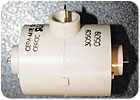
PTCRs are made from a pure semiconducting ceramic material.

Positive Temperature Coefficient Resistors (PTCRs) are variable resistors that vary their resistance when their surrounding temperature changes.

Because they have a positive temperature coefficient, as their temperature increases so does their resistance. Also, as their temperature decreases, so does their resistance. PTCRs have a low resistance over a wide temperature range.

However, when they reach a certain higher temperature, their resistance greatly increases. This very high resistance can act as an open circuit and stop all current flow through a circuit. When the heat source on the PTCR is removed, its resistance will return to its initial room temperature resistance. PTCRs are made from a very pure semiconducting ceramic material.

This type of resistor is being used often in the HVACR industry in place of current and potential relays. In fact, the ice making industry is using PTCRs in place of potential relays in commercial ice machines. They make wiring much easier and get rid of a lot of nonessential, high-maintenance moving parts like relay contacts and springs.

The PTCR is wired in parallel with the run capacitor and in series with the start winding in a Permanent Split Capacitance (PSC) motor. PTCRs can supply the extra starting torque needed with a single-phase, PSC compressor motor on systems that can equalize pressure before starting.

When the cycling control brings power to the motor, both the run and start winding experience a heavy inrush of current. The run (main) winding sees heavy current flow because its low resistance winding is wired across Line 1 and Line 2 directly.

The start (auxiliary) winding also sees heavy current flow because its low resistance winding also sees Line 1 and Line 2 directly for a split instant.

By increasing the current flow in the start winding, additional starting torque is provided by the compressor motor. The reason being is the PTCR is at room temperature and its resistance is very low. It actually shunts out the run capacitor because it acts like a straight wire with very low resistance when it is at room temperature.

Since both the run and start winding see high current that is a bit out of phase from their different inductance values, the motor will have torque to start.

Looking for quick answers on air conditioning, heating and refrigeration topics? Try Ask ACHR NEWS, our new smart AI search tool. Ask ACHR NEWS →

The high current flow through the PTCR will now increase its temperature and will have a very high resistance in less than one second. This will act as an open circuit in the PTCR circuit. The run capacitor will no longer be shunted out and the motor will now run as a PSC motor for the remainder of its running cycle. The PTCR will remain hot and at a high resistance value as long as voltage remains on the circuit.
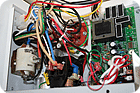
PTCR in a commercial ice machine.

To help this PSC motor starting situation, some ice machine manufacturers use PTCRs as starting relays energizing a hot gas solenoid (harvest) valve before a compressor motor start-up.

Energizing a hot gas solenoid valve located between the compressor's discharge line and the entrance to the evaporator prior to starting will somewhat equalize system pressures and cause much easier compressor starting.

Many times manufacturers will allow the hot gas solenoid valve to remain energized for up to 45 seconds to ensure system equalization before compressor starting. To ensure the compressor is started and will not stall, often the hot gas solenoid valve is energized for 5 to 10 seconds after the compressor has started.

It is important that the PTCR is cooled down to near the ambient temperature before attempting to restart the compressor. If the cool down process is not accomplished, the high starting torque for the PSC compressor motor may not last long enough. Because of this, the ice machine's logic may be schemed to remain off for at least three minutes before it can automatically restart.

Often, a good PTCR may be too hot to operate properly at start-up because the compressor motor has short-cycled or the compressor overload has opened. In these situations, move the toggle switch to the "off" position and allow the compressor motor and the PTCR to cool down. A low voltage situation at the compressor at start-up may also cause the compressor not to have enough starting torque and stall.

In normal operation, a PTCR may reach over 200°F while the compressor is running. To check for a bad PTCR, visually inspect it for physical signs of damage.

Next, wait for at least 10 to 15 minutes for the PTCR to cool down to room temperature with the machine off. Isolate the PTCR from the ice machine and use an ohmmeter to measure its resistance. The manufacturer should have resistance values for room temperature PTCRs. If the resistance falls outside of the acceptance range, replace the PTCR.

Publication date: 10/02/2006

Share This Story

Looking for a reprint of this article?
From high-res PDFs to custom plaques, order your copy today!


John Tomczyk is HVACR professor emeritus, Ferris State University, Big Rapids, Michigan, and coauthor of Refrigeration & Air Conditioning Technology, published by Cengage Learning. Contact him at tomczykjohn@gmail.com.

Recommended Content

JOIN TODAY
To unlock your recommendations.

Already have an account? Sign In

  • HVAC-enrollment

    The Trades Are Back: HVACR Programs See Nearly 30% Enrollment Spike

    A new wave of future technicians is entering the pipeline.  
    News
    By: Matt Jachman
  • 2025 Top 40 Under 40

    2025 Top 40 Under 40 HVACR Professionals List

    The 11th annual Top 40 Under 40 list highlights those...
    HVAC Residential Market
    By: Hannah Belloli-Oster
  • LG Ductless Mini-Split Systems

    The 9 Types of Heat Pumps

    As the U.S. moves toward electrification, heat pumps are...
    News
    By: Joanna R. Turpin
Subscription Center
  • Create an Account
  • Start a Subscription
  • Manage My Account
  • Sign Up for Newsletters
  • Visit Customer Service
  • Update Preferences

More Videos

Sponsored Content

Sponsored Content is a special paid section where industry companies provide high quality, objective, non-commercial content around topics of interest to The News audience. All Sponsored Content is supplied by the advertising company and any opinions expressed in this article are those of the author and not necessarily reflect the views of The News or its parent company, BNP Media. Interested in participating in our Sponsored Content section? Contact your local rep!

close
  • Piggy Bank
    Sponsored byWatercress Financial

    Energy Prices, Inflation, and HVAC: What Today’s Homeowners Care About

  • Refrigerated Food
    Sponsored bySolstice Advanced Materials

    R-455A Refrigeration: A Cold Storage Solution for the Future

  • Airex Rooftop Units
    Sponsored byAirex Manufacturing Inc

    Consolidating Roof Penetrations: A Growing Trend in Multifamily HVAC Design

Popular Stories

Refrigerants-and-gauge.jpg

HVAC Industry Warns of Counterfeit Refrigerants Entering U.S. Supply Chain

Lennox equipment

Platinum Equity to Sell Heat Controller to Lennox

HVAC Minute retail refrigeration system

EPA Final Rule’s Impact on R-410A Deadlines

HVAC-tech-van.jpg

Report: Only 65% of HVAC Technician Time is Billable Hours

Dealer_Couple2_Kitchen_Estimate.jpg

Predicting the Next Service Call

View The ACHR NEWS
Centennial Anniversary Timeline

The ACHR News Timeline Chart
Submit a Letter
Submit a letter to our editors.

Events

November 6, 2025

Next-Gen Data Center Cooling: HVAC Innovation and Real-World Solutions

On Demand As AI workloads and high-density computing push traditional cooling methods to their limits, the data center industry is accelerating the adoption of next-generation HVAC technologies.

July 28, 2026

How Top Home Services Companies Turn Every Conversation Into Predictable Revenue

In this webinar, we'll outline how top contractors are turning every conversation into predictable revenue by coaching every comfort advisor visit, not just the ones a manager rides along on.

View All Submit An Event

Poll

Summer Staff

Are you fully staffed for the summer season?
View Results Poll Archive

Products

BNI Mechanical/Electrical Square Foot Costbook, 2026 Edition

BNI Mechanical/Electrical Square Foot Costbook, 2026 Edition

See More Products
Designing Systems Using A2L Refrigerant - Free Webinar - 7/22/2026

Related Articles

  • DCGenFT-DistBLOG.jpg

    Talking About Yourself Is OK

    See More
  • Talking About Retaining, Hiring Employees

    See More
  • Talking About Internet Usage (Or the Lack Thereof)

    See More
×

Sign Up. Stay Informed.

The #1 trusted source for the HVACR industry since 1926

SUBSCRIBE
  • RESOURCES
    • Advertise
    • Contact Us
    • Advisory Board
    • Classifieds
    • Submit a Letter
    • Directories
    • Store
  • ACCOUNT CENTER
    • Create an Account
    • Start a Subscription
    • Manage My Account
    • Sign Up for Newsletters
    • Visit Customer Service
    • Update Preferences
  • SERVICES
    • Marketing Services
    • Reprints
    • Market Research
    • List Rental
    • Survey/Respondent Access
  • STAY CONNECTED
    • LinkedIn
    • Facebook
    • Instagram
    • YouTube
    • X (Twitter)
  • PRIVACY
    • PRIVACY POLICY
    • TERMS & CONDITIONS
    • DO NOT SELL MY PERSONAL INFORMATION
    • PRIVACY REQUEST
    • ACCESSIBILITY

Copyright ©2026. All Rights Reserved BNP Media, Inc. and BNP Media II, LLC.

Design, CMS, Hosting & Web Development :: ePublishing