ACHR News
search
Ask ACHR NEWS AI
cart
facebook twitter instagram linkedin youtube
  • Sign In
  • Subscribe
  • Sign Out
  • My Account
ACHR News
  • NEWS
    • Breaking News
    • New HVAC Products
    • Featured Products
    • Manufacturer Reports
    • HVAC Data
    • Legislation
    • ACHR NEWS Centennial
  • RESIDENTIAL
    • Air Conditioners
    • Furnaces
    • Residential Heat Pumps
    • Ductless
    • Residential IAQ
    • Testing, Monitoring, Tools
    • Components & Accessories
  • COMMERCIAL
    • Air Handlers
    • Rooftop Units
    • Chillers and Cooling Towers
    • Commercial Heat Pumps
    • Boilers and Hydronics
    • VRF/Ductless
    • Commercial IAQ
  • REFRIGERATION
    • Refrigerants
    • Refrigerant Regulations
    • Leak Management
  • CONTRACTOR PRO
    • Geothermal
    • Homeowner Study
    • VRF and VRV Ductless
    • Unitary Trends
  • EDUCATION
    • Training and Education
    • Business Management
    • Service and Maintenance
    • Continuing Education
    • Market Research >
      • HVAC Brand Awareness Report
      • VRV, VRF, VRVZ Report
      • Unitary Trends Report
      • Water Heat Professionals Report
    • Webinars
    • Sponsor Insights
    • eProducts Info
    • White Papers
  • EVENTS
    • HVAC Contractor Forum
    • Industry Events and Webinars
  • MEDIA
    • Videos
    • AHR Expo 2025 Videos
    • Podcasts >
      • ACHR News Podcast
      • HARDI Podcasts
      • AHR Expo Podcasts
      • ACCA Podcasts
    • Interactive Spotlights
    • Quizzes
    • eBooks
    • HVAC Talkback
  • HVAC GROUP
    • ACHR NEWS >
      • Current Issue
      • Digital Edition
      • Subscribe
    • Distribution Trends
    • SNIPS NEWS >
      • Join SNIPS NEWS
    • Engineered Systems News >
      • Join ES News
    • HVACR Directory
    • Contests
    • Newsletters
    • Contact
    • Advertise
    • My Account

Pushing Green Into the Black

By Robert Eckery
March 3, 2008
FIGURE 1. Benefit of self-powered wireless sensors.

Energy inefficiencies in buildings are easy to spot. Less evident, however, are cost-effective means that can remedy the pervasive wastes of energy.

A building owner can easily document a building’s faults and then ask the contractor to propose an energy-efficient solution. Building owners must then weigh the benefits of modernizing the building versus their own fiduciary goals. Building owners often elect to continue to feed an energy-hungry building more power rather than pay the cost of installing a new system.

Fortunately, green technologies have matured. Thanks to innovative engineering and premiums paid by early adapters, contractors can now present cost-effective and field-tested solutions to prospective clients. Products, such as peel-and-stick sensors, simplify and expedite system integration; while providing the building owner a wireless sensor network that yields greater control of building space.

Case studies show that after a reliable wireless sensor network is put into place, energy consumption is reduced. And, over time, building owners recoup the initial cost of installation. (See Figure 1, benefit of self-powered wireless sensors.)

Practical experience has demonstrated that there is a 10 to 60 percent saving potential for amortizations between two and 10 years. In the case studies referenced in this article, energy consumption was reduced 40 percent by implementing green strategies, such as “need-based” heating and cooling. As the studies will document, a network of peel-and-stick sensors can have a positive impact on the environment and on finances.

The wireless networks in this article make use of self-powered wireless sensors and switches that are enabled by EnOcean RF (radio frequency) modules and energy harvesters. The embedded modules enable wireless thermostats, window sensors, and key card switches to operate without batteries or wired power sources.

The energy harvester converts environmental energy (in these cases, solar and mechanical energy) into transmit power that the sensors can use to convey information to HVAC controllers. The self-powered wireless technology is what differentiates the wireless sensor networks in this article from others. (See Figure 2, EnOcean RF modules and energy harvesters.)

FIGURE 2. Example of EnOcean RF Modules and Energy Harvesters.

CASE STUDY 1

Let’s study a few case studies. In the case of University of Canterbury, a learning institution in New Zealand, the school wanted to improve the quality and capacity of older dormitory buildings. Modernization of the buildings had to satisfy the following requirements:

• reduce energy consumption and utility spending;

• avoid reliance upon batteries; and

• the installation of sensors could not be invasive, as building closures had to be kept to a minimum.

The solution, in this example, was to install self-powered wireless window sensors (solar-powered magnetic contacts), thermostats, and controllers in each room. The window sensors enable status monitoring of windows. When a window is closed and a room is below a specified temperature, the heating unit turns on automatically. If either the temperature gets too warm or a window is opened while the heating is on, the heating is automatically turned off.

The self-powered wireless controls rendered time-consumptive labors, such as wiring or chiseling conduits unnecessary. (See Figure 3, college dormitory renovation.)

FIGURE 3. College dormitory renovation.

CASE STUDY 2

In a different example, a contractor was investigating ways to renovate and modernize a 200-room hotel in Orlando, Fla., plus reduce the amount of energy the hotel consumes. The hospitality building upgrade needed to satisfy the following requirements:

• reduce energy consumption in unoccupied rooms;

• avoid reliance upon batteries;

• maintain and improve hotel guests’ experience; and

• install the sensors and switches in a non-invasive manner. In other words, the hotel had to stay open for business during installations.

The contractor proposed to install self-powered wireless hotel key switches in each room. The key card switch is an EnOcean-enabled wireless transmitter recently developed by Echoflex Solutions. The key switch operates without batteries and solves the problem of heating, cooling, and lighting unoccupied hotel rooms.

The self-powered wireless key card switch acts as a master switch. When a guest enters a room, they insert their hotel key into a lighted dock. When the key card is inserted, a radio signal is transmitted that enables the room’s lights, electronics, heater, and air conditioner. When the key card is removed from its dock, another radio signal is sent that, after allowing the guest 10 minutes to depart, disables the room’s powered amenities.

In the scenario cited here, the hotel owner will make back the initial installation cost in 3.75 years and then pocket nearly $310,000 in net profits during the lifetime of the self-powered wireless sensors and switches, based on 20 years of maintenance-free operations. (See Figure 4, conserving power in unoccupied hotel rooms.)
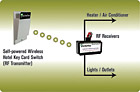
FIGURE 4. Conserving power in unoccupied hotel rooms.

DO THE MATH

The following outlines how the savings of $19,045/year was figured:

1. Calculate the amount of power one hotel room consumes in one hour. In this case, the sum of energy consumption per room was 1,080 Watts.

1080 Watts = 750 Watts + 180 Watts + 150 Watts

(• Heater/Air conditioner = 750 Watts;

• three 60-Watt light bulbs = 180 Watts

• TV = 150 Watts)

2. Now multiply the following variables: Power usage (in kilowatts); number of rooms; number of hours room is left unoccupied; hotel occupancy percentage; percentage of guests that leave utilities on when they are not in the room; cost of electricity; and number of days in a year.

After multiplying the variables, the potential energy savings for one year is $19,045.

$19,045 = 1.08 kW x 200 rooms x 5 hours x 70% occupancy x 70% of guests leave utilities on when departed x $0.0986 kWh x 365 days

SUMMARY

Installing a self-powered wireless network requires some clairvoyance. If an integrator can see beyond the glare of initial installation costs, long-term gains are in store. Contractors and building owners now have access to products that protect the environment, preserve natural resources and stimulate economic growth.

The benefits of self-powered wireless solutions also stretch beyond the scope outlined in these case studies. No attempt was made to attach a monetary value to other tangibles, such as the costs of battery-replacement. The green solutions cited in this article are not only good for the environment; self-powered wireless controls are also good for business.

Publication date: 03/03/2008

Share This Story

Looking for a reprint of this article?
From high-res PDFs to custom plaques, order your copy today!


Robert Eckery is with EnOcean. For more information, visit www.EnOcean.com.

Recommended Content

JOIN TODAY
To unlock your recommendations.

Already have an account? Sign In

  • HVAC-enrollment

    The Trades Are Back: HVACR Programs See Nearly 30% Enrollment Spike

    A new wave of future technicians is entering the pipeline.  
    News
    By: Matt Jachman
  • 2025 Top 40 Under 40

    2025 Top 40 Under 40 HVACR Professionals List

    The 11th annual Top 40 Under 40 list highlights those...
    HVAC Light Commercial Market
    By: Hannah Belloli-Oster
  • LG Ductless Mini-Split Systems

    The 9 Types of Heat Pumps

    As the U.S. moves toward electrification, heat pumps are...
    News
    By: Joanna R. Turpin
Subscription Center
  • Create an Account
  • Start a Subscription
  • Manage My Account
  • Sign Up for Newsletters
  • Visit Customer Service
  • Update Preferences

More Videos

Sponsored Content

Sponsored Content is a special paid section where industry companies provide high quality, objective, non-commercial content around topics of interest to The News audience. All Sponsored Content is supplied by the advertising company and any opinions expressed in this article are those of the author and not necessarily reflect the views of The News or its parent company, BNP Media. Interested in participating in our Sponsored Content section? Contact your local rep!

close
  • Piggy Bank
    Sponsored byWatercress Financial

    Energy Prices, Inflation, and HVAC: What Today’s Homeowners Care About

  • Refrigerated Food
    Sponsored bySolstice Advanced Materials

    R-455A Refrigeration: A Cold Storage Solution for the Future

  • Airex Rooftop Units
    Sponsored byAirex Manufacturing Inc

    Consolidating Roof Penetrations: A Growing Trend in Multifamily HVAC Design

Popular Stories

HVAC-Price-Increase-graphic

HVAC Price Increase List: June 2026

Trump-Section-232.jpg

Trump Reduces Section 232 Tariffs on HVAC Equipment to 15%

R410A-Refrigerant-Cylinder.jpg

Refrigerant Recovery is a Revenue Opportunity

Heat-pump-cutaway.jpg

PFAS Rules and A2L Building Codes Continue to Evolve

Midea-training.jpg

HVAC Workforce Crisis Expands Beyond Technicians to Instructor Shortages

View The ACHR NEWS
Centennial Anniversary Timeline

The ACHR News Timeline Chart
Submit a Letter
Submit a letter to our editors.

Events

November 6, 2025

Next-Gen Data Center Cooling: HVAC Innovation and Real-World Solutions

On Demand As AI workloads and high-density computing push traditional cooling methods to their limits, the data center industry is accelerating the adoption of next-generation HVAC technologies.

June 17, 2026

Decarbonization Without Disruption

This webinar will explore practical HVAC decarbonization strategies that minimize disruption while maximizing long-term performance and ROI.

View All Submit An Event

Poll

Summer Staff

Are you fully staffed for the summer season?
View Results Poll Archive

Products

BNI Mechanical/Electrical Square Foot Costbook, 2026 Edition

BNI Mechanical/Electrical Square Foot Costbook, 2026 Edition

See More Products
Decarbonization Without Disruption - Free Webinar - 6/17/2026

Related Articles

  • How Does the Black Hat Look on Arkema?

    See More
  • Backing Into the LEED

    See More
  • autonomous vehicle hvac

    Autonomous Vehicles Drive the HVAC Industry into the Future

    See More

Related Products

See More Products
  • Converting Phone Calls Into More Sales - DVD

  • Green Tips for Building Maintenance Engineers

  • new cover.jpg

    Profit is An Attitude: The Strategies You Need to Optimize Profits

See More Products

Events

View AllSubmit An Event
  • September 9, 2025

    How Maintenance Plays into the HVAC Decarbonization Trend

    On Demand This webinar will explore maintenance strategies for advanced HVAC systems, including VAVs and demand-controlled ventilation.
View AllSubmit An Event

Related Directories

  • Black Mamba Gloves

    Specifically designed from a unique blend of nitrile, the Black Mamba Glove was designed to be the toughest disposable glove on the market today. Thicker and stronger than any other black nitrile glove available, the black mamba glove is over 6.0 mils thick and is fully textured with 3 times the puncture-resistance of latex and vinyl.
×

Sign Up. Stay Informed.

The #1 trusted source for the HVACR industry since 1926

SUBSCRIBE
  • RESOURCES
    • Advertise
    • Contact Us
    • Advisory Board
    • Classifieds
    • Submit a Letter
    • Directories
    • Store
  • ACCOUNT CENTER
    • Create an Account
    • Start a Subscription
    • Manage My Account
    • Sign Up for Newsletters
    • Visit Customer Service
    • Update Preferences
  • SERVICES
    • Marketing Services
    • Reprints
    • Market Research
    • List Rental
    • Survey/Respondent Access
  • STAY CONNECTED
    • LinkedIn
    • Facebook
    • Instagram
    • YouTube
    • X (Twitter)
  • PRIVACY
    • PRIVACY POLICY
    • TERMS & CONDITIONS
    • DO NOT SELL MY PERSONAL INFORMATION
    • PRIVACY REQUEST
    • ACCESSIBILITY

Copyright ©2026. All Rights Reserved BNP Media, Inc. and BNP Media II, LLC.

Design, CMS, Hosting & Web Development :: ePublishing