The arrival of the second Trump administration in Washington, D.C., this year brought talk of canceling the Energy Star program, though the HVAC industry and lawmakers on both sides of the aisle have expressed support for it.
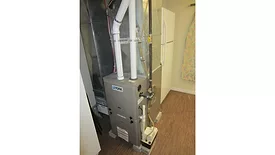
A federal court has upheld the Department of Energy’s furnace efficiency rule, requiring all new residential furnaces manufactured after 2028 to be 15% more efficient than today’s models. The DOE says the move will save consumers an average of $350 over the life of their equipment while cutting emissions equivalent to shutting down two dozen gas power plants.
Energy Star, which was launched in 1992, certifies highly efficient appliances, including HVAC equipment, and homes and other buildings. The work is a joint EPA and U.S. Department of Energy (DOE) effort.
Designed to produce innovative HVAC technology, this accomplishment helps provide customers with access to high-efficiency heat pumps in cold climates, improving performance and solving long-standing defrost limitations for greater comfort and reliability.
"This achievement reflects the work of our talented engineering and product development teams, who delivered a solution that reduces energy intensity and operating costs while helping strengthen U.S. competitiveness in commercial buildings,” said Heidi Gehring, managing director of the Americas light commercial division at Carrier HVAC.
The DOE says the changes will ease regulatory burdens, lower consumer costs, and improve Americans’ quality of life. But industry stakeholders are raising red flags, warning that weakening efficiency standards could open the door to an influx of low-cost, lower-quality imports.
Refrigerant rules, energy standards, and incentives are all in flux. HVACR contractors need to stay informed in order to make smart business decisions.