ACHR News
search
Ask ACHR NEWS AI
cart
facebook twitter instagram linkedin youtube
  • Sign In
  • Subscribe
  • Sign Out
  • My Account
ACHR News
  • NEWS
    • Breaking News
    • New HVAC Products
    • Featured Products
    • Manufacturer Reports
    • HVAC Data
    • Legislation
    • ACHR NEWS Centennial
  • RESIDENTIAL
    • Air Conditioners
    • Furnaces
    • Residential Heat Pumps
    • Ductless
    • Residential IAQ
    • Testing, Monitoring, Tools
    • Components & Accessories
  • COMMERCIAL
    • Air Handlers
    • Rooftop Units
    • Chillers and Cooling Towers
    • Commercial Heat Pumps
    • Boilers and Hydronics
    • VRF/Ductless
    • Commercial IAQ
  • REFRIGERATION
    • Refrigerants
    • Refrigerant Regulations
    • Leak Management
  • CONTRACTOR PRO
    • Geothermal
    • Homeowner Study
    • VRF and VRV Ductless
    • Unitary Trends
  • EDUCATION
    • Training and Education
    • Business Management
    • Service and Maintenance
    • Continuing Education
    • Market Research >
      • HVAC Brand Awareness Report
      • VRV, VRF, VRVZ Report
      • Unitary Trends Report
      • Water Heat Professionals Report
    • Webinars
    • Sponsor Insights
    • eProducts Info
    • White Papers
  • EVENTS
    • HVAC Contractor Forum
    • Industry Events and Webinars
  • MEDIA
    • Videos
    • AHR Expo 2025 Videos
    • Podcasts >
      • ACHR News Podcast
      • HARDI Podcasts
      • AHR Expo Podcasts
      • ACCA Podcasts
    • Interactive Spotlights
    • Quizzes
    • eBooks
    • HVAC Talkback
  • HVAC GROUP
    • ACHR NEWS >
      • Current Issue
      • Digital Edition
      • Subscribe
    • Distribution Trends
    • SNIPS NEWS >
      • Join SNIPS NEWS
    • Engineered Systems News >
      • Join ES News
    • HVACR Directory
    • Contests
    • Newsletters
    • Contact
    • Advertise
    • My Account
HVAC Contracting

Helping Air Conditioning Systems Beat The Heat

May 30, 2003
Starting the cooling season with a dirty condenser or poor quality lubrication is a sure way to decrease air conditioning system performance and increase chances for equipment breakdowns during periods of high cooling load. In addition to the high cost associated with replacing a motor/compressor unit, customers may experience delays in repairs during peak cooling months, as you, the HVACR service contractor, are likely to be busy.

Remind your commercial customers of the importance of having a clean condenser and high quality lubrication before starting up air conditioning equipment for the cooling season. This applies to all systems, large and small.

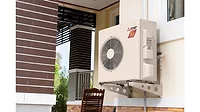
Remind customers of the need for a clean condenser.

Condensers Perform Key Functions

Take a look at a condenser. Fans, coils — not much to look at compared to some of the other system components. Now take a closer look. Just what is going on in this rather simple looking device? First, regardless of what the nominal rated tonnage of the system is, the condenser, more than any other single component, will determine the true capacity of an air conditioning system. In other words, if you have a unit rated at 50 tons, and you only reject heat at a rate equivalent to 40 tons, system capacity will be limited to 40 tons of cooling.

The primary function of a condenser is to reject the heat absorbed in the evaporator, but this is not the only function. The compressor will add a significant amount of heat as it shrinks gas volume and increases its pressure. In fact, when refrigerant gas enters the condenser, it is a superheated gas (at a temperature above that corresponding to its pressure). So, the first job of the condenser is to desuperheat the gas.

Once this is done, the condenser can get to the job of condensing or changing the refrigerant gas into a liquid. To avoid excessive flash gas as the refrigerant metering device controls flow to the evaporator, most condensers are also designed to provide some degree of liquid subcooling (at a temperature below that corresponding to its pressure). In order for any condenser to perform all of these functions properly, it must be clean and have the proper airflow across the coils.

A fouled condenser will not perform up to par during the hottest days of summer.

Don’t Neglect Condenser Maintenance

Unfortunately, condensers don’t always get the attention they deserve, possibly due to the typical location of condensers on rooftops. Over a period of years of operation, condenser coils will become fouled with dirt and organic matter. In certain areas, they can become rapidly fouled, as Mother Nature likes to spread its seeds in the springtime. Try maintaining a condenser anywhere near a cottonwood tree in the springtime. In other areas, hail damage to condensers can severely restrict airflow.

Condenser “combs” can be used to straighten coil fins if damage isn’t too severe. Cleaning the exterior of a condenser can be a challenge. Air conditioning condensers tend to have closely spaced fins, and will often be three or more rows deep. It will require at least partial disassembly of the condenser to do an effective job of cleaning. While this is labor intensive, adding to the cost of maintenance, it is often the only way to assure that the condenser will perform well during the warmest days of summer. The condenser coil can also become fouled inside if poor quality lubricant or improper levels of lubricant additives are in the system.

Lubrication Breakdown

The primary function of lubrication is to prevent metal-to-metal contact. In order to perform this function, oil needs to be relatively free of contamination and within a specified viscosity range. Viscosity, of course, decreases with an increase in temperature. This simple fact can be easy to overlook when trying to figure out why a compressor has seized long before its time. Remember our simple condenser? If you don’t reject heat in the condenser, it will stay in the system.

Condensers in poor condition will have two very detrimental effects on an air conditioning system. The higher temperature can lower oil viscosity to the point where metal-to-metal contact occurs in the compressor. This will result in rapid wear, or even compressor seizure in extreme cases. This condition is often referred to as lack of lubrication or lubrication breakdown.

Moisture Is The No. 1 Problem

In both hermetic and semi-hermetic systems, refrigerant is often used to cool the motor windings. Again, if you don’t reject heat in the condenser, it stays in the system. The higher operating temperatures will break down motor insulation more rapidly over time and eventually cause the motor insulation to fail (burnout). There are, of course, other factors contributing to early motor insulation failures more directly related to lubrication quality. Moisture contamination is the No. 1 problem associated with breakdown of oils. Refrigerant oils are particularly susceptible to this problem because they are hygroscopic (readily absorb moisture).

Monitoring Conditions With Oil Analysis

Spectrochemical oil analysis is the best method available to assure a system’s oil is in good condition for continued service. While it is good maintenance practice to change oil on a routine basis, simply changing the oil does not provide any information on possible system problems. For larger units, original equipment manufacturers (OEMs) may recommend changing oil only when an oil analysis indicates the need to do so. The most important parameters to monitor for oil analysis include:

  • Moisture (ppm) — Helps identify possible system leaks (air, water, or both).

  • Acid Number — Indicates level of corrosive acids in the oil (may be caused by moisture contamination or high operating temperatures).

  • Gardner Color — A high number or dark color indicates higher than normal operating temperatures.

    Improving Efficiency, Extending Equipment Life

    Although the spectrochemical oil analysis report will include metals content, it is not necessarily a good indication of wear metals. The indication may be an oxide due to moisture contamination. Medium and larger size systems may also include highly efficient oil filters trapping any actual wear metals above 5 microns in size. If the system has such filters, consider examining the oil filter for actual wear particles under a good light and with magnification.

    OEMs or experienced labs will often specify limits for the critical parameters found in spectrochemical oil analysis reports. Routine oil analysis will allow you to compare a system’s lubricant to new oil conditions to determine if contamination or other operating problems are present. This will not only help identify problems before a failure occurs, but will help maintain good operating efficiency and extend the life of system components, especially the motor/compressor unit.

    Lubricant Additives

    Most of us are familiar with numerous lubricant additives available for our auto engines that promise to do everything from increasing gas mileage to making our engines run indefinitely. When it comes to refrigerant oil additives, there are additives that will help oil perform better in an air conditioning system. These are the additives that have been approved by OEMs such as foam depressants, rust inhibitors, anti-oxidants, and viscosity extenders. Many other additives are available that have not been approved by OEMs and claim to provide benefits which are, at best, questionable. Some may even damage a system. Clogged oil filters are often the first indication that an additive may be causing problems, or that an approved additive is not at proper treatment levels.

    Summing It Up

    Condensers are an important part of an air conditioning system. But, often, this critical equipment doesn’t get the attention it deserves. Customers may even try to hide condensers with foliage or architecture. If, however, they want to give their air conditioning system a head start in “beating the heat,” starting with a clean condenser and high quality lubrication are the keys to a “cool” summer.

    James Brogan, an industry consultant with HSB Inspection Services in Denver, received an Associate in Risk Management (ARM) designation from the Insurance Institute of America. He specializes in loss control and risk management issues associated with HVACR equipment and systems. For more information, visit www.hsb.com.

    Publication date: 06/02/2003

  • Looking for quick answers on air conditioning, heating and refrigeration topics? Try Ask ACHR NEWS, our new smart AI search tool. Ask ACHR NEWS →

    Share This Story

    Looking for a reprint of this article?
    From high-res PDFs to custom plaques, order your copy today!


    Recommended Content

    JOIN TODAY
    To unlock your recommendations.

    Already have an account? Sign In

    • HVAC-enrollment

      The Trades Are Back: HVACR Programs See Nearly 30% Enrollment Spike

      A new wave of future technicians is entering the pipeline.  
      Training and Education
      By: Matt Jachman
    • 2025 Top 40 Under 40

      2025 Top 40 Under 40 HVACR Professionals List

      The 11th annual Top 40 Under 40 list highlights those...
      HVAC Commercial Market
      By: Hannah Belloli-Oster
    • LG Ductless Mini-Split Systems

      The 9 Types of Heat Pumps

      As the U.S. moves toward electrification, heat pumps are...
      HVAC Residential Market
      By: Joanna R. Turpin
    Subscription Center
    • Create an Account
    • Start a Subscription
    • Manage My Account
    • Sign Up for Newsletters
    • Visit Customer Service
    • Update Preferences

    More Videos

    Sponsored Content

    Sponsored Content is a special paid section where industry companies provide high quality, objective, non-commercial content around topics of interest to The News audience. All Sponsored Content is supplied by the advertising company and any opinions expressed in this article are those of the author and not necessarily reflect the views of The News or its parent company, BNP Media. Interested in participating in our Sponsored Content section? Contact your local rep!

    close
    • Piggy Bank
      Sponsored byWatercress Financial

      Energy Prices, Inflation, and HVAC: What Today’s Homeowners Care About

    • Refrigerated Food
      Sponsored bySolstice Advanced Materials

      R-455A Refrigeration: A Cold Storage Solution for the Future

    • Airex Rooftop Units
      Sponsored byAirex Manufacturing Inc

      Consolidating Roof Penetrations: A Growing Trend in Multifamily HVAC Design

    Popular Stories

    Refrigerants-and-gauge.jpg

    HVAC Industry Warns of Counterfeit Refrigerants Entering U.S. Supply Chain

    U.S. Supreme Court building

    95% Furnace Efficiency Rule to Get New Hearing

    Midea-training.jpg

    HVAC Workforce Crisis Expands Beyond Technicians to Instructor Shortages

    Data_Center_facility.jpg

    HVAC Manufacturers Respond to Growing Data Center Backlash

    HVAC Minute retail refrigeration system

    EPA Final Rule’s Impact on R-410A Deadlines

    View The ACHR NEWS
    Centennial Anniversary Timeline

    The ACHR News Timeline Chart
    Submit a Letter
    Submit a letter to our editors.

    Events

    November 6, 2025

    Next-Gen Data Center Cooling: HVAC Innovation and Real-World Solutions

    On Demand As AI workloads and high-density computing push traditional cooling methods to their limits, the data center industry is accelerating the adoption of next-generation HVAC technologies.

    June 23, 2026

    HVAC Duct Sealing Mastics: Why Selection Matters

    In this webinar we will detail what HVAC material buyers and technicians need to know when selecting duct mastics, including matching mastic to substrate, alternatives to liquid mastic, and where UL 181 Listings fit into real world installations.

    View All Submit An Event

    Poll

    Summer Staff

    Are you fully staffed for the summer season?
    View Results Poll Archive

    Products

    BNI Mechanical/Electrical Square Foot Costbook, 2026 Edition

    BNI Mechanical/Electrical Square Foot Costbook, 2026 Edition

    See More Products
    HVAC Duct Sealing Mastics: Why Selection Matters - Free Webinar - 6/23/2026

    Related Articles

    • women in HVACR

      Friedrich Air Conditioning Helps New York City Youth Beat the Heat with Donation to Cool Community Centers

      See More
    • heat pump installation

      All-Electric, All-Climate Heat Pumps Help Homeowners Beat the Heat and Lower Energy Costs

      See More
    • Funding Needed For Dallas ‘Beat The Heat' Program

      See More

    Related Products

    See More Products
    • Uncomplicating The Heat Pump: Refrigeration & Air Flow Systems DVD

    • ac.png

      Air Conditioning Service Guide R-410A and R-22 Systems 2nd Edition

    • EHEP002028.jpg

      Principles of Heating, Ventilation, and Air Conditioning in Buildings, 1st Edition

    See More Products

    Related Directories

    • Ai Air Conditioning Corp.

      AI Air Conditioning Corp. is a New York-based wholesaler and distributor of Midea heating, ventilation, and air conditioning (HVAC) systems, offering products and engineering support for commercial and residential projects.
    ×

    Sign Up. Stay Informed.

    The #1 trusted source for the HVACR industry since 1926

    SUBSCRIBE
    • RESOURCES
      • Advertise
      • Contact Us
      • Advisory Board
      • Classifieds
      • Submit a Letter
      • Directories
      • Store
    • ACCOUNT CENTER
      • Create an Account
      • Start a Subscription
      • Manage My Account
      • Sign Up for Newsletters
      • Visit Customer Service
      • Update Preferences
    • SERVICES
      • Marketing Services
      • Reprints
      • Market Research
      • List Rental
      • Survey/Respondent Access
    • STAY CONNECTED
      • LinkedIn
      • Facebook
      • Instagram
      • YouTube
      • X (Twitter)
    • PRIVACY
      • PRIVACY POLICY
      • TERMS & CONDITIONS
      • DO NOT SELL MY PERSONAL INFORMATION
      • PRIVACY REQUEST
      • ACCESSIBILITY

    Copyright ©2026. All Rights Reserved BNP Media, Inc. and BNP Media II, LLC.

    Design, CMS, Hosting & Web Development :: ePublishing