ACHR News
search
Ask ACHR NEWS AI
cart
facebook twitter instagram linkedin youtube
  • Sign In
  • Subscribe
  • Sign Out
  • My Account
ACHR News
  • NEWS
    • Breaking News
    • New HVAC Products
    • Featured Products
    • Manufacturer Reports
    • HVAC Data
    • Legislation
    • ACHR NEWS Centennial
  • RESIDENTIAL
    • Air Conditioners
    • Furnaces
    • Residential Heat Pumps
    • Ductless
    • Residential IAQ
    • Testing, Monitoring, Tools
    • Components & Accessories
  • COMMERCIAL
    • Air Handlers
    • Rooftop Units
    • Chillers and Cooling Towers
    • Commercial Heat Pumps
    • Boilers and Hydronics
    • VRF/Ductless
    • Commercial IAQ
  • REFRIGERATION
    • Refrigerants
    • Refrigerant Regulations
    • Leak Management
  • CONTRACTOR PRO
    • Geothermal
    • Homeowner Study
    • VRF and VRV Ductless
    • Unitary Trends
  • EDUCATION
    • Training and Education
    • Business Management
    • Service and Maintenance
    • Continuing Education
    • Market Research >
      • HVAC Brand Awareness Report
      • VRV, VRF, VRVZ Report
      • Unitary Trends Report
      • Water Heat Professionals Report
    • Webinars
    • Sponsor Insights
    • eProducts Info
    • White Papers
  • EVENTS
    • HVAC Contractor Forum
    • Industry Events and Webinars
  • MEDIA
    • Videos
    • AHR Expo 2025 Videos
    • Podcasts >
      • ACHR News Podcast
      • HARDI Podcasts
      • AHR Expo Podcasts
      • ACCA Podcasts
    • Interactive Spotlights
    • Quizzes
    • eBooks
    • HVAC Talkback
  • HVAC GROUP
    • ACHR NEWS >
      • Current Issue
      • Digital Edition
      • Subscribe
    • Distribution Trends
    • SNIPS NEWS >
      • Join SNIPS NEWS
    • Engineered Systems News >
      • Join ES News
    • HVACR Directory
    • Contests
    • Newsletters
    • Contact
    • Advertise
    • My Account

GAMAzine: They're Vent-Free Products - And Safe

July 24, 2006
Ajay Gupta of Housewarmings in Lexington, Ky.
The aesthetic and practical aspects of vent-free gas heating appliances continue to draw consumer interest. For instance, potential buyers are looking for stylish fireplaces that do not include a potentially messy chimney, flue, and vent. Or, they just need a good, mounted space heater in the garage, basement, or a chilly part of the house for supplemental zone heat.

With such purchases comes the need for assurances that such products are safe, especially since most are in home situations. And such assurances come from a variety of sources, such as independent testing, a myriad of code requirements, and, at the heart of such units, the Oxygen Detection Safety (ODS) pilot.

The selling point for such vent-free gas appliances includes energy efficiency, convenience, and, in the case of gas logs or fireplaces, there's no need for wood. There is a wide range of products, including space heaters, gas stoves, gas fireplaces, gas fireplace inserts, and gas logs that can be installed within existing masonry or factory-built fireplace. Locations could include living rooms, kitchens, family rooms, dining rooms, home offices, playrooms, basements, garages, room additions, sun porches, or recreation rooms.
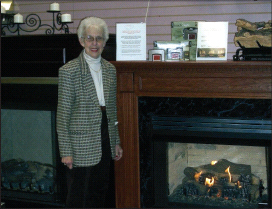
Susan Scott of O'Malia's Fireplace Shop, Carmel, Ind.
Instant and plentiful heat is a customer hot button for vent-free products, according to Ajay Gupta, president of Housewarmings (Lexington, Ky.).

"With any appliance other than vent-free, it takes quite a while to build up heat in a room. A vent-free heater or log set provides heat immediately," he said. "We've found this is a key point for our customers, along with the 99 percent efficiency of vent-free appliances."

Because a chimney is not needed, a vent-free gas product can be installed almost anywhere, even along an inside wall.

"In contrast, installing a traditional wood fireplace is a major and costly construction project," noted Mary Carson, program director for the Vent-Free Gas Products Alliance. "With a vent-free gas fireplace or heater, you have complete flexibility in designing or redesigning your room. A vent-free supplemental gas product can reduce heating costs by allowing you to zone heat. You can use your vent-free unit to provide abundant heat for the rooms in most frequent use, and turn down your central heating thermostat."

THE SAFETY FACTOR

The building codes in the United States require that all gas appliances, including vent-free gas products, be approved to specific safety standards that are approved by the American National Standards Institute (ANSI). For vent-free gas appliances, the standard is ANSI Z21.11.2. The building inspector and gas utility will look for the metal label listing the testing laboratory that certified the product. The performance tests in the standard ensure that, under normal and certain abnormal conditions, the combustion is within safe limits and that no part of the appliance exceeds safe temperature limits, among other safety-related design and performance items.

Among the safety issues that the vent-free industry addresses with its products are those concerning carbon monoxide (CO) and moisture (H20), since both are byproducts of gas combustion. The effects of vent-free products' emissions on sensitive populations were tested in an extensive independent study on indoor air quality (IAQ) - and the results were favorable.

"This research used as its criteria the recommended maximum levels of CO as set by the Consumer Product Safety Commission (CPSC) with sensitive populations - such as children, pregnant women, and the elderly - as the benchmark," said Carson. "The results of the research proved that vent-free gas heating products performed well within the CPSC guidelines for carbon monoxide."

Looking for quick answers on air conditioning, heating and refrigeration topics? Try Ask ACHR NEWS, our new smart AI search tool. Ask ACHR NEWS →

With a vent-free gas fireplace or heater, a homeowner has the flexibility in designing or redesigning a room.
The Gas Appliance Manufacturers Association (GAMA) recommends a CO monitor in every home since possible sources for carbon monoxide could include automobiles, indoor grilling on hibachis, and gas appliances that may not have been properly maintained.

To address the moisture issue, the industry recommends adequate ventilation.

"If the home shows symptoms of inadequate ventilation, such as moisture on the insides of windows and mildew, more ventilation may be required prior to adding additional vent-free gas appliances," said Carson. "Also, if the vent-free product is installed in a tight new home, the installer should make sure a home is properly ventilated."

For the vast majority of homes in the United States, Carson noted that vent-free gas heating products do not generate enough water vapor to raise indoor humidity levels high enough to foster mold growth.

KEEPING UP WITH CODES

All model codes and code groups permit the installation of vent-free gas products, including the National Fire Protection Association (NFPA), Building Officials and Code Administrators (BOCA), Southern Building Code Congress International (SBCCI), Council of American Building Officials (CABO), International Mechanical Code (IMC), International Fuel Gas Code (IFGC), International Residential Code (IRC), and the Uniform Mechanical Code (UMC). The International Association of Plumbing and Mechanical Officials (IAPMO) sponsored UMC accepted vent-free appliances as of January 2006 and is currently being adopted in their code regions. Forty-nine states in the United States allow for the sale and installation of vent-free supplemental gas heat appliances.
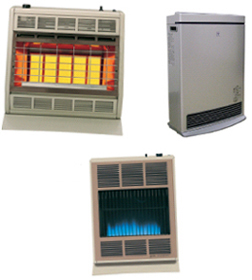
Because a chimney is not needed, a vent-free gas appliance product can be installed almost anywhere, even alongside an inside wall.

ODS AND OTHER SAFETY FEATURES

U.S. manufacturers of vent-free gas products adopted oxygen detection safety (ODS) pilot technology in the early 1980s. The technology originated in Europe more than 50 years earlier and had a solid track record of safety, according to those in the industry.

"The ODS pilot is a proven safety device. There are literally millions of vent-free gas products in use in the United States, and not one has been involved in a CO incident," said David Knowles, manager of technical services for the Gas Appliance Manufacturers Association (GAMA).

An oxygen depletion safety shutoff system consists of three main components:

1. An oxygen-sensitive pilot burner;

2. A thermopile, positioned in the pilot flame; and

3. A safety shut-off valve.

The pilot is designed to be stable within a narrow-operating range. The thermopile, when heated, generates a small current that keeps the gas supply valve in the open position. If the level of oxygen drops, the flame starts to go out. The loss of flame causes the thermopile current to drop to the point where it cannot keep the gas valve open. The main fuel supply to the appliance closes, and the appliance is safely shut off. The unit will not operate until the living space is properly ventilated, adequate oxygen is introduced, and the appliance is restarted.

As a further check-and-balance, ODS systems contain orifices designed to disintegrate with any attempt at drilling them out to enlarge the pilot flame. The product is not interchangeable with a normal standing pilot. Further, propane and natural gas vent-free products cannot be converted from one type of gas to another.

Beside the ODS, most vent-free heating appliances also have:

  • An automatic shut-off valve designed to shut off gas flow if the pilot extinguishes or the gas flow is interrupted in any way;

  • Burners engineered to produce clean, complete combustion;

  • An internal, nonadjustable pressure regulator designed to prevent overtiring in case of increased gas pressure;

  • Either piezoelectric igniter or an electronic ignition system for the pilot (Most vent-free gas appliances do not require electricity, allowing them to operate during power outages.);

  • Defined cabinet temperature limits for wall- or floor-mounted heaters;

  • A defined distance to combustible surfaces for all gas appliance categories; and

  • Safety grills for heaters, fire screens, and hoods for gas logs.

    SALES GROWTH

    The various ways the industry has addressed safety questions, combined with installation and energy savings components, have allowed for a growing market for vent-free products with more than 17 million units now being used in the United States.

    "Our sales of vent-free appliances have grown tremendously in the last five years," said Susan Scott of O'Malia's Fireplace Shop (Carmel, Ind.) "The approach provides an opportunity to add a fireplace or heating system to a room or garage and not be concerned with the need to install a vent or chimney.

    "That's a huge cost-savings."

    For more information, visit www.ventfree.org.

    Publication date: 07/24/2006

  • Share This Story

    Looking for a reprint of this article?
    From high-res PDFs to custom plaques, order your copy today!


    Recommended Content

    JOIN TODAY
    To unlock your recommendations.

    Already have an account? Sign In

    • HVAC-enrollment

      The Trades Are Back: HVACR Programs See Nearly 30% Enrollment Spike

      A new wave of future technicians is entering the pipeline.  
      Training and Education
      By: Matt Jachman
    • 2025 Top 40 Under 40

      2025 Top 40 Under 40 HVACR Professionals List

      The 11th annual Top 40 Under 40 list highlights those...
      HVAC Commercial Market
      By: Hannah Belloli-Oster
    • LG Ductless Mini-Split Systems

      The 9 Types of Heat Pumps

      As the U.S. moves toward electrification, heat pumps are...
      HVAC Commercial Market
      By: Joanna R. Turpin
    Subscription Center
    • Create an Account
    • Start a Subscription
    • Manage My Account
    • Sign Up for Newsletters
    • Visit Customer Service
    • Update Preferences

    More Videos

    Sponsored Content

    Sponsored Content is a special paid section where industry companies provide high quality, objective, non-commercial content around topics of interest to The News audience. All Sponsored Content is supplied by the advertising company and any opinions expressed in this article are those of the author and not necessarily reflect the views of The News or its parent company, BNP Media. Interested in participating in our Sponsored Content section? Contact your local rep!

    close
    • Piggy Bank
      Sponsored byWatercress Financial

      Energy Prices, Inflation, and HVAC: What Today’s Homeowners Care About

    • Refrigerated Food
      Sponsored bySolstice Advanced Materials

      R-455A Refrigeration: A Cold Storage Solution for the Future

    • Airex Rooftop Units
      Sponsored byAirex Manufacturing Inc

      Consolidating Roof Penetrations: A Growing Trend in Multifamily HVAC Design

    Popular Stories

    Lennox equipment

    Platinum Equity to Sell Heat Controller to Lennox

    Trade groups challenge EPA refrigerant rule

    HVACR Trade Groups Challenge EPA Refrigerant Rule in Federal Court

    heat-pump-tech-customer.jpg

    DOE Updates $8.8B Home Energy Rebate Program Guidance

    Lovato-refrigerant-rooftop_AC_Units_.jpg

    When Refrigerants Change, So Do the Contactors

    HVAC-Price-Increase-graphic

    HVAC Price Increase List: July 2026

    View The ACHR NEWS
    Centennial Anniversary Timeline

    The ACHR News Timeline Chart
    Submit a Letter
    Submit a letter to our editors.

    Events

    November 6, 2025

    Next-Gen Data Center Cooling: HVAC Innovation and Real-World Solutions

    On Demand As AI workloads and high-density computing push traditional cooling methods to their limits, the data center industry is accelerating the adoption of next-generation HVAC technologies.

    July 28, 2026

    How Top Home Services Companies Turn Every Conversation Into Predictable Revenue

    In this webinar, we'll outline how top contractors are turning every conversation into predictable revenue by coaching every comfort advisor visit, not just the ones a manager rides along on.

    View All Submit An Event

    Poll

    Summer Staff

    Are you fully staffed for the summer season?
    View Results Poll Archive

    Products

    BNI Mechanical/Electrical Square Foot Costbook, 2026 Edition

    BNI Mechanical/Electrical Square Foot Costbook, 2026 Edition

    See More Products
    Designing Systems Using A2L Refrigerant - Free Webinar - 7/22/2026

    Related Articles

    • Vent-Free Gas Products on the Upswing

      See More
    • Home Health and Comfort: Keeping Customers Healthy and Safe

      See More
    • Welding

      Spotlight on Safety: Hazard Identification and the OSHA Safe and Sound Program

      See More

    Related Products

    See More Products
    • 9781482255676.jpg

      Testing and Balancing HVAC Air and Water Systems, Fifth Edition

    • Manual B.jpg

      Manual B - Balancing and Testing Air and Hydronic Systems

    • Building Information Modeling: Planning and Managing Construction Projects with 4D CAD and Simulations

    See More Products
    ×

    Sign Up. Stay Informed.

    The #1 trusted source for the HVACR industry since 1926

    SUBSCRIBE
    • RESOURCES
      • Advertise
      • Contact Us
      • Advisory Board
      • Classifieds
      • Submit a Letter
      • Directories
      • Store
    • ACCOUNT CENTER
      • Create an Account
      • Start a Subscription
      • Manage My Account
      • Sign Up for Newsletters
      • Visit Customer Service
      • Update Preferences
    • SERVICES
      • Marketing Services
      • Reprints
      • Market Research
      • List Rental
      • Survey/Respondent Access
    • STAY CONNECTED
      • LinkedIn
      • Facebook
      • Instagram
      • YouTube
      • X (Twitter)
    • PRIVACY
      • PRIVACY POLICY
      • TERMS & CONDITIONS
      • DO NOT SELL MY PERSONAL INFORMATION
      • PRIVACY REQUEST
      • ACCESSIBILITY

    Copyright ©2026. All Rights Reserved BNP Media, Inc. and BNP Media II, LLC.

    Design, CMS, Hosting & Web Development :: ePublishing