ACHR News
search
Ask ACHR NEWS AI
cart
facebook twitter instagram linkedin youtube
  • Sign In
  • Subscribe
  • Sign Out
  • My Account
ACHR News
  • NEWS
    • Breaking News
    • New HVAC Products
    • Featured Products
    • Manufacturer Reports
    • HVAC Data
    • Legislation
    • ACHR NEWS Centennial
  • RESIDENTIAL
    • Air Conditioners
    • Furnaces
    • Residential Heat Pumps
    • Ductless
    • Residential IAQ
    • Testing, Monitoring, Tools
    • Components & Accessories
  • COMMERCIAL
    • Air Handlers
    • Rooftop Units
    • Chillers and Cooling Towers
    • Commercial Heat Pumps
    • Boilers and Hydronics
    • VRF/Ductless
    • Commercial IAQ
  • REFRIGERATION
    • Refrigerants
    • Refrigerant Regulations
    • Leak Management
  • CONTRACTOR PRO
    • Geothermal
    • Homeowner Study
    • VRF and VRV Ductless
    • Unitary Trends
  • EDUCATION
    • Training and Education
    • Business Management
    • Service and Maintenance
    • Continuing Education
    • Market Research >
      • HVAC Brand Awareness Report
      • VRV, VRF, VRVZ Report
      • Unitary Trends Report
      • Water Heat Professionals Report
    • Webinars
    • Sponsor Insights
    • eProducts Info
    • White Papers
  • EVENTS
    • HVAC Contractor Forum
    • Industry Events and Webinars
  • MEDIA
    • Videos
    • AHR Expo 2025 Videos
    • Podcasts >
      • ACHR News Podcast
      • HARDI Podcasts
      • AHR Expo Podcasts
      • ACCA Podcasts
    • Interactive Spotlights
    • Quizzes
    • eBooks
    • HVAC Talkback
  • HVAC GROUP
    • ACHR NEWS >
      • Current Issue
      • Digital Edition
      • Subscribe
    • Distribution Trends
    • SNIPS NEWS >
      • Join SNIPS NEWS
    • Engineered Systems News >
      • Join ES News
    • HVACR Directory
    • Contests
    • Newsletters
    • Contact
    • Advertise
    • My Account
Manufacturer Reports

How a 117-Year-Old Home Became the Future of Sustainable Housing

It’s not practical to build new sustainable homes for every household in the U.S.
By Jacques Touillon
House
House 2
House 3
House
House 2
House 3
June 19, 2017

Picture the “house of the future:” A sustainable, zero-emissions home that keeps its family comfortable and the air clean while 100 percent of its power comes from the sun.

Does it have tall, spotless pillars of glass? Artsy white arcs with circular windows? Big, futuristic domes on mile-high stilts? Nope. The house of the future looks pretty basic.  

Sure, something out of a sci-fi novel might sound good on paper. But the fact is, demolishing old homes to build new, eco-friendly ones from scratch isn’t an option when there are 84 million of them already standing. The time, cost, and displacement involved make it silly. And that’s to say nothing of the sheer waste of materials from bulldozing, which would defeat the whole purpose.

So, we’re stuck with what we’ve got. But thanks to some new techniques and technology, even the oldest, ugliest, worn-down houses in the country can be retrofitted to be 100 percent powered by renewable energy.

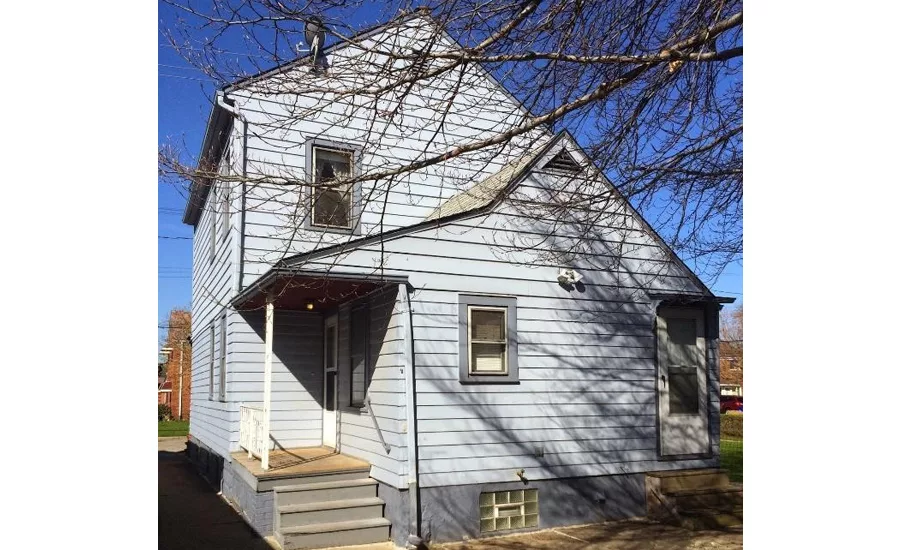
That beauty pictured above, for example, was built in 1900. Cracked cement, peeling paint, and sunken steps serve as constant proof that it came from a century long passed. But after a recent renovation, it’s heated and cooled entirely without gas, and its HVAC systems and insulation have been optimized so well that a few solar panels could easily make it a net-zero energy house, even during the harsh winters of the Midwestern state it calls home.

Nate Adams, the home performance contractor who helped make this happen, remembers first pulling into the driveway. His job was to install air conditioning and to keep the energy bill down. It was a dream project: the house’s new owner, Paul, saved loads of money in mortgage and property tax by moving here, and he was prepared to write a big check, so Adams could “do it right.” When Adams left his car and went downstairs, he found that there was a big hole where the boiler was supposed to be. The home owner was so eager to get started that he yanked it out himself.

But dream project or not, it was a century-old house. Its walls and attic leaked air constantly, and endless quirks from old design and strange retrofits put limits on what they could do. To make matters worse, the only reasonable way to run ductwork to the second floor required going up to the attic and over to the rooms, breaking a cardinal rule of keeping ductwork within the thermal envelope. 

Looking for quick answers on air conditioning, heating and refrigeration topics? Try Ask ACHR NEWS, our new smart AI search tool. Ask ACHR NEWS →

Adams had two things going for him to face these challenges. First, he’s good. He’s been in the business for nearly a decade, and his name carries weight in the home performance community.

The second thing, though, is what let Adams go beyond just a job well done and turn an antique home into a house of the future and why the same thing is possible with tens of millions of other houses — data.

“There’s so much you can only do if you have data,” Adams said. “Data is how you know where to tackle a problem, how you know you’ve fixed it when you’re done, and how you know you didn’t cause another problem in the process.” Specifically, he champions continuous optimization, where one measures not once or twice, but constantly, so as to track changes over time and as soon as they happen.

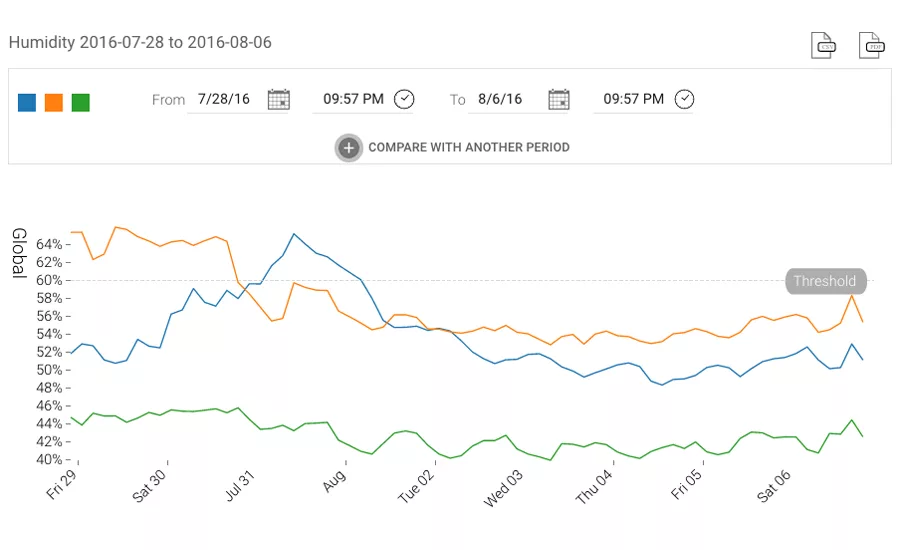
To do this, he measures the temperature, humidity, and pollutants of a house using Foobot smart indoor air quality monitors that he leaves on each floor. It’s a smart device that logs all its readings over time for ADams to view on charts, giving him a glimpse of what’s going on each hour, day, and week, and the interplay between each part of the house. Colored lines make it clear when there’s a problem and when that problem goes away.

For example, he suspected that the house had a humidity problem, but it wasn’t bad enough to feel. The Foobots confirmed it, though, showing him that humidity levels would frequently pass above 60 percent — the “danger zone” where mold thrives. If he didn’t do something about it, the home owner and his wife could get sick.

But the data also gave him the solution. It showed him that it was only on the first and second floor that got damp. The basement, on the other hand, stayed dry thanks to a new dehumidifier. So he sawed a hole in the basement’s return duct, which let dry air get sucked into the upper floors to balance things out. Immediately, the charts from the Foobot showed him that the air on all three floors was staying below 60 percent, 100 percent of the time.

To be clear, cutting that hole is not something an HVAC professional would do just to see what happens. But the data gave Adams the confidence to do it anyway. In fact, as a joke he did it while the homeowner was hosting a housewarming party. He freaked out when he heard the sawzall ripping through metal but laughed when he ran downstairs and saw it was just Adams doing his thing.

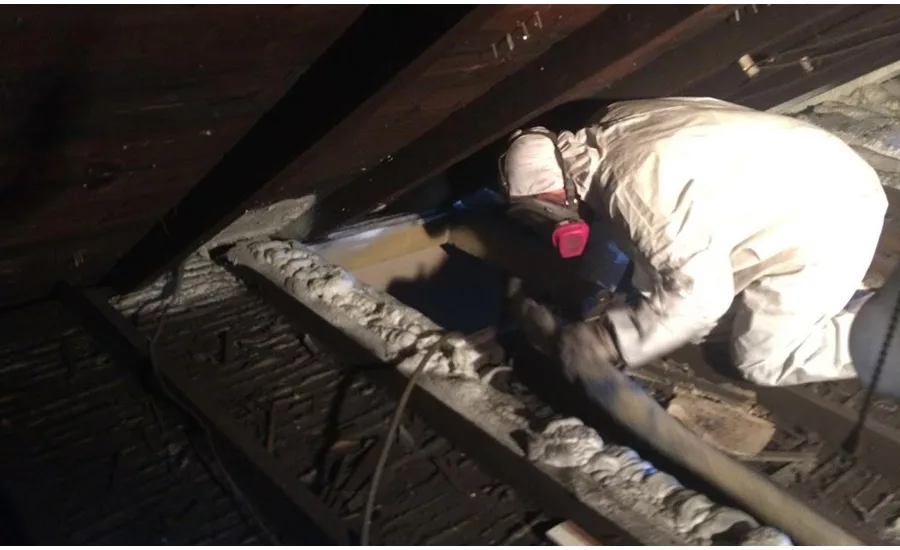
Aside from solving the humidity, Adams installed a modulating heat pump (which can provide both heating and cooling using little energy), a heat recovery ventilator (which lets you cycle in fresh air without losing as much heat), and an electric water heater. Then came the insulation and spray foam, which he put in leaky spots all around the building and especially on the dreaded attic duct.

At the end of the job, his Foobot data, along with traditional measurements, confirmed a job well done. The house was 100 percent electric, and the heating and cooling worked flawlessly. The home’s blower door score, which measures leakage, went down by 55 percent. Not only does the home stay comfortable, but in defiance of physics, Foobot shows that the basement is the warmest level in the house thanks to the strange duct configuration.

Adams called the homeowners after the job to wrap things up and see how comfortable he was with his new air conditioning. Not only were they comfortable, but they were only spending $1.50-$2.00 a day on electricity to cool the house. More important than money, though, is the fact that solar panels could easily provide this electricity on their own. That’s despite being in Ohio, which gets less sun exposure than most states. As 64.2 percent of the nation’s power comes from fossil fuels, this would mean keeping the homeowners comfortable 365 days a year without putting an ounce of carbon into the atmosphere.

And this is a 117-year-old house we’re talking about. If it’s possible here, it’s possible anywhere. Which is good because the road to sustainable, healthy, comfortable housing has no room for a bulldozer. It’s about using careful measurements and clever tricks to upgrade the homes we already have. It’s about smart, new technologies in capable hands.

For more information, visit energysmartohio.com.

Publication date: 6/19/2017

Want more HVAC industry news and information? Join The NEWS on Facebook, Twitter, and LinkedIn today!

KEYWORDS: energy efficiency upgrades net zero energy renewable energy

Share This Story

Looking for a reprint of this article?
From high-res PDFs to custom plaques, order your copy today!


Jacques

Jacques Touillon is the CEO of AirBoxLab. He started the company after watching his asthmatic son struggle to breathe, even in the safety of his own home. The company and its line of products are dedicated to keeping a lookout for airborne pollutants, so that homes, offices, and commercial and residential buildings are all safe places to breathe.


Recommended Content

JOIN TODAY
To unlock your recommendations.

Already have an account? Sign In

  • HVAC-enrollment

    The Trades Are Back: HVACR Programs See Nearly 30% Enrollment Spike

    A new wave of future technicians is entering the pipeline.  
    Training and Education
    By: Matt Jachman
  • 2025 Top 40 Under 40

    2025 Top 40 Under 40 HVACR Professionals List

    The 11th annual Top 40 Under 40 list highlights those...
    HVAC Commercial Market
    By: Hannah Belloli-Oster
  • LG Ductless Mini-Split Systems

    The 9 Types of Heat Pumps

    As the U.S. moves toward electrification, heat pumps are...
    HVAC Commercial Market
    By: Joanna R. Turpin
Subscription Center
  • Create an Account
  • Start a Subscription
  • Manage My Account
  • Sign Up for Newsletters
  • Visit Customer Service
  • Update Preferences

More Videos

Sponsored Content

Sponsored Content is a special paid section where industry companies provide high quality, objective, non-commercial content around topics of interest to The News audience. All Sponsored Content is supplied by the advertising company and any opinions expressed in this article are those of the author and not necessarily reflect the views of The News or its parent company, BNP Media. Interested in participating in our Sponsored Content section? Contact your local rep!

close
  • Piggy Bank
    Sponsored byWatercress Financial

    Energy Prices, Inflation, and HVAC: What Today’s Homeowners Care About

  • Refrigerated Food
    Sponsored bySolstice Advanced Materials

    R-455A Refrigeration: A Cold Storage Solution for the Future

  • Airex Rooftop Units
    Sponsored byAirex Manufacturing Inc

    Consolidating Roof Penetrations: A Growing Trend in Multifamily HVAC Design

Popular Stories

Refrigerants-and-gauge.jpg

HVAC Industry Warns of Counterfeit Refrigerants Entering U.S. Supply Chain

Data_Center_facility.jpg

HVAC Manufacturers Respond to Growing Data Center Backlash

Lennox equipment

Platinum Equity to Sell Heat Controller to Lennox

HVAC Minute retail refrigeration system

EPA Final Rule’s Impact on R-410A Deadlines

HVAC-tech-van.jpg

Report: Only 65% of HVAC Technician Time is Billable Hours

View The ACHR NEWS
Centennial Anniversary Timeline

The ACHR News Timeline Chart
Submit a Letter
Submit a letter to our editors.

Events

November 6, 2025

Next-Gen Data Center Cooling: HVAC Innovation and Real-World Solutions

On Demand As AI workloads and high-density computing push traditional cooling methods to their limits, the data center industry is accelerating the adoption of next-generation HVAC technologies.

July 28, 2026

How Top Home Services Companies Turn Every Conversation Into Predictable Revenue

In this webinar, we'll outline how top contractors are turning every conversation into predictable revenue by coaching every comfort advisor visit, not just the ones a manager rides along on.

View All Submit An Event

Poll

Summer Staff

Are you fully staffed for the summer season?
View Results Poll Archive

Products

BNI Mechanical/Electrical Square Foot Costbook, 2026 Edition

BNI Mechanical/Electrical Square Foot Costbook, 2026 Edition

See More Products
Designing Systems Using A2L Refrigerant - Free Webinar - 7/22/2026

Related Articles

  • Exploring the Future of Sustainable Commercial Refrigeration

    See More
  • ac installation

    The Future of Living: Why a Smart Home is the Key to Health, Comfort, and Convenience

    See More
  • hvac technician

    The Future of HVAC: Embracing Innovation for a Sustainable Industry

    See More

Related Products

See More Products
  • The ACHR News - February 16, 2026

    ACHR NEWS February 16, 2026, Issue

See More Products

Events

View AllSubmit An Event
  • November 4, 2025

    Connected Comfort: Exploring the Future of Smart HVAC Systems

    On Demand In this webinar, we’ll discuss how the HVAC industry is designing systems that offer a balanced mix of performance, safety and environmental responsibility with enhanced capabilities for more efficient maintenance.
  • June 16, 2026

    Hybrid Heat: The Future of Light Commercial Rooftops

    On Demand This session explores the technical fundamentals of hybrid heat RTU technology of Carrier’s WeatherMaster™ 48QE, detailing how heat pump and gas heat operation work together to optimize energy performance, climate flexibility, and occupant comfort.
View AllSubmit An Event

Related Directories

  • Old World Industries

    Old World Industries offers PEAK® Thermal Charge®, a line of glycol-based Heat Transfer Fluids used in data centers, HVAC systems, stationary engines and more.
  • Howe Corp.

    Howe manufactures flake ice making equipment for use with virtually any refrigerant including natural such as R-744, and R-717, Ice storage bins, Condensing units for our ice flakers.
  • Webstone, a brand of NIBCO

    Residential and commercial valves used in plumbing, hydronic, radiant, solar and geothermal applications. Designs focus on labor and space saving concepts that simplify future maintenance.
×

Sign Up. Stay Informed.

The #1 trusted source for the HVACR industry since 1926

SUBSCRIBE
  • RESOURCES
    • Advertise
    • Contact Us
    • Advisory Board
    • Classifieds
    • Submit a Letter
    • Directories
    • Store
  • ACCOUNT CENTER
    • Create an Account
    • Start a Subscription
    • Manage My Account
    • Sign Up for Newsletters
    • Visit Customer Service
    • Update Preferences
  • SERVICES
    • Marketing Services
    • Reprints
    • Market Research
    • List Rental
    • Survey/Respondent Access
  • STAY CONNECTED
    • LinkedIn
    • Facebook
    • Instagram
    • YouTube
    • X (Twitter)
  • PRIVACY
    • PRIVACY POLICY
    • TERMS & CONDITIONS
    • DO NOT SELL MY PERSONAL INFORMATION
    • PRIVACY REQUEST
    • ACCESSIBILITY

Copyright ©2026. All Rights Reserved BNP Media, Inc. and BNP Media II, LLC.

Design, CMS, Hosting & Web Development :: ePublishing