HVAC Industry Prepares for Rooftop Regulations
New efficiency regulations set to go into effect in less than one year

READY FOR LIFT OFF: Based on U.S. Department of Energy (DOE) estimates, the new rooftop air conditioner standards will save more energy and cut more emissions than any other standard ever completed by the agency. Photo courtesy of Integrated Facility Services
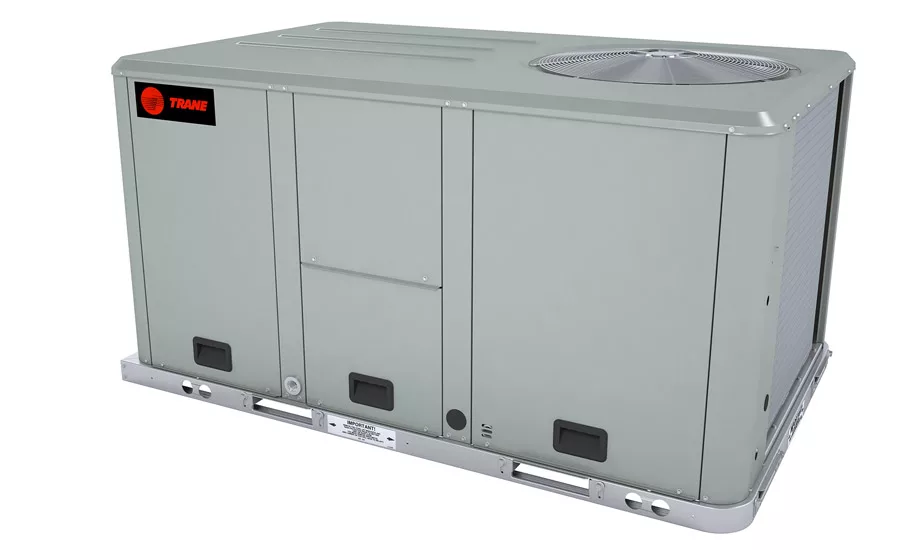
KEEPING UP WITH TRENDS: “We can build in value along those trend lines as part of our work to comply with the regulations,” said Jeff Moe, product business leader, unitary business, North America, Trane.
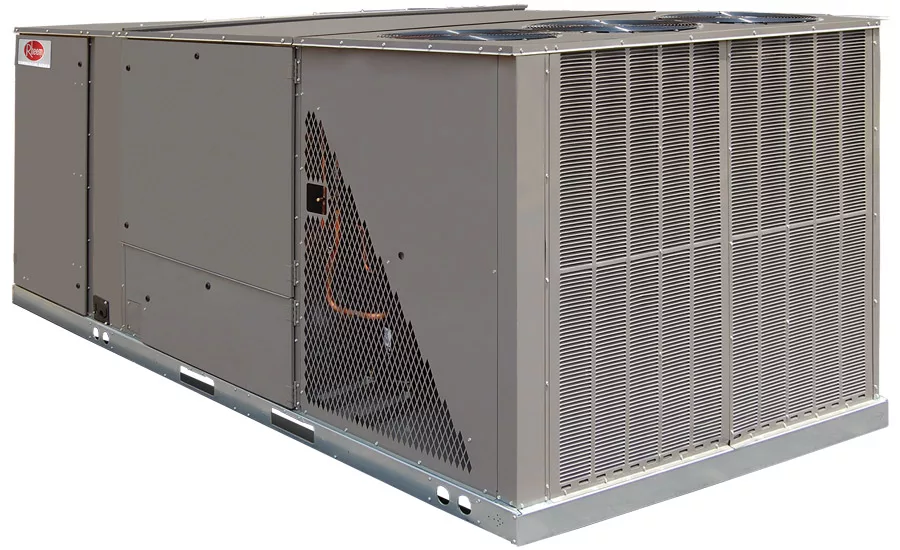
MAKING MOVES AS A MANUFACTURER: “Whenever there are major regulation changes, the biggest concern for manufacturers, like Rheem, are how does the product need to be redesigned,” said Karen Meyers, vice president, government affairs, Rheem Mfg. Co.
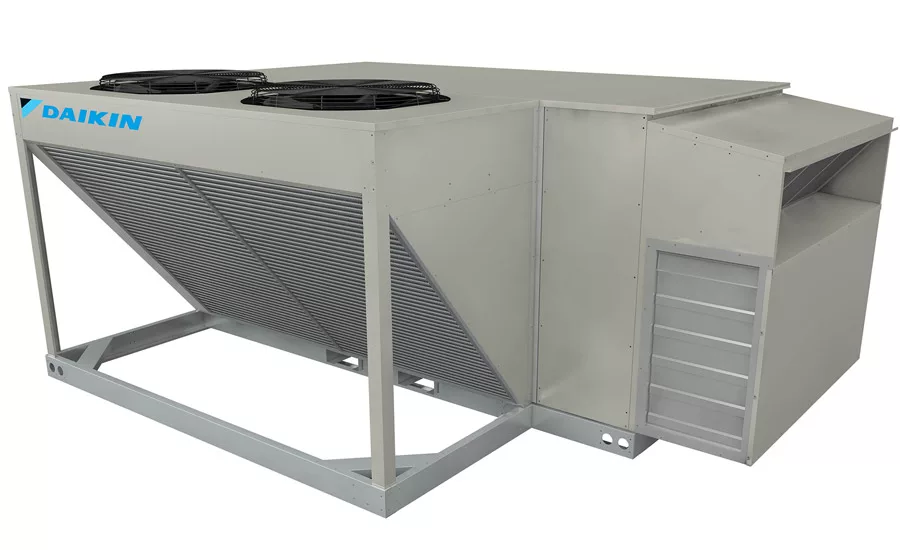
POSITIVE THINKING: “We welcome this change from the DOE, and we are focused on part load performance and the energy savings it can produce,” said Steve VanPeursem, director of packaged systems, Daikin Applied.
The HVACR industry has less than one year to prepare for what the government has deemed the “largest energy-saving standard in history” as the U.S. Department of Energy’s (DOE’s) energy conservation standards for commercial air conditioners and heat pumps and commercial warm-air furnaces, otherwise known as rooftop units (RTUs), are scheduled to take effect Jan. 1, 2018.
The rooftop air conditioner standards — which will cover new units found on low-rise buildings, like hospitals, schools, and big-box stores — will take effect in two phases, increasing minimum efficiency by about 10 percent as of Jan. 1, 2018, and by 25-30 percent as of Jan. 1, 2023. Standards for new warm-air furnaces that are typically installed in conjunction with commercial air conditioners also become effective in 2023.
Based on the DOE’s estimates, the new rooftop air conditioner standard will save 1.7 trillion kWh over 30 years of sales, or almost as much energy created by all the coal burned in the U.S. to generate electricity in a year, which is expected to outpace any other standard completed by the agency, including the previous record setters that covered electric motors in 2014 and fluorescent tube lamps in 2009.
Additionally, the new standards would net a typical building owner $4,200-$10,100 over the life of a single rooftop air conditioner. For larger commercial buildings, the savings are significant.
“This particular standard was negotiated with relevant stakeholders, including manufacturers of commercial air conditioners, major industry organizations, utilities, and efficiency organizations to finalize this standard,” said Katie Arberg, Energy Efficiency and Renewable Energy (EERE) communications, DOE.
In order to comply, the industry may be forced to make several changes to the way they currently do business. So, the question remains, with less than 365 days until implementation, is the industry prepared for this new regulation?
RENOVATING FOR REGULATIONS
HVAC manufacturers will be making significant design changes in order to comply with this new regulation. And, while this will require a great deal of effort in a limited timeframe, many tend to view the change in a positive light.
Looking for quick answers on air conditioning, heating and refrigeration topics? Try Ask ACHR NEWS, our new smart AI search tool. Ask ACHR NEWS
“We can build in value along these trend lines as part of our work to comply with these regulations,” said Jeff Moe, product business leader, unitary business, North America, Trane. “One of the things we looked at is a term called ‘Beyond Compliance.’ For example, we’ll look at the new 2018 energy-efficiency minimums, modify existing products, and increase their efficiencies so they comply with new regulations. We will also incorporate additional product changes in areas of customer interest along the trends to provide value above and beyond the efficiency increases.”
Manufacturers are proceeding through the appropriate steps to ensure their equipment meets these regulations. Step one — making sure they clearly understand what the regulations require, and step two — transforming their products to meet these standards so they can continue to successfully sell rooftop units.
“Whenever there are major regulation changes, the biggest concerns for manufacturers, like Rheem, are how does the product need to be redesigned, how will the proposed changes be applied in the field, will the product remain a good value for the end user, and what training needs to happen for the contractors and installers,” said Karen Meyers, vice president, government affairs, Rheem Mfg. Co.
Steve VanPeursem, director of packaged systems, Daikin Applied, agreed, stating, “Daikin Applied products with the variable-speed supply fan option already meet the requirements for 2018.
“Daikin recognizes the benefit of part-load energy performance,” continued VanPeursem. “We welcome this change from the DOE, as the majority of the mechanical cooling operating hours take place at less than 50 percent cooling capacity, and we are focused on part-load performance and the energy savings it can produce.”
Darren Sheehan, director of light commercial products, Daikin North America LLC, said, “One of the items required for getting ready for 2018 is preparing for the DOE’s change of the performance metric from EER to IEER, which will require education to customers on that change and what that is going to mean. From a technology standpoint, different types of indoor supply fans and variable capacity compression could come into play.”
This affects manufacturers as well as their customers, as they now have to explain to them that an increase in cost or reason for redesign is not a choice of theirs, but due to the DOE’s new regulations.
“We continue to have dialogue on the 2018 and 2023 DOE rooftop efficiency regulations that will impact our industry,” said David Hules, director of marketing, commercial air conditioning, Emerson Climate Technologies Inc. “Specifically, we have been talking with our customers to understand their needs and how our modulation solutions, including our two-stage compression solutions, can help them achieve higher efficiencies with enhanced comfort benefits.”
It can be difficult for manufacturers to completely revamp their units to meet the new efficiency levels, though many are working hard to ensure they do so in time.
“The biggest impact is on the manufacturers who have to ensure that all of their products meet the minimum efficiency levels,” said Michael Deru, engineering manager, National Renewable Energy Laboratory (NREL). “The next biggest impact will be on utilities, because they have to adjust their programs and savings calculations. It gets harder for them to develop new efficiency programs and show savings when the minimum efficiency bar keeps getting higher.”
MOVING FORWARD
Most companies are prepared and are doing everything they can to comply prior to Jan. 1, 2018. And, despite the extraneous efforts, most feel this regulation isn’t going to negatively impact the industry.
“We have certain investments in place for our entire portfolio to make sure we are compliant with the new regulations and that we can deliver additional value with added features or introduce them early, where it’s of interest to our customers,” Moe said. “We fully expect that we will be increasing our competitiveness in this way, and we will work through the regulatory movement in the industry not just this year and next, but throughout 2023 and 2024, which is when the next major update on the minimum equipment efficiencies will go into effect.”
Karim Amrane, vice president of regulatory and research at Air-Conditioning, Heating, and Refrigeration Institute (AHRI), commented, “[The rooftop regulation] is something we believe better represents how equipment operates and performs in the field. Manufacturers are going to be ready for 2018 with their available products, and we anticipate a smooth transition.”
Despite its magnitude and brief deadline, the HVAC industry appears ready and willing to do what it takes to meet and, in some cases, exceed this pending national efficiency standard.
Publication date: 1/23/2017
Want more HVAC industry news and information? Join The NEWS on Facebook, Twitter, and LinkedIn today!
Looking for a reprint of this article?
From high-res PDFs to custom plaques, order your copy today!


