HVAC’s Role in Net-zero Buildings
Heating and cooling systems are key players in net-zero-energy building projects

BIG FAN OF EFFICIENCY: High-volume, low-speed (HVLS) fans create a light 2-3 mph breeze that produces an evaporative cooling effect and reduces the effective temperature by 7°-11°F, leading to significant energy savings in high-performance buildings. Photo Courtesy of Rite-Hite Fans
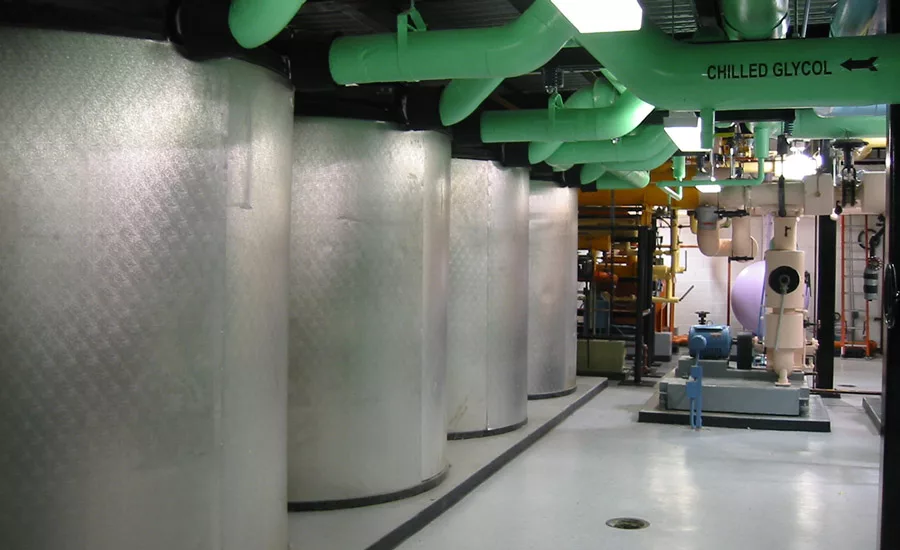
ICE, ICE BABY: Calmac manufactures thermal energy storage tanks that make ice at night to cool buildings during the day, drastically reducing the cooling system’s energy use during daytime peak hours. Photo Courtesy of Calmac
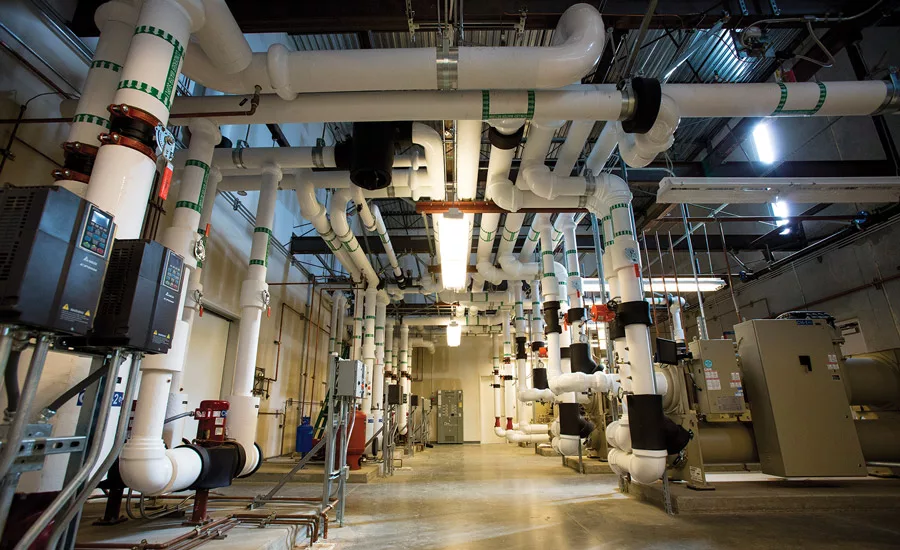
DYNAMIC DRIVES: Delta Products Corp.’s new net-zero-energy headquarters feature Delta’s own variable frequency drives (VFDs) throughout the building, including in the building’s elevator and geothermal systems. Photo Courtesy of Delta Products Corp
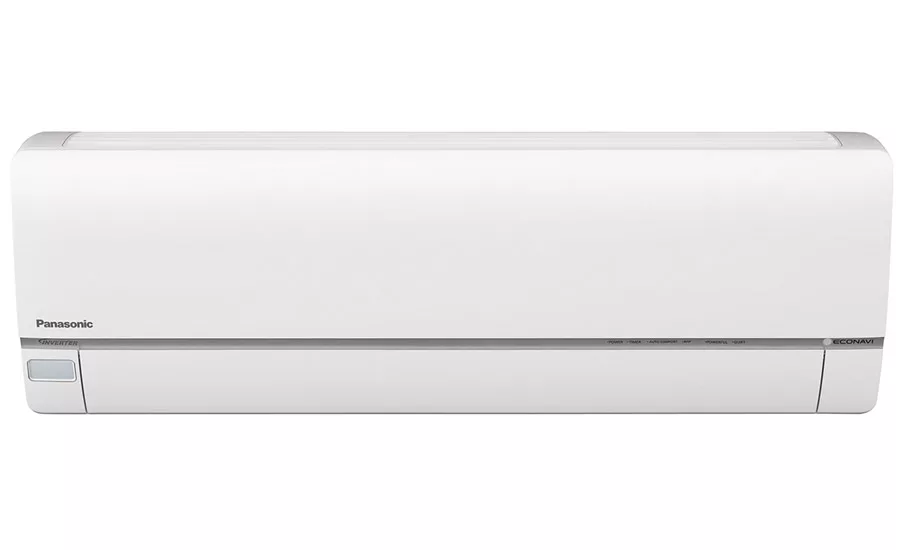
SUPER SENSORS: Panasonic’s Exterios XE Low Ambient series all-in-one ductless heat pump and air conditioner includes built-in ECONAVI® sensors, which identify the occupancy and activity of any given room and adjust to ensure optimal occupant comfort without sacrificing energy efficiency. Photo Courtesty of Panasonic
Net-zero-energy buildings (NZEBs) employ the latest materials, technologies, practices, and controls in order to not only minimize energy usage, but also produce as much or more energy than the building consumes. As these buildings become more popular, HVACR manufacturers are working to create highly efficient products and systems to help meet these ambitious performance goals.
THE RISE OF NET-ZERO-ENERGY BUILDINGS
Mark Stimson, business development manager, Bosch Thermotechnology Corp., said there are several trends driving the growth of NZEBs. “The resurgence of the building industry, builders’ interest to sell a differentiated product in a more competitive market, and new building codes encouraging less energy use and more on-site renewable energy generation are all factors,” he said.
Richard Holzer, managing principal engineer, Southland Industries, said the impacts of greenhouse gas (GHG) emissions on climate change coupled with rising energy costs are primary drivers for the green building and sustainability movement. “The size of the green building market is increasing, and the rising popularity of NZEBs is an outgrowth of this trend,” he said. “In addition, policies, codes, regulations, and incentives are even greater drivers of this ever-growing trend. All levels of government, ranging from federal and state agencies to city government and institutional users, are beginning to impose net-zero-energy policies. Also, the cost of photovoltaic panel equipment is decreasing while efficiency is increasing, making NZEBs economically viable.”
Additionally, a renewed focus on building performance as a whole as well as quality installations have supported the NZEB movement, said David Calabrese, vice president, government affairs, Daikin U.S. Corp. “We are reaching the technological limits to increasing the energy efficiency of some HVAC products; therefore, the focus has shifted to system efficiency or whole-[building] efficiency,” he said. “NZEBs reflect that trend. A high-efficiency HVAC system cannot be effective if it is coupled with poorly installed or designed insulation, ductwork, or other building components — therefore, a holistic view is needed.”
Ben Majerus, manager, field systems engineering, Danfoss, pointed out in a white paper that building codes, including California’s 2013 Title 24 Energy Efficiency Standard, which mandates all new residential construction attain net-zero-energy status by 2020 and return commercial construction by 2030, as well as a renewed focus on building performance as a whole as the driving forces behind the growing popularity of NZEBs. “When a more holistic calculation of a building’s operational and energy life cycle costs are employed, it changes views about value,” he said. “Instead of looking mainly at the first cost of HVAC equipment, the focus shifts to the operational energy savings that the equipment delivers in an actual application.”
In its 2016 Energy Efficiency Indicator survey of energy and facility management executives, Johnson Controls Inc. discovered 74 percent of commercial, institutional, and industrial organizations plan to achieve near-zero, net-zero, or positive-energy status for at least one of their buildings in the next 10 years, said Clay Nesler, vice president, global energy and sustainability, Johnson Controls Building Efficiency.
“This is up significantly from 49 percent in 2013,” he said. “It took certified green buildings about twice as long to achieve the same level of commitment. Similar to what we found with green buildings, there is stronger interest in renovating existing buildings to achieve net-zero energy rather than just focusing on new construction. This trend toward existing buildings could move NZEBs from being an interesting niche market to a major business opportunity for contractors.”
Looking for quick answers on air conditioning, heating and refrigeration topics? Try Ask ACHR NEWS, our new smart AI search tool. Ask ACHR NEWS
Nesler also pointed to the affordability of PV panels as a factor and asserted that the availability of power purchase agreements and other financing options that reduce the price of acquisition are playing a part in the growing trend of NZEBs, too. “There is also a degree of simplicity in evaluating the performance of net-zero buildings,” he added. “Measure the energy produced for a year, measure the energy consumed for a year, and then subtract to see if the difference is greater than zero. No higher math is required.”
THE ROLE OF HVAC IN ZERO-ENERGY BUILDINGS
As one of the largest — if not the largest — energy consumers in a commercial building, the HVAC system plays a significant role in helping designers meet their net-zero-energy goals.
“The largest energy consumer in a building is the heating, air conditioning, and lighting; therefore, the technological improvements in these categories have contributed toward the net-zero-energy building,” said Malcolm Persaud, senior manager, product and market development, Panasonic Air Conditioning Group. “Like so many other ‘green’ initiatives, the concept of a NZEB has greatly benefitted from improved technologies that make HVAC, lighting, and other energy-consuming appliances much more energy efficient. We are still learning about the broader implications of energy reduction, but the growing sentiment is that environmental responsibility isn’t just a moral obligation, it’s also good business.
“Considering that approximately 40 percent of the energy in commercial buildings is consumed by HVAC equipment, it’s reasonable to conclude that mechanical system efficiency will have to improve substantially to achieve those results,” Majerus said. “Consequently, HVAC equipment designers must look for new solutions to old challenges.”
A high-efficiency HVAC system is a critical part of an NZEB, Calabrese agreed. “Without this technology, it would be very difficult to reach this goal. Highly efficient HVAC systems, like those sold by Daikin, use innovative technologies, such as inverters that drive the compressor and smart controls to manage the time and usage.”
Nesler agreed that a building’s HVACR systems are critical elements in NZEB design. “Every watt that gets saved in lighting, HVAC, and plug loads is a watt that doesn’t need to be generated by renewable energy or sourced from the grid,” he said. “Additionally, many net-zero-energy buildings choose to be net-zero-carbon buildings by avoiding the direct use of fossil fuels. The electrification of heating through the use of heat pumps and the electrification of transportation through the use of electric vehicles are common components of modern net-zero-energy buildings.”
Holzer also stressed the important role the HVACR system plays in balancing the energy equation and achieving net-zero energy.
“The HVACR system size and energy consumption directly relates to key components of the building design, such as orientation, building envelope, lighting system, and appliances,” he said. “Mechanical system designers strive to reduce the cooling and heating loads these elements impose in order to minimize the energy consumption of the HVACR systems and then overlay renewable energy sources to achieve a net-zero-energy balance.”
RENEWABLE ENERGY OPTIONS
One extremely popular choice for HVAC systems in NZEBs is geothermal, a renewable energy resource that helps significantly lower heating and cooling costs.
“Ground-source heat pumps are among the most efficient technologies available and a cornerstone to achieving NZEB,” Stimson said. “Using the ground as the thermal heat exchanger is the most effective way to heat and cool a building.”
Stimson added that solar, another renewable source of energy, is integral in helping buildings reach net-zero-energy status. “Integrating a whole-building approach to building technology helps improve the chances of meeting the technical design threshold of NZEBs,” he added.
Richard Hermans, director of training and advanced applications, Daikin Applied, also pointed to geothermal as a key component in many NZEB projects. “Daikin offers many residential and commercial products that contribute to helping a facility realize net-zero-energy status, including air- and water-source heat pumps,” he said. “The ground-source heat pump terminal units are a popular choice for net-zero designs because they provide three or more units of energy for thermal comfort and high IAQ for every one unit of energy input. Daikin’s SmartSource® geothermal water-source heat pumps feature part-load EERs up to 29.8.”
“The use of highly efficient heat pumps, particularly geothermal heat pumps, is popular in net-zero-energy designs,” Nesler said. “Our corporate campus in Glendale, Wisconsin, uses York™ heat pumps connected to a geothermal field with 272 individual 250-foot-deep wells to eliminate almost all natural gas use for water heating.”
In addition to renewable energy, industry leaders point to energy storage as an important piece of the NZEB puzzle. “A modest amount of energy storage can provide energy to a building when the sun isn’t shining and at night when a typical building would be pulling energy from the grid,” Nesler said. “Energy storage also allows the building owner to provide valuable services back to the grid, such as load shifting, demand response, spinning reserves, and frequency regulation. Depending on utility/system operator incentives, these grid services can significantly improve paybacks for energy storage investments.”
Additionally, thermal energy storage can help cut overall building energy costs, said Mark MacCracken, CEO of Calmac, which manufactures thermal energy storage tanks that make ice at night to cool buildings during the day.
“Our storage product decouples when you make cooling and when you need cooling,” he said. “We take the same chiller, and instead of running water through it, we run antifreeze. The water that surrounds the tubing in the storage tanks starts freezing to ice. During the next day, you can turn the chiller off and just pump the antifreeze through the tubing. We get the same temperature liquid, but we created the cooling the night before. It helps a 500-ton chiller meet the 1,000-ton load by doing part of the cooling load of the daytime peak cooling with storage and the rest with the same chiller used to make ice the night before.”
PART-LOAD OPERATION
Whereas many older systems featured single-speed motors on equipment, including compressors and fans, NZEBs rely on variable-speed technologies to ensure only the amount of heating or cooling that is needed is being delivered.
Danfoss recently introduced its VLT® DriveMotor FCM106/FCP106, which combines a high-efficiency motor with a Danfoss drive, providing a lower-cost, high-efficiency drive-motor solution for air handlers, rooftop units, and pumps.
“For variable-speed compressors, an inverter or VFD [variable frequency drive] runs the motor at different speeds, thereby modulating refrigerant flow and cooling output,” Majerus said. “Speed reductions that precisely match the load help reduce energy consumption — as much as 50 percent or more, depending on the application. Less energy is wasted, since the variable-speed compressor delivers precisely the capacity required by speeding the motor up and down.
“There are operational benefits, as well,” he continued. “A VFD uses an inverter switching circuit to change incoming alternating current [ac] power to direct current [dc], which is then output as an ac-like sine wave that can modulate in a controlled fashion. Consequently, a VFD eliminates the big inrush of line voltage ac at startup. The resulting ‘soft start’ reduces amperage draw, which extends motor life and reduces costly peak electric usage.”
Mike Gazzano, marketing manager, Delta Products Corp., said the company’s new net-zero-energy headquarters features Delta’s own VFDs throughout the building. These drives “help drive the two elevator systems as well as the extensive large geothermal system,” he said. Additionally, Delta’s drives are used in high-volume, low-speed (HVLS) fans from manufacturer Big Ass Solutions. The fans help with destratification, increasing comfort and reducing the need for heating and cooling. “We’re a major supplier and help provide products for their end solutions,” Gazzano said. “We’ve been working with Big Ass Fans for a while.”
“HVLS fans create a light 2-3 mph breeze that produces an evaporative cooling effect and reduces the effective temperature by 7-11°F,” said Andy Olson, product manager, Rite-Hite Fans. “By moving large volumes of air in an area up to 22,000 square feet, a single HVLS fan can replace as many as 10-20 traditional high-speed floor fans. In air-conditioned facilities, the breeze from an HVLS fan typically allows up to a 5° increase in thermostat setting with no change in comfort. With an electric bill savings of 4 percent for each degree, an annual savings of 20 percent can be achieved in warm-weather climates. Because HVLS fans are efficient, their return on initial investment often ranges from six months to two years, depending on a number of application variables. Winter energy savings are substantial, as users can reduce their heating bills by 20-30 percent.”
SMART CONTROLS AND THE IOT
Smarter controls and the Internet of Things (IoT) are playing a large part in ensuring a building is operating as efficiently as possible.
“Daikin is continuing to develop a robust IoT-enabled equipment control solution called Intelligent Equipment, which provides visibility into our packaged rooftop solutions and air-cooled chillers,” Hermans said. “With Intelligent Equipment, building owners and managers get direct access to 150 data points, helping them achieve more accurate power measurement at the equipment level. Ultimately, Intelligent Equipment will offer automated demand response, which can give customers even greater control to shift and shed load to lower-priced time periods or avoid energy use during peak demand periods. It benefits not just their bottom lines but the greater community, as well.”
“Outside of IoT, Daikin products are compatible with BACnet®, an ASHRAE industry standard in building management systems [BMS],” said Dennis Thoren, vice president, VRV [variable refrigerant volume] and light commercial strategy, Daikin North America LLC. “For VRV systems, the Intelligent Touch Manager [iTM] controller is essentially a mini-BMS when the BACnet® client option is added. The iTM controller is an advanced, cost-effective solution for smaller BMS applications. The iTM BACnet® client option provides the added flexibility to enhance the iTM’s standard functions to become a mini-BMS. With this option, the iTM is able to manage DOAS [dedicated outdoor air systems], Daikin DZK with BACnet IP option, and other third-party equipment through the BACnet/IP protocol.”
Occupancy sensors are also becoming more prevalent in NZEBs. For example, Panasonic’s Exterios XE Low Ambient Series all-in-one ductless heat pump and air conditioner includes built-in ECONAVI® sensors, which identify the occupancy and activity of any given room.
“The ECONAVI sensors then automatically adjust the thermostats and direct the airflow louvers depending on that room’s needs,” Persaud said. “This guarantees optimal comfort without sacrificing energy efficiency, a hallmark of Panasonic technology.”
BUILDINGS OF THE FUTURE
While NZEBs are still relatively novel, the idea of a building being self-sufficient in regards to its energy use is becoming increasingly appealing for building owners.
“There is increasing interest in resilience, which is the ability for facilities to withstand extended power outages due to extreme weather or other grid events,” Nesler said. “A NZEB designed with reliable distributed generation, sufficient amounts of energy storage, dedicated circuits for critical loads, and a transfer switch with islanding capabilities can provide critical services to families and communities over extended periods of time. The incremental cost of providing high levels of resilience is relatively minor compared to the costs of making the building net-zero energy, and the energy savings can help pay for the resiliency improvements over time.”
Holzer also commented on the growing desire for resiliency. “NZEBs are consistent with the growing trend of resiliency in the building design and construction industry,” he said. “Renewable energy systems coupled with storage will allow buildings to remain functional after adverse situations such as natural disasters. Renewable energy sources and net-zero-energy buildings provide a level of security for the national energy supply, as well as for businesses and individuals.”
As for the future of NZEBs, Calabrese said NZEB technology will likely move into areas that further control and manage the use of the HVAC product, depending on climate conditions, energy availability, energy costs, and types of energy supplied. “In addition, the industry is increasingly looking at personal, or portable, HVAC technologies that are closely connected to individuals in a commercial building or home. With this type of technology, the cooling and heating is focused on an individual or groups of individuals instead of the room itself. These emerging control technologies will be capable of optimizing energy performance on their own.”
Holzer anticipates that building control and management systems will play an increasingly important role as net-zero-energy buildings become more prevalent. “The control systems will increase in capability providing building operators and managers the ability to integrate many disparate building systems into a functional high-performance building. Big data and building analytics will help owners report energy performance and operate HVACR and lighting systems at optimum levels and discover potential system maladies.”
Ryohei Hinokuma, manager, strategic alliances, Daikin U.S. Corp., also commented on the growing role of controls in NZEB projects. “As in other industries, connectivity and big data will play more important roles in the future. For example, it is possible to achieve significant grid burden reduction through the integration and optimization of hardware combined as a system through the use of software-based intelligence. The vast majority of the current software only offers the ability to monitor equipment performance, adjust settings, and diagnose some mechanical issues.”
The increased focus on energy efficiency and the growing demand from customers for products that can help them save on utilities is a trend that is certainly growing. And with NZEBs being mandated in some building codes already, it is a trend that is here to stay.
Publication date: 7/25/2016
Want more HVAC industry news and information? Join The NEWS on Facebook, Twitter, and LinkedIn today!
Looking for a reprint of this article?
From high-res PDFs to custom plaques, order your copy today!