the NEWS
Advertisement:
HVACR Directory | Extra Edition | Learning Center | Editorial Blogs | Product Gallery
  Home
  About the NEWS
  Subscription Info
  e-Newsletters
  Contact Us
  Resources
  Archived Editorial
  Blogs
  Career Center - Employers
  Career Center - Job Seekers
  Columns
  Distributor Corner
  Calendar of Events
  HVACR Directory
  Industry Links
  Learning Center
  Letters
  Manufacturer Reports
  Regional Reports
  Reprints
  Survey Says
  Training Track
  Webinars
  AEC Store
  Market Research
  Extra Edition
  HVACR Forum
  Legal forum
  Business Management
  Dot Comment
  Energy Matters
  Features
  Newsline
  People
  Service Hotline
  Service & Maintenance
  Technical
  Advertising
  Ad Index
  Media Kit
  Submit Press Release
  Services
  Classifieds
  Digital Edition
  Post Cards
Search in: EditorialProductsCompanies
Troubleshooting Challenge: A Furnace With a Flashing Fault Code
by Jim Johnson
November 3, 2008

ARTICLE TOOLS
EmailEmailPrintPrintReprintsReprintsshareShare


Enlarge this picture
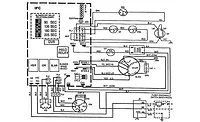
Figure 1. (Click on the diagram for an enlarged view.)
In this month’s troubleshooting situation, we find ourselves dealing with a condensing furnace, and the customer has called to say that “there’s no heat at all.” It’s a relatively small unit, rated at only 40,000 Btu, but it is equipped with an LED readout system that flashes a fault code in the event of a breakdown in operation. In this specific situation, you find that when you arrive at the customer’s home, this unit (a Carrier model) is flashing one short and three long flashes.

When you consult the fault code information shown on the inside of the furnace access panel, the LED sequence you observe prompts you to do three things (refer to the accompanying diagram in Figure 1):

1. Make a visual inspection of the FRS (flame rollout switch) which indicates it is closed.

2. Use an ohmmeter to test across the FRS terminals, which shows on your meter as closed.

3. Use an ohmmeter to test across the LS (limit switch) terminals, which shows a result of infinity.

These checks lead you to further investigation, and the next component on your list is the PSC-operated blower motor. Proceeding with your tests, you find the motor cool to the touch, and after isolating all the wiring connected to the COM, HEAT, COOL, SPARE 1, and SPARE 2, you find a reading of infinity when testing with an ohmmeter from the white wire to any other color wire lead to the motor.

Your troubleshooting question:

Which component has failed?

Compare your answer with ours by clicking here.

Publication date: 11/03/2008


Jim Johnson
is the director of training for Technical Training Associates, a Tucson, Ariz.-based firm that provides HVACR technician training DVDs/videos, E-books, and workshops. For more information, call 520-625-6847 or visit www.technicaltrainingassoc.com.

|PrintEmail

Did you enjoy this article? Click here to subscribe to the magazine.


© 2009 BNP Media. All rights reserved. | Privacy Policy
Your Feedback