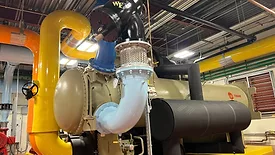
How Wake Forest University’s South Chiller Plant upgrade sets a new standard for campus infrastructure – boosting cooling capacity, preserving campus land, and blending cutting-edge engineering with iconic architecture.
we outline key considerations for selecting and designing traditional VRF and Hybrid VRF (HVRF) systems, explain their differences and highlight best practices for enhancing performance and compliance.
Regular and data-driven filter changes are essential to safeguard indoor air quality, minimize equipment wear, and respond to real-world conditions like pollen surges.
When air handlers first enable economizer mode, overlooked control sequences can trigger temperature and humidity spikes that pose real risks to critical environments.
This article explains why focusing on the total cost of ownership – rather than just the upfront price – when purchasing filling equipment is crucial for long-term efficiency, compliance, and profitability.
Smart pump platform delivers data-driven savings, helps hotels meet district energy requirements, and proves the business case for building decarbonization
A Toronto-area Marriott used Armstrong Fluid Technology’s performance envelope platform to cut its energy use by 70% – and discovered even bigger potential savings for buildings not on district heating.
The results of these operational changes are reflected in the City of Deadwood’s publicly approved maintenance contracts. City officials attributed the reductions to improved system condition and annual cost analysis rather than reduced service.
In a first for the industry, Carrier submits standardized Title 24 JA18 logic to regulators, promising faster compliance and simpler commissioning for building automation projects
The submission covers a broad range of applications – VAVs, air handlers, exhaust fans, and fan coil units. The i-Vu system will include locked logic to support compliance.
 RSS
RSS