Six Trends Reshaping Building Performance in 2026
From continuous commissioning to AI-enabled analytics, here’s what’s driving the next era of building performance in 2026
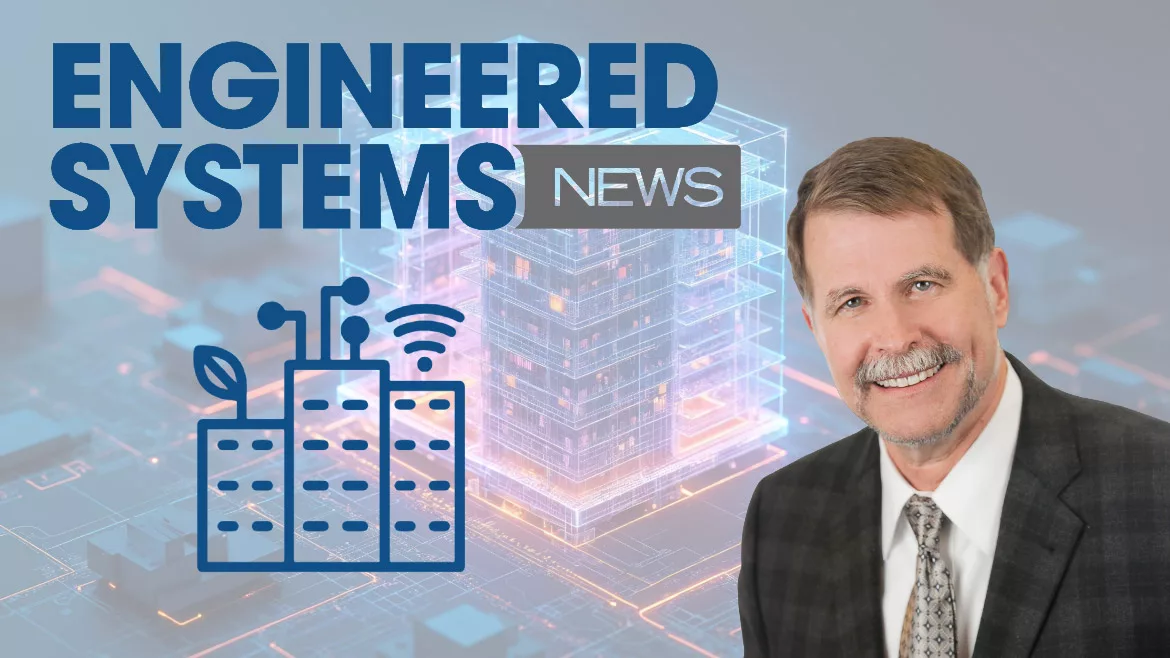
EEI: “2026 is the year where data drives every decision – and resilience matters as much as efficiency,” says Jeff Nichols, vice president of EEI Building Performance.
As owners face rising energy costs, grid instability, and mounting regulatory pressure, Engineering Economics, Inc.'s Building Performance is tracking several shifts that will redefine priorities for designers, builders, and operators in 2026.
Here are six key questions – with answers from Jeff Nichols, vice president of EEI Building Performance – about the trends shaping the year ahead.
1. How is building commissioning evolving in 2026?
Owners are increasingly viewing commissioning as an ongoing operational strategy, not just a moment in time at project closeout. In 2026, we expect broader adoption of continuous and monitoring-based commissioning, as well as analytics-driven performance verification – especially among mission-critical clients who demand a higher level of confidence in building system performance. Over the past several years, monitoring-based and ongoing commissioning concepts have moved from optional to explicit scope requirements in many public-facing commissioning RFPs, particularly for complex or portfolio-scale facilities.
2. Are carbon reduction targets enough, or is proof now required?
Net-zero and decarbonization goals are becoming more common, but owners, regulators, and investors are demanding measured, verified results. EEI is watching a shift toward data-backed carbon reporting. For example, electrification can reduce fossil fuel use, but operational data may show that higher electric demand during peak grid emissions periods offsets projected carbon savings – underscoring the need for data-backed, seasonal, and time-of-day verification.
3. What challenges does accelerating electrification create for utility infrastructure?
Building electrification is accelerating due to codes and demand growth. In 2026, the challenge will be addressing load growth (25% by 2030) due to data centers/AI, continued electrification, and the fragility of the US electrical grid, including transmission bottlenecks, aging infrastructure, and new load/generation connection issues. Deep-well Enhanced Geothermal Systems (EGS) and Small Modular Reactors (SMR) are also gaining interest, while wind and solar are expected to be among the fastest-growing generation sources, with long-term projections showing continued gains in market share.
4. Why is resilience now as important as efficiency for building owners?
Extreme weather, grid instability, and operational risk are pushing resilience higher on the priority list. EEI expects more owners to ask not just “Is it efficient?” but “Does it work under stress?” This includes backup power readiness, control system robustness, and how buildings perform during abnormal operating conditions. Extreme conditions expose how systems behave outside normal design assumptions, where control logic, sequencing, and recovery become critical.
5. How is AI shifting from experimental to essential in building performance?
This year, AI-enabled fault detection, predictive maintenance, and performance analytics will be less about novelty and more about actionable decision support. The trend to watch is not AI replacing engineers, but engineers using AI to scale insight, identify issues faster, and focus expertise where it matters most. For example, in a large building or campus, hundreds of temperature, pressure, flow, and ventilation setpoints are adjusted over time – often as temporary overrides that unintentionally become permanent. AI-enabled analytics can continuously review all active setpoints in real time, identify deviations from standard ranges or design intent, and flag inconsistencies across similar zones or systems.
6. How are regulations changing the focus to existing buildings?
Energy and carbon regulations are increasingly targeting existing building stock rather than just new construction. Existing building performance requirements already apply to tens of thousands of large buildings nationwide, with coverage expanding as additional jurisdictions adopt similar standards. EEI is seeing a rise in retro-commissioning, optimization, and performance-tuning projects as owners seek cost-effective ways to comply with evolving energy and emissions requirements.
As buildings face mounting pressure from energy volatility, grid instability, and evolving regulations, the role of engineers in building performance is undergoing a fundamental shift. The six trends outlined here – from continuous commissioning and carbon verification to AI integration and resilience planning – signal a move toward more adaptive, data-driven, and future-ready engineering practice. No longer confined to design and closeout phases, engineers are increasingly central to long-term operational performance, regulatory compliance, and risk-informed decision-making.
Jeff Nichols serves as EEI Building Performance’s Vice President. For more information about EEI, visit eeibuildingperformance.com.
Looking for a reprint of this article?
From high-res PDFs to custom plaques, order your copy today!