Trump’s Section 232 Tariff Shake-Up Raises Costs, Uncertainty
New Section 232 tariff rules amplify supply chain pain for U.S. contractors
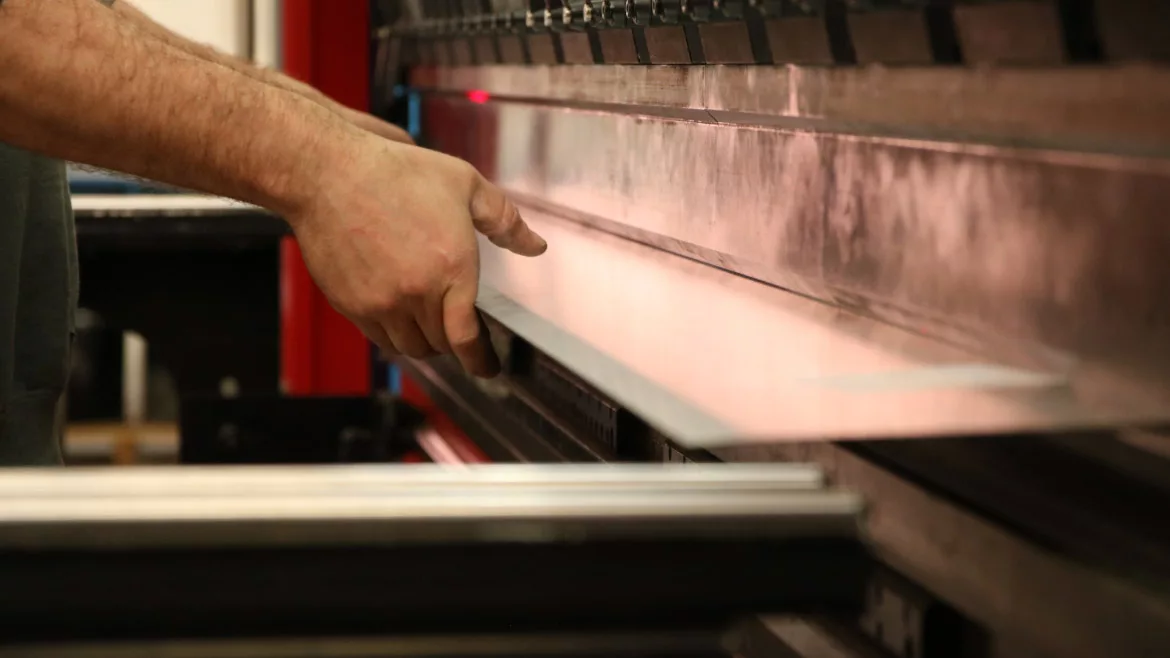
SHEET METAL: A worker operates sheet metal machinery to precisely bend a piece of metal for a rooftop curb adapter.
On Thursday, President Donald Trump issued an executive proclamation that overhauls how Section 232 tariffs on steel, aluminum, and copper are calculated – a change that, according to Stan Kolbe, executive director of government and political affairs for the Sheet Metal & Air Conditioning Contractors' Association (SMACNA), offers little comfort to contractors already grappling with rising material costs, particularly for aluminum and specialty steel.
“While the new metal tariff announcement today may impact how tariffs are calculated, it did not provide long-overdue relief and certainty for most businesses,” Kolbe said, underscoring the frustration felt throughout the construction sector.
What the Tariff Recalibration Actually Means
Kolbe and other industry leaders are closely watching the details: The recalibration fundamentally changes how Section 232 tariffs are applied. Previously, tariffs were set at fixed rates – 25% for steel and 10% for aluminum – applied broadly based on declared customs value. Now, a new tiered structure takes effect April 6: goods made almost entirely of steel, aluminum, or copper, such as steel coils and aluminum sheets, will face a 50% tariff, while derivative articles “substantially made” of these metals, including items like cooking appliances, diesel-engine trains, and semi-trailers, will see a 25% levy. Kolbe warns that this could mean “a longer list of essential materials will soon fall under the far more ironclad and costly Section 232 tariff enforcement,” making it even harder for contractors to plan and budget for projects.
The administration clarified that lower tariff rates will apply to steel and aluminum products from the United Kingdom – 25% if made almost entirely of the metals, and 15% for derivatives – while prior agreements with the EU, Japan, and South Korea remain unchanged. For certain industrial and electrical grid equipment, a 15% tariff is set through 2027, and goods made entirely with U.S. steel, aluminum, or copper will see a 10% levy. Notably, the proclamation exempts imported goods made with 15% or less of these metals from Section 232 tariffs altogether, a shift that could affect a swath of specialty and composite products.
Practically, this recalibration expands the list of products subject to tariffs, including more alloys and components previously exempt or covered under narrow exclusions. “Section 232 tariffs pressures on metal supplies, and impacted equipment needs were unaffected by the recent Supreme Court decision and by Thursday’s executive proclamation,” Kolbe noted, referencing the recent decision on IEEPA-based tariffs that did not touch Section 232.
Beyond higher rates, the new rules also broaden what counts as a “derivative” product – meaning even goods with small amounts of imported steel, aluminum, or copper could now be taxed at the highest rate. The process for adding new derivative products has also changed: the administration has scrapped the old system of periodic presidential orders, now giving Cabinet officials the authority to expand the list of covered products on a rolling basis. Tariff compliance is becoming more demanding: importers must now provide detailed documentation proving the origin and composition of each shipment, or risk being hit with the maximum tariff by default. For contractors, Kolbe points out, “this action and additional discussions underway indicate a longer list of essential materials will soon fall under the far more ironclad and costly Section 232 tariff enforcement.”
Industry groups warn that this recalibration injects more uncertainty into construction supply chains. Material costs could spike without warning, and the risk of retroactive tariff assessments may force companies to hold more inventory or scramble for new suppliers. Legal experts at Seyfarth say the move is designed to make tariff revenue collection more robust and harder to challenge in court, but for contractors, it means more volatility.
Kolbe says the recalibration also complicates contract bidding and fulfillment, since project costs can now swing unpredictably after contracts are locked in. “We have advocated for favorable construction-related tax cuts, tariff relief, and necessary infrastructure investments. They offer a pathway to Congress and the White House to provide needed relief for contractors and their highly skilled workforce, both hoping to offset a slowing construction economy,” he said.
SMACNA’s Push for Relief
With more tariffs expected and no concrete relief in sight, Kolbe and SMACNA have intensified their advocacy – urging Congress and federal agencies to authorize economic price adjustments (EPAs) on existing federal contracts. “We have countless federal and state infrastructure contractors with existing contracts where the tariffs boosted material costs after the project had been bid and work begun. We have turned our advocacy to seeking relief for those firms as the courts sort out the growing list of tariff issues being litigated,” he explains. SMACNA is also fighting for standardized documentation requirements and clear guidance to ensure subcontractors have the same protections as prime contractors.
The pain isn’t letting up. With new tariffs on the way, some companies are now using their refund claims from overturned tariffs as collateral for loans – trying to cover cash flow gaps while they wait for government payouts, according to new reporting in Reuters. But these creative financing strategies don’t apply to Section 232 tariffs, which remain firmly in place.
Supporters of Trump’s tariffs have argued they would spark a rush of foreign direct investment (FDI) into the U.S., as global firms build new factories to avoid import taxes. But new data tells a different story. The Chamber of Commerce, citing Bureau of Economic Analysis figures released last week, reported that the value of FDI into the U.S. actually declined in 2025 compared to 2024 – hitting its lowest point of the Biden and Trump years, and far below the $480 billion seen in 2016.
What’s more, the composition of that investment has changed. Jonathan Samford, CEO of the Global Business Alliance, notes that just 20% of FDI in 2016 came from reinvested earnings; by 2025, that share had jumped to 70%. That means most investment is now coming from companies already here, not new entrants.
For now, Kolbe concludes, contractors and their clients are left waiting – caught between rising material costs, legal uncertainty, and a trade policy that seems increasingly unpredictable. The industry, he warns, needs more than a recalibration: it needs real, targeted relief on federal projects and for private sector bidding certainty and affordability.
Looking for a reprint of this article?
From high-res PDFs to custom plaques, order your copy today!