What Sheet Metal Contractors Need to Know About Seismic Bracing
Seismic concerns aren’t just for California: building codes are tightening from the Gulf Coast to the Great Lakes
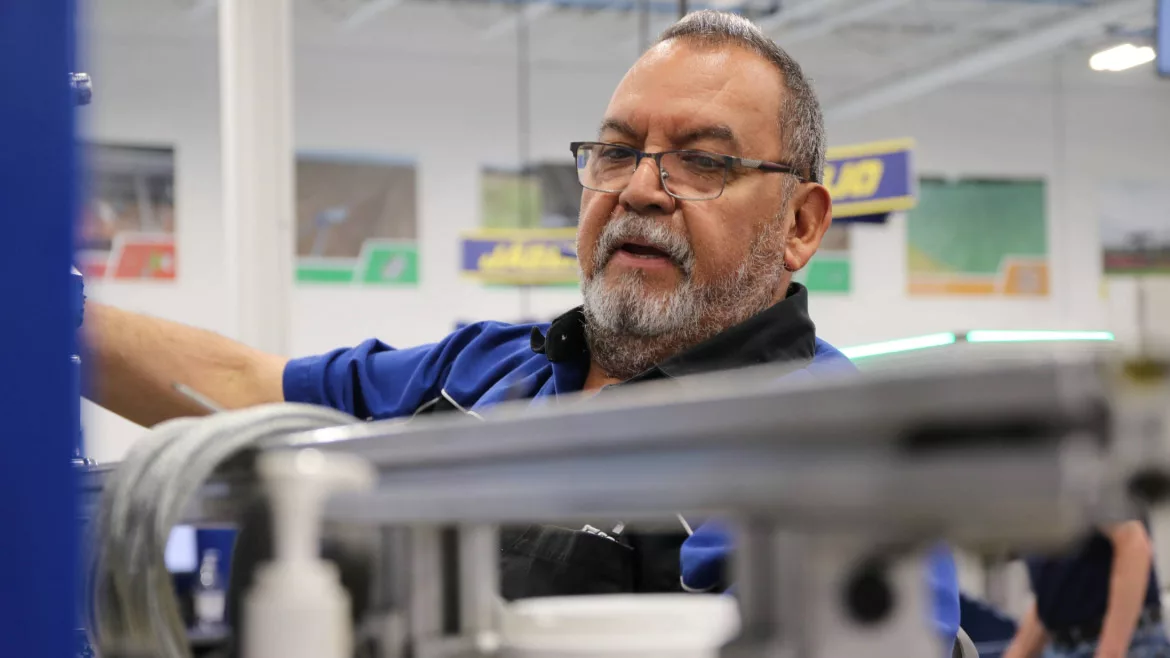
RESTRAINT: Inside Gripple’s Chicago manufacturing facility, precision-engineered cable restraint systems are crafted to meet rigorous seismic bracing standards.
A new data center hums to life in Texas. A hospital expansion nears completion outside St. Louis. A school retrofit wraps up in Salt Lake City. None of these projects are anywhere near the San Andreas Fault, and yet all are tied together by a quietly growing demand: seismic bracing for ductwork.
It’s not just the specter of the “big one” on the West Coast anymore. Insurance carriers, major tech companies, and even local inspectors are asking tougher questions about how HVAC and sheet metal systems will hold up when the ground suddenly isn’t still. And as the codebook thickens and the cost of downtime climbs, seismic bracing has shifted from a rare specialty to an everyday necessity.
The lessons have been expensive. Robert Simmons, PE, CEO of Petra Seismic Design, described the aftermath of the 1989 earthquake, often called the World Series earthquake: “Some buildings were perfectly fine, but the equipment, pipe, and duct inside suffered severe damage.” The Northridge quake in 1993 told a similar story—structures held, but unbraced mechanical systems failed, causing costly losses and shutdowns.
These weren’t just cautionary tales – they were the reason codes have evolved. As Simmons said, those disasters “started an emphasis in the codes to address that specifically,” making seismic bracing a must-have for non-structural components.
Nolan Balls, managing partner at Calder Richards Consulting Engineers, took it a step further: “In an earthquake, the contents inside the building make up 70, 80% of the damage costs versus the actual damage to the building. So they’ve been designing buildings for high seismic areas a lot longer than they’ve been taking precautions to brace the inside parts of the building.” For Balls, the message was simple: “It financially, it’s a big dollar cost in an earthquake.”
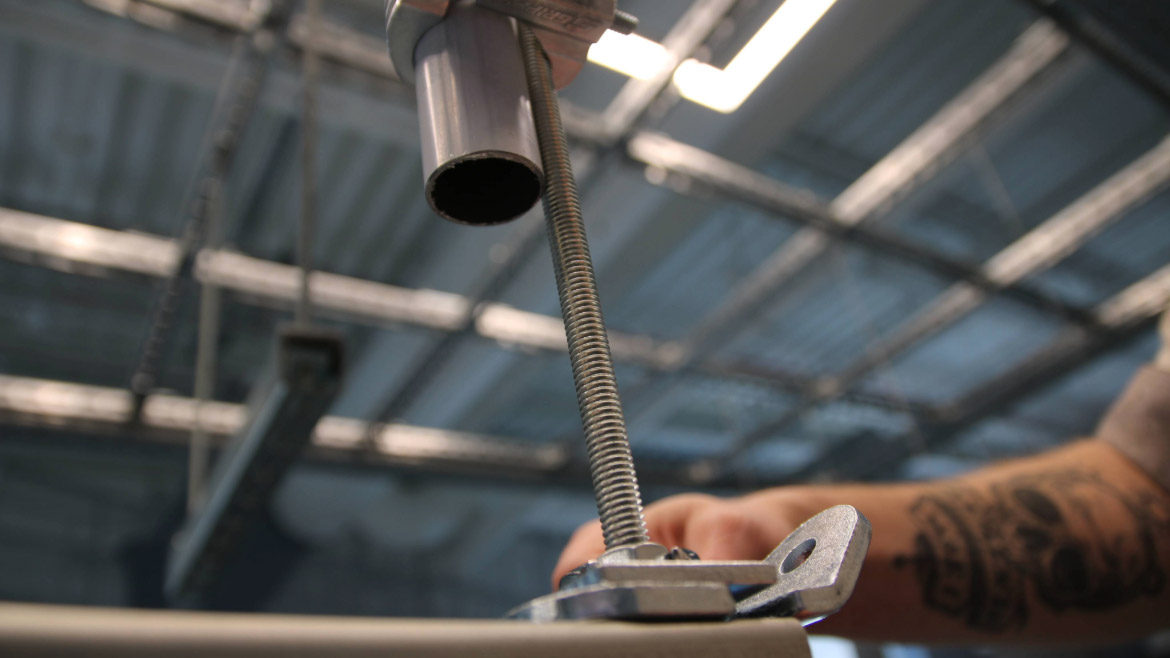
SEISMIC FORCES: Rod stiffener clip at the top prevents buckling from vertical movement. (Staff photo)
From Guidelines to Hard Numbers
So why has seismic bracing become more complicated – and more urgent? For a long time, the mechanical code was vague in its coverage of seismic restraints. It referenced the need for seismic restraint in accordance with the building code but didn’t spell out how to do it.
“The codes have been evolving and getting better, and the IMC now points to the section of the IBC regulating seismic requirements” Jim Cika of the International Code Council explained. “It’s not just about saying, you know, you have to provide straps. It’s looking at all aspects of seismic restraint systems, including supports, anchors and things of that nature, making sure that you don’t have failures.” Sheet metal contractors are now required to think through the entire system – bracing, anchors, supports, and connections. The International Mechanical Code (IMC) and the IBC have grown teeth, and the “weakest link” can be your undoing.
Balls explained, “The code requirements are IBC, which references the ASCE 7 and chapter 13 in the ASCE 7 is really what we use for code required seismic bracing. SMACNA is ... not what we use for our calculations.” In practice, that meant shifting from “broad brush recommendations” to site-specific analysis and calculation.
One of the most common misconceptions is that only massive, heavy ductwork needs seismic bracing. That’s not true.
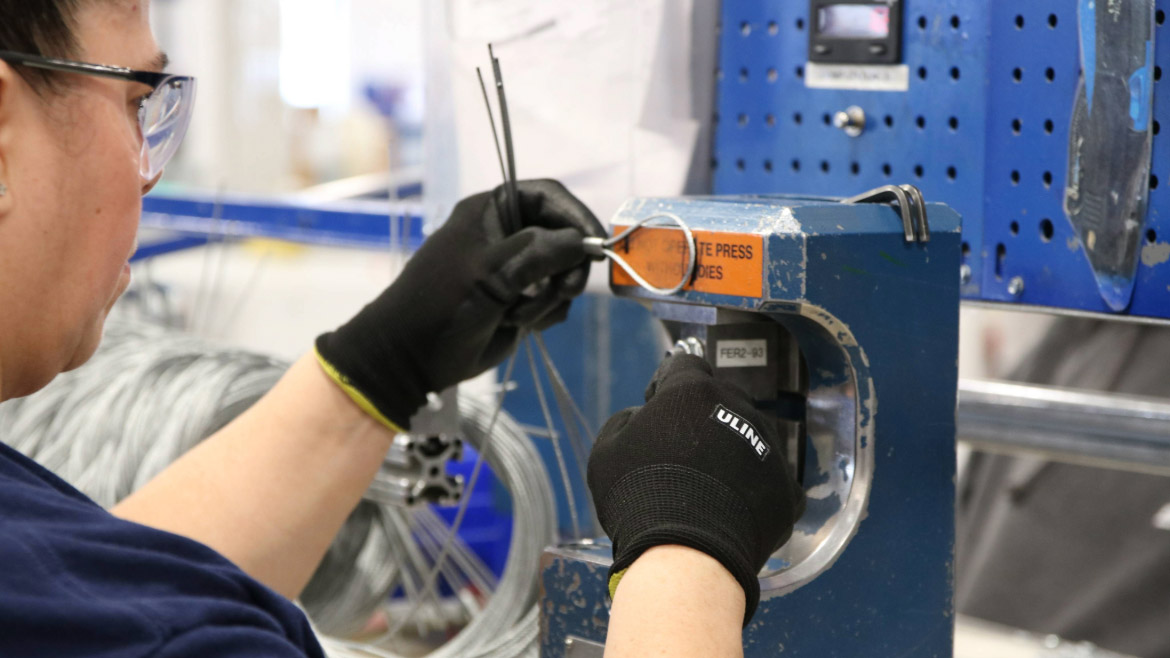
STRONG: High-strength wire rope assemblies undergo meticulous quality checks on production lines. (Staff photo)
Standard supports are designed for vertical loads – gravity. But earthquakes bring lateral, dynamic forces that make ductwork swing. As Simmons explained, “It’s a dynamic load that creates resonance between the duct system and the earthquake. Sometimes in resonance, it creates very large loads that standard supports aren’t designed for.”
Lightweight ducts can be just as vulnerable, especially if they carry hazardous exhaust, smoke, or are part of a life-safety system. Prasad Naik, PE, a senior engineer at Gripple, pointed out, “If it’s a flue duct that carries a lot of exhaust gases and things like that, you need to brace that duct, irrespective of its weight and size.”
Balls added a technical twist: “If you have light gauge ductwork or hazardous exhaust duct, there’s an amplification or importance factor that’s placed on that of 1.5, so you would multiply your forces essentially by 1.5 and design for higher loads. If you have that type of hazardous material or essential facilities like a hospital or fire station, you also have to use that importance factor of 1.5, which amplifies your design forces.”
When Owners (and Insurers) Want More Than Code
For many clients, the code is just the starting line. Data centers, hospitals, and tech giants are insisting on “voluntary design requirements” – sometimes exceeding code by a factor of two.
Simmons had seen it firsthand: “Places like data centers will often do above the code requirement for the purpose of ensuring operation post-event, and that’s driven by cost.” If Google or Meta loses a data center for a week, the lost revenue dwarfs the cost of extra bracing.
Prasad at Gripple confirmed, “We have done Meta data centers, multiple Amazon data centers, and some Google data centers as well,” sometimes in places where the seismic risk is low but the stakes for downtime are sky-high.
Balls agreed: “Some owners—nuclear, you definitely would fall under that 1.5 factor. But an owner has the ability to say, we want more here. Yes, this is a big deal. This is an essential facility.” Sometimes insurance carriers even drove the decision, offering premium discounts if seismic bracing was documented and verified.
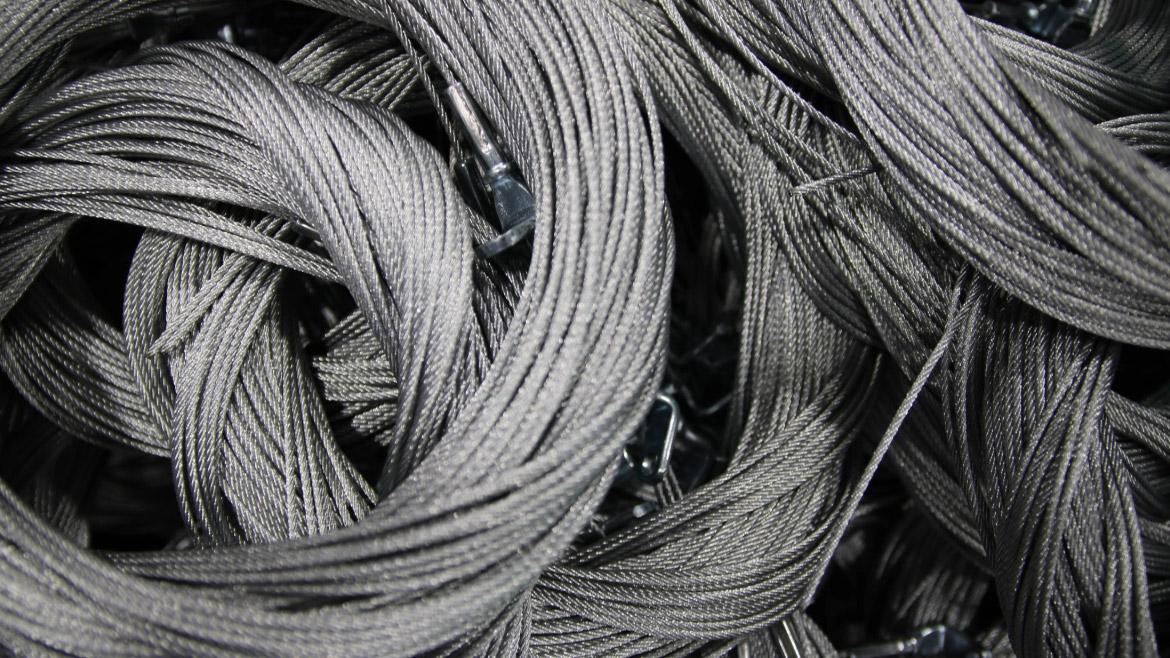
SEISMIC: Gripple’s seismic bracing components are fabricated for non-structural component restraint. (Staff photo)
Products, Testing, Documentation, and Pitfalls
The bracing industry itself has matured. Simmons remembered when it was “very rudimentary, basic, off-the-shelf type materials.” Now, “you have availability of standards for product, ASHRAE 171 standard for testing, seismic bracing, FM 1950, listing and certification agencies that have begun to provide that for product line has matured the industry.”
Corrosive environments, such as pools or industrial plants, sometimes require stainless steel bracing components and anchors. Balls explained, “We have done some projects where we’ve had to use all stainless steel products to brace things. Those have been kind of a rigid brace and stainless steel anchors. So it’s an important part of or consideration for many projects.”
There’s no excuse for skipping third-party certified products. “There’s no reason not to use a product with compliance validation by an independent party,” Simmons stated. Plus, there are now cable bracing products in multiple sizes that can be tailored for your loads and your code jurisdiction.
Here’s where the rubber meets the road – and where contractors can get tripped up. Deferred submittals aren’t just paperwork – they’re required in high seismic areas.
Balls walked through the process: “The contractor should read in the specs and in the drawings, mechanical drawings, the deferred submittals needed for seismic bracing, and then he should hire somebody like us to do a deferred submittal. We turn that into the contractor who then sends it to the mechanical engineer of record to review, so he should see it early on.” When the engineer visits the site, the bracing should be in place – not an afterthought.
And what’s the most common mistake? Missing rod stiffeners. “The braces are diagonal. They create a vertical component that can cause buckling in the hanging threaded rod. And a lot of times we have to stiffen those rods with rod stiffeners of various sorts. And I’d say that’s one of the things that often doesn’t get placed in or gets overlooked or missed,” Balls warned.
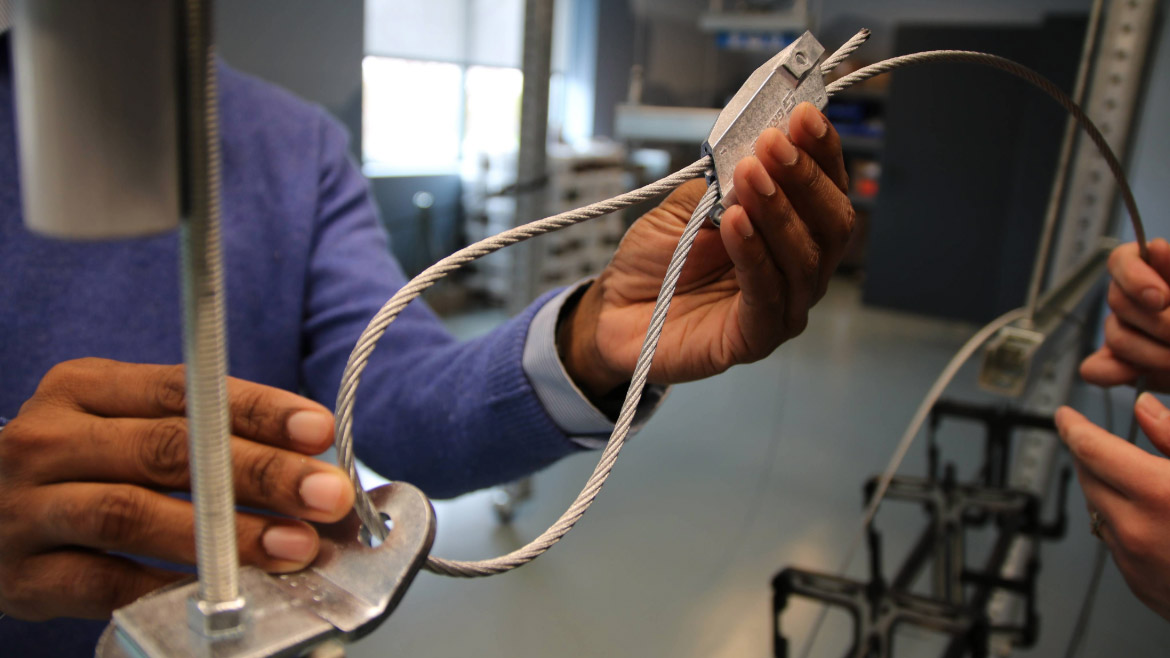
DEMONSTRATE: This demonstration provides a clear look at how cable bracing systems are installed to secure ductwork and piping. (Staff photo)
Coordination: The Weakest Link
For all the calculation and engineering, the real-world challenge is coordination. As Simmons put it: “That little piece there is oftentimes the biggest challenge, because you can put a brace to the duct or pipe, and that’ll be strong enough. Then you attach it to the structure, and all of a sudden the structure is limited.” If the anchor fails, it doesn’t matter how good the brace is, leading to tragedies like the duct collapse at the Gaylord Rockies Resort near Denver. Though the exact investigation details remain limited, the failure underscored the liability risks and potential for injury when ductwork isn’t properly restrained – whether due to seismic forces or other factors like corrosion or inadequate anchoring.
Manufacturers like Gripple now offer technical support to help with “understanding the requirements of seismic and delegated designs, and the methods and product options to meet those requirements in a manner that provides the most value to the project,” Cullen Rostveit, director at Gripple, noted.
Seismic bracing isn’t just for the West Coast – and it’s not just another code hurdle. It’s about protecting your clients’ investment, their safety, and your own reputation. With codes evolving, expectations rising, and the financial stakes growing, sheet metal contractors who get ahead of seismic bracing will do more than avoid failures – they’ll win more work and build trust with the most demanding clients.
If you need technical sheets, want to see how new bracing solutions fit your next job, or just need to talk through a tricky specification, reach out to your suppliers or an engineer who lives and breathes seismic. The right prep now means fewer headaches – and less risk – when the ground shakes.
Looking for a reprint of this article?
From high-res PDFs to custom plaques, order your copy today!