From Beer Bottles to Better Buildings: Fiberglass Ductwork Insulation
Fiberglass insulation is critical for addressing noisy ductwork, but the material must be installed correctly to achieve goals
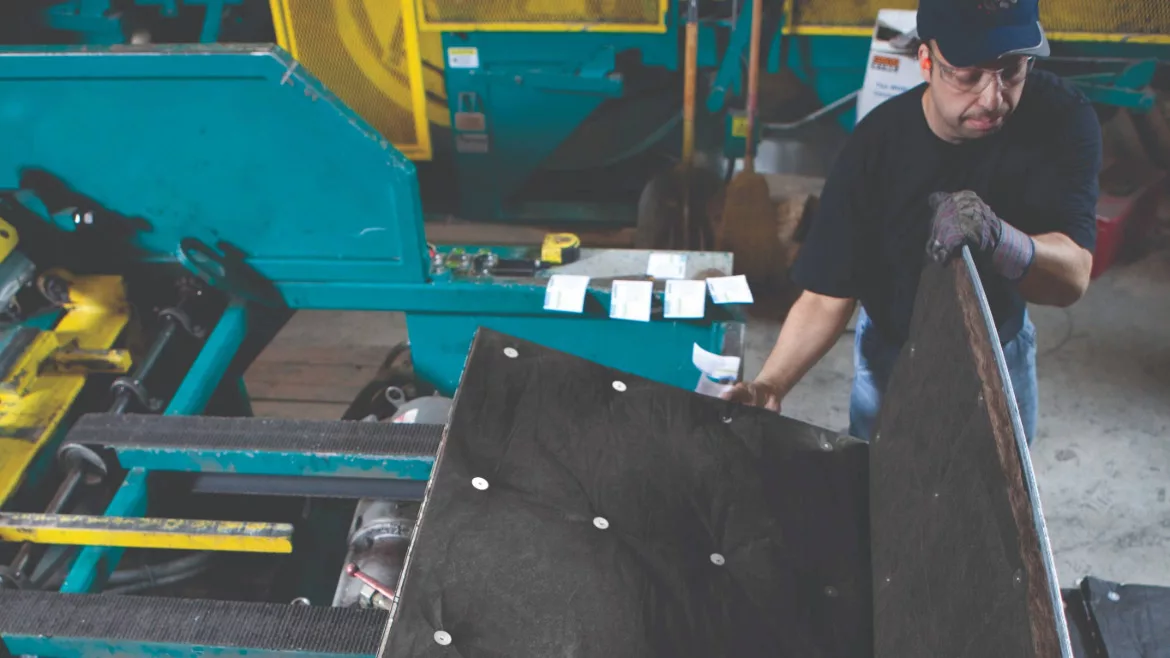
(Courtesy of Knauf Insulation)
When you crack open a cold beer or pour a glass of wine, chances are you aren't thinking about the role that bottle might play in making buildings more energy efficient. But for Buddy Combs, Specifications Specialist at Knauf Insulation, that connection is a key part of his work.
As an industry, fiberglass insulation manufacturers rank among the largest users of recycled glass in North America.
"At Knauf North America, we recycle 10 train cars of beer and wine bottle glass every day to make the fiberglass used in our insulation products," Combs explained.
In 2023, North American Insulation Manufacturers Association member companies consumed more than 2.3 billion pounds of discarded glass. Members include Knauf and groups like Owens Corning, whose wide array of insulations have various recycled-to-new ratios.
That recycled glass, melted then fiberized into glass fibers for insulation, is just the beginning of a story that highlights the crucial role of ductwork insulation in high-performance buildings.
For Combs and his peers, the focus is on using sustainable materials to manufacture products that improve energy efficiency, enhance indoor air quality, and minimize environmental impact. And fiberglass is a star player in this story, added David Burd, air distribution products technical manager for North America at Owens Corning.
“Fiberglass duct wrap is one of the most forgiving, installation friendly HVAC installation products on the market, but it's still very important to follow a robust installation process,” Burd added.
As sheet metal fabricators insulate ductwork on the sheet metal shop floor for instance, he recommends techs on site do an inspection, and seal any holes they find that may have split open in transit.
“If you don't, you're losing that vapor retarder. And so therefore, not only are you losing thermal, so either heating or cooling air, but you're also reducing the duct wrap’s ability to help control condensation,” Burd added.
The benefits of fiberglass extend to the buildings where it's installed. As Combs explained, "fiberglass helps eliminate cross-talk sound from room to room and reduces noise from mechanical units.” But the advantages don't stop there. Fiberglass also plays a critical role in improving indoor air quality.
Knauf’s insulation is made with a bio-based binder, so they've reduced risk from a health standpoint for not only the occupants of the buildings where this duct work is delivered, but also for all the people that are handling it and working with it on an everyday basis, maybe at a sheet metal shop or within our factories themselves.
For HVAC contractors and building owners, the choice of insulation matters. By selecting products made with recycled materials and designed for high performance, they can create buildings that are not only more energy efficient but also healthier and more sustainable.
As Combs puts it, “if we're saving money producing the product and saving energy, it gives us more opportunity to then take that money, or the resources, and go back into research and development."
The Safety of Internally Lined Fiberglass Ductwork
For years, a persistent myth has circulated within the HVAC industry: that fiberglass internally lined ductwork poses a risk to indoor air quality by releasing fibers into the airstream, despite the technique’s critical role in reducing cross talk and noise.
“We'll see specifications, where they're asking them to put a mylar liner or some other kind of material in between the insulation and the perforated inner duct,” Combs said. “We don't recommend that. You've actually reduced the acoustic capability of the insulation by quite a bit by adding something that's reflecting the sound back into the duct again. It's acting more as a speaking tube.”
In the past, and the line of thinking persists to some extent today, “people were concerned that the duct would get either clogged up, or that fibers would get into the duct, neither of which actually happen. We’ve certainly done enough studies with our facings to show that you really don't need to do that practice anymore.”
How Fiberglass Insulation Improves Acoustics
For building occupants, few things are more distracting than the hum of HVAC systems or the muffled voices from adjacent rooms. That's where the acoustic benefits of fiberglass insulation come into play.
"Fiberglass is the most efficient acoustic control product available today," Combs said. By lining ductwork with fiberglass, contractors can significantly reduce the noise that travels through the system.
For fiberglass insulation, one key metric is insertion loss, which measures sound attenuation across different frequency bands. In the 50-250 Hz range, which includes system noise like fan startup, fiberglass shows significantly higher insertion loss. The same is true in the 250-1000 Hz range, the speech frequency band.
But the acoustic advantages of fiberglass extend beyond just noise reduction. As Combs explained, "Fiberglass helps eliminate cross-talk sound from room to room and reduces noise from mechanical units."
In settings like healthcare facilities or schools, where acoustics play a critical role in patient care or learning, the benefits of fiberglass are especially pronounced. By minimizing background noise and preventing sound from carrying over long distances, fiberglass insulation helps create spaces that are not just energy efficient, but also acoustically optimized.
So next time you recycle a beer bottle, consider this: it might just end up helping to make the world more sustainable, and quieter, one building at a time.
Looking for a reprint of this article?
From high-res PDFs to custom plaques, order your copy today!