Using Defrost Termination and Fan Delay Controls
If so, you may want to check into installing a defrost termination/fan delay control.
The defrost termination/fan delay control is a temperature activated, single-pole, double-throw (spdt) switch controlled with a remote sensing bulb. The control shown also happens to be an adjustable type.
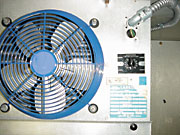
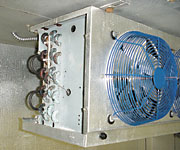
Figure 1 shows an installation of an adjustable defrost termination/fan delay control on an evaporator. The control is wired into the refrigeration circuit. The control’s remote sensing bulb is located high on the evaporator, where the frost is likely to clear last (Figure 2).
The function of this temperature-activated switch is to “terminate” defrost when the evaporator coil has been defrosted, and also to “delay” the evaporator fans from coming on immediately after defrost.
Time clocks can be programmed for certain defrost duration periods. This time duration is set at the time clock in minute increments. For example, a defrost time clock on a freezer could be programmed to defrost every 6 hrs (four times daily), and have defrost increments of 40 minutes.
However, there will be times throughout the year where the coil does not need the entire 40 minutes of defrost heat. These times could result from low usage of the freezer, when door openings are at a minimum, or when the humidity is low and not much frost accumulates on the coil.
This is where the defrost termination part of the control comes into play.
Looking for quick answers on air conditioning, heating and refrigeration topics? Try Ask ACHR NEWS, our new smart AI search tool. Ask ACHR NEWS

DEFROST TERMINATION
In order to see its importance, let’s assume that the system does not have a defrost termination/fan delay control, or that it is not functioning. Once the normally open (NO) contacts of the defrost time control have closed and the unit is in defrost mode, the defrost heaters will emit heat and frost will melt off the evaporator coil. Let us say that it only took 10 minutes for all of the frost to leave the evaporator coil. However, there are still 30 minutes (40 minutes minus 10 minutes) left in the programmed defrost duration increment. If the system has an optional heater safety switch (sometimes referred to as a defrost limit control) in series with the defrost heater, this limit switch will open and take the defrost heaters out of the active circuit. However, the system’s defrost timer will still have 30 minutes left in the defrost mode. The system simply sits idle, and the product load suffers because it receives no refrigeration for 30 minutes. After 30 minutes, the defrost timer switches over to refrigeration and the fans start immediately. The fans blow the moist residual defrost heat through the refrigerated space and through the evaporator coil while the system is in refrigeration. This puts the system, thus the compressor, under an extremely high load from high suction pressures. The compressor will see high suction pressures with dense vapors coming to its cylinders. This causes high amperage draws and may overload the compressor to a point where its internal or external overload may open. Now let’s assume that a defrost termination/fan delay switch has been installed (see Figure 3). Once the NO contacts of the defrost timer control have closed and the unit is in defrost, the defrost heaters emit heat, and ice melts off of the coil. If it only takes 10 minutes for the ice to leave the coil, the remote bulb of the defrost termination control senses the defrost heat and contacts are made on the control. This, in turn, energizes a defrost termination solenoid (release solenoid) in the time clock which mechanically puts the system back into refrigeration mode. It does this by solenoid action and levers, and mechanically closes the normally closed (NC) contacts and opens the NO contacts of the defrost time control. This action by the defrost termination solenoid (release solenoid) prevents the system from sitting idle for 30 minutes in defrost with the heaters off. It terminates the defrost mode and puts the refrigeration mode back into service.FAN DELAY
Now that the system is back in the refrigeration mode, the evaporator fans will be delayed from coming on. This happens until the contacts of the defrost termination/fan control close (usually at about 20° to 30°F), and is sensed and controlled by the control’s remote bulb.This is an adjustable setting on most controls (Figure 4) that lets the evaporator coil prechill itself and get rid of some of the defrost heat still in the coil.
Delaying the fans prevents the suction pressure from getting too high after defrost and subsequently overloading the compressor. It also prevents warm, moist air from being blown on the product load in the refrigerated space.
Tomczyk is a professor of hvacr at Ferris State University, Big Rapids, MI.
Publication date: 12/04/2000
Looking for a reprint of this article?
From high-res PDFs to custom plaques, order your copy today!