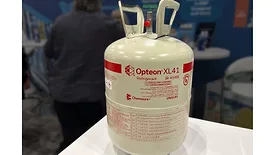
The long-term availability of HFCs survived another effort at phase-down during the 23rd Meeting of the Parties (MOP23) to the Montreal Protocol held in November 2011. Participants did not reach agreement on taking any action to control HFCs.
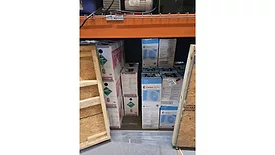
Recent reports from overseas have revealed that rogue refrigerants were used in hundreds of transport HFC-134a refrigeration systems, which resulted in a number of explosions and at least three deaths. World trade press, industry manufacturers, and watchdog websites have been issuing statements in recent weeks as part of this ongoing story.
Efforts to make CO2 work in transcritical applications got a boost with the announcement the CSC, The Canadian manufacturer of refrigeration systems, will be making a major push in that regard.
The year 2011 introduced the concept of dry-shipping HCFC-22 condensing units for retrofit applications, and that shipping and use is expected to continue through 2012.
“The sky isn’t falling. There are plenty of options.” Those words are from Rajan Rajendran, director of engineering services for Emerson Climate Technologies to an audience of supermarket engineers at the Food Marketing Institute Energy & Store Development Conference.
While there are no pending regulations that would curb production of HFCs, those specific refrigerants are a part of the equation when talk turns to the broad, emotionally laden topic of global warming.
No technology has stirred up more attention in recent years than use of carbon dioxide (CO2) as a refrigerant in both stationary and mobile HVACR applications. And yet the technology has more people head scratching over it in terms of dealing with the pressures, efficiencies, installation costs, and servicing skills.
Whether or not HCs become major refrigerant players in the U.S. depends on who you talk to. Advocates point to extremely lower global warming potential, low cost, and a proven track record in Europe and Asia. Others see the flammability issue, A3 safety rating, and current building and fire codes limiting use to smaller applications.
The use of ammonia as a refrigerant has been around for approximately 160 years, dating back to its first use in France in the 1850s. It first appeared in the United States in the 1860s when it was used for artificial ice production. Its latest uses are a testament to the growing popularity of ammonia refrigerants.
Photos from the 2013 ACCA Conference & IE3 Expo in Orlando, Fla.
Podcasts
Cade Clark, assistant vice president of government affairs for the Air-Conditioning, Heating & Refrigeration Institute (AHRI), gives a brief overview of the new version of the Shaheen-Portman bill, what AHRI thinks of the energy-efficiency legislation, and how it might affect the HVACR industry if it becomes law.
With access to over one million professionals and more than 60 industry-specific publications, Clear Seas Research offers relevant insights from those who know your industry best. Let us customize a market research solution that exceeds your marketing goals.
DON'T MISS A THING
Register today for complete access to ACHRNews.com. Get full access to the latest features, Extra Edition, and more.