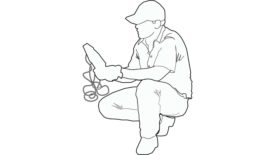
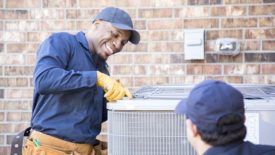
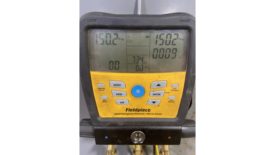
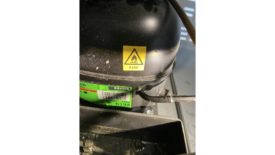
Bob and Tim are continuing a service call on a heat pump that has two failed auxiliary heaters. When they went to the supply house to get new heaters, they left wondering if the heat pump itself was operating up to capacity. After replacing the defective heaters, Bob suggested a visual inspection of the heat pump.
It’s a common winter woe affecting thousands of building owners and managers each year: frozen water pipes that burst. To minimize water damage caused by a frozen pipe burst, two critical steps must be taken. First, act fast to assess the situation, and then control the environment within the building.
Bob and Tim have arrived at a home where the owner is complaining that the heat pump is not heating properly. It has been getting cold in the home during the late night and early morning hours. It’s really cold outside, about 10°F at night and 25° during the day.
To prepare you for this month’s troubleshooting situation … you’re not the first technician to be called, nor are you the second technician. You’re the third one that’s been called in to solve this customer’s problem, which involves a heat pump that serves a residential building in a mild Southwest desert climate.
Tim and Bob have been sent on a service call to a new customer’s house. The homeowner has an unusual complaint. She said that she thinks she has a furnace problem because there is mold in her house. They don’t know what this can be all about.
I simply don’t know of any way to reduce chiller maintenance (recommended scheduled maintenance), below industry standards and manufacturer recommendations, without reducing the system’s long-term efficiency and working life.
Bob and Tim have arrived back at the apartment building where they have been working for several days inspecting and making necessary repairs to the building’s split-system heat pumps. Bob said, “Check the list for another unit that seemed to have a problem and let’s take a closer look at it.”
In this situation we have a customer who has called for service on their gas furnace, and the description of the problem is “no heat at all.” The customer also reports that this is the first time they’ve had to call for service on their 10-year-old unit.
Bob and Tim have arrived at the apartment house that they have been working at for the last several days. They’ve gone to the roof where the outdoor units are located. There are 60 heat pumps that use R-22 as the refrigerant. They start with Unit No. 2.
It is important to understand grease extraction and new options in capturing grease particulate efficiently near the source. A commonly overlooked byproduct of many cooking processes is grease — overlooked, that is, until it causes problems at a restaurant facility.
Photos from the 2013 ACCA Conference & IE3 Expo in Orlando, Fla.
Podcasts
Cade Clark, assistant vice president of government affairs for the Air-Conditioning, Heating & Refrigeration Institute (AHRI), gives a brief overview of the new version of the Shaheen-Portman bill, what AHRI thinks of the energy-efficiency legislation, and how it might affect the HVACR industry if it becomes law.
With access to over one million professionals and more than 60 industry-specific publications, Clear Seas Research offers relevant insights from those who know your industry best. Let us customize a market research solution that exceeds your marketing goals.
DON'T MISS A THING
Register today for complete access to ACHRNews.com. Get full access to the latest features, Extra Edition, and more.