ACHR News
search
Ask ACHR NEWS AI
cart
facebook twitter instagram linkedin youtube
  • Sign In
  • Subscribe
  • Sign Out
  • My Account
ACHR News
  • NEWS
    • Breaking News
    • New HVAC Products
    • Featured Products
    • Manufacturer Reports
    • HVAC Data
    • Legislation
    • ACHR NEWS Centennial
  • RESIDENTIAL
    • Air Conditioners
    • Furnaces
    • Residential Heat Pumps
    • Ductless
    • Residential IAQ
    • Testing, Monitoring, Tools
    • Components & Accessories
  • COMMERCIAL
    • Air Handlers
    • Rooftop Units
    • Chillers and Cooling Towers
    • Commercial Heat Pumps
    • Boilers and Hydronics
    • VRF/Ductless
    • Commercial IAQ
  • REFRIGERATION
    • Refrigerants
    • Refrigerant Regulations
    • Leak Management
  • CONTRACTOR PRO
    • Geothermal
    • Homeowner Study
    • VRF and VRV Ductless
    • Unitary Trends
  • EDUCATION
    • Training and Education
    • Business Management
    • Service and Maintenance
    • Continuing Education
    • Market Research >
      • HVAC Brand Awareness Report
      • VRV, VRF, VRVZ Report
      • Unitary Trends Report
      • Water Heat Professionals Report
    • Webinars
    • Sponsor Insights
    • eProducts Info
    • White Papers
  • EVENTS
    • HVAC Contractor Forum
    • Industry Events and Webinars
  • MEDIA
    • Videos
    • AHR Expo 2025 Videos
    • Podcasts >
      • ACHR News Podcast
      • HARDI Podcasts
      • AHR Expo Podcasts
      • ACCA Podcasts
    • Interactive Spotlights
    • Quizzes
    • eBooks
    • HVAC Talkback
  • HVAC GROUP
    • ACHR NEWS >
      • Current Issue
      • Digital Edition
      • Subscribe
    • Distribution Trends
    • SNIPS NEWS >
      • Join SNIPS NEWS
    • Engineered Systems News >
      • Join ES News
    • HVACR Directory
    • Contests
    • Newsletters
    • Contact
    • Advertise
    • My Account

The Professor: The Scroll Compressor - A History

By John Tomczyk
September 1, 2008
Figure 1: Scrolls are now in their fifth generation. (Courtesy of Emerson Climate Technologies.)


This is the first in a series of three articles covering the scroll compressor. This first article will cover the history of the scroll compressor along with the scroll compressor operation. The second article will cover the scroll compressor advantages and the modulating scroll compressor. The third article will cover digital capacity control for scroll compressors and scroll compressor protection.

The concept of compressing a gas by turning one scroll against another around a common axis isn’t new. Scroll compressor technology has been around for 100 years, but it did not become commercially available and cost effective until the mid-1980s. Today, it continues to be even more fine-tuned and is available in many applications.


The major hurdle in making the scroll compressor a viable product was achieving a balance between the need for high volume precision manufacturing, and the ability to consistently achieve high performance and efficiencies, low sound levels, and great reliability.

In fact, it is the scroll compressor’s ability to reach higher levels of SEER that helped guide the industry through government-mandated regulations. Every central split cooling system manufactured in the United States today must have a SEER of at least 13. Federal law as of Jan. 23, 2006, mandated this energy requirement. Also, with the phaseout of R-22 just around the corner, manufacturers of HVACR equipment are looking for energy-efficient methods to apply to their equipment to meet these new energy requirements.


Figure 2: One of the two spiral-shaped scrolls in a scroll compressor. (Courtesy of Ferris State University.)

SEER is calculated based on the total amount of cooling (in Btu) the system will provide over the entire season, divided by the total number watt-hours it will consume. Higher SEERs reflect a more efficient cooling system.

This federal mandate impacts 95 percent of the unitary market in the United States, which is about 8 million units at this time of writing.

Because of this new federal mandate of 13 SEER, most air conditioning and heat pump manufacturers are looking for more efficient evaporator and condenser designs, more efficient compressors like the scroll compressor, and more efficient fan motors, along with more sophisticated control systems to meet this new energy-efficiency requirement.


Figure 3: The other of the two spiral shaped scrolls in a scroll compressor. (Courtesy of Ferris State University.)

Scrolls are now in their fifth generation (Fig. 1). Because of the scroll compressor’s fewer moving parts, it operates much quieter than other compressor designs and technologies. Less noise and higher efficiencies have become two key selling points for the scroll compressor to be installed in residential air conditioning units.


COMMERCIAL COOLING

The next step for the scroll compressor was for use in commercial cooling equipment. A major development for commercial scroll compressors has been modulating technology. Modulating technology is able to maintain ideal comfort levels in buildings like churches, where rooms can be empty for hours and then suddenly fill to capacity. Modulation technology is accomplished in several ways. Some high-end systems now have communication systems onboard that enable components to talk to each other.
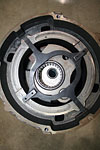


Figure 4: The orbiting motion is created from the centers of the bearings. (Courtesy of Ferris State University.)

REFRIGERATION

The next major application for the scroll compressor was in refrigeration. The scroll compressor’s reliability and durability proved itself in refrigeration applications. It is used in walk-in coolers, reach-ins, and distributed refrigeration systems. Beyond coolers and freezers, the scroll compressor has found its way into soft-serve ice cream machines, frozen carbonated beverage machines, and more. Scroll compressors are also being utilized in cryogenic equipment, Magnetic Resonance Imaging (MRI) machines, and even some dental equipment.

Scroll compressor operation is relatively simple. Two spiral-shaped scrolls fit inside one another (Figs. 2 and 3). The two mating parts are often referred to as involute spirals. One of the spiral-shaped parts stays stationary, while the other orbits around the stationary member. The orbiting motion is created from the centers of the journal bearings and the motor being offset (Fig. 4).


Figure 5: The orbiting motion causes continuous crescent-shaped gas pockets to be formed. (Courtesy of Emerson Climate Technologies.)

It is a true orbital motion, not a rotational motion. This orbiting motion causes continuous crescent-shaped gas pockets to be formed (Fig. 5). The orbiting motion draws gas into the outer pocket and seals it as the orbiting continues. This continuous orbiting motion causes the crescent-shaped gas pocket to become smaller and smaller in volume as it nears the center of the scroll form. Once at the center, the gas pocket is fully compressed and is discharged out of a port of the non-orbiting (fixed) scroll member (Fig. 6).

Several crescent-shaped gas pockets are compressed at the same time, which provides for a smooth and continuous compression cycle. Thus, the scroll compressor conducts its intake, compression, and discharge phases simultaneously.


Figure 6: The gas pocket is fully compressed and is discharged out of a port of the non-orbiting scroll member. (Courtesy of Ferris State University.)

The scroll compressor always takes a fixed volume of gas at suction pressure, and then decreases the same gas volume which increases its pressure. In fact, during the discharge phase, the scroll compressor compresses the discharge gas to zero volume, eliminating any carryover of trapped discharge gas in a clearance volume characteristic of piston-type compressors. Because of this, the scroll compressor is often referred to as a “fixed compression ratio” compressor.

Unlike piston-type compressors, the scroll compressor has no re-expansion of discharge gas which can be trapped in a clearance volume. This is why piston-type compressors are often referred to as “variable compression ratio” compressors. This contributes to low volumetric efficiencies in piston-like compressors.

Publication date: 09/01/2008

Share This Story

Looking for a reprint of this article?
From high-res PDFs to custom plaques, order your copy today!


John Tomczyk is HVACR professor emeritus, Ferris State University, Big Rapids, Michigan, and coauthor of Refrigeration & Air Conditioning Technology, published by Cengage Learning. Contact him at tomczykjohn@gmail.com.

Recommended Content

JOIN TODAY
To unlock your recommendations.

Already have an account? Sign In

  • HVAC-enrollment

    The Trades Are Back: HVACR Programs See Nearly 30% Enrollment Spike

    A new wave of future technicians is entering the pipeline.  
    News
    By: Matt Jachman
  • 2025 Top 40 Under 40

    2025 Top 40 Under 40 HVACR Professionals List

    The 11th annual Top 40 Under 40 list highlights those...
    HVAC Residential Market
    By: Hannah Belloli-Oster
  • LG Ductless Mini-Split Systems

    The 9 Types of Heat Pumps

    As the U.S. moves toward electrification, heat pumps are...
    HVAC Commercial Market
    By: Joanna R. Turpin
Subscription Center
  • Create an Account
  • Start a Subscription
  • Manage My Account
  • Sign Up for Newsletters
  • Visit Customer Service
  • Update Preferences

More Videos

Sponsored Content

Sponsored Content is a special paid section where industry companies provide high quality, objective, non-commercial content around topics of interest to The News audience. All Sponsored Content is supplied by the advertising company and any opinions expressed in this article are those of the author and not necessarily reflect the views of The News or its parent company, BNP Media. Interested in participating in our Sponsored Content section? Contact your local rep!

close
  • Piggy Bank
    Sponsored byWatercress Financial

    Energy Prices, Inflation, and HVAC: What Today’s Homeowners Care About

  • Refrigerated Food
    Sponsored bySolstice Advanced Materials

    R-455A Refrigeration: A Cold Storage Solution for the Future

  • Airex Rooftop Units
    Sponsored byAirex Manufacturing Inc

    Consolidating Roof Penetrations: A Growing Trend in Multifamily HVAC Design

Popular Stories

HVAC-Price-Increase-graphic

HVAC Price Increase List: June 2026

Trump-Section-232.jpg

Trump Reduces Section 232 Tariffs on HVAC Equipment to 15%

Refrigerants-and-gauge.jpg

HVAC Industry Warns of Counterfeit Refrigerants Entering U.S. Supply Chain

U.S. Supreme Court building

95% Furnace Efficiency Rule to Get New Hearing

Midea-training.jpg

HVAC Workforce Crisis Expands Beyond Technicians to Instructor Shortages

View The ACHR NEWS
Centennial Anniversary Timeline

The ACHR News Timeline Chart
Submit a Letter
Submit a letter to our editors.

Events

November 6, 2025

Next-Gen Data Center Cooling: HVAC Innovation and Real-World Solutions

On Demand As AI workloads and high-density computing push traditional cooling methods to their limits, the data center industry is accelerating the adoption of next-generation HVAC technologies.

June 23, 2026

HVAC Duct Sealing Mastics: Why Selection Matters

In this webinar we will detail what HVAC material buyers and technicians need to know when selecting duct mastics, including matching mastic to substrate, alternatives to liquid mastic, and where UL 181 Listings fit into real world installations.

View All Submit An Event

Poll

Summer Staff

Are you fully staffed for the summer season?
View Results Poll Archive

Products

BNI Mechanical/Electrical Square Foot Costbook, 2026 Edition

BNI Mechanical/Electrical Square Foot Costbook, 2026 Edition

See More Products
HVAC Duct Sealing Mastics: Why Selection Matters - Free Webinar - 6/23/2026

Related Articles

  • The Professor: The Scroll Compressor

    See More
  • The Professor: Scroll Compressor Internal Protection

    See More
  • John Tomczyk

    The Professor: The Importance of a Refrigeration System’s Operating Pressures

    See More

Related Products

See More Products
  • air came to a stop.jpg

    The Air Came to a Stop

  • compressormotorwindingsdvd.jpg

    UNDERSTANDING COMPRESSOR MOTOR WINDINGS

  • Uncomplicating The Heat Pump: Electrical System Troubleshooting DVD

See More Products

Events

View AllSubmit An Event
  • May 6, 2014

    Scroll Compressor Technology Day—INLD-STT1

    The Scroll Compressor Technology Day provides a concise overview of the applicable Copeland brand compressors and their varying applications. The course then follows up with proven troubleshooting techniques and practices.
View AllSubmit An Event

Related Directories

  • Carlyle Compressor

    Count on Carlyle. Carlyle compressors can be found around the world - from the first nuclear sub to your grocer's freezer to entire bus fleets.
×

Sign Up. Stay Informed.

The #1 trusted source for the HVACR industry since 1926

SUBSCRIBE
  • RESOURCES
    • Advertise
    • Contact Us
    • Advisory Board
    • Classifieds
    • Submit a Letter
    • Directories
    • Store
  • ACCOUNT CENTER
    • Create an Account
    • Start a Subscription
    • Manage My Account
    • Sign Up for Newsletters
    • Visit Customer Service
    • Update Preferences
  • SERVICES
    • Marketing Services
    • Reprints
    • Market Research
    • List Rental
    • Survey/Respondent Access
  • STAY CONNECTED
    • LinkedIn
    • Facebook
    • Instagram
    • YouTube
    • X (Twitter)
  • PRIVACY
    • PRIVACY POLICY
    • TERMS & CONDITIONS
    • DO NOT SELL MY PERSONAL INFORMATION
    • PRIVACY REQUEST
    • ACCESSIBILITY

Copyright ©2026. All Rights Reserved BNP Media, Inc. and BNP Media II, LLC.

Design, CMS, Hosting & Web Development :: ePublishing