ACHR News
search
Ask ACHR NEWS AI
cart
facebook twitter instagram linkedin youtube
  • Sign In
  • Subscribe
  • Sign Out
  • My Account
ACHR News
  • NEWS
    • Breaking News
    • New HVAC Products
    • Featured Products
    • Manufacturer Reports
    • HVAC Data
    • Legislation
    • ACHR NEWS Centennial
  • RESIDENTIAL
    • Air Conditioners
    • Furnaces
    • Residential Heat Pumps
    • Ductless
    • Residential IAQ
    • Testing, Monitoring, Tools
    • Components & Accessories
  • COMMERCIAL
    • Air Handlers
    • Rooftop Units
    • Chillers and Cooling Towers
    • Commercial Heat Pumps
    • Boilers and Hydronics
    • VRF/Ductless
    • Commercial IAQ
  • REFRIGERATION
    • Refrigerants
    • Refrigerant Regulations
    • Leak Management
  • CONTRACTOR PRO
    • Geothermal
    • Homeowner Study
    • VRF and VRV Ductless
    • Unitary Trends
  • EDUCATION
    • Training and Education
    • Business Management
    • Service and Maintenance
    • Continuing Education
    • Market Research >
      • HVAC Brand Awareness Report
      • VRV, VRF, VRVZ Report
      • Unitary Trends Report
      • Water Heat Professionals Report
    • Webinars
    • Sponsor Insights
    • eProducts Info
    • White Papers
  • EVENTS
    • HVAC Contractor Forum
    • Industry Events and Webinars
  • MEDIA
    • Videos
    • AHR Expo 2025 Videos
    • Podcasts >
      • ACHR News Podcast
      • HARDI Podcasts
      • AHR Expo Podcasts
      • ACCA Podcasts
    • Interactive Spotlights
    • Quizzes
    • eBooks
    • HVAC Talkback
  • HVAC GROUP
    • ACHR NEWS >
      • Current Issue
      • Digital Edition
      • Subscribe
    • Distribution Trends
    • SNIPS NEWS >
      • Join SNIPS NEWS
    • Engineered Systems News >
      • Join ES News
    • HVACR Directory
    • Contests
    • Newsletters
    • Contact
    • Advertise
    • My Account
Manufacturer Reports

Simulation Can Improve Fan Performance

February 13, 2006
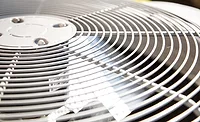
A four-bladed fan assembly.

In the recent past, fans were designed using trial-and-error procedures whose cost and lead time meant that it was almost never possible to optimize the design. Today, fan manufacturers are turning to computer simulation tools that allow them to quickly and economically evaluate the performance of designs simply by changing the configuration of a computer model and re-running the analysis. The new simulation tools, of which computational fluid dynamics (CFD) is by far the most popular, make it possible to evaluate enough potential designs to bring performance to optimum levels for any desired application.

Until recently, fans were designed using essentially the same methods as 50 years ago. Typically, this involved hand calculations using airfoil design methods to estimate the performance of various blade design concepts. The problem with these calculations was that they required many simplifying assumptions, thus limiting their accuracy in practical applications. The result was that most real-world designs relied upon building and testing prototypes. Prototypes, however, take a considerable period of time to build and test and are also expensive. Moreover, the point measurements used to evaluate a prototype provided little information as to why a particular design performed well or poorly. Consequently, engineers were often forced to settle for less than ideal performance because they didn't have the tools to shoot for a truly optimized design.
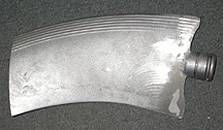
A close-up of the blade alone.

CFD BASICS

Recently, fan designers have turned to CFD simulation, which provides fluid velocity and pressure and temperature values throughout the solution domain with complex geometries and boundary conditions. As part of the analysis, a designer may change the geometry of the system or the boundary conditions such as inlet velocity, flow rate, rotational speed, etc., and view the effect on fluid flow characteristics.

CFD is an effective tool for generating detailed parametric studies, making it possible to evaluate far more design alternatives than the build and test method and thereby providing opportunities for optimization. Another advantage of CFD is that it provides more complete information than physical testing, including color-coded graphics that depict flow direction and velocity in all relevant locations. This helps designers gain more insight into the reasons why a design is performing as it is, which enables rapid design improvements.

Fan designers have adopted CFD methods later than many other design disciplines due to a historically heavy dependence on testing coupled with the knowledge of highly-experienced fan designers. Now as computer hardware becomes more powerful and affordable, fan designers are beginning to use CFD software which contains tools for modeling rotating flows.

CFD simulation showing colored contours of static pressure on the suction sides of a six-bladed axial fan along with ribbon pathlines, twisted by local velocity magnitude, emanating from the tip region of each blade.

DESIGNING VARIABLE PITCH FAN

An excellent example of the use of CFD technology in fan design is provided by Hartzell Fan Inc. of Piqua, Ohio. Hartzell air moving products include fans for general and process ventilation with a complete line of axial, centrifugal fans and blowers, a fiberglass product line, make-up air and heating equipment, and a range of options and accessories. Hartzell engineers used computer simulation to develop a unique variable pitch fan which can be field adjusted to provide high efficiency and low noise in a wide range of applications. The idea behind this new variable pitch fan is to maximize airflow while minimizing sound and power consumption regardless of the application.

Engineers developed an original concept design using the SolidWorks computer aided design system. This model was subsequently analyzed using Fluent CFD software. Their initial design could be run at any pitch angle between 15 and 35 degrees so they created 21 variations of the model to represent each possible pitch angle. They wanted the ability to evaluate different propeller designs without having to build prototypes and also to gain the global design information that can be obtained from CFD analysis.

Changing the pitch of a fan significantly changes its performance. For example, as the pitch is raised, the horsepower requirement increases and sound characteristics change. The task facing Hartzell Fan engineers was to develop a design that would provide excellent performance at any pitch angle, which is comparable to the task of designing 21 different fans. Engineers built a prototype of their initial design to validate their CFD model. The CFD model included both the fan and the complete test chamber. Engineers took advantage of the symmetry of the design to model only a one-quarter rotational section of the fan.

Hartzell engineers then proceeded to the heart of the actual design process, modifying the CFD model and evaluating the results in order to improve the performance of the fan, particularly in the area of noise reduction. The CFD results gave them complete airflow patterns throughout the test chamber, providing far more insight into the performance of each design alternative than could be obtained by physical testing. Most of the design changes were made in SolidWorks and then exported back to the CFD program. This step provided them with complete design documentation for each design iteration and was enabled by the ease of importing a CAD file and generating a grid by the CFD software.

Hartzell engineers steadily improved their design and by the time they were done had made a 30 percent reduction in noise compared to their original design.

Looking for quick answers on air conditioning, heating and refrigeration topics? Try Ask ACHR NEWS, our new smart AI search tool. Ask ACHR NEWS →

CONCLUSIONS

Computer simulation is an idea whose time has come for fan design. New modeling techniques provide engineers with the ability to accurately model the performance of design concepts without having to build a prototype. This makes it possible to evaluate many more designs, usually resulting in a substantial improvement in performance. At the same time, the lower cost and shorter lead times of simulation provide faster time to market and reduced development costs. When you add the fact that CFD simulation provides even more design data than physical testing, you end up with an unbeatable proposition for engineers involved in fan design.

Thomas Gustafson is vice president of engineering, Hartzell Fan, Piqua, Ohio, and Walter Schwarz, Ph.D., Member ASHRAE, is HVAC&R industry manager, Fluent Inc., Lebanon, N.H. For more information, contact Fluent Inc., 10 Cavendish Court, Centerra Resource Park, Lebanon, NH 03766; 603-643-2600; 603-643-3967 (fax); www.fluent.com.

Publication date: 02/13/2006

Share This Story

Looking for a reprint of this article?
From high-res PDFs to custom plaques, order your copy today!


Recommended Content

JOIN TODAY
To unlock your recommendations.

Already have an account? Sign In

  • HVAC-enrollment

    The Trades Are Back: HVACR Programs See Nearly 30% Enrollment Spike

    A new wave of future technicians is entering the pipeline.  
    News
    By: Matt Jachman
  • 2025 Top 40 Under 40

    2025 Top 40 Under 40 HVACR Professionals List

    The 11th annual Top 40 Under 40 list highlights those...
    HVAC Commercial Market
    By: Hannah Belloli-Oster
  • LG Ductless Mini-Split Systems

    The 9 Types of Heat Pumps

    As the U.S. moves toward electrification, heat pumps are...
    HVAC Commercial Market
    By: Joanna R. Turpin
Subscription Center
  • Create an Account
  • Start a Subscription
  • Manage My Account
  • Sign Up for Newsletters
  • Visit Customer Service
  • Update Preferences

More Videos

Sponsored Content

Sponsored Content is a special paid section where industry companies provide high quality, objective, non-commercial content around topics of interest to The News audience. All Sponsored Content is supplied by the advertising company and any opinions expressed in this article are those of the author and not necessarily reflect the views of The News or its parent company, BNP Media. Interested in participating in our Sponsored Content section? Contact your local rep!

close
  • Piggy Bank
    Sponsored byWatercress Financial

    Energy Prices, Inflation, and HVAC: What Today’s Homeowners Care About

  • Refrigerated Food
    Sponsored bySolstice Advanced Materials

    R-455A Refrigeration: A Cold Storage Solution for the Future

  • Airex Rooftop Units
    Sponsored byAirex Manufacturing Inc

    Consolidating Roof Penetrations: A Growing Trend in Multifamily HVAC Design

Popular Stories

HVAC-Price-Increase-graphic

HVAC Price Increase List: June 2026

Trump-Section-232.jpg

Trump Reduces Section 232 Tariffs on HVAC Equipment to 15%

R410A-Refrigerant-Cylinder.jpg

Refrigerant Recovery is a Revenue Opportunity

Heat-pump-cutaway.jpg

PFAS Rules and A2L Building Codes Continue to Evolve

Midea-training.jpg

HVAC Workforce Crisis Expands Beyond Technicians to Instructor Shortages

View The ACHR NEWS
Centennial Anniversary Timeline

The ACHR News Timeline Chart
Submit a Letter
Submit a letter to our editors.

Events

November 6, 2025

Next-Gen Data Center Cooling: HVAC Innovation and Real-World Solutions

On Demand As AI workloads and high-density computing push traditional cooling methods to their limits, the data center industry is accelerating the adoption of next-generation HVAC technologies.

June 17, 2026

Decarbonization Without Disruption

This webinar will explore practical HVAC decarbonization strategies that minimize disruption while maximizing long-term performance and ROI.

View All Submit An Event

Poll

Summer Staff

Are you fully staffed for the summer season?
View Results Poll Archive

Products

BNI Mechanical/Electrical Square Foot Costbook, 2026 Edition

BNI Mechanical/Electrical Square Foot Costbook, 2026 Edition

See More Products
Decarbonization Without Disruption - Free Webinar - 6/17/2026

Related Articles

  • Two steps to improve fan and pump efficiency in HVAC systems

    See More
  • Pressure measurement can improve building air quality

    See More
  • Google PPC.

    Google PPC Can Improve Your HVAC Marketing Strategy

    See More

Related Products

See More Products
  • imageServlet.jpg

    Delmar Online Training Simulation: HVAC 4.0, 4 terms (24 months) Printed Access Card

  • PEAK Audio Discs.jpg

    PEAK Performance Audio Book On CD

  • Guide Home Evaluations.jpg

    Technician's Guide & Workbook for Home Evaluations and Performance Improvements

See More Products

Related Directories

  • Performance Air Service

    Reviewed October 5, 2020 Job planning and scheduling can always improve, to have a more consistent flow of work for the company's core group of workers.
  • ZOO Fans

    Destratification fans for open ceilings and drop ceilings, HVLS fans, Garage transfer fans. ZOO Fans save energy and increase comfort for efficiency and performance.
  • Big Ass Fans

    The preeminent designer and manufacturer of ceiling and vertical fans developed to provide significant energy savings and improve occupant comfort year-round.
×

Sign Up. Stay Informed.

The #1 trusted source for the HVACR industry since 1926

SUBSCRIBE
  • RESOURCES
    • Advertise
    • Contact Us
    • Advisory Board
    • Classifieds
    • Submit a Letter
    • Directories
    • Store
  • ACCOUNT CENTER
    • Create an Account
    • Start a Subscription
    • Manage My Account
    • Sign Up for Newsletters
    • Visit Customer Service
    • Update Preferences
  • SERVICES
    • Marketing Services
    • Reprints
    • Market Research
    • List Rental
    • Survey/Respondent Access
  • STAY CONNECTED
    • LinkedIn
    • Facebook
    • Instagram
    • YouTube
    • X (Twitter)
  • PRIVACY
    • PRIVACY POLICY
    • TERMS & CONDITIONS
    • DO NOT SELL MY PERSONAL INFORMATION
    • PRIVACY REQUEST
    • ACCESSIBILITY

Copyright ©2026. All Rights Reserved BNP Media, Inc. and BNP Media II, LLC.

Design, CMS, Hosting & Web Development :: ePublishing