ACHR News
search
Ask ACHR NEWS AI
cart
facebook twitter instagram linkedin youtube
  • Sign In
  • Subscribe
  • Sign Out
  • My Account
ACHR News
  • NEWS
    • Breaking News
    • New HVAC Products
    • Featured Products
    • Manufacturer Reports
    • HVAC Data
    • Legislation
    • ACHR NEWS Centennial
  • RESIDENTIAL
    • Air Conditioners
    • Furnaces
    • Residential Heat Pumps
    • Ductless
    • Residential IAQ
    • Testing, Monitoring, Tools
    • Components & Accessories
  • COMMERCIAL
    • Air Handlers
    • Rooftop Units
    • Chillers and Cooling Towers
    • Commercial Heat Pumps
    • Boilers and Hydronics
    • VRF/Ductless
    • Commercial IAQ
  • REFRIGERATION
    • Refrigerants
    • Refrigerant Regulations
    • Leak Management
  • CONTRACTOR PRO
    • Geothermal
    • Homeowner Study
    • VRF and VRV Ductless
    • Unitary Trends
  • EDUCATION
    • Training and Education
    • Business Management
    • Service and Maintenance
    • Continuing Education
    • Market Research >
      • HVAC Brand Awareness Report
      • VRV, VRF, VRVZ Report
      • Unitary Trends Report
      • Water Heat Professionals Report
    • Webinars
    • Sponsor Insights
    • eProducts Info
    • White Papers
  • EVENTS
    • HVAC Contractor Forum
    • Industry Events and Webinars
  • MEDIA
    • Videos
    • AHR Expo 2025 Videos
    • Podcasts >
      • ACHR News Podcast
      • HARDI Podcasts
      • AHR Expo Podcasts
      • ACCA Podcasts
    • Interactive Spotlights
    • Quizzes
    • eBooks
    • HVAC Talkback
  • HVAC GROUP
    • ACHR NEWS >
      • Current Issue
      • Digital Edition
      • Subscribe
    • Distribution Trends
    • SNIPS NEWS >
      • Join SNIPS NEWS
    • Engineered Systems News >
      • Join ES News
    • HVACR Directory
    • Contests
    • Newsletters
    • Contact
    • Advertise
    • My Account

Oil-Logged Evaporators

February 6, 2002
Systematic troubleshooting using a system check sheet is still the best method for the conscientious service technician to pinpoint hard-to-find system problems. This article explores how evaporators can become oil logged, and includes symptoms with explanations of a system with an oil-logged evaporator.

This low-temperature, R-134a refrigeration unit has a thermostatic expansion valve (TXV) for the metering device and a receiver at the condenser outlet.

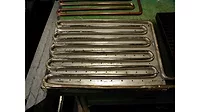
Oil usually logs in the evaporator because it is the coldest component with the largest tubes, thus it has the slowest refrigerant velocity.

Here are some ways an evaporator can become oil logged:

  • A flooded compressor is circulating oil.
  • Too much oil is in the system.
  • The system is not piped correctly (there are no oil traps or the piping is too large).
  • There is liquid migration during the off cycle.
  • TXV is out of adjustment (too little superheat-flooding).
  • There aren’t enough defrosts for low-temperature machines.
  • The wrong type or viscosity of oil was used.
Oil logged in the evaporator will coat the inner wall of the coil and reduce heat transfer through the walls. This will cause a loss of capacity and poor performance.

The compressor will be robbed of some of its crankcase oil and will run with a lower-than-normal oil level. This may score or ruin mechanical parts in the compressor. Table 1 is a system check sheet for an oil-logged evaporator. Pressures and temperatures will vary depending on the severity of the oil logging.

SYMPTOMS

Some symptoms of an oil-logged evaporator include:
  • Noisy compressor;
  • Low oil level in the sight glass on the compressor’s crankcase;
  • TXV has a hard time controlling superheat (hunting);
  • Low evaporator and compressor superheat; and
  • Warmer-than-normal box temperatures with loss of capacity.
Here is a more-detailed look at those symptoms.

Noisy compressor: The compressor may be noisy because of the lack of oil. Metallic sounds may be heard due to the lack of lubrication or because parts are out of tolerance from excessive wear. Oil is a sound deadener as well as a lubricant.

Low oil level in compressor’s sight glass: Because a lot of the oil is in the evaporator, the crankcase will be low on oil. In fact, all of the system’s components (excluding the compressor) may have too much oil. This would cause a low oil level in the compressor’s crankcase sight glass.

Many times, a compressor that is flooding with refrigerant will turn into an oil pumper. The crankcase will foam from the liquid refrigerant flashing in it. Small oil droplets entrained in the oil will be pumped through the compressor. This will oil log many components in the system.

The velocity of the refrigerant traveling through the lines and P-traps will try to return the oil from the system to the crankcase. Even an oil separator in the compressor’s discharge line may have a hard time keeping up with excess oil in circulation. Oil will continue to get into the system if the flooding is not remedied.

Looking for quick answers on air conditioning, heating and refrigeration topics? Try Ask ACHR NEWS, our new smart AI search tool. Ask ACHR NEWS →

TXV has a hard time controlling superheat: The TXV will also see too much oil passing through it. The evaporator’s tailpipe will be oil logged and the inside of the tubes will be coated with oil. The remote bulb of the TXV at the evaporator outlet will have a hard time sensing a true evaporator outlet temperature because of the reduced heat transfer through the line. The TXV will hunt.

As a result, constant superheat will not be maintained. The TXV remote bulb may sense a warmer-than-normal temperature from the oil insulating the inside of the line. This could make the TXV run a low superheat and flood or slug the compressor with refrigerant. Often the sight glass in the liquid line will be discolored with a yellow or brown tint from refrigerant and oil flowing through it.

Low compressor superheat: If the TXV is running low superheat, this will cause the compressor superheat to run lower.

Warmer-than-normal box temperatures with capacity losses: Because of the reduced heat transfer in both the condenser and evaporator (caused by excess oil coating the inner tubing), capacity will be decreased. The compressor will run longer trying to maintain a desired box temperature.

Evaporator temperatures and pressures may run low because of the reduced heat transfer from the oil insulating the evaporator tubes. This will cause reduced mass flow rates.

Service technicians must be able to recognize the symptoms brought forth by excessive oil circulating in a refrigeration system. The service check sheet is the number-one tool for helping technicians recognize that they have this hard-to-detect problem.

Tomczyk is a professor of hvac at Ferris State University, Big Rapids, MI, and author of the book, Troubleshooting and Servicing Modern Air Conditioning & Refrigeration Systems, published by ESCO Press. To order, call 800-726-9696. Tomczyk can be reached at tomczykj@tucker-usa.com (e-mail).

Publication date: 02/11/2002

Share This Story

Looking for a reprint of this article?
From high-res PDFs to custom plaques, order your copy today!


Recommended Content

JOIN TODAY
To unlock your recommendations.

Already have an account? Sign In

  • HVAC-enrollment

    The Trades Are Back: HVACR Programs See Nearly 30% Enrollment Spike

    A new wave of future technicians is entering the pipeline.  
    News
    By: Matt Jachman
  • 2025 Top 40 Under 40

    2025 Top 40 Under 40 HVACR Professionals List

    The 11th annual Top 40 Under 40 list highlights those...
    HVAC Contracting
    By: Hannah Belloli-Oster
  • LG Ductless Mini-Split Systems

    The 9 Types of Heat Pumps

    As the U.S. moves toward electrification, heat pumps are...
    Heat Pumps
    By: Joanna R. Turpin
Subscription Center
  • Create an Account
  • Start a Subscription
  • Manage My Account
  • Sign Up for Newsletters
  • Visit Customer Service
  • Update Preferences

More Videos

Sponsored Content

Sponsored Content is a special paid section where industry companies provide high quality, objective, non-commercial content around topics of interest to The News audience. All Sponsored Content is supplied by the advertising company and any opinions expressed in this article are those of the author and not necessarily reflect the views of The News or its parent company, BNP Media. Interested in participating in our Sponsored Content section? Contact your local rep!

close
  • Piggy Bank
    Sponsored byWatercress Financial

    Energy Prices, Inflation, and HVAC: What Today’s Homeowners Care About

  • Refrigerated Food
    Sponsored bySolstice Advanced Materials

    R-455A Refrigeration: A Cold Storage Solution for the Future

  • Airex Rooftop Units
    Sponsored byAirex Manufacturing Inc

    Consolidating Roof Penetrations: A Growing Trend in Multifamily HVAC Design

Popular Stories

Refrigerants-and-gauge.jpg

HVAC Industry Warns of Counterfeit Refrigerants Entering U.S. Supply Chain

Data_Center_facility.jpg

HVAC Manufacturers Respond to Growing Data Center Backlash

Lennox equipment

Platinum Equity to Sell Heat Controller to Lennox

HVAC Minute retail refrigeration system

EPA Final Rule’s Impact on R-410A Deadlines

HVAC-tech-van.jpg

Report: Only 65% of HVAC Technician Time is Billable Hours

View The ACHR NEWS
Centennial Anniversary Timeline

The ACHR News Timeline Chart
Submit a Letter
Submit a letter to our editors.

Events

November 6, 2025

Next-Gen Data Center Cooling: HVAC Innovation and Real-World Solutions

On Demand As AI workloads and high-density computing push traditional cooling methods to their limits, the data center industry is accelerating the adoption of next-generation HVAC technologies.

July 28, 2026

How Top Home Services Companies Turn Every Conversation Into Predictable Revenue

In this webinar, we'll outline how top contractors are turning every conversation into predictable revenue by coaching every comfort advisor visit, not just the ones a manager rides along on.

View All Submit An Event

Poll

Summer Staff

Are you fully staffed for the summer season?
View Results Poll Archive

Products

BNI Mechanical/Electrical Square Foot Costbook, 2026 Edition

BNI Mechanical/Electrical Square Foot Costbook, 2026 Edition

See More Products
Designing Systems Using A2L Refrigerant - Free Webinar - 7/22/2026

Related Articles

  • The Professor: Systematic Troubleshooting an Oil-Logged Evaporator

    See More
  • Troubleshooting Ice Machine Evaporators

    See More
  • Plated Evaporator

    Understanding Direct Expansion Evaporators

    See More

Related Directories

  • BVA Oils

    Our complete line of products is available for export. Most common is our refrigeration, A/C, and our ammonia line of lubricants. BVA also has a line of synthetic lubricants for green refrigerants.
×

Sign Up. Stay Informed.

The #1 trusted source for the HVACR industry since 1926

SUBSCRIBE
  • RESOURCES
    • Advertise
    • Contact Us
    • Advisory Board
    • Classifieds
    • Submit a Letter
    • Directories
    • Store
  • ACCOUNT CENTER
    • Create an Account
    • Start a Subscription
    • Manage My Account
    • Sign Up for Newsletters
    • Visit Customer Service
    • Update Preferences
  • SERVICES
    • Marketing Services
    • Reprints
    • Market Research
    • List Rental
    • Survey/Respondent Access
  • STAY CONNECTED
    • LinkedIn
    • Facebook
    • Instagram
    • YouTube
    • X (Twitter)
  • PRIVACY
    • PRIVACY POLICY
    • TERMS & CONDITIONS
    • DO NOT SELL MY PERSONAL INFORMATION
    • PRIVACY REQUEST
    • ACCESSIBILITY

Copyright ©2026. All Rights Reserved BNP Media, Inc. and BNP Media II, LLC.

Design, CMS, Hosting & Web Development :: ePublishing