ACHR News
search
Ask ACHR NEWS AI
cart
facebook twitter instagram linkedin youtube
  • Sign In
  • Subscribe
  • Sign Out
  • My Account
ACHR News
  • NEWS
    • Breaking News
    • New HVAC Products
    • Featured Products
    • Manufacturer Reports
    • HVAC Data
    • Legislation
    • ACHR NEWS Centennial
  • RESIDENTIAL
    • Air Conditioners
    • Furnaces
    • Residential Heat Pumps
    • Ductless
    • Residential IAQ
    • Testing, Monitoring, Tools
    • Components & Accessories
  • COMMERCIAL
    • Air Handlers
    • Rooftop Units
    • Chillers and Cooling Towers
    • Commercial Heat Pumps
    • Boilers and Hydronics
    • VRF/Ductless
    • Commercial IAQ
  • REFRIGERATION
    • Refrigerants
    • Refrigerant Regulations
    • Leak Management
  • CONTRACTOR PRO
    • Geothermal
    • Homeowner Study
    • VRF and VRV Ductless
    • Unitary Trends
  • EDUCATION
    • Training and Education
    • Business Management
    • Service and Maintenance
    • Continuing Education
    • Market Research >
      • HVAC Brand Awareness Report
      • VRV, VRF, VRVZ Report
      • Unitary Trends Report
      • Water Heat Professionals Report
    • Webinars
    • Sponsor Insights
    • eProducts Info
    • White Papers
  • EVENTS
    • HVAC Contractor Forum
    • Industry Events and Webinars
  • MEDIA
    • Videos
    • AHR Expo 2025 Videos
    • Podcasts >
      • ACHR News Podcast
      • HARDI Podcasts
      • AHR Expo Podcasts
      • ACCA Podcasts
    • Interactive Spotlights
    • Quizzes
    • eBooks
    • HVAC Talkback
  • HVAC GROUP
    • ACHR NEWS >
      • Current Issue
      • Digital Edition
      • Subscribe
    • Distribution Trends
    • SNIPS NEWS >
      • Join SNIPS NEWS
    • Engineered Systems News >
      • Join ES News
    • HVACR Directory
    • Contests
    • Newsletters
    • Contact
    • Advertise
    • My Account
Service and MaintenanceVentilationDuct Products

Interpreting Duct Static Pressure

By Brendan Reid
July 30, 2007
The air speed going into the single return grille was over twice the 400 feet per minute recommended by ACCA. The undersized return created noise and high static pressure.

[Editor’s note: When we last visited with lead installer John and his helper Charlie (in the June 11 issue), they had learned how to measure external static pressure on a new system they had just installed. They were shocked to measure a high 0.98 inches of water column - and surprised when their trainer David asserted the airflow through the unit was probably OK.]

“The half-inch rule of thumb for maximum static pressure doesn’t always apply. What kind of indoor blower motor is in this unit?” asked trainer David, pointing at the “V” in the model number.

“Oh, yeah, variable speed,” answered installer John. “They can handle a lot more static, right? And I set the DIP switches for 400 cfm per ton based on the compressor size. So are we actually OK then?”

“Well, yes, and no,” answered the trainer. “From an airflow standpoint, you’re probably barely OK. Most electronically commutated motors (ECMs) will deliver the airflow up to 0.9 inches, and usually a bit more. But there’s a lot more to consider. This is definitely not a happy system. There are a lot of reasons to get this static pressure back down.”

FIXING A NOISY SYSTEM

“First off,” said David, “have you noticed we’re having to speak kind of loudly?”

“Sorry, what did you say?” joked John. “But, seriously, I did notice this new system seems noisier than the one we pulled out. Why is that? Is it caused by the high static pressure?”

“Partly,” replied David.

He explained there were two key reasons for the noise.

“The high static pressure is causing this poor variable-speed motor to ramp up to maximum revolutions per minute (rpm) to get the programmed airflow. More rpm means more noise.”

He then pulled out his anemometer. He placed it over the single central grille under the platform and measured an average of 849 feet per minute (fpm) air velocity.

“I think the other big noise maker is this high air velocity at the grille,” said David. “ACCA Manual D tells us this should be under 400 fpm. After sealing the ducts, and going to a variable-speed motor, there’s now a lot more air going through this single return grille. Too high of a velocity like this, and you get air noise.”

“So should we drop it back to a lower airflow setting?” asked Charlie.

“No, we should give it a tracheotomy,” replied David.

“A tracheotomy?” questioned John. “Isn’t that when you help someone who’s choking by cutting a hole into his wind-pipe … oh … I see what you mean! We need to add a hole. We could cut in a second return grille over on this other wall into the return box.”

“Exactly,” replied trainer David. “I’d literally like to see double the return air grille size they have now. A good rule of thumb is to aim for 1 ¼ to 1 ½ feet of return grille per ton of air conditioning. By the way, one clue that the return grille is too small is that 0.70 inches out of the total 0.98 inches is on the return side. Let’s see how much of that is caused by the grille versus the media filter.”

David reinserted the two static probes, one on each side of the brand new filter, and measured a drop of 0.15 inches. He pointed out that although it was currently 0.15 inches, the pressure would rise as the filter loaded up. This was another reason to get the total static down. He then returned to the subject of the grille.

“So if the total static on the return side is 0.70, and we know that 0.15 of that is caused by the filter, how much is caused by the rest of the return system?” asked David.

Charlie answered correctly that it would be 0.55 inches, which they then confirmed by placing one probe at the inlet to the filter, the other in the room in front of the single grille, and getting a reading of 0.55 inches.

“In addition to adding a second return, I’d replace this old stamped return grille that’s been bashed by the vacuum cleaner over the years. Use a new low resistance grille with more net free area. This will cut the velocity and noise at the grilles, cut the static pressure, lower the rpm and also save energy,” said David.

David recommended adding a second return, and replacing the original stamped grille with a less restrictive, more aerodynamic design.

LOWER STATIC PRESSURE SAVES ENERGY TOO

“I can see how added return will help with the noise and static pressure,” said John. “But how exactly will it save energy?”

“Two ways: the circulating blower motor will use quite a bit less energy at a lower static,” said trainer David. “A good rule of thumb for an ECM is it uses about 40 percent more electricity to move the same amount of air at 0.90 inches than at 0.50 inches. And the customer actually pays for that wasted electricity twice: once to make the air move, and then again to run the a/c to remove the heat Btus the electricity turned into.”

“Makes sense,” said John. “What’s the second way adding return will save energy?”

“It will reduce the pressure across those return duct leaks that you didn’t manage to seal,” answered the trainer. “Air is proportional. In essence, if you make the good holes bigger, the bad holes don’t have as much significance.”

“OK. Although we’re going to seal everything we can, I can see that some small leaks will still be there,” said installer John. “So getting the static pressure down is actually a way to reduce duct leakage. Interesting angle. I’d never considered that.”

“But that brings up a point,” said Charlie. “Was this high static pressure actually caused by the duct sealing we did?”

“Static pressure always goes up somewhat as an inherent side effect from sealing ducts,” answered David. “Some air used to enter the system enters through the bad holes. Now it’s all trying to move through the good holes - by that I mean the grilles and registers. With regular permanent split capacitor [PSC] motors, airflow through the coil usually drops at least a little after duct sealing. But in some cases, it can drop a lot, especially if the ducts were way undersized to begin with.”

“So did the airflow go down because we sealed the ducts?” asked Charlie.

“Actually, with this new variable-speed motor, this system’s probably moving more air now than it did before,” said David. “The ECM is probably the bigger cause of the high static we’re seeing. When it sees undersized returns or other restrictions, it ramps up to compensate. In fact, it’s a good thing you did seal the ducts, otherwise the higher pressure caused by the ECM would have caused the ducts to leak even more.”

DUCT RENOVATION, NOT JUST DUCT SEALING

“So bottom line, what do we do now?” asked John, before answering his own question. “We need to bring the high static pressure and undersized return grille to the customer’s attention, and offer to solve it. Would have been better to recommend this before you sold the job, but still, this is their problem, not yours. The return has always been undersized. It’s just showing up more now that the ducts are sealed and the airflow is right.”

David then gave them some tips on how to approach future jobs.

“Most duct systems need more done to them than just sealing, especially if the airflow was already low before the repairs. We prefer to use the term duct renovation, not duct sealing, when describing what we offer. In this case, it would have been good to recommend added returns as part of the job.

“Sometimes the supplies need to be straightened out, or fittings replaced. With attic systems, it often makes more sense to start over than to try to patch up a dirty, old, leaky, undersized, poorly insulated system. Testing it for leakage, pressure, temperatures, and airflow will guide your recommendations.”

After a pause, David added, “By the way, as part of the commissioning after a duct renovation, you’d better check the refrigerant charge. Even if it had been adjusted before, once you get the leakage solved and the airflow right, it will likely need to be changed. And, finally, always measure building and combustion zone pressures to ensure there isn’t a negative pressure problem.”

So John and Charlie learned again that there’s more to fixing ducts than just painting on the mastic. A true duct renovation requires looking at the whole picture.

Publication date: 07/30/2007

Share This Story

Looking for a reprint of this article?
From high-res PDFs to custom plaques, order your copy today!


Brendan Reid is President of the Comfort Institute (CI), Bellingham, Wash. CI provides building science training and instruments for whole-house and air-distribution diagnostics and repair. He can be reached at 360-420-5049.

Recommended Content

JOIN TODAY
To unlock your recommendations.

Already have an account? Sign In

  • HVAC-enrollment

    The Trades Are Back: HVACR Programs See Nearly 30% Enrollment Spike

    A new wave of future technicians is entering the pipeline.  
    News
    By: Matt Jachman
  • 2025 Top 40 Under 40

    2025 Top 40 Under 40 HVACR Professionals List

    The 11th annual Top 40 Under 40 list highlights those...
    HVAC Contracting
    By: Hannah Belloli-Oster
  • LG Ductless Mini-Split Systems

    The 9 Types of Heat Pumps

    As the U.S. moves toward electrification, heat pumps are...
    Heat Pumps
    By: Joanna R. Turpin
Subscription Center
  • Create an Account
  • Start a Subscription
  • Manage My Account
  • Sign Up for Newsletters
  • Visit Customer Service
  • Update Preferences

More Videos

Sponsored Content

Sponsored Content is a special paid section where industry companies provide high quality, objective, non-commercial content around topics of interest to The News audience. All Sponsored Content is supplied by the advertising company and any opinions expressed in this article are those of the author and not necessarily reflect the views of The News or its parent company, BNP Media. Interested in participating in our Sponsored Content section? Contact your local rep!

close
  • Piggy Bank
    Sponsored byWatercress Financial

    Energy Prices, Inflation, and HVAC: What Today’s Homeowners Care About

  • Refrigerated Food
    Sponsored bySolstice Advanced Materials

    R-455A Refrigeration: A Cold Storage Solution for the Future

  • Airex Rooftop Units
    Sponsored byAirex Manufacturing Inc

    Consolidating Roof Penetrations: A Growing Trend in Multifamily HVAC Design

Popular Stories

HVAC-Price-Increase-graphic

HVAC Price Increase List: June 2026

Trump-Section-232.jpg

Trump Reduces Section 232 Tariffs on HVAC Equipment to 15%

R410A-Refrigerant-Cylinder.jpg

Refrigerant Recovery is a Revenue Opportunity

Heat-pump-cutaway.jpg

PFAS Rules and A2L Building Codes Continue to Evolve

Kroger.jpg

Kroger to Spend $100 Million to Reduce Refrigerant Leaks

View The ACHR NEWS
Centennial Anniversary Timeline

The ACHR News Timeline Chart
Submit a Letter
Submit a letter to our editors.

Events

November 6, 2025

Next-Gen Data Center Cooling: HVAC Innovation and Real-World Solutions

On Demand As AI workloads and high-density computing push traditional cooling methods to their limits, the data center industry is accelerating the adoption of next-generation HVAC technologies.

June 17, 2026

Decarbonization Without Disruption

This webinar will explore practical HVAC decarbonization strategies that minimize disruption while maximizing long-term performance and ROI.

View All Submit An Event

Poll

Summer Staff

Are you fully staffed for the summer season?
View Results Poll Archive

Products

BNI Mechanical/Electrical Square Foot Costbook, 2026 Edition

BNI Mechanical/Electrical Square Foot Costbook, 2026 Edition

See More Products
A2L Refrigerants - Free Webinar - May 21, 2026

Related Articles

  • How to Measure Duct Static Pressure

    See More
  • Duct Dynasty: Measuring Static Pressure with a Magnehelic

    See More
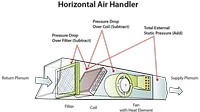
  • Pressure reading locations will vary from a gas furnace to an air handler. Many air handlers include the pressure drop of the internal coil in the total external static pressure rating.

    Duct Dynasty: Four Essential Static Pressure Readings for Diagnostics

    See More

Related Products

See More Products
  • Manual Q.jpg

    Manual Q - Low Pressure, Low Velocity Duct System Design

  • pewtpm.png

    Pressure Enthalpy Without Tears Manual

See More Products

Events

View AllSubmit An Event
  • June 23, 2026

    HVAC Duct Sealing Mastics: Why Selection Matters

    In this webinar we will detail what HVAC material buyers and technicians need to know when selecting duct mastics, including matching mastic to substrate, alternatives to liquid mastic, and where UL 181 Listings fit into real world installations.
View AllSubmit An Event

Related Directories

  • Gustafson Duct

    Gustafson is a leading spiral duct and fitting manufacturer that markets to wholesalers and dealers. The company offers conventional air duct systems, as well as self-sealing and high velocity HVAC duct systems.
  • Dynamic Air Quality Solutions

    High-performance air filtration systems that remove ultrafine particles, viruses, odors and gas phase contaminants, without Ozone. Low static pressure reduces energy and operating costs.
  • EHG Duct

    EHG is a spiral duct and fitting manufacturer with representatives across the country. In addition to our superior G-3 gasketed duct system, EHG offers project management, special packaging, racking, online submittals and much more.
×

Sign Up. Stay Informed.

The #1 trusted source for the HVACR industry since 1926

SUBSCRIBE
  • RESOURCES
    • Advertise
    • Contact Us
    • Advisory Board
    • Classifieds
    • Submit a Letter
    • Directories
    • Store
  • ACCOUNT CENTER
    • Create an Account
    • Start a Subscription
    • Manage My Account
    • Sign Up for Newsletters
    • Visit Customer Service
    • Update Preferences
  • SERVICES
    • Marketing Services
    • Reprints
    • Market Research
    • List Rental
    • Survey/Respondent Access
  • STAY CONNECTED
    • LinkedIn
    • Facebook
    • Instagram
    • YouTube
    • X (Twitter)
  • PRIVACY
    • PRIVACY POLICY
    • TERMS & CONDITIONS
    • DO NOT SELL MY PERSONAL INFORMATION
    • PRIVACY REQUEST
    • ACCESSIBILITY

Copyright ©2026. All Rights Reserved BNP Media, Inc. and BNP Media II, LLC.

Design, CMS, Hosting & Web Development :: ePublishing