Higher Amps: For Better or for Worse?
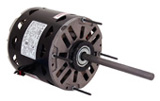
Here is an example of a PSC design that is more efficient than a previous design, and uses about 14 percent few amps. If the two motors were compared just based on amps, it might be incorrectly concluded that the previous design was a stronger motor, which is not the case.
One typical way that technicians determine whether the replacement motor has sufficient power output is to compare the nameplate amps of the original motor with the replacement model. If the replacement motor’s amp rating is at least as high as the original, you can consider the replacement suitable. In many cases, this comparison simply confirms what other factors, such as nameplate horsepower and rated voltage, tell us. This practice is most satisfactory when there is little or no variation in the efficiency from the original motor to the replacement. This method works well, for example, with most three-phase motors.
In other cases, however, comparing amps may be misleading. The comparison process tends to break down when the motors in question are single-phase models where there is a wide range of efficiencies common for a single design. This category includes permanent-split-capacitor motors, shaded-pole, and some types of split-phase and capacitor-start motors.
Since nameplate amps reflect the total current consumption of the motor (which includes both the current converted to output power and the current lost to heat due to design inefficiency), higher nameplate amps can just as likely mean poor efficiency as higher power output.
As motor manufacturers become increasingly sensitive to the energy efficiency issue, they work hard to develop motors that deliver higher power while consuming the same or fewer watts. That efficiency may or may not be reflected in the amp rating of the motor. For the service technician, this generally means placing more importance on comparing the horsepower of certain motors rather than comparing amps of the replacement to the original.
Since there are no efficiency standards for most single-phase motors, there is one good way for the technician to verify that a replacement motor of the same horsepower but higher or lower amps is a satisfactory replacement. The method is to measure the actual amps delivered to the replacement motor in its normal operating state (under normal load) and compare that measurement only to the nameplate amps for that particular replacement motor.
In summary, using just an amp comparison is not sufficient with certain types of motors. You need to be aware of variations in efficiency and take this factor into account when determining a successful replacement.
Publication date: 08/10/2009
Links
Looking for a reprint of this article?
From high-res PDFs to custom plaques, order your copy today!